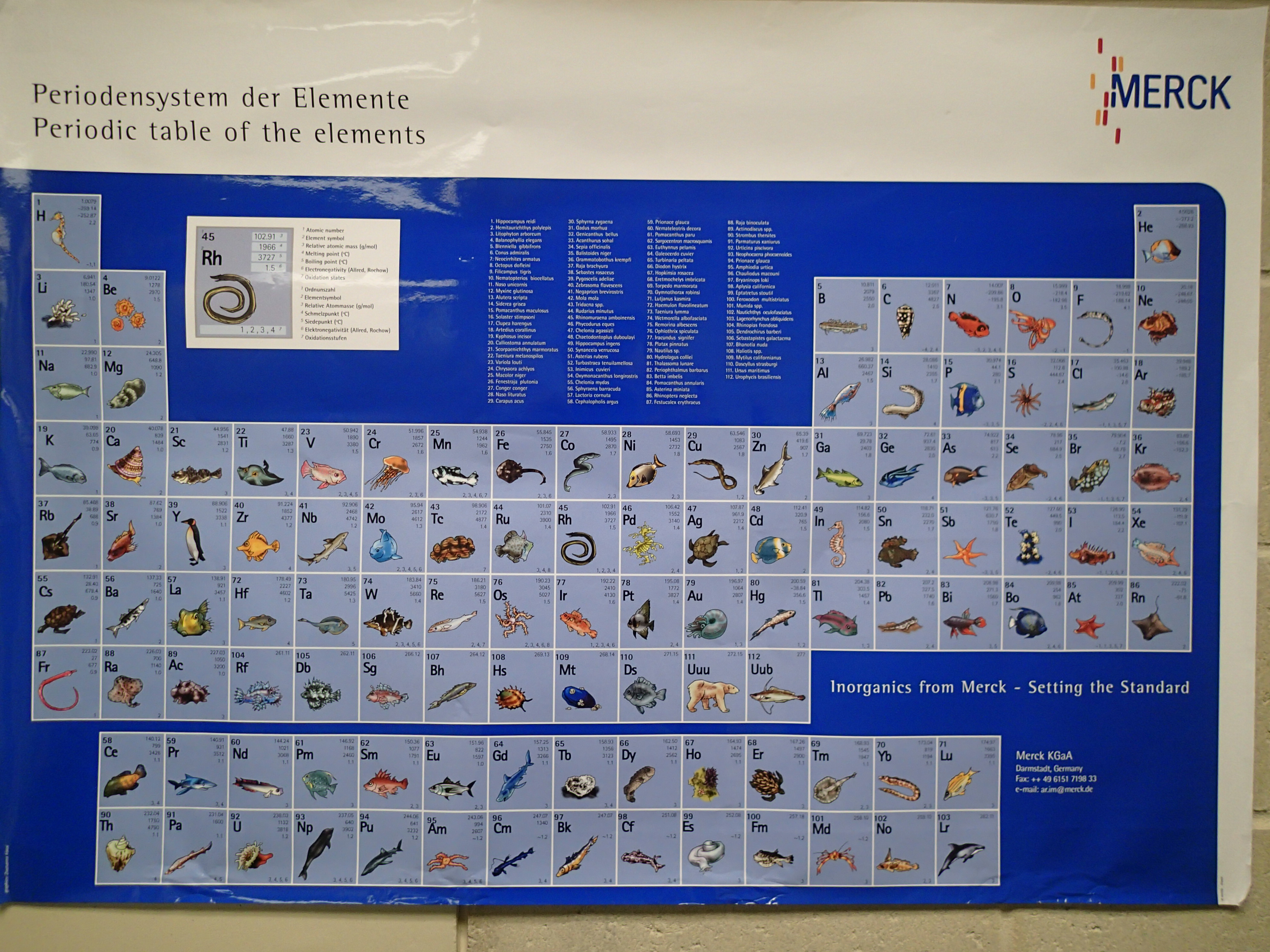
Where can I get myself one of these?
Would it have made high school chemistry subject more fun?
All about Fish Vetting – Dr Richmond Loh
Check this out!
forwarded message:
From: “Dr. David Scarfe”
Date: 4 November 2014 3:07:19 AWST
Subject: AquaVetMed e-News: Oceana Study ~30% of Shrimp are Mislabeled
November 3, 2015
Mislabeled Shrimp at Restaurants, Grocers (see study Summary & Highlights below)
AP News – Ever thought that big, pink Gulf coast shrimp you ordered at the restaurant or bought from the store didn’t taste juicy or salty enough? Maybe it wasn’t from the Gulf.
From New York to New Orleans to Oregon, consumers are being misled about the shrimp they’re buying, according to a survey by the advocacy group Oceana. Cheap, imported farm-raised shrimp is being sold as prized wild-caught Gulf shrimp while common, more plentiful shrimp is being sold as premium. And shrimp of all kinds is sold with no indication whatsoever about where it came from, the group said.
Shrimp caught in the open oceans is considered superior in taste, texture and healthiness compared with farm-raised shrimp that tend to be more rubbery and without the distinct salty taste of the sea. Imports of farm-raised shrimp have skyrocketed in recent years, coinciding with shrimp’s ascent as the nation’s most popular seafood.
Oceana said it found about 30 percent of 143 shrimp products bought from 111 vendors were not what the label said. Bad labeling was discovered on shrimp sold at national and regional supermarkets and smaller grocery stores alike. Restaurants, from national chains to high-dollar eateries, were also selling poorly labeled shrimp, the group said.
The survey looked at shrimp sold in Washington, D.C.; Portland, Oregon; and various spots around the Gulf of Mexico as well as New York City, which it deemed the worst offender. But the group acknowledged that the survey was a small sample, but said it used a technique involving DNA to trace the shrimp’s roots. “It was a first good look at shrimp,” said Kimberly Warner, a marine scientist with Oceana. She went out and obtained many of the samples. The group did a similar survey last year for fish and made similar findings. In that report, Oceana said consumers routinely are misled into believing they’re buying tuna and red snapper when in reality they’re getting less expensive fish.
Oceana is urging Congress and regulators to enforce proper labeling … … .
See the source (http://tinyurl.com/mpfxslb) for the full AP story. From the Study Report (available at http://oceana.org/en):
Executive Summary
With shrimp, it is almost impossible to know what you are getting. Shrimp is the most commonly consumed seafood in the United States and the most highly traded seafood in the world. However, this high demand has led to many environmental and human rights abuses in the fishing, farming and processing of shrimp. Despite the popularity of shrimp, as well as the associated sustainability, human rights and environmental concerns, U.S. consumers are routinely given little information about the shrimp they purchase, making it nearly impossible to find and follow sound sustainability recommendations.
Oceana’s previous studies have shown that species substitution, a form of seafood fraud, is common in the U.S. Last year, Oceana found that one-third of the more than 1,200 fish samples it tested nationwide were mislabeled, according to Food and Drug Administration guidelines. We have now turned our attention to shrimp, American’s most popular seafood, to investigate mislabeling as well as the information that consumers are given about the products they purchase.
Consumers may wish to choose their shrimp more carefully for many important social and ecological reasons. For instance, consumers may wish to avoid shrimp caught in fisheries that are not responsibly managed, that have high rates of waste or discards, or that are associated with human rights abuses. At the same time, consumers may wish to avoid farmed shrimp due to health and environmental impacts. Similarly, consumers may want to actively choose shrimp caught from nearby wild populations in the U.S., rather than shrimp caught overseas, or they may wish to purchase shrimp that are farmed using stat-of-the-art techniques that minimize pollution and provide ecological benefits.
Most labels and menus do not provide consumers with enough information to make such choices. There is very little information provided, and in many cases, the information given about shrimp misrepresents the actual identity of the product. This makes it difficult, if not impossible, for consumers to make informed choices.
Oceana surveyed shrimp in grocery stores and restaurants to see what information consumers typically receive and compared it to what they actually got. Oceana’s investigation included surveying how shrimp were labeled on menus and in grocery stores and collecting samples for genetic species identification. Oceana’s study covered shrimp producing states in the Gulf of Mexico as well as Portland, OR, Washington, D.C. and New York City in 2013.
Highlights
Overall, 30 percent of the 143 shrimp products tested from 111 vendors visited nationwide were misrepresented, while 35 percent of those 111 vendors sold misrepresented shrimp. Of the 70 restaurants visited, 31 percent sold misrepresented products, while 41 percent of the 41 grocery stores and markets visited sold misrepresented products.
• The most common species substitution was farmed whiteleg shrimp sold as “wild” shrimp and “Gulf” shrimp.
• Forty percent of the 20 shrimp species or categories collected and identified were not previously known to be sold in the U.S.
• No samples that were labeled as “farmed” were mislabeled, while over half of the samples labeled simply “shrimp” were actually wild species.
• A banded coral “shrimp,” which is an aquarium pet not intended to be consumed as food, was found commingled with another unidentifiable shrimp in a bag of frozen wild salad-sized shrimp.
• New York City had the highest amount of misrepresented shrimp at 43%.
• Products from Washington, D.C. and the Gulf of Mexico region were misrepresented about one third of the time.
• In Portland, only 5% of products were misrepresented, the lowest rate among regions investigated.
• Overall, 30% of the shrimp products surveyed in grocery stores lacked information on country of origin, 29% lacked farmed/wild information and one in five did not provide either.
• The majority of restaurant menus surveyed did not provide the diner with any information on the type of shrimp, whether it was farmed/wild or its origin.
Misrepresenting shrimp not only leaves consumers in the dark, but it also hurts honest fishermen who are trying to sell their products into the market. Instituting full-chain traceability and providing more information at the point of sale will benefit all stakeholders in the supply chain, from fishermen and seafood businesses to consumers. Traceability can also prevent illegally caught seafood from entering the marketplace and deter human rights violations around the world, while giving consumers the information they need to make fully informed, responsible seafood choices.
___________________________
AquaVetMed e-News provides information to veterinary and veterinary-allied subscribers concerning aquatic animal medicine, health, welfare, public health and seafood safety, obtained from a variety of sources (largely AquaVetMed subscribers). While provided by the American Veterinary Medical Association’s, Aquatic Veterinary Medicine Committee and are for public distribution, they do not necessarily reflect the opinion of the AVMA or the veterinary profession. See the AVMA Terms of Use (http://tinyurl.com/29h2rf) for further information.
Subscription and Contributions: Interested veterinarians and veterinary-allied professionals can subscribe, unsubscribe, or contribute pertinent news or information, by sending a message with “For AquaVetMed -” and the topic in the subject line, to dscarfe@avma.org. If e-News information is used elsewhere please acknowledge AquaVetMed as the source. Encourage individuals to subscribe rather than distribute through list serves.
Note: Undelivered e-mails will not be resent; Subscribers will be deleted from the list after repeated undelivered or bounced messages and will have to re-subscribe. Messages may contain attachments that will have been scanned for known viruses.
Visit our website: http://www.avma.org
________________________________
I believe subscribers and clients of TheFishVet will be most interested in this.
The speaker did her Masters thesis on this and I’d consider her a world expert on pathology of Syngnathids, and I’m so lucky to have "hooked" her as the speaker.
See the email below for more information on this FREE event, and how to register.
Follow me on: Facebook "Fin Page" – YouTube – Blog – Linkedin – Twitter
—
Yours sincerely,
Dr Richmond Loh DipProjMgt, BSc, BVMS, MPhil (Pathology), MANZCVS (Aquatics & Pathobiology), CertAqV, CMAVA, NATA Signatory.
THE FISH VET, Perth, Western Australia, AUSTRALIA.
Mobile Aquatic Veterinary Medical & Diagnostic Services.
http://www.thefishvet.com.au
Ph: +61 (0)421 822 383
Skype: thefishvet
WebCEPDB-1006 – Diseases of Syngnathids (seahorses, seadragons and pipefishes)
Join us for a free webinar on November 28, 2014 at 7:00 am (AWST, +8 GMT)
Click http://tinyurl.com/pprk3ly to check your local time.
Register now!
https://attendee.gotowebinar.com/register/8726501994123337218
This lecture will cover diseases of captive seahorses, sea dragons and pipefish. The focus will be primarily on inflammatory, environmental and neoplastic aetiologies. Diagnostics and treatments for the most common causes of diseases will also be addressed.
This webinar is suitable for veterinarians, vet techs/nurses, vet students, research scientists and aquarists/aquarium husbandry staff.
Speaker: Dr Véronique LePage DVM, MSc (Department of Pathobiology, Ontario Veterinary College, Guelph, Canada)
Learning Objectives – participants will:
1. Understand the most common causes of morbidity and mortality in sygnathids.
2. Be able to clinically evaluate and necropsy syngnathids to arrive at a diagnosis of common diseases.
3. Consider various treatment modalities for these diseases.
4. Understand the challenges and limitations of diagnostics and treatments options.
NOTE: this webinar will be recorded. If you register for the live webinar and are unable to attend, you will be sent a link to view the webinar at a later time.
Want CEPD credit? (Registration is required)
Information on how to access the recorded webinar (at no cost), and a short knowledge & skills assessment (KSA or quiz) covering the webinar’s principle learning objectives, in order to earn veterinary Continuing Educational & Professional Development (CEPD) credit will be e-mailed to all registrants in 7-10 days after the webinar.
As CEPD credit can be used towards re-licensing or registration requirements to practice veterinary medicine, we provide WAVMA Members a discount off the US$25.00 fee for CEPD ($5 for student members, $15 for all others).
Register now for this free live WAVMA WebCEPD webinar at
https://attendee.gotowebinar.com/register/8726501994123337218.
After registering, you will receive a confirmation e-mail containing information about joining the webinar.
Q: What did one whale say to the other during a heated argument?
A: Is there a porpoise to this?

Suspected water weeds, like water hyacinth, that are sold via internet trading sites should be reported to the Department of Agriculture and Food.
Users of online markets are warned to keep watch for sales of illegal water weeds and to report any sightings to the Department of Agriculture and Food.
There has been a proliferation of sales of declared weeds, which pose a risk to the environment and the agriculture and food sector, since the rise of the internet to trade goods.
Regional invasive species leader Tim Thompson said the most recent case was a person selling a pond full of water hyacinth.
“Some people are not aware that the weeds they are selling have been banned for years and years, while others are very much aware of the action they are taking,” Mr Thompson said.
“People may think that they aren’t creating a risk, as they’re selling weeds to people who will keep it in their ponds – but the weeds often get away.
“Sometimes the weeds are spread by ducks and other fauna, while the simple act of a seed on a shoe can transfer the weed far and wide.”
Recent apprehensions have involved the sale of water hyacinth, sagittaria and salvinia, all of which spread quickly in ponds, swamps and drains killing native flora and fauna.
The department is currently working with local government councils in Melville, Baldivis, High Wycombe and Rockingham to eradicate water weeds that have been dumped in local waterways.
Any suspect sightings of water weed sales on the internet, at markets or in the community can be reported via the department’s Pest and Disease Information Service by freecall 1800 084 881 or email info
—
Yours sincerely,
Dr Richmond Loh DipProjMgt, BSc, BVMS, MPhil (Pathology), MANZCVS (Aquatics & Pathobiology), CertAqV, CMAVA, NATA Signatory.
THE FISH VET, Perth, Western Australia, AUSTRALIA.
Mobile Aquatic Veterinary Medical & Diagnostic Services.
http://www.thefishvet.com.au
Ph: +61 (0)421 822 383
Skype: thefishvet
Begin forwarded message:
From: “Dr. David Scarfe”
Date: 6 November 2014 7:07:15 AWST
Subject: AquaVetMed e-News: Legal Penalties for Violating Australia’s Fish Import/Biosecurity Requirements
November 5, 2014
Caught and in Court
Australia Biosecurity – The strength of our intelligence and enforcement capability has hit hard for two businesses who tried to conceal their shonky dealings from the Department of Agriculture and have paid the price for putting Australia’s biosecurity at risk. Failing to comply with import conditions has cost a fish farming business $36,000 and a conviction in the Brisbane Magistrates court.
The owner of Bay Tropical Fish Farm Pty Ltd, Jared Ross Patrick, pleaded guilty to 30 charges in the Brisbane Magistrates Court and was convicted under section 67(5) of the Quarantine Act 1908. As a Quarantine Approved Premises (QAP), Bay Tropical Fish Farm was required to keep fish separate and not engage in unauthorised use of antibiotics. The fish farm supplies the retail aquarium market with imported ornamental freshwater fish.
People convicted of illegal importation under the Quarantine Act face up to 10 years jail. In cases of commercial importation a fine of up to $1.7 million per offence can also apply.
In Perth, Vihentico Pty Ltd and the business owner, James Huynh, received a $52,500 fine for illegally importing 26,040 packets of Songlin Brand Fish Maw from Taiwan between July 2007 and July 2010. He also received a suspended eight month custodial sentence and a $5000 good behaviour bond. First Assistant Secretary of the Department of Agriculture’s Compliance Division, Raelene Vivian, said fish maw is traditionally made from the swim bladders of fish. “But this brand of the product contains pork skin and not a single trace of fish,” she said. Australia does not allow pork products to be imported from Taiwan. The fish maw had been deliberately concealed among other products and fraudulently invoiced as Huynh knew it was prohibited in Australia.
Ms Vivian said that the department takes its job seriously. “We do a lot of work to help importers comply with Australia’s laws but we know there are people who intentionally put our country at risk,” she said. “This is why we have a series of risk management measures in place across the continuum, including random inspections and audits of importer premises.”
Source: Australia Biosecurity Bulletin – Edition 5, 2014 (http://tinyurl.com/pg4s6sf).
___________________________
AquaVetMed e-News provides information to veterinary and veterinary-allied subscribers concerning aquatic animal medicine, health, welfare, public health and seafood safety, obtained from a variety of sources (largely AquaVetMed subscribers). While provided by the American Veterinary Medical Association’s, Aquatic Veterinary Medicine Committee and are for public distribution, they do not necessarily reflect the opinion of the AVMA or the veterinary profession. See the AVMA Terms of Use (http://tinyurl.com/29h2rf) for further information.
Subscription and Contributions: Interested veterinarians and veterinary-allied professionals can subscribe, unsubscribe, or contribute pertinent news or information, by sending a message with “For AquaVetMed -” and the topic in the subject line, to dscarfe@avma.org. If e-News information is used elsewhere please acknowledge AquaVetMed as the source. Encourage individuals to subscribe rather than distribute through list serves.
Note: Undelivered e-mails will not be resent; Subscribers will be deleted from the list after repeated undelivered or bounced messages and will have to re-subscribe. Messages may contain attachments that will have been scanned for known viruses.
Visit our website: http://www.avma.org
________________________________
From: “Dr. David Scarfe”
Date: 2 November 2014 0:11:38 AWST
Subject: AquaVetMed e-News: Australia’s Revised AQUAPLAN for 2014-2019
November 1, 2014
Australia’s National Strategic Plan for Aquatic Animal Health outlines the shared vision of governments and aquatic animal industries for a sustainable and prosperous future of Australia’s fisheries and aquaculture sectors valued at $2.3 billion in 2012. AQUAPLAN outlines agreed industry and government priorities to improve national biosecurity and health management policies.
The plan was endorsed in August by the Agriculture Ministers’ Forum and by aquaculture and fisheries industries through the National Aquatic Animal Health Industry Reference Group in January. Industry and governments are jointly responsible for implementing the plan and will work together to achieve the objectives and to ensure Australia remains a leader in aquatic animal health management.
AQUAPLAN 2014-2019 has five objectives, each of which is supported by activities that address specific aquatic animal health management issues. They include:
1. Improving regional and enterprise-level biosecurity
2. Strengthening emergency disease preparedness and response capability
3. Enhancing surveillance and diagnostic services
4. Improving availability of appropriate veterinary medicines
5. Improving education, training and awareness
Over the next five years the department will lead on a number of activities to improve awareness of nationally significant aquatic animal diseases and will investigate the use of mobile technology to enhance reporting. Australia’s Department of Agriculture will coordinate a review of the existing Aquatic Animal Health Training Scheme (2013–14), and are looking to improve the breadth of comprehensive data in Australia’s online database for aquatic animal diseases and pathogens.
AQUAPLAN covers aquatic animal health issues relevant to aquaculture, commercial fisheries, recreational fisheries, the ornamental fish industry, the tourism industry and the environment. Its objectives are supported by activities to address specific aquatic animal health management issues associated with infectious diseases of finfish, molluscs and crustaceans.
AQUAPLAN 2014–2019 is available at http://www.agriculture.gov.au/animal-plant-health/aquatic/aquaplan. For more information or to receive a hardcopy of AQUAPLAN 2014–2019, contact the Aquatic Pest and Health Policy team at aah@agriculture.gov.au.
Source: Australia Biosecurity Bulletin – Edition 5, 2014 (http://tinyurl.com/pg4s6sf).
___________________________
AquaVetMed e-News provides information to veterinary and veterinary-allied subscribers concerning aquatic animal medicine, health, welfare, public health and seafood safety, obtained from a variety of sources (largely AquaVetMed subscribers). While provided by the American Veterinary Medical Association’s, Aquatic Veterinary Medicine Committee and are for public distribution, they do not necessarily reflect the opinion of the AVMA or the veterinary profession. See the AVMA Terms of Use (http://tinyurl.com/29h2rf) for further information.
Subscription and Contributions: Interested veterinarians and veterinary-allied professionals can subscribe, unsubscribe, or contribute pertinent news or information, by sending a message with “For AquaVetMed -” and the topic in the subject line, to dscarfe@avma.org. If e-News information is used elsewhere please acknowledge AquaVetMed as the source. Encourage individuals to subscribe rather than distribute through list serves.
Note: Undelivered e-mails will not be resent; Subscribers will be deleted from the list after repeated undelivered or bounced messages and will have to re-subscribe. Messages may contain attachments that will have been scanned for known viruses.
Visit our website: http://www.avma.org
________________________________
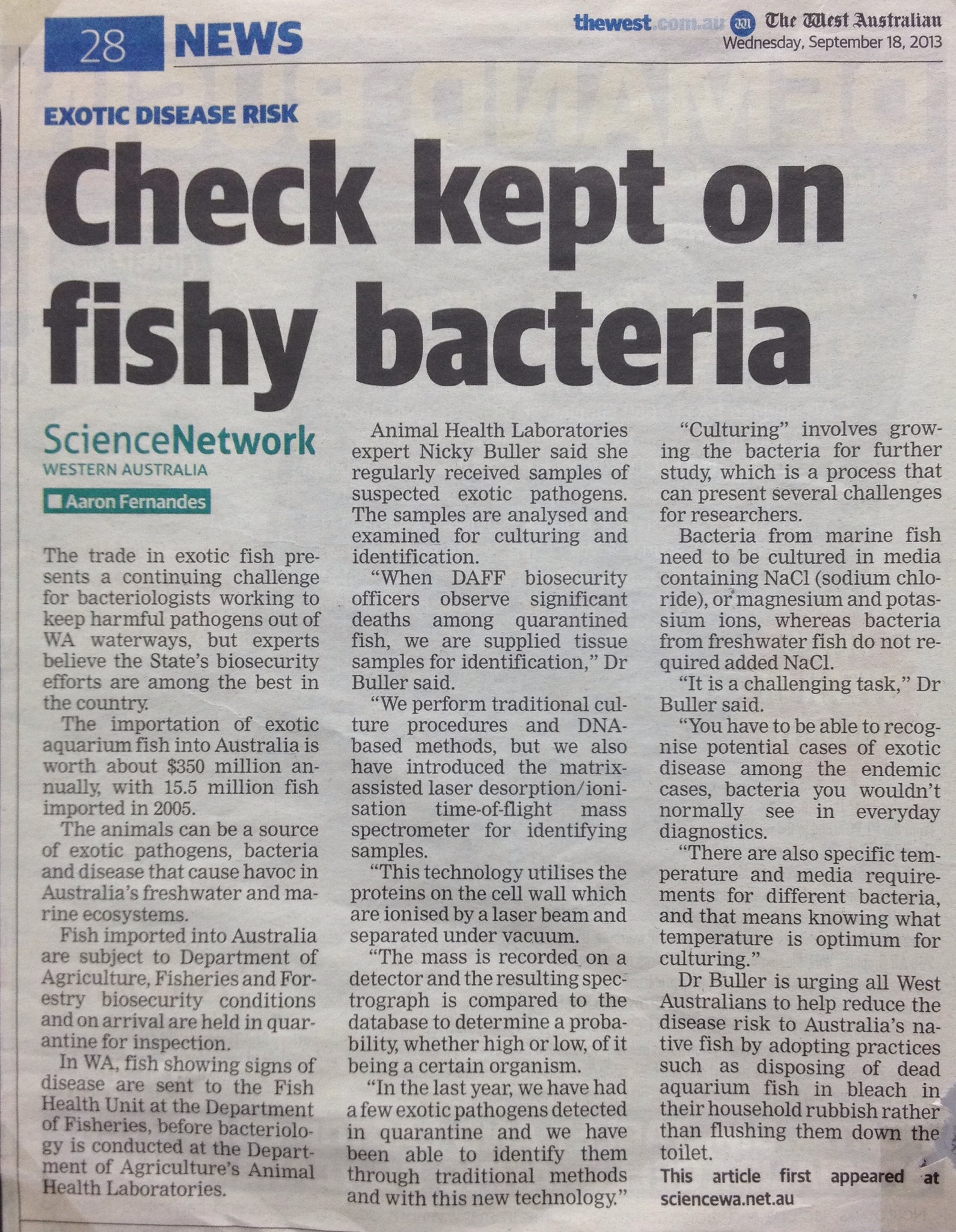
Q: How do fish watch internet videos?
A: They stream.