Shark deterrents can t eliminate attacks – Yahoo7
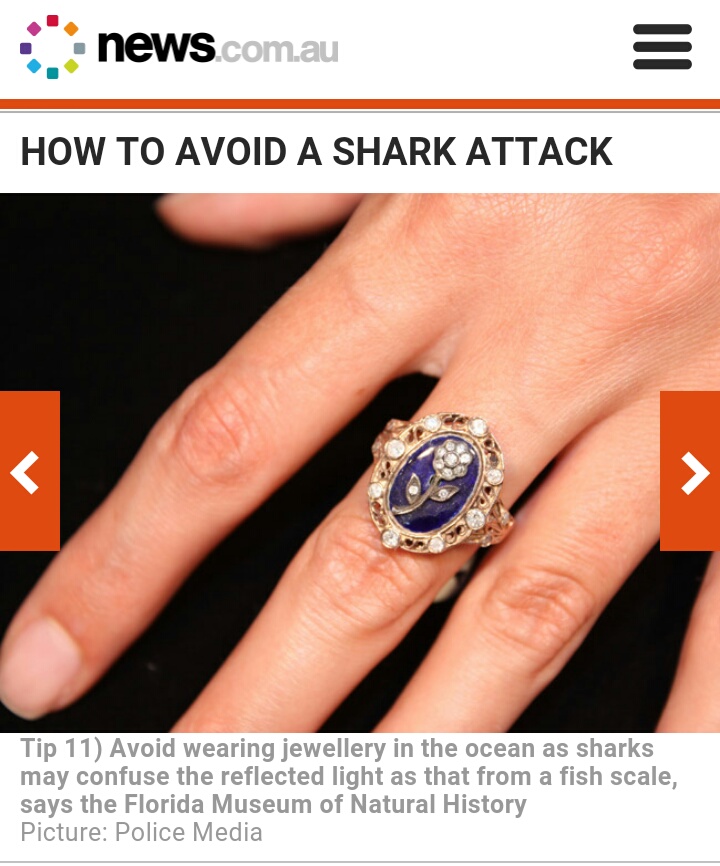
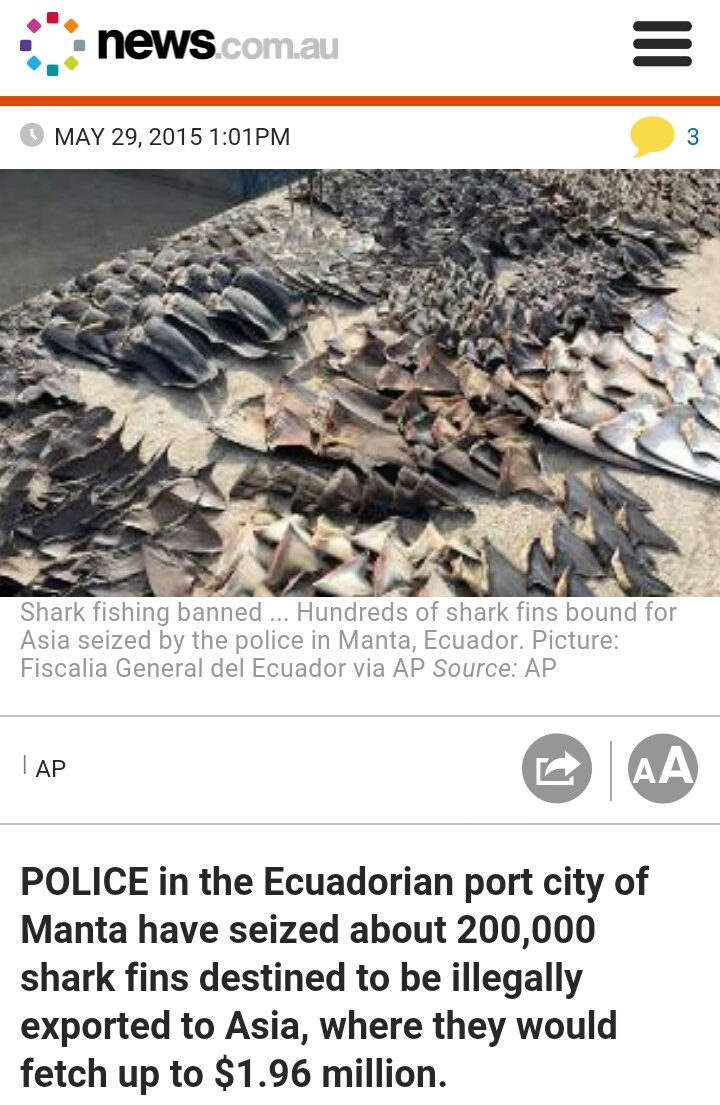
Preliminary research by the University of Western Australia’s Oceans Institute suggests electronic anklet devices, bubble curtains and loud sounds including killer whale calls have a limited or insignificant effect in deterring sharks.
But there are promising early results from testing of the surfboard-based Shark Shield, which emits electromagnetic pulses to deter a range of shark species including tiger sharks and white sharks.
Read more –
https://au.news.yahoo.com/technology/a/28480289/shark-deterrents-cant-eliminate-attacks/
2015 FRDC Aquatic animal health technical forum and skills training workshop.
Held at the James Cook University (JCU), this forum is for Aquatic Animal Health technical/laboratory specialists. It includes presentations and skills development sessions, a way to facilitate the dissemination of information on, and results from, aquatic animal health research and development, and practice.
One full day of learning down and 1.5 more days ahead.
Check out the sights at this link.
Upcoming posts will have my learnings from this event.
Follow me on: Facebook "Fin Page" – YouTube – Blog – Linkedin – Twitter
—
Yours sincerely,
Dr Richmond Loh DipProjMgt, BSc, BVMS, MPhil (Pathology), MANZCVS (Aquatics & Pathobiology), CertAqV, CMAVA, NATA Signatory.
THE FISH VET, Perth, Western Australia, AUSTRALIA.
Mobile Aquatic Veterinary Medical & Diagnostic Services.
http://www.thefishvet.com.au
Ph: +61 (0)421 822 383

Skype: thefishvet
President WAVMA 2014

Adjunct Lecturer Murdoch University | Secretary Aquatic Animal Health Chapter – ANZCVS.
Looking for more books? Check out this site.
See advert on YouTube.
Regular Care and Maintenance of a Zebrafish (Danio rerio) Laboratory: an instructional video.
This is an interesting way for publishing in a journal. The video shows how to clean, disassemble and assemble a zebrafish system.
In general, a good effort at detailing how it is done, though there are a few inaccuracies. See what you think of it –
https://www.jove.com/video/4196/regular-care-maintenance-zebrafish-danio-rerio-laboratory-an
Follow me on: Facebook "Fin Page" – YouTube – Blog – Linkedin – Twitter
—
Yours sincerely,
Dr Richmond Loh
DipProjMgt, BSc, BVMS, MPhil (Pathology), MANZCVS (Aquatics & Pathobiology), CertAqV, CMAVA, NATA Signatory.
THE FISH VET, Perth, Western Australia, AUSTRALIA.
Mobile Aquatic Veterinary Medical & Diagnostic Services.
http://www.thefishvet.com.au
Ph: +61 (0)421 822 383
Skype: thefishvet
President WAVMA 2014
Adjunct Lecturer Murdoch University | Secretary Aquatic Animal Health Chapter – ANZCVS.
See advert on YouTube.
What’s the difference between a turtle, a tortoise and a terrapin? Are the Teenage Mutant Ninja Turtles, turtles?
So I was watching an old episode of TMNT (oh the memories of the good old days) and I started thinking about this.
My take on it – turtles have flippers or webbed feet, and they live most of their lives in, or around water. An example of one with flippers is the leatherback turtle. One with webbed feet is the oblonga turtle.
Tortoises have feet that resemble elephants’, and they have a terrestrial existence. Am example is the giant gallapagos tortoise.
The Americans have a third category – Terrapins. Terrapins are webbed-footed and live in and near water. An example is the red-eared slider terrapin.
So now to address the REAL question.
Are the Teenage Mutant Ninja Turtles, really turtles? They live in sewers but are completely terrestrial. They don’t have webbed feet or fingers either. So, I’d say that they should really be called Teenage Mutant Ninja Tortoises.

Addendum added 20/6/2015 :
Now watching the latest movie… They are actually red-eared sliders (Trachemys scripta elegans), also known as red-eared terrapin. It is the most popular pet turtle in the United States and is also popular as a pet in the rest of the world.
Warning! Your pond fish may be becoming diseased at this time. How can you prevent this?
I’ve had a few clients with fish dying at this time of the year. It’s not surprising because it’s only now that the weather is getting cold in Perth. I suspect the dropping temperature is causing poor immunity, and secondary bacterial infections result.
What you can do to prevent this?
Check water parameters and biofilter are OK. Then add vitamin C (in water, or in food) and reduce osmoregulatory stress by increasing salinity to 2-5g/L.
Failing this, get them vet checked before we get into the really cold part of winter.
Follow me on: Facebook "Fin Page" – YouTube – Blog – Linkedin – Twitter
—
Yours sincerely,
Dr Richmond Loh
DipProjMgt, BSc, BVMS, MPhil (Pathology), MANZCVS (Aquatics & Pathobiology), CertAqV, CMAVA, NATA Signatory.
THE FISH VET, Perth, Western Australia, AUSTRALIA.
Mobile Aquatic Veterinary Medical & Diagnostic Services.
http://www.thefishvet.com.au
Ph: +61 (0)421 822 383
Skype: thefishvet
President WAVMA 2014
Adjunct Lecturer Murdoch University | Secretary Aquatic Animal Health Chapter – ANZCVS.
See advert on YouTube.
Fish joke for Monday-itis: Who do dugongs mentor?
Man(a)tees.
Have a FINtastic week!
R <+>{
@thefishvet has now 1000 followers!
Yay!
—
Yours sincerely,
Dr Richmond Loh
DipProjMgt, BSc, BVMS, MPhil (Pathology), MANZCVS (Aquatics& Pathobiology), CertAqV, NATA Signatory.
THE FISH VET, Perth, Western Australia, AUSTRALIA.
Mobile Aquatic Veterinary Medical & Diagnostic Services.
http://www.thefishvet.com.au
Ph: +61 (0)421 822 383

Marit Solberg; “We have to farm more fish”
DID you know that…
Although 70% of the planet is ocean, only about 2% of the world’s food supply comes from the seas!
Check this out:
Marit Solberg; “We have to farm more fish”
https://www.linkedin.com/pulse/marit-solberg-we-have-farm-more-fish-salvador-meza
Sent from LinkedIn for Android
—
Yours sincerely,
Dr Richmond Loh
DipProjMgt, BSc, BVMS, MPhil (Pathology), MANZCVS (Aquatics& Pathobiology), CertAqV, NATA Signatory.
THE FISH VET, Perth, Western Australia, AUSTRALIA.
Mobile Aquatic Veterinary Medical & Diagnostic Services.
http://www.thefishvet.com.au
Ph: +61 (0)421 822 383
Sent from my Sony Xperia™ smartphone