The Queensland Government has bought a massive Cape York cattle station in a bid to stem hundreds of thousands of tonnes of sediment pollution flowing into the Great Barrier Reef every year.
Mr Heath added: "Sediment is mud… it clouds the water, preventing the reef from photosynthesising. Corals need light to survive and mud kills the light."
Skin Diseases in Ornamental Fish – FREE Webinar by WAVMA
Join us on Tuesday 19 July, 2016 at 23:00 Perth time (15:00 GMT/UTC) for this free webinar.
Click on http://tinyurl.com/jr5uuvl to see the time in your local time zone, anywhere around the world.
Register now (even if you cannot make the live event)! Simply click on https://attendee.gotowebinar.com/register/675400681447920897
About this webinar: This presentation will cover the anatomy of the fish skin and how this relates to disease, and will highlight the main groups of skin diseases (parasites, bacteria, fungus and viral) in ornamental fish, and how to diagnose them. Other non-infectious processes that cause skin pathology will also be discussed, including possible treatments.
About the speaker: Dr Matt Metselaar received his veterinary degree from the University of Utrecht in Holland in 2007, and has extensive experience dealing with ornamental fish, and as a koi veterinarian for many years. Like many fish veterinarians, he is also a keen aquarist. He currently works for the Fish Vet Group focusing on minor food species such as trout, tilapia, yellow tail and seabass. More recently he has taken an active role in the R&D, with investigations leading to fish vaccines and treatments, as well as specific biocides used in aquatics.
This webinar is suitable for veterinarians, vet techs/nurses, vet students and veterinary practice staff.
Feel free to forward this announcement to colleagues.
Register now (even if you cannot make the live event)!
Follow me on: Facebook "Fin Page" – YouTube – Blog – Linkedin – Twitter
—
Yours sincerely,
Dr Richmond Loh
DipProjMgt, BSc, BVMS, MPh (Pathology), MANZCVS (Aquatics & Pathobiology), CertAqV, CMAVA, NATA Signatory.
Aquatic Veterinarian & Veterinary Pathologist
THE FISH VET, AUSTRALIA – PERTH | MELBOURNE | TOWNSVILLE
Mobile Aquatic Veterinary Medical & Diagnostic Services.
http://www.thefishvet.com.au
Ph: +61 (0)421 822 383

What’s the difference between a veterinarian and a scientist?
I was speaking to a colleague/friend the other day, and it occurred to me, this question. What’s the difference between a vet and a scientist?
We were talking about dose rates and I said, "Point-O-one mils."
To which he clarified, "Is that ten microlitres?"
At The Fish Vet, we work hand-in-hand with those who are "point-O-ones", and those who are "microlitres". This is how we’re able to deliver you comprehensive services in our one-stop-shop, with our team.
Find out how we can help you by downloading our services manual below :
TFV Services and Fees 2016.pdf
—
Yours sincerely,
Dr Richmond Loh
DipProjMgt, BSc, BVMS, MPhil (Pathology), MANZCVS (Aquatics& Pathobiology), CertAqV, NATA Signatory.
Aquatic Veterinarian & Veterinary Pathologist.
PERTH | MELBOURNE | TOWNSVILLE
THE FISH VET – AUSTRALIA.
Aquatic Veterinary Medical & Diagnostic Services.
http://www.thefishvet.com.au
Ph: +61 (0)421 822 383
Should veterinarians have a formal role in human clinical medicine?
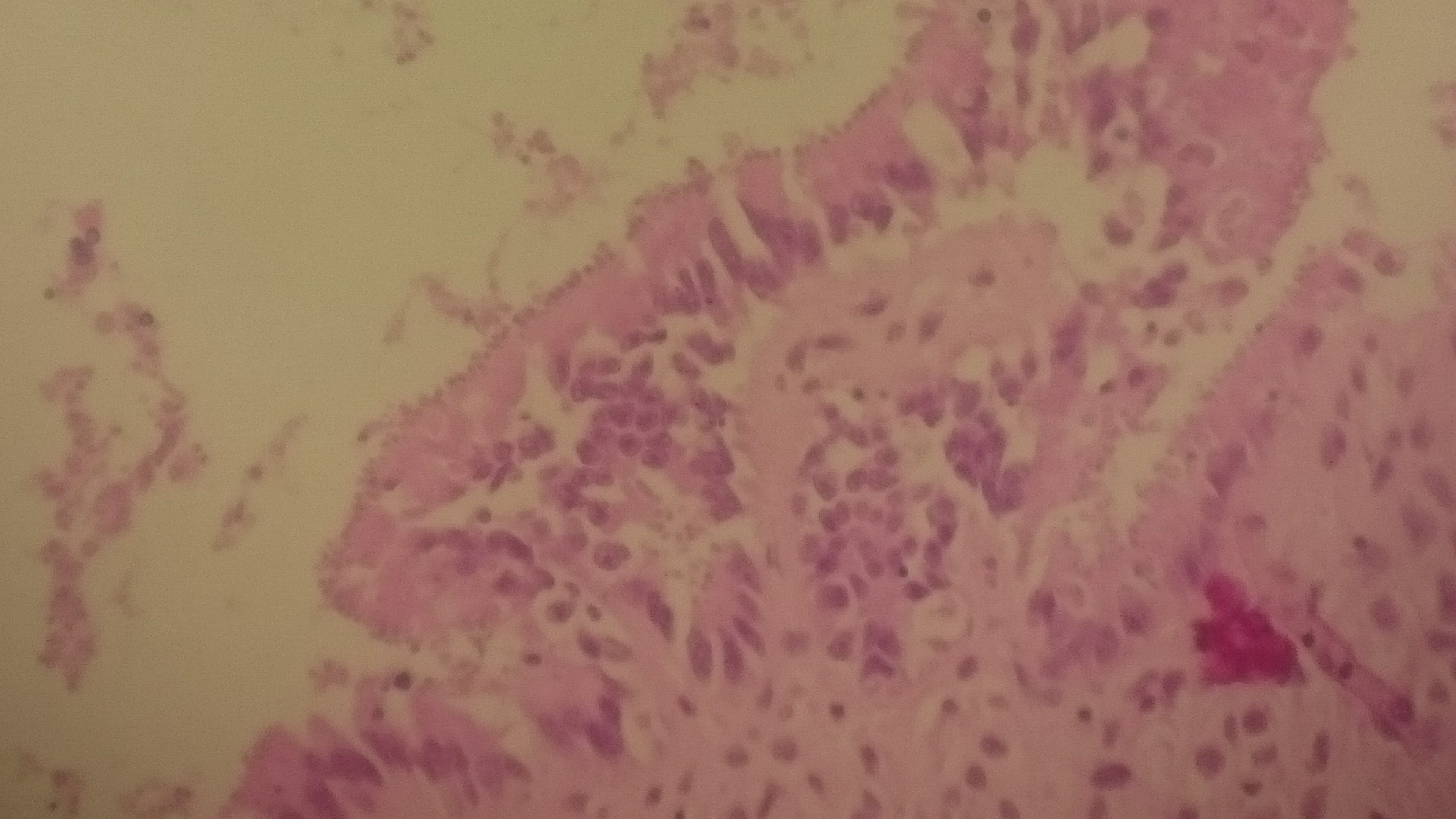
This is such a timely article published in the Australian Veterinary Journal. Just last week I diagnosed Cryptosporidia in an owner’s fish (pictured are the bugs, represented by little blue blebs on the surface of the gut cells). Now that the owner is armed with this knowledge, they will return to their GP, to assess the risk of the fish’s bug, infecting the owner, and their family.
Some pertinent points from the article are included below:
The term ‘Clinical One Health’ is used to describe a new paradigm of veterinarians assisting doctors to more effectively manage patients suffering from a zoonotic disease or other animal-related clinical condition.
“In reality, if vets had a more formal role in clinical medicine, the professional separation between doctors and veterinarians in Australia would decrease and implementation of One Health activities would increase,” Dr Speare said.
“The exchange of pathogens between animals and humans is becoming increasingly complex, so it’s difficult to determine whether they belong to humans or animals.
“Vets can help patients understand their disease, how they may have acquired it, how they can reduce their chances of getting it again, and more importantly how the hazard to their family, work colleagues or others sharing the same risks could be reduced.
Read more here –
http://www.ava.com.au/13575
Find out more about the origins of One Health – here.
—
Yours sincerely,
Dr Richmond Loh
DipProjMgt, BSc, BVMS, MPhil (Pathology), MANZCVS (Aquatics& Pathobiology), CertAqV, NATA Signatory.
Aquatic Veterinarian & Veterinary Pathologist.
PERTH | MELBOURNE | TOWNSVILLE
THE FISH VET – AUSTRALIA.
Aquatic Veterinary Medical & Diagnostic Services.
http://www.thefishvet.com.au
Ph: +61 (0)421 822 383
Fish joke for Monday-itis: you may know about the story of the fish swimming into the wall….but,
Q: What did the fish say when he swam into the Pope’s boat?
A: Holy ship!
Have a FINtastic week! R <+>{
Beginners guide to aquascaping.
Check this out –
https://www.aquascapeaddiction.com/articles/aquascaping-for-beginners
—
Yours sincerely,
Dr Richmond Loh
DipProjMgt, BSc, BVMS, MPhil (Pathology), MANZCVS (Aquatics& Pathobiology), CertAqV, NATA Signatory.
PERTH | MELBOURNE | TOWNSVILLE
THE FISH VET – AUSTRALIA.
Mobile Aquatic Veterinary Medical & Diagnostic Services.
http://www.thefishvet.com.au
Ph: +61 (0)421 822 383
Can you eat, colourful, pretty fish?
I was asked a question not long ago about this, " Just the other day I was wondering is there a reason why humans can’t eat colourful fish? The fish that we eat are usually just silvery in colour."
The short answer is that as long as the fish is not poisonous, there is no reason why you cannot eat a fish. Having said that, skilled Japanese chefs do prepare the poisonous fugu fish for eating!
There are lots of pretty colourful fishes that people eat. See pictured is a the beautiful coral trout at my local fish market.

Moreover, the very fancy, venomous lionfish are being served in many restaurants (see http://www.reef.org/restaurants) because they’ve reached menacing plague proportions in the wild.
Humans can eat colourful fishes. The grey/silvery fishes are what’s more commonly available, I think because these are schooling fish, and they can be caught in large numbers by net.
—
Yours sincerely,
Dr Richmond Loh
DipProjMgt, BSc, BVMS, MPhil (Pathology), MANZCVS (Aquatics& Pathobiology), CertAqV, NATA Signatory.
Aquatic Veterinarian & Veterinary Pathologist.
PERTH | MELBOURNE | TOWNSVILLE
THE FISH VET – AUSTRALIA.
Aquatic Veterinary Medical & Diagnostic Services.
http://www.thefishvet.com.au
Ph: +61 (0)421 822 383
Soon to be released: Ornamental Fishes and Aquatic Invertebrates: Self-Assessment Color Review, Second Edition.
Dated for a September 2016 release, pre-order your book/s now!
Features
Contributions from experts from around the world (including from Dr Richmond Loh, The Fish Vet 🙂
All new cases
Summary
This is a new edition in the Self-Assessment Colour Review series that covers ornamental fish. It includes 200 colour illustrated cases in random order, as they would be presented in practice. It presents questions based on each case with answers that fully explore the disease/disorder. This new edition contains 250 new cases. The book should appeal to candidates preparing for examinations and to practitioners in their continuing education.
Order yours at: https://www.crcpress.com/Ornamental-Fishes-and-Aquatic-Invertebrates-Self-Assessment-Color-Review/Lewbart/p/book/9781482258868
Use promo code EMQ61 to save 15%, and receive FREE shipping!
Follow me on: Facebook "Fin Page" – YouTube – Blog – Linkedin – Twitter
—
Yours sincerely,
Dr Richmond Loh
DipProjMgt, BSc, BVMS, MPh (Pathology), MANZCVS (Aquatics & Pathobiology), CertAqV, CMAVA, NATA Signatory.
Aquatic Veterinarian & Veterinary Pathologist
THE FISH VET, AUSTRALIA – PERTH | MELBOURNE | TOWNSVILLE
Mobile Aquatic Veterinary Medical & Diagnostic Services.
http://www.thefishvet.com.au
Ph: +61 (0)421 822 383
Skype: thefishvet
President WAVMA 2014
Adjunct Lecturer Murdoch University
Looking for more books? Check out this site.
See advert on YouTube.

Workshop on identification of bacteria from fish and other aquatic animals.
Dr Nicky Buller, Senior Microbiologist at the Department of Agriculture and Food in Western Australia, is running a workshop at the Australian Society for Microbiology (ASM) conference being held in Perth in July. The workshop is for 2 hours on Sunday 3rd July and cost is $30 for members of $50 for those not attending the conference. Please see below for information regarding the workshop, and a website link to registration.
For a sneak preview on her expertise, watch this webinar – https://www.wavma.org/Webinars/B-1009-Techniques-for-collection-culture-and-identification-of-bacteria-from-aquatic-animals
Workshop title: Identification of bacteria from fish and other aquatic animals
Name(s) of person chairing the workshop: Dr Nicky Buller
· Workshop description – This workshop covers identification of bacteria from fish and other aquatic animals from freshwater and marine environments. The emphasis will be on biochemical methods, but the use of polymerase chain reaction (PCR) and matrix assisted laser desorption ionisation time of flight mass spectrometry (MALDI-TOF) will be discussed. Participants will learn the importance of using appropriate isolation media and incubation temperatures to isolate pathogens from different host species. Bacteria covered include Aeromonas species, Vibrio species, Flavobacterium species, Tenacibaculum maritimum, Photobacterium species,Streptococcus species (S. agalactiae and S. iniae), and biosafety issues from zoonotic bacteria when culturing tissues from marine mammals. A presentation will be incorporated with demonstration and practice for interpretation of biochemical reactions. A range of bacterial cultures will be available for participants to observe.
The workshop is aimed at students, scientists and researchers who are working or studying in the area of aquaculture or diagnostic methods for aquatic animals.
http://asm2015.asnevents.com.au/programs/workshops/
For further enquiries please contact nicky.buller
Follow me on: Facebook "Fin Page" – YouTube – Blog – Linkedin – Twitter
—
Yours sincerely,
Dr Richmond Loh
DipProjMgt, BSc, BVMS, MPh (Pathology), MANZCVS (Aquatics & Pathobiology), CertAqV, CMAVA, NATA Signatory.
Aquatic Veterinarian & Veterinary Pathologist
THE FISH VET, AUSTRALIA – PERTH | MELBOURNE | TOWNSVILLE
Mobile Aquatic Veterinary Medical & Diagnostic Services.
http://www.thefishvet.com.au
Ph: +61 (0)421 822 383
Skype: thefishvet
President WAVMA 2014
Adjunct Lecturer Murdoch University
Looking for more books? Check out this site.
See advert on YouTube.
Funds needed to complete research into stress response in sharks after capture and handling.
On behalf of Dr Michael Hyatt, the veterinarian at Adventure Aquarium in Camden, NJ.
I along with my Co-author, Paul Anderson, a research scientist with Mystic Aquarium, have been studying the stress response in sharks after capture and handling. Our current research, on how temperature, salinity and dissolved oxygen may exacerbate the stress response in bull and bonnethead sharks, is almost complete. We are hoping our work will help guide the formulation of capture and handling recommendations to minimize acute and delayed mortality of captured sharks in commercial and recreational fisheries, and in fisheries research.
Field work and sample collection has been completed; we have developed a data set on 61 bull and 93 bonnethead sharks that were captured and handled for fisheries research in the Rookery Bay National Estuarine Research Reserve (Naples, FL) over a 4 year period. Data analysis has not yet been completed.
To finish this experimental project and submit for publication, we need $5,000 in order to conduct statistical analyses and reporting to determine the effects of water quality parameters on the stress response due to capture and handling.
Today, we are launching a crowdfunding campaign on Experiment to raise support for our research: https://experiment.com/sharkstress. Once we complete the statistical analyses, we’ll be sharing every step of the scientific process from the field to the lab, on our project page. It’s a very unique experience and we are lucky to have a chance to share this with you. Once we’re ready to publish our results, we’ll thank all of our backers in our paper.
We are reaching out to ask for your support. If you can’t donate directly, could you please take a moment to share our project? Even just a social media post, or emailing the project to any friends, family, or colleagues interested in science and the environment will help finish this amazing project.
If you have any additional questions about the research, or how this works, we’ll be happy to answer them. Thanks for supporting this science, it won’t be possible without you!
Learn more about our project at: https://experiment.com/sharkstress
Best regards,
Mike
Michael Hyatt, DVM
Adventure Aquarium
Camden, NJ
WAVMA – 2006 to 2016
10 Years of Advocacy for Aquatic Veterinary Medicine!