42nd Annual Eastern Fish Health Workshop

Michigan State University, East Lansing, MI, USA.

April 3-7, 2017.


The 42nd Annual Eastern Fish Health Workshop is at the Kellogg Hotel & Conference Center in East Lansing, MI. Registration begins at our annual reception on Monday, April 3 from 5:00 to 7:00 pm, and is followed by an evening of interesting, bewildering, and bemusing case reports. There will be three full-day sessions (April 4-6), followed by a full-day continuing education course on Friday, April 7. We encourage contributions for oral presentation of case reports and research investigations that are pertinent to animal health within marine and freshwater environments. There are no poster sessions.


For the first time, the EFHW will be held in Michigan, a state which fittingly boasts the longest freshwater coastline of any political subunit in the world and where a person is always within 6 miles of a stream, lake, river, or natural waterbody. The Michigan State University Aquatic Animal Health Laboratory (MSU-AAHL) has been a longstanding supporter of the EFHW and is proud to host the annual meeting in Spartan Country. We have plans to offer tours of MSU’s campus that will include the veterinary diagnostic and other related laboratories, as well as optional organized excursion(s) that showcase some of Michigan’s delights. The banquet and Best Student Presentation award will be on Thursday night, when there is never a shortage of dancing – not to be missed.


We will continue to use the general email address (TheEFHW@gmail.com) to correspond with folks; however, if you need to reach any one of us, please feel free to contact us directly.


Call for General Session Titles and Abstracts: To guarantee a place on the program, please return a tentative title for your abstract and presentation via email as soon as possible. Do this by completing the appropriate sections of the Word attachment titled “42 efhw title form.” If you are presenting a diagnostic case, please indicate your tentative title that you would like included in our special session titled: “The Aquatic Detective.”


Abstracts must be submitted by 21 February 2017. Email abstracts toTheEFHW@gmail.com. Please follow the direction for preparation of abstracts and presentations (see attachment). Your attention to these guidelines is greatly appreciated. PowerPoint presentations are due 20 March 2017.


Best Student Paper Presentation: The Eastern Fish Health Workshop will present $200 and a plaque for the Best Student Presentation. Eligible individuals must be currently enrolled in an undergraduate or graduate research program and present his/her own research. The award will be presented at our Banquet and the recipientmust be present. In order to be considered for this award, you must register by completing the appropriate section of the “42 efhw title form” attachment.


Registration

$200 registration fee (U.S. dollars) includes a reception on Monday evening with heavy hors d’oeuvres, workshop proceedings, refreshments at breaks, buffet breakfasts and luncheons on each of the three full days of the workshop (Tuesday, Wednesday, Thursday), and dinner at the Banquet on Thursday night. That’s a steal for $ 200!!! Make checks payable to the “Eastern Fish Health Workshop” and return payment with your registration formpostmarked by 21 February 2017. The late registration fee of $35 (U.S. dollars) is charged if postmarked after this date (for a total registration fee of $235, if late). The EFHW does not accept credit cards and there are no daily or discounted registrations. Please ensure that you mail your registration form and check to Dr. Roy Yanong.


Lodging

Individual accommodations start at $108/night and must be made with the Kellogg Hotel & Conference Center in East Lansing, Michigan. You can make reservations online or by phone. Please call the hotel at 1-800-875-5090 and use either the code 1704FISHHE or Block NameEastern Fish Health Conference. You may also go online to www.kelloggcenter.com, click Reservations in the link at the top, and fill in the dates, rooms, and number of people. Select “Click Here for Special Rates” and enter the Group Code: 1704FISHHE. In order to secure reservations, please make reservations with the Kellogg Hotel before March 3, 2017.


The Kellogg Hotel is located on the Michigan State University campus in the heart of East Lansing. Lansing’s Capital Region International Airport is only eight miles away. The hotel offers a shuttle to the Lansing Capital Region International Airport, but it must be reserved ahead of time. Attached to this email are instructions for reserving this shuttle.https://kelloggcenter.com/ The Detroit airport is located approximately 1.5 hours away and may offer more flights. A bus service between the Detroit airport and Downtown East Lansing is offered throughwww.michiganflyer.com.


Important Deadlines:

Call for Abstracts: now open

Abstracts Due By: 21 February 2017

Registration due by (postmarked): 21 February 2017 (to avoid the late fee)

PowerPoints due: 20 March 2017

Hotel Reservation due by: 3 March 2017


Please use the following email address for submission of title forms, abstracts, PowerPoints, and any specific questions:TheEFHW@gmail.com. Please use snail mail (regular postal services) to send registration forms AND checks to Dr. Roy Yanong.


CE Sessions Planned for Upcoming Fish Health Meetings

The QA/QC committee of the FHS is pleased to announce two upcoming continuing education sessions on Quality Management System Training at the Fish Health Section Meeting (April 7, 2017) and again at the Western Fish Disease Workshop (June 20, 2017).


These sessions will be taught by Dr. Kelly Burkhart, microbiologist and quality management trainer with the National Animal Health Laboratory Network (NAHLN). Topics to be covered include: document writing and control, record keeping, training, equipment, corrective action, root cause analysis and internal audits. The training will be RACE-approved for veterinarians requiring continuing education hours.


This training should be valuable for all aquatic animal health laboratories, and especially those who are participating in the QA/QC recognition program of the FHS. Quality Management Training like this will likely be a requirement of the upcoming Tier 2 process, but this training would be of benefit to those just starting Tier 1, or those labs just contemplating entering the process in the future.


And for those of you sending in those samples to the lab? Field pathologists, inspectors and technicians should not feel left out! This workshop will give you training on the documentation required for the samples that you send, and insight in to the care that should be taken in processing them to give you confidence in the results.


For more information on the April session, contact Mark Fast at mfast@upei.ca.


For more information on the June session, contact Marcia House at mhouse@nwifc.org

Australia slammed for risking global food security by releasing KHV.

​This article mirrors what a lot of Australian scientists and veterinarians think and say, but powerless to exert any effect. Seems like there’s no stopping this train wreck.
We do not live in isolation. Despite the enormously stringent quarantine rules…

Question: How did the killer prawn WSSV come to create outbreaks in Australia? Read more of the devastating crustacean disease at this link.

Another question: How did the new strain of the killer rabbit haemorrhagic virus enter Australia?

And another: How did the tomato potato psyllid (link) come to cause havoc in Perth (Western Australia), the most isolated city in the world? 

If such disease can arrive our shores, how can we assure other countries that the KHV released in Australia, won’t mutate into more virulent strains, and then escape our country to kill carp and koi, where these fish are vital to people’s livelihoods? 
Read more of the article at this link.

Share your comments. 
For more information and discussions on KHV, use the search field, or click on this link.

Fish joke for Monday-itis: tank.

​Two fish were in a tank,  one said to the other,  “Do you know how to drive this?”

With thanks to BT. 
Have a FINtastic week! R <+>{

Perfect mosquito breeding conditions.

Following widespread rainfall and recent flooding events across Western Australia, the Department of Health has issued a press release stating the substantial rainfall combined with higher temperatures had created perfect mosquito breeding conditions.

Read also, article on Dengue Fever.

And on Ross River virus

Marlborough salmon relocation

​There’s news of the potential moving of salmon leases in New Zealand. Maybe due to global warming, this move may help stock cope with elevated water temperatures.

They probably need to get to cooler waters, or have increased passive water flow to cater for lower DO that comes with warmer waters.

It may be a plus or minus, for the local communities – bring jobs for locals, but may be eye-sore, competing with tourists.

We hope they’ll do due diligence from the biosecurity perspective 


Closing Date for comments: 27 Mar 2017

More information at: http://mpi.govt.nz/news-and-resources/consultations/marlborough-salmon-relocation/

FEVER – Fish have them too.

“A healthy fish is very proud, very pretty to look at,” he says. Infected fish, on the other hand, would lie at the bottom of the tank, their fins limp and bodies secreting a cloud of mucus.

In the process of that research, they noticed that sick fish would huddle around the aquarium heater – in what’s termed “Behavioural fever”. 


The heat could help them fight infection. 

Read more here – 

In Studying Sick Fish, Scientists Trace History Of Fevers  

​The Fourth FRDC Australasian Scientific Conference on Aquatic Animal Health & Biosecurity will be held in Cairns, Queensland, Australia.

 The conference provides a forum for presentation of research, diagnostic, epidemiology, management and policy issues encompassing all areas of aquatic animal health and bio-security. Previously, the Fisheries Research and Development Corporation’s Aquatic Animal Health Subprogram has organized national scientific conferences (in 2003, 2005, 2007 and 2009) and Australasian scientific conferences (2011, 2013 and 2015) featuring presentations on aquatic animal health research in Australia and an international aquatic animal health expert as the keynote presenter. We anticipate that the Fourth Australasian Scientific Conference on aquatic Animal Health will attract participants from New Zealand, SE Asia and beyond.

We are pleased to announce that the conference keynote speakers will be Dr Grant Stentiford, Director, European Union Reference Laboratory for Crustacean Diseases, Team Leader, Pathology and Molecular Systematics at Centre for Environment, Fisheries and Aquaculture Science (Cefas) Weymouth Laboratory, United Kingdom, and Dr Brian Jones, A/Manager, Bacteriology and Aquatic Animal Health, Ministry of Primary Industries, New Zealand, Adjunct Professor, Murdoch University, Western Australia, Australia.

In this second conference announcement you will find information about registration, abstract forms and accommodation details. Please register for the conference through Joanne Slater, FRDC Aquatic Animal Health Subprogram Coordinator (email: joanne.slater@csiro.au). Conference delegates will need to make their own accommodation arrangements.

If you have any queries with respect to any aspect of the conference please contact Joanne Slater or Mark Crane (mark.crane@csiro.au).

The proposed conference program will in part depend on the range of topics received as abstracts but we anticipate that it will at least include sessions on:
Bacterial and Fungal Infections of Finfish

Finfish Viruses

Finfish Parasites

Finfish Immunology & Vaccines

Diseases of Molluscs

Diseases of Crustaceans

Immune Responses in Invertebrates

Emergency Response

Biosecurity

The Fish Vet’s make some Finchat. 

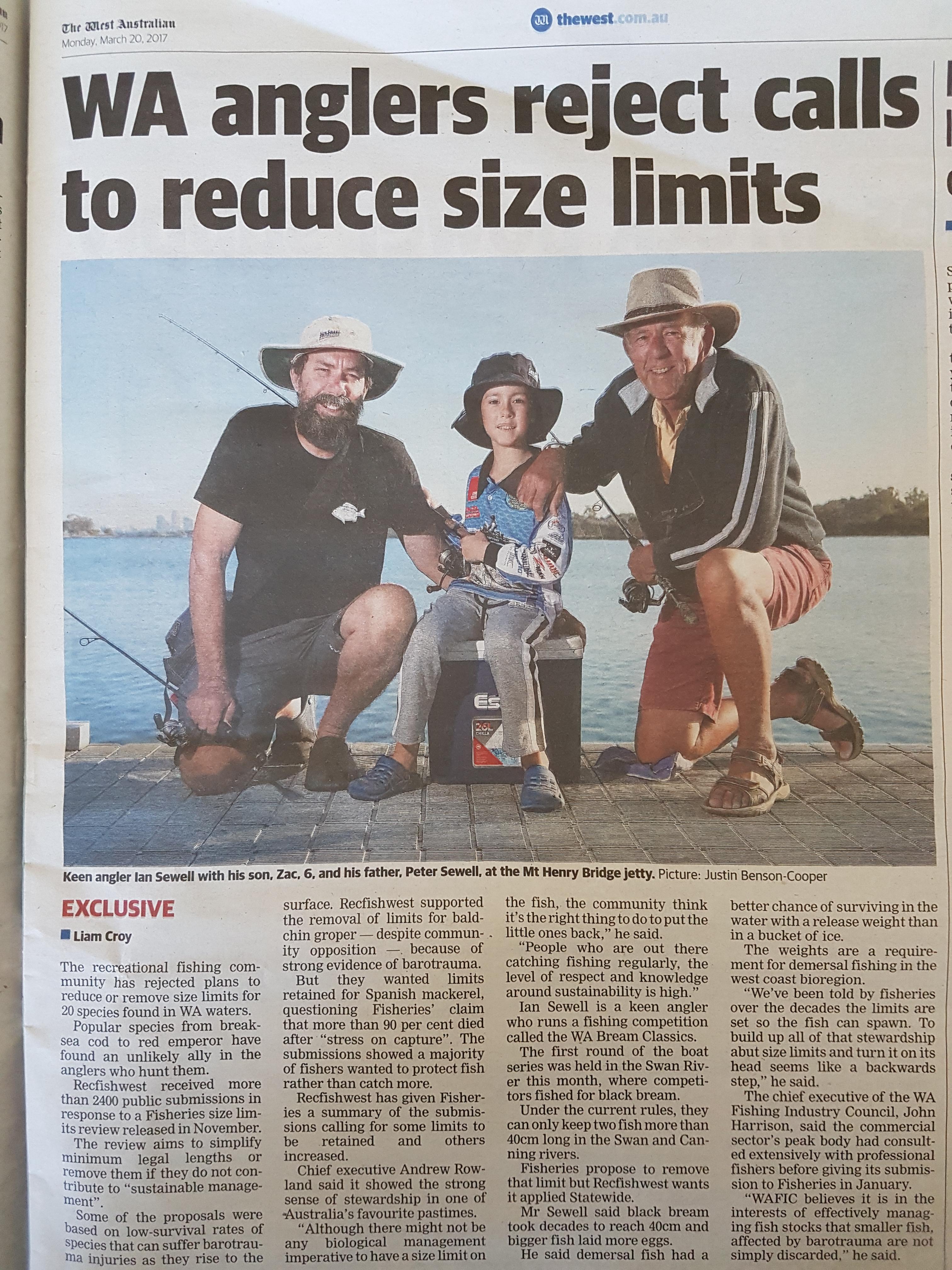
​We made a splash in Melbourne, and feature in the Combined Fish Clubs of Victoria ‘s publication.
An erratum on page 3

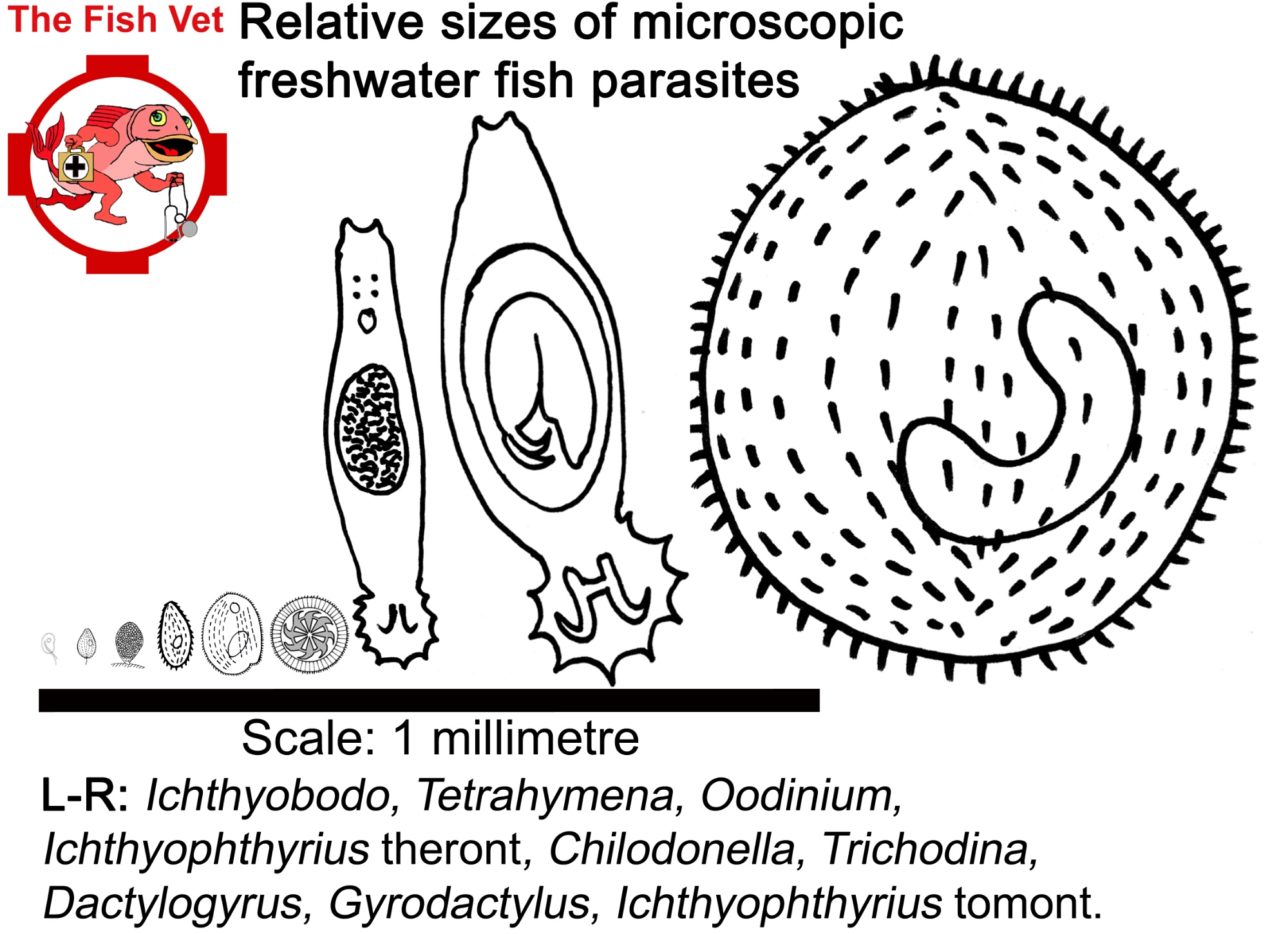
“Fish with ulcers due to Tetrahymena need to be culled because there’s no way of treating them. Sometimes they look like a white spot infection, but they penetrate deep within the fish tissue, even Into the brain.”

Fish with ulcers due to other causes (e.g. lice, anchor worm, flukes, bacteria, trauma, etc.) can be treated by various means, targeting the primary cause, together with symptomatic therapy.

The picture on page five looks like we’ve two heads in one body! Maybe Alistair and I have spent too much time in Tasmania 😛

Prawns help reduce parasites.

To end this week’s crusta-themed blogs on a good note, prawns are being introduced to help reduce parasites.

Read more here – http://www.bbc.com/news/science-environment-38571937


Yours sincerely,

Dr Richmond Loh
DipProjMgt, BSc, BVMS, MPhil (Pathology), MANZCVS (Aquatics& Pathobiology), CertAqV, NATA Signatory.

Aquatic Veterinarian & Veterinary Pathologist.
PERTH | MELBOURNE | SYDNEY | TOWNSVILLE | BRIBIE ISLAND.
THE FISH VET – AUSTRALIA.

Aquatic Veterinary Medical & Diagnostic Services.
http://www.thefishvet.com.au
Ph: +61 421 822 383