Sculptures by the Sea
Cottesloe Beach.

Fish Joke for Monday-itis
What do you call a fish that doesn’t tell the truth?
A lion (lyin’) fish!
Fish Vetting Medicines – Formulary of Fish Treatments
It is difficult to find information of what medicines to treat fish diseases. It is even more difficult to find information on the dose rate to use and in which circumstances. Many of the drugs veterinarians use in ornamental fish are used off-label and as such, there are often limited published data on what can be used, how and how much.
I have been compiling a fish formulary since 2001 and already it has almost 300 drugs listed. This handbook will be titled: Fish Vetting Medicines – Formulary of Fish Treatments (in prep).
This would make a perfect companion to Fish Vetting Essentials.
Sometimes, dose rates for one species may not be transferable to another species. One that I recently found issues with is the antibiotic, florfenicol in koi fish. I had been in consultation with my client, the World Aquatic Veterinary Medical Association (WAVMA) and with the drug representative. For everyone’s benefit, I have summarised my findings in the document provided in the link below from “Loh R. (in prep) Fish Vetting Medicines – Formulary of Fish Treatments“:
Fish Vetting Medicines – Formulary of Fish Treatments – Florfenicol
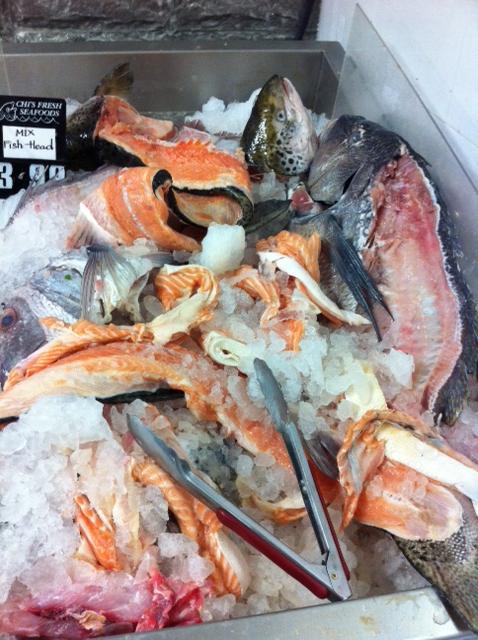
Loads of fish wasted!
Talk about wasted shark meat when only the fins are harvested…
Should we be eating whole fish, or just fillets? An estimated 8-10% of flesh is wasted (http://www.fao.org/wairdocs/tan/x5950e/x5950e01.htm). But if taking into account the skin, bones and head, then the total wastage would be as much as 45%
(http://www.academiabarilla.com/italian-recipes/how-to/filleting-salmon.aspx).
Should we learn to eat fish off the bone?
—
Yours sincerely,
Dr Richmond Loh
BSc BVMS MPhil MANZCVS (Aq & Pathol)
The Fish Vet, Perth, Western Australia.
Veterinary Medicine for fish.
http://www.thefishvet.com.au
Ph: +61 (0)421 822 383
International Abalone Symposium: 6-11 May 2012, Hobart, Tasmania, Australia.
———- Forwarded message ———-
From: <Joanne.Slater@csiro.au>
Date: Wed, Mar 7, 2012 at 7:49 AM
Subject: 8th IAS – Early Bird Registration Closes 26th March
To: Joanne.Slater@csiro.au
From: <Joanne.Slater@csiro.au>
Date: Wed, Mar 7, 2012 at 7:49 AM
Subject: 8th IAS – Early Bird Registration Closes 26th March
To: Joanne.Slater@csiro.au
Provisional Program OnlineThe International Abalone Symposium Provisional Program is now online and available to be viewed. Abstract submission and review is now complete however the organising committee will still consider poster abstracts from late submissions. If you wish to submit a poster abstract please email it to anna@cdesign.com.au.
Registration OpenFull registration to the conference entitles delegates to attend 4 full days of conference sessions including a stimulating range of theme discussions, poster, oral paper and workshop sessions and exciting social functions such as the Welcome Reception and Poster Evening. In addition each full delegate registration includes a 1 year free membership to the International Abalone Society!
|
|||||||||||||
|
Abalone Society 2012 Awards |
|||||||||||||
|
Nominations are now open for International Abalone Society 2012 Awards to be presented at the IAS2012 Symposium. There are two types of IAS award: (1) an IAS medal, to be awarded to researchers for an outstanding record of published contributions to abalone research, and (2) life membership of IAS, to be awarded to persons who have made extensive “career” contributions in areas such as abalone research, the abalone industry, abalone aquaculture, or the management or administration of any of the above. Note: Abalone research means research on abalone or other species that form part of an abalone’s niche (eg predator, prey, parasite, commensal, disease or associated organism). Nominations must include the nominee’s full name and title, the award for which they are nominated, a statement outlining the suitability of the candidate for the award, a CV containing all information relevant to the award, and the name and e-mail address of the person nominating the candidate. Nominations should be made by IAS members, which includes existing members plus anyone who has paid their full registration for the upcoming May 2012 Abalone Symposium. Nominations must be received by the IAS Secretary by 1 April 2012 at the following address: Rodney Roberts, SPATnz, Private Bag 2, Nelson 7042, New Zealand, rodney.roberts@spatnz.co.nz Up to 2 awards in each category will be presented at the IAS Symposium in Hobart in early May 2012.
|
|||||||||||||
|
Sponsorship Opportunities |
Important Dates |
||||||||||||
Support of the conference and exhibition will provide your organisation with a number of key benefits.
A variety of sponsorship packages are being offered. We also invite any new proposals you may wish to put forward; the Committee is happy to negotiate a package that will be of maximum benefit to your organisation and the Symposium.
Click HERE to download the IAS 2012 Sponsorship & Exhibition Prospectus
|
Mailing List
|
||||||||||||
|
Symposium Hosts |
|||||||||||||
|
Symposium Sponsors |
|||||||||||||
|
Visit the Symposium website for more information |
|||||||||||||
—
Now on: Twitter – Blog – Facebook – Linkedin – YouTube
—
Yours sincerely,Dr Richmond Loh
BSc BVMS MPhil (Vet Path) MANZCVS (Aquatics & Pathobiology) DipPM
BSc BVMS MPhil (Vet Path) MANZCVS (Aquatics & Pathobiology) DipPM
Veterinarian / Adjunct Lecturer Murdoch University / Secretary Aquatic Animal Health Chapter ANZCVS
The Fish Vet, Perth, Western Australia. Mobile Veterinary Service for fish and other aquatic creatures.
http://www.thefishvet.com.au
Ph: +61 (0)421 822 383
http://www.thefishvet.com.au
Ph: +61 (0)421 822 383
Put your axolotls in the fridge?
Brace yourselves for Perth’s eighth heat wave. With temperatures rising towards forty degrees Celsius, some aquatic critters like the Mexican walking fish may not be able to tolerate the heat without a chiller installed. Until you can get your hands on this, the fridge may be the only safe haven for them as a stop gap measure. Be sure to turn the refrigerator’s thermostat to 10-12 degrees Celsius and make sure there aren’t things in the fridge that will spoil.
One-way valves for air pumps could save you in more ways than one!
It is quite often that people have their air pumps located below the water level of aquaria and ponds. In such cases, by the action of siphon, water can actually be sucked into your air pump when the electricity is turned off. I’ve witnessed a couple of occasions where a simple, relatively inexpensive installation of one-way valves in the air line tubing would have come in handy.
As you know, water and electricity should not mix. The least of the worries is that you’ll have to replace the airpump and dry the wet carpet. The bigger worry is risking an explosion and possible electrocution!
So, if the set-up of your air pump is similar to what I’ve just described, make sure you go out and get yourselves some one-way valves now!
It will save you in more ways than one.
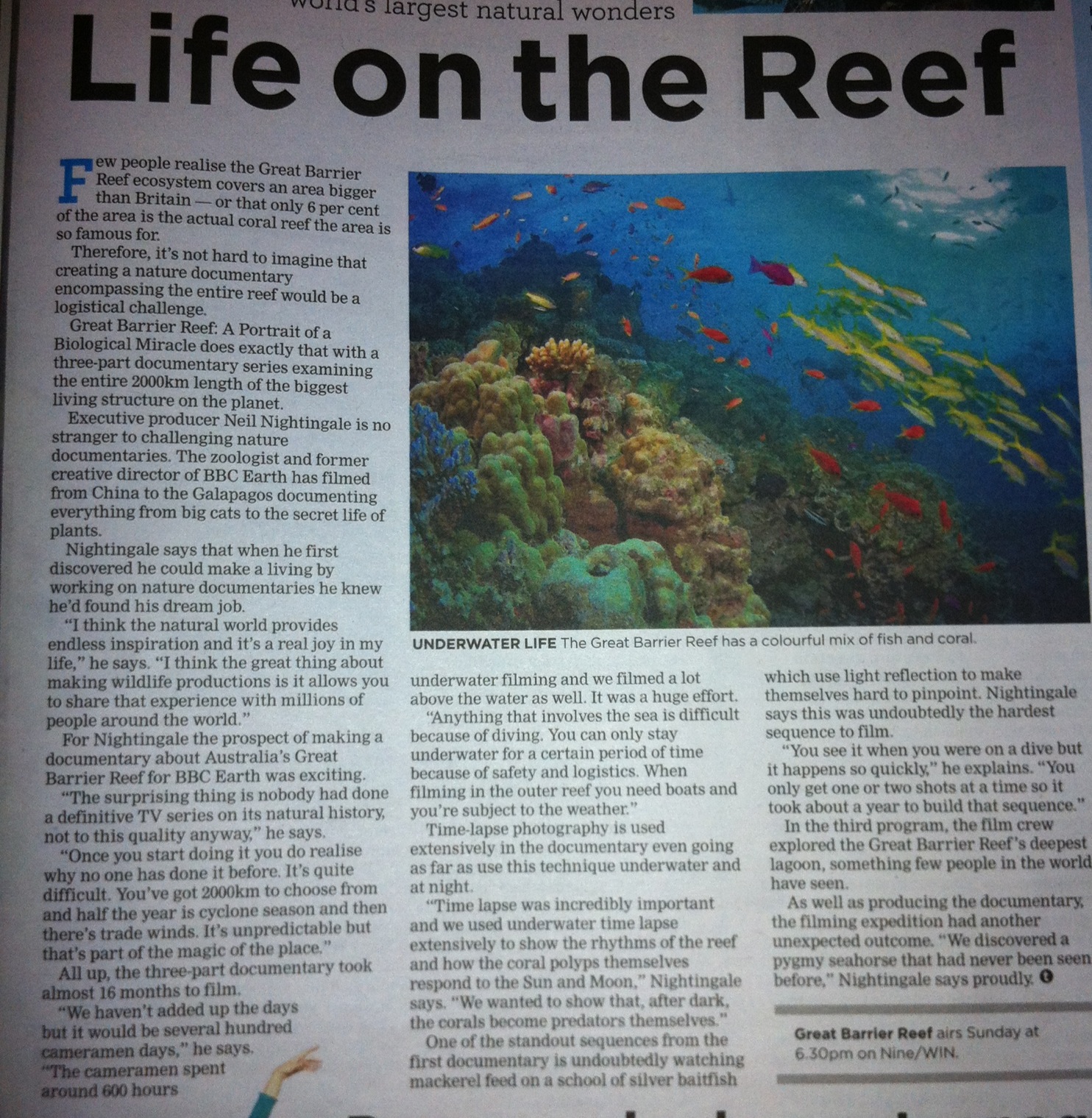
Documentary on the Great Barrier Reef
I’ve just set my recorder to tape this documentary on channel 9 this Sunday.
Free downloadable webinar on Fish Health.
What are the costs of sick fish?
What are the impacts of not demonstrating more responsible ornamental fish industry?
How do fish present when they are sick?
Can you make a definitive diagnosis based on clinical signs alone?
Find out more in this free downloadable powerpoint presentation I did for the PIAA’s Pet Expo – Reducing Losses in Aquaria:
Feel free to share this link with your colleagues and friends.
Don’t forget to follow Dr Loh in the various social media platforms and LIKE his Facebook fan page.
—
Now on: Twitter – Blog – Facebook – Linkedin – YouTube
—
Yours sincerely,
Dr Richmond Loh
BSc BVMS MPhil (Vet Path) MANZCVS (Aquatics & Pathobiology) DipPM
Veterinarian / Adjunct Lecturer Murdoch University / Secretary Aquatic Animal Health Chapter ANZCVS
The Fish Vet, Perth, Western Australia. Mobile Veterinary Service for fish and other aquatic creatures.
http://www.thefishvet.com.au
Ph: +61 (0)421 822 383
http://www.thefishvet.com.au
Ph: +61 (0)421 822 383