What caused the massive catfish kill in the Brisbane River?

White spot disease and a fungus was blamed for catfish kill.

Via

The AquaticHealth.net Community Digest

Read more here:
http://m.qt.com.au/news/parasite-and-fungus-blamed-catfish-kill/1583102/


Yours sincerely,

Dr Richmond Loh
BSc BVMS MPhil MANZCVS (Aq & Pathol)
The Fish Vet, Perth, Western Australia.
Veterinary Medicine for fish.
http://www.thefishvet.com.au
Ph: +61 (0)421 822 383

Rare whale beached in Hawaii infected with deadly marine-mammal virus | Smithsonian Science

Via

The AquaticHealth.net Community Digest

http://smithsonianscience.org/2012/10/rare-whale-beached-in-hawaii-infected-with-deadly-marine-mammal-disease/


Yours sincerely,

Dr Richmond Loh
BSc BVMS MPhil MANZCVS (Aq & Pathol)
The Fish Vet, Perth, Western Australia.
Veterinary Medicine for fish.
http://www.thefishvet.com.au
Ph: +61 (0)421 822 383

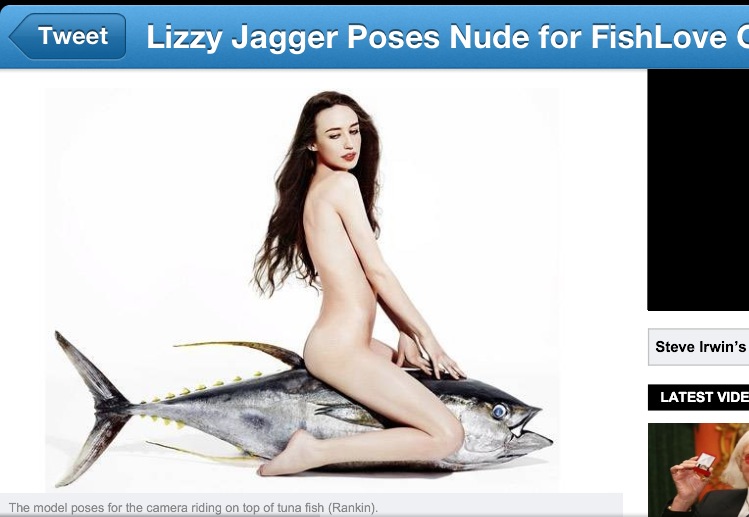
Lizzy Jagger Poses Nude for FishLove Campaign.

Lizzy Jagger Poses Nude for FishLove Campaign.
http://www.ibtimes.co.uk/articles/393764/20121012/lizzy-jagger-poses-nude-fishlove-campaign.htm


Yours sincerely,

Dr Richmond Loh
BSc BVMS MPhil MANZCVS (Aq & Pathol)
The Fish Vet, Perth, Western Australia.
Veterinary Medicine for fish.
http://www.thefishvet.com.au
Ph: +61 (0)421 822 383

Dr Loh addresses the Koi Society with two talks.

Want to know about ulcers in koi fish? Want to know about koi herpesvirus? Then come along to the next two Koi Society of Western Australia’s meetings.

Details are provided below.

20121017-200716.jpg

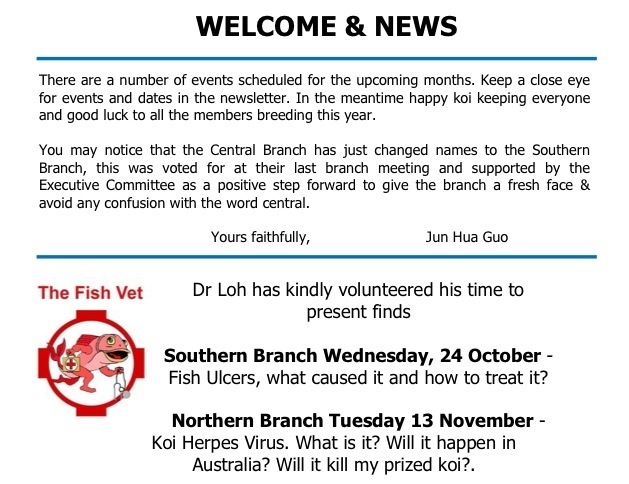
20121017-200736.jpg

Hydrogen peroxide (H2O2) to treat amoebic gill disease (AGD) in salmon.

Journal of Fish Diseases
Volume 35, Number 11 (November 2012)
Preliminary success using hydrogen peroxide to treat Atlantic salmon, Salmo salar L., affected with experimentally induced amoebic gill disease (AGD)
Authors: M B Adams, P B B Crosbie, B F Nowak
Author Affiliations:
no affiliations available
Source: Journal of Fish Diseases, Volume 35, Number 11 (November 2012)
Page Numbers: 839 – 848
Available Full Text:
Full Text: Subscription Required to view full text
Format: PDF
Size: unknown
Location: Publisher’s Site
Authentication: EBSCOhost EJS
Abstract: Currently, the only effective and commercially used treatment for amoebic gill disease (AGD) in farmed Tasmanian Atlantic salmon is freshwater bathing. Hydrogen peroxide (H2O2), commonly used throughout the aquaculture industry for a range of topical skin and gill infections, was trialled in vitroand in vivoto ascertain its potential as an alternative treatment against AGD. Under in vitroconditions, trophozoites of Neoparamoeba peruranswere exposed to three concentrations of H2O2in sea water (500, 1000 and 1500 mg L-1) over four durations (10, 20, 30 and 60 min) each at two temperatures (12 and 18 °C). Trophozoite viability was assessed immediately post-exposure and after 24 h. A concentration/duration combination of 1000 mg L-1for >10 min demonstrated potent amoebicidal activity. Subsequently, Atlantic salmon mildly affected with experimentally induced AGDwere treated with H2O2at 12 and 18 °C for 15 min at 1250 mg L-1and their re-infection rate was compared to freshwater-treated fish over 21 days. Significant differences in the percentage of filaments affected with hyperplastic lesions (in association with amoebae) and plasma osmolality were noted between treatment groups immediately post-bath. However, the results were largely equivocal in terms of disease resolution over a 3-week period following treatment. These data suggest that H2O2treatment in sea water successfully ameliorated a clinically light case of AGDunder laboratory conditions.
Citation: M B Adams, P B B Crosbie, B F Nowak . Preliminary success using hydrogen peroxide to treat Atlantic salmon, Salmo salar L., affected with experimentally induced amoebic gill disease (AGD). Journal of Fish Diseases, Volume 35, Number 11 (November 2012), pp. 839-848, <http://ejournals.ebsco.com/direct.asp?ArticleID=4806A1B1E8B8F7759199&gt;
URL: http://ejournals.ebsco.com/direct.asp?ArticleID=4806A1B1E8B8F7759199


Follow me on: Facebook “Fin Page” – YouTube – Blog – Linkedin – Twitter 

Yours sincerely,

Dr Richmond Loh

BSc, BVMS, MPhil (Vet Path), MANZCVS (Aquatics), MANZCVS (Pathobiology), DipPM.
Veterinarian | Adjunct Senior Lecturer Murdoch University | WAVMA Communications Committee Member |
Secretary Aquatic Animal Health Chapter – Australian and New Zealand College of Veterinary Scientists (ANZCVS)
The Fish Vet, Perth, Western Australia, AUSTRALIA. Mobile Veterinary Service for fish and other aquatic creatures.
http://www.thefishvet.com.au
Ph: +61 (0)421 822 383

Small-Brained Fish Make More Babies.

Can such a finding be extrapolated to other species?

www.the-scientist.com/?articles.view/articleNo/32348/title/Small-Brained-Fish-Make-More-Babies/


Yours sincerely,

Dr Richmond Loh
BSc BVMS MPhil MANZCVS (Aq & Pathol)
The Fish Vet, Perth, Western Australia.
Veterinary Medicine for fish.
http://www.thefishvet.com.au
Ph: +61 (0)421 822 383

Fish Vet Job opportunity – Mote Marine Lab.

From Dr Rob Oz Ossiboff 3:16am Oct 17

If anyone knows of anyone eligible, here is a listing for a fellowship at the Mote Marine Lab. They are looking for a DVM/PhD ready by the start of summer 2013.

http://www.mote.org/index.php?src=gendocs&link=JobOpportunites&category=JOBS#MPD


Yours sincerely,

Dr Richmond Loh
BSc BVMS MPhil MANZCVS (Aq & Pathol)
The Fish Vet, Perth, Western Australia.
Veterinary Medicine for fish.
http://www.thefishvet.com.au
Ph: +61 (0)421 822 383

Fish flesh that melts!

The Kudoa parasite can cause liquefactive necrosis of the host fish’s flesh when the host dies. It was always joked that this is the reason why some fish are deep fried direct from the freezer to avoid this ‘melting moment’!

Read more about this interesting fish flesh parasite at the following link:

www.thefishsite.com/articles/1481/kudoa-parasites-in-fish


Yours sincerely,

Dr Richmond Loh
BSc BVMS MPhil MANZCVS (Aq & Pathol)
The Fish Vet, Perth, Western Australia.
Veterinary Medicine for fish.
http://www.thefishvet.com.au
Ph: +61 (0)421 822 383

What impact does abalone domestication have on the genetic variability within and amongst populations?

Abalone are commercially fished from the sea by professional divers and recreational fishers collect them during the open season near the shore. Due to the demand for this delicacy, farming of abalone is now commonplace. Traditionally, farming has been on land and water from the sea is used to supply the tanks. In some places, ranching of abalone is gradually being introduced. Ranching involves breeding and raising abalone to a certain size, and then placing them on leased reefs in the wild to grow out, for harvesting when they are ready (imagine, free-ranging abalone!).

After the very real abalone die-offs as a result of abalone viral ganglioneuritis (AVG is caused by a herpesvirus), there has been increased vigilance in movement of livestock and in health checks.

There has been plenty of political battles between the various stakeholders (recreational fishers, live restaurant trade, commercial divers, traditional farmers and ranchers). Each with an economic stake in this oppose each others’ activities as they are seen to jeopardise the health and safety of the abalone resource. Add to this, the dimension of altering the genetic structure of the population.

A risk analysis was recently conducted, regarding the probability of disease spread which was funded by the FRDC. We have yet to hear the conclusions.

This article concentrates on the genetic aspect and it’s worth a read especially if you’re into breeding fish for wild stock enhancement.

According to this article, abalone domestication has no impact on the genetic variability within and amongst populations.

Aquaculture
Volume 357, Number 3 (August 2012)
A population genetic analysis of abalone domestication events in South Africa: Implications for the management of the abalone resource
Authors: Clint Rhode, Juli-ann Hepple, Suzaan Jansen, Tanja Davis, Jessica Vervalle, Aletta Elizabeth Bester-van der Merwe, Rouvay Roodt-Wilding
Author Affiliations:
no affiliations available
Source: Aquaculture, Volume 357, Number 3 (August 2012)
Page Numbers: 235 – 242
Available Full Text:
Full Text: Subscription Required to view full text
Format: PDF
Size: Unknown
Location: Publisher’s Site
Authentication: Publisher’s Site
Abstract: Abalone culture is South Africa’s largest aquaculture sector in terms of revenue. Nonetheless, the industry is in its formative years and much scope remains for refinement and regulation of production practices. It is important to manage genetic diversity in terms of the particular breeding objectives pursued by respective facilities: selective breeding vs. ranching; whilst conserving the genetic integrity of wild populations remains a national imperative. The present study found no significant decrease in genetic diversity between wild and cultured populations as based on heterozygosity and allelic content of genomic- and EST-microsatellite loci. However, estimates for pairwise genotypic differentiation, Fst, AMOVA and Factorial correspondence analysis suggest the genetic heterogeneity of cultured populations and their significant differentiation from the wild progenitor populations. As expected, the cultured population showed reduced effective population sizes, but relatedness remained low. It is postulated that both neutral and selective evolutionary forces are responsible for the observed patterns of genetic variability within and amongst populations. The implications of the results are discussed in terms of broad managerial objectives for the South African abalone and continued monitoring is advised.
Citation: Clint Rhode, Juli-ann Hepple, Suzaan Jansen, Tanja Davis, Jessica Vervalle, Aletta Elizabeth Bester-van der Merwe, Rouvay Roodt-Wilding . A population genetic analysis of abalone domestication events in South Africa: Implications for the management of the abalone resource. Aquaculture, Volume 357, Number 3 (August 2012), pp. 235-242, ;
URL: http://ejournals.ebsco.com/direct.asp?ArticleID=4C24A0722428D6D8BA24


Follow me on: Facebook “Fin Page” – YouTube – Blog – Linkedin – Twitter 

Yours sincerely,

Dr Richmond Loh

BSc, BVMS, MPhil (Vet Path), MANZCVS (Aquatics), MANZCVS (Pathobiology), DipPM.
Veterinarian | Adjunct Senior Lecturer Murdoch University | WAVMA Communications Committee Member |
Secretary Aquatic Animal Health Chapter – Australian and New Zealand College of Veterinary Scientists (ANZCVS)
The Fish Vet, Perth, Western Australia, AUSTRALIA. Mobile Veterinary Service for fish and other aquatic creatures.
http://www.thefishvet.com.au
Ph: +61 (0)421 822 383

Effectiveness of electrical stunning and chilling in ice water of farmed fish.

This method has been in use for quite a while and effectively in the poultry industry. Work is being done to show its effectiveness for humane slaughter of fishes. This might also be the way to go for invertebrates such as the crab and lobster.


Aquaculture
Volume 365, Number 18 (October 2012)
Assessing effectiveness of electrical stunning and chilling in ice water of farmed yellowtail kingfish, common sole and pike-perch
Authors: P. Llonch, E. Lambooij, H.G.M. Reimert, J.W. van de Vis
Author Affiliations:
no affiliations available
Source: Aquaculture, Volume 365, Number 18 (October 2012)
Page Numbers: 143 – 149
Available Full Text:
Full Text: Subscription Required to view full text
Format: PDF
Size: Unknown
Location: Publisher’s Site
Authentication: Publisher’s Site
Abstract: Animals should be rendered unconscious before slaughter in order to avoid suffering or pain. The objective of this study was to evaluate an electrical stunning after dewatering to induce instantaneous unconsciousness and insensibility in yellowtail kingfish (Seriola lalandi), common sole (Solea solea) and pike-perch (Stizostedion lucioperca). To kill without recovery, the current was applied for 5s, followed by chilling in ice water for 10min. Loss of consciousness and sensibility were assessed by neural (EEG), physiological (ECG) and behavioural parameters. An epileptiform insult was observed in all yellowtail kingfish (n=27), common sole (n=25) and pike-perch (n=25) after administering a current of 0.54±0.12 Arms(124V dc and 11 Vrmsac; 100Hz), 0.65±0.23 Arms(98V dc and 8.4 Vrmsac; 100Hz) and 0.75±0.24 Arms(144V dc and 13 Vrmsac; 100Hz) during 1s through the head of individual fish, respectively.
Citation: P. Llonch, E. Lambooij, H.G.M. Reimert, J.W. van de Vis . Assessing effectiveness of electrical stunning and chilling in ice water of farmed yellowtail kingfish, common sole and pike-perch. Aquaculture, Volume 365, Number 18 (October 2012), pp. 143-149, <http://ejournals.ebsco.com/direct.asp?ArticleID=450883FD825B209A5FB5&gt;
URL: http://ejournals.ebsco.com/direct.asp?ArticleID=450883FD825B209A5FB5