Will BHP’s plans to explore for oil just five kilometres from Western Australia’s Ningaloo Reef affect the health of marine life in the region?

See link for the full article:

http://aquatichealth.net/node/62537


Yours sincerely,

Dr Richmond Loh
BSc BVMS MPhil MANZCVS (Aq & Pathol)
The Fish Vet, Perth, Western Australia.
Veterinary Medicine for fish.
http://www.thefishvet.com.au
Ph: +61 (0)421 822 383

Optimal stocking density of carp in rice paddies is 6000/ha.

Aquaculture International: Journal of the European Aquaculture Society
Volume 20, Number 5 (October 2012)
Factors affecting fish yield and profit in fish pen culture in flooded ricefields
Authors: Nam Cao Quoc 1, Nico Vromant 2, Duong Le Thanh 1, Frans Ollevier 3
Author Affiliations:
1: Mekong Delta Development Research Institute, Can Tho University, Can Tho city, Vietnam
2: Vlaamse Vereniging voor Ontwikkelingssamenwerking en Technische Bijstand, Paramaribo, Suriname
3: Laboratory of Aquatic Ecology and Evolutionary Biology, Faculty of Science, Leuven, KU, Belgium
Source: Aquaculture International: Journal of the European Aquaculture Society, Volume 20, Number 5 (October 2012)
Page Numbers: 827 – 845
Available Full Text:
Full Text: Subscription Required to view full text
Format: PDF
Size: unknown
Location: Publisher’s Site
Authentication: EBSCOhost EJS
Abstract:
Abstract

In recent years, a rotational system consisting of two rice crops followed by a fish pen culture during the monsoon flood period was adopted in parts of the flood-prone region of the Mekong Delta. In this paper, we use the survey data from 51 fish pen farmers at Co Do and Vinh Thanh district, Can Tho City, to investigate the factors affecting fish yield and profit in such fish pen culture system. The net yield of all stocked fish varies from 377 to 3,782 kg/ha/crop while the return above variable costs varies from -5.3 to 9.8 million VND/ha/crop. Low fish price at harvest and the difficulty to sell below market sized fish at a period of oversupply are the main problems for fish pen culture. Fish net yield significantly increases with stocking density and is linked with specific polycultures. Common carp and bighead carp perform best in fish pen culture, both in production and profit considerations. Harvest body mass of common carp is mainly limited by increasing common carp stocking density. Therefore, a stocking density of common carp of about 6,000 fish/ha is recommended to obtain the optimum combination of reasonable body masses, and a good price, as well as a high return above fingerling costs.
Citation: Nam Cao Quoc, Nico Vromant, Duong Le Thanh, Frans Ollevier . Factors affecting fish yield and profit in fish pen culture in flooded ricefields. Aquaculture International: Journal of the European Aquaculture Society, Volume 20, Number 5 (October 2012), pp. 827-845, <http://ejournals.ebsco.com/direct.asp?ArticleID=443AB7B63ED5FB6A814A&gt;
URL: http://ejournals.ebsco.com/direct.asp?ArticleID=443AB7B63ED5FB6A814A


Follow me on: Facebook “Fin Page” YouTube Blog Linkedin Twitter

Yours sincerely,

Dr Richmond Loh

BSc, BVMS, MPhil (Vet Path), MANZCVS (Aquatics), MANZCVS (Pathobiology), DipPM.
Veterinarian | Adjunct Senior Lecturer Murdoch University | WAVMA Communications Committee Member |
Secretary Aquatic Animal Health Chapter – Australian and New Zealand College of Veterinary Scientists (ANZCVS)
The Fish Vet, Perth, Western Australia, AUSTRALIA. Mobile Veterinary Service for fish and other aquatic creatures.
http://www.thefishvet.com.au
Ph: +61 (0)421 822 383

Are We Still Evolving? – immortality.

I watched this show today and one of the scientists said she discovered the secret to anti-ageing when studying Tetrahymena (this, in the fish world, we know as a parasite of fishes). These protozoa are capable of continually dividing/multiplying without limit because they are able to repair and maintain the length of their telomeres (at the ends of their DNA) with telomerase.

Studies have shown that lobsters also have strong telomerase activity, and so, they never age at a cellular level. Theoretically then, they can live for eternity!

In humans, decreasing stress levels can help with extending the telomere length.

Maybe Tetrahymena and lobsters are just cool and calm critters.

How do you make seawater?

Did you know you can make artificial seawater so you can conveniently keep a tropical seawater tank to house your own set of Nemo’s?

Check out a very simple video I’ve uploaded to my YouTube channel –

Amoebic gill disease (AGD), the long-term solution.

Looks like genetic selection is the way to forge ahead as a way to avoid the costly freshwater baths and production losses (reduced appetite, poor feed conversion, poor growth rates, mortalities, etc.). Good one!

Aquaculture
Volume 365, Number 18 (October 2012)
Genetic variation in parasite resistance of Atlantic salmon to amoebic gill disease over multiple infections
Authors: Peter D. Kube, Richard S. Taylor, Nicholas G. Elliott
Author Affiliations:
no affiliations available
Source: Aquaculture, Volume 365, Number 18 (October 2012)
Page Numbers: 165 – 172
Available Full Text:
Full Text: Subscription Required to view full text
Format: PDF
Size: Unknown
Location: Publisher’s Site
Authentication: Publisher’s Site
Abstract: Genetic selection is being developed as a management tool for the control of amoebic gill disease (AGD) in Atlantic salmon. AGD is caused by an external gill parasite and is an animal health issue that results in significant economic loss to the Tasmanian salmon industry. This paper presents genetic parameters for AGD resistance, describes patterns of genetic variation over multiple infection cycles, and discusses the development of a selective breeding program to exploit this variation.
Citation: Peter D. Kube, Richard S. Taylor, Nicholas G. Elliott . Genetic variation in parasite resistance of Atlantic salmon to amoebic gill disease over multiple infections. Aquaculture, Volume 365, Number 18 (October 2012), pp. 165-172, <http://ejournals.ebsco.com/direct.asp?ArticleID=400DB0C52F19EFF6B346&gt;
URL: http://ejournals.ebsco.com/direct.asp?ArticleID=400DB0C52F19EFF6B346


Follow me on: Facebook “Fin Page” – YouTube – Blog – Linkedin – Twitter 

Yours sincerely,

Dr Richmond Loh

BSc, BVMS, MPhil (Vet Path), MANZCVS (Aquatics), MANZCVS (Pathobiology), DipPM.
Veterinarian | Adjunct Senior Lecturer Murdoch University | WAVMA Communications Committee Member |
Secretary Aquatic Animal Health Chapter – Australian and New Zealand College of Veterinary Scientists (ANZCVS)
The Fish Vet, Perth, Western Australia, AUSTRALIA. Mobile Veterinary Service for fish and other aquatic creatures.
http://www.thefishvet.com.au
Ph: +61 (0)421 822 383

Would the presence of a larger fish, suppress aggression in smaller conspecifics?

“Whilst it was thought that the presence of a larger fish would suppress aggression in smaller conspecifics this did not occur. In fact aggression was significantly (P =0.036) higher when large trout were present during the first 4 weeks. No significant differences were found between other welfare indicators, self-feeder utilization or production parameters.”

From this interesting article below.

Aquaculture Research
Volume 43, Number 11 (October 2012)
Can the presence of a large conspecific improve the production and welfare of groups of smaller self-feeder competent rainbow trout?
Authors: Matthew J. Flood, Chris Noble, Rem Kagaya, Mitsuo Tabata
Author Affiliations:
no affiliations available
Source: Aquaculture Research, Volume 43, Number 11 (October 2012)
Page Numbers: 1620 – 1627
Available Full Text:
Full Text: Subscription Required to view full text
Format: PDF
Size: unknown
Location: Publisher’s Site
Authentication: EBSCOhost EJS
Abstract: This study examined the production and welfare effects of including a large self-feeder competent rainbow trout, Oncorhynchus mykiss(Walbaum) (~665 g) in groups of smaller self-feeder competent conspecifics (~234 g). Costs and benefits were examined for both welfare (aggression, fin damage, condition and mortality) and production (self-feeder utilization and growth). The 8-week experiment used six groups of small trout; three treatment groups containing a large trout and three control groups. After 4 weeks the large fish were removed from treatment groups and added to control groups, thus reversing the treatments. Whilst it was thought that the presence of a larger fish would suppress aggression in smaller conspecifics this did not occur. In fact aggression was significantly (P =0.036) higher when large trout were present during the first 4 weeks. No significant differences were found between other welfare indicators, self-feeder utilization or production parameters. From a production and welfare perspective these results suggest that with the exception of initially increasing aggression larger fish do not represent a significant benefit or risk to smaller conspecifics being cultured in self-feeder equipped tanks, when all fish are self-feeder competent.
Citation: Matthew J. Flood, Chris Noble, Rem Kagaya, Mitsuo Tabata . Can the presence of a large conspecific improve the production and welfare of groups of smaller self-feeder competent rainbow trout?. Aquaculture Research, Volume 43, Number 11 (October 2012), pp. 1620-1627, <http://ejournals.ebsco.com/direct.asp?ArticleID=4EF1BFEAD3C61114F025&gt;
URL: http://ejournals.ebsco.com/direct.asp?ArticleID=4EF1BFEAD3C61114F025


Follow me on: Facebook “Fin Page” – YouTube – Blog – Linkedin – Twitter 

Yours sincerely,

Dr Richmond Loh

BSc, BVMS, MPhil (Vet Path), MANZCVS (Aquatics), MANZCVS (Pathobiology), DipPM.
Veterinarian | Adjunct Senior Lecturer Murdoch University | WAVMA Communications Committee Member |
Secretary Aquatic Animal Health Chapter – Australian and New Zealand College of Veterinary Scientists (ANZCVS)
The Fish Vet, Perth, Western Australia, AUSTRALIA. Mobile Veterinary Service for fish and other aquatic creatures.
http://www.thefishvet.com.au
Ph: +61 (0)421 822 383

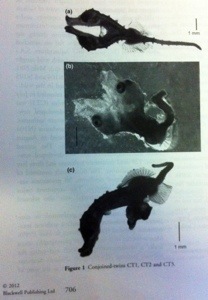
What causes “Siamese” twin seahorses?

Dr Jo Bannister shared this article with me from the Journal of Fish Diseases.

The causes include over-ripened eggs, pollutants, low dissolved oxygen and thermal shock induction.

Check out the pictures of the conjoined twin seahorses taken from the article:

20121018-232555.jpg

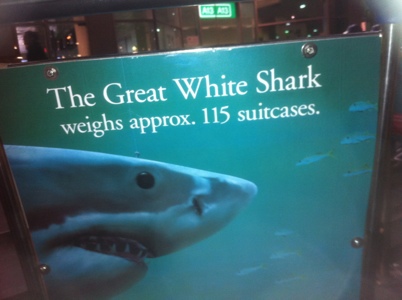
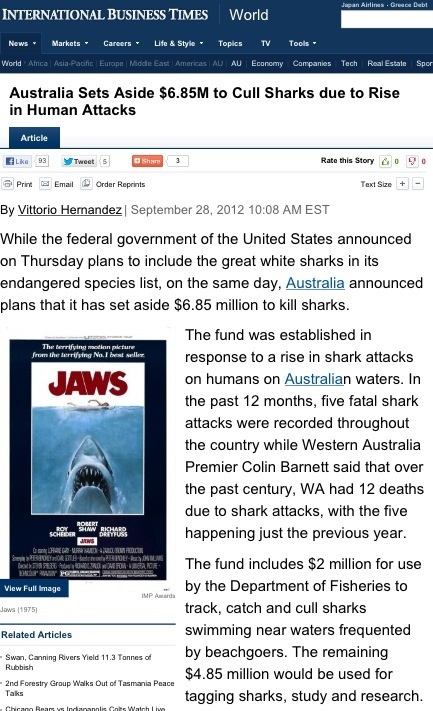
Is the Dept of Fisheries WA going to cull the great white sharks?

The mass media makes it out that the Dept of Fisheries are going to go out and cull these magnificent creatures. I’m sure you may have “Liked” a few things on Facebook in the bid to protest against this and maybe even attended a rally or two.

The facts are that the Minister gave the CEO of the Dept of Fisheries WA, the authority to decide whether a shark should be killed, on a case by case basis. They did not make it policy for the wholesale culling of sharks.

Quite the reverse. A lot of resources have been put in place to find ways of deterring the fish from populated beaches, to keep the community safe from predation. Sharks are being tagged so that individuals will be identifiable and their habits studied.

Who do we believe? We might have to wait and see.

20121018-155834.jpg

What are approved drugs? – Food & Drug Administration, Center for Veterinary Medicine – Letter to Aquaculture Professionals

Did you know that even if even if a marketed product has the same active ingredient as an FDA-approved drug, it doesn’t mean it’s also FDA-approved?

Having read this from my email inbox today (see below), I thought I should add that we really should be supporting the companies that are taking the time and resources to get the various aquatic medicines registered. It may cost us a little more, but without these companies putting such things forward, we’d have nothing to use legally. So, saving a few dollars over here today, may mean that you might not have an industry tomorrow. We must support each other if we are to grow the industry.


Follow me on: Facebook “Fin Page” – YouTube – Blog – Linkedin – Twitter

Yours sincerely,

Dr Richmond Loh

BSc, BVMS, MPhil (Vet Path), MANZCVS (Aquatics), MANZCVS (Pathobiology), DipPM.
Veterinarian | Adjunct Senior Lecturer Murdoch University | WAVMA Communications Committee Member |
Secretary Aquatic Animal Health Chapter – Australian and New Zealand College of Veterinary Scientists (ANZCVS)
The Fish Vet, Perth, Western Australia, AUSTRALIA. Mobile Veterinary Service for fish and other aquatic creatures.
http://www.thefishvet.com.au
Ph: +61 (0)421 822 383


———- Forwarded message ———-
From: Dr. David Scarfe <DScarfe@avma.org>
Date: Thu, Oct 18, 2012 at 2:05 AM
Subject: AquaVetMed: FDA Letter to Aquaculture Industry re: Marketed Approved Aquaculture Drugs
To:

October 17, 2012

Food & Drug Administration, Center for Veterinary Medicine – Letter to Aquaculture Professionals


Dear Aquaculture Professional:


The U.S. Food and Drug Administration (FDA) wants to remind you that not all drugs currently marketed for fish are approved. And even if a marketed product has the same established name (active ingredient) as an FDA-approved drug, that doesn’t mean it’s also FDA-approved.


Please see the table below for a list of all FDA-approved fish drugs. If a product currently marketed for fish isn’t listed, it’s not FDA-approved, and therefore, hasn’t been shown to be safe and effective in fish. For example, only the four listed formalin products are approved by FDA for fish. Any other formalin-containing products marketed are not FDA-approved.


FDA rigorously evaluates an animal drug before approving it. As part of the approval process, the drug company must prove to FDA that:

•       The drug is safe and effective for a specific use in a specific animal species. For food fish intended for human consumption, the drug company must also prove that food made from fish treated with the drug is safe for people to eat;

•       The manufacturing process is adequate to preserve the drug’s identity, strength, quality, and purity; and

•       The drug’s labeling is truthful and complete.


FDA’s role doesn’t stop after the agency approves an animal drug. As long as the drug company markets the animal drug, the agency continues to monitor the drug’s:

•       Safety and effectiveness to determine if concerns arise that were unknown at the time of approval;

•       Manufacturing process to ensure quality and consistency are maintained; and

•       Labeling to make sure the information remains truthful and complete.


FDA-Approved Fish Drugs <snip>


FDA-approved animal drugs are scientifically shown to be safe and effective when used according to the directions on the label. If the approved drugs are for food fish, food made from treated fish is safe for people to eat. FDA-approved animal drugs also meet the agency’s strict standards for quality, purity, and potency.


The Center for Veterinary Medicine (CVM) at FDA is responsible for ensuring that safe and effective drugs are available for animals. If you have questions or would like more information, please call the CVM Communications Staff at 240-276-9300, or email us at AskCVM@fda.hhs.gov.


Sincerely,

FDA’s Center for Veterinary Medicine


See the source (http://tinyurl.com/coxq2sp) for full letter that lists drugs currently approved for aquaculture in the USA.


FDA also keeps lists approved drugs used for Immersion, Injectable and as Medicated Feeds updated at http://tinyurl.com/bo6j2vo.


___________________________

AquaVetMed e-News provides information to veterinary and veterinary-allied subscribers concerning aquatic animal medicine, health, welfare, public health and seafood safety, obtained from a variety of sources (largely AquaVetMed subscribers). While provided by the American Veterinary Medical Association’s, Aquatic Veterinary Medicine Committee and are for public distribution, they do not necessarily reflect the opinion of the AVMA or the veterinary profession. See the AVMA Terms of Use (http://tinyurl.com/29h2rf) for further information.


If e-News information is used elsewhere please acknowledge AquaVetMed as the source.  Encourage individuals to subscribe rather than distribute through list serves.


Messages may contain attachments that will have been scanned for known viruses.


Subscription and Contributions: Interested veterinarians and veterinary-allied professionals can subscribe, unsubscribe, or contribute pertinent news or information, by sending a message with “For AquaVetMed -” and the topic in the subject line, to dscarfe@avma.org.  


Note: Undelivered e-mails will not be resent; Subscribers will be deleted from the list after repeated undelivered or bounced messages and will have to re-subscribe.


Visit our website: www.avma.org


________________________________