WAVMA – A global source and resource for aquatic veterinarians.

wavma_logo.jpg

If you’re a fish vet and have not heard of, or joined up with, the World Aquatic Veterinary Medical Association, you’re missing out BIG time! I might of course be a bit biased as I’m the president-elect for the group, but let me tell you a little more about this WAVMA.

The mission of the WAVMA is to serve the discipline of aquatic veterinary medicine through enhancing aquatic animal health and welfare, public health and seafood safety, to support aquatic veterinarians, aquatic animal owners and industries, and other stakeholders. Our global organisation consists of more than 300 members from over 37 countries.

For many, a career in aquatic veterinary medicine was but a dream. Few opportunities existed for them to expand in their chosen discipline as an aquatic veterinarian. With such challenges, our passionate predecessors (past and present), have forged amazing pathways for the up and coming aquatic veterinarians.

Now, the number of potential clients and industries needing aquatic veterinarians are increasing rapidly. Commercial aquaculture has become a dominant industry for producing seafood. Public aquaria are demanding veterinarians to oversee their animal health programs. Government legislation and regulations, and international standards and requirements aimed at preventing, controlling and eradicating disease in all aquatic species are seeking veterinary input.

The WAVMA is a beacon of innovation and it is made up of professional veterinarians, ranging from students through to internationally renowned experts in the world. Their work our members do is multifaceted and it canvasses an incredibly diverse range of areas. They include:

  • Private practice (aquaculture & ornamental)
  • Academics (research, teaching, extension)
  • Commercial companies (drug development, commercial aquaculture)
  • Government regulatory agencies
  • Public aquaria,

covering a diverse range of species including marine mammals, ornamental fish, food fish, mollusc, crustacean and amphibia.

With a high level of member engagement, the WAVMA is an authoritative source of information and as such, it acts as an ambassador for all veterinarians involved with aquatic animal health. WAVMA is in the optimal position to advance the discipline of aquatic veterinary medicine, and supports the practice of aquatic veterinary medicine in all countries.

There are many tangible and intangible benefits and rewards for being a part of WAVMA. Gain the communities’ confidence and be sure that you don’t miss out on this great opportunity. It’s the one place that you can ‘hook-up’ with leading aquatic experts from around the world. Get answers to questions, difficult cases and more!

Delay no more. Join NOWat http://www.wavma.org/
Where would you find the greatest number of marine mammal veterinarians?

From: “Dr. David Scarfe”
Date: 26 March 2013 0:20:18 AWST
Subject: AquaVetMed: Aquatic Veterinarians & US Navy Marine Mammal Program

March 25, 2013
Top-notch care for elite fleets

JAVMA News – The greatest concentration of marine mammal veterinarians isn’t found in the theme parks of Orlando or on the colorful beaches of Hawaii. That designation goes to the U.S. Navy Marine Mammal Program at Point Loma in San Diego. For decades, the U.S. Navy Marine Mammal Program in San Diego has provided cutting-edge veterinary care to bottle-nosed dolphins and California sea lions.

The Navy uses these animals to find and mark the location of underwater objects. Both of these marine mammal species can be trained to perform a variety of tasks for the Navy. They are fast and agile swimmers, can dive up to 1,000 feet underwater, and can do repetitive dives without suffering from the bends.

The program’s animal care team comprises members of the U.S. Army Veterinary Corps, civilians, National Marine Mammal Foundation veterinarians, and other animal health care experts. Together, the marine mammal veterinarians who care for the program’s 80 dolphins and 40 sea lions constitute the largest group of marine mammal veterinarians in the country. Dr. Cynthia R. Smith, executive director of the NMMF, explained that marine mammal veterinarians from the program originally created the nonprofit foundation under Dr. Sam Ridgway’s guidance. The NMMF currently provides medical care for the Navy animals and clinical research support that helps the Navy continuously advance the health and welfare of its marine mammal population.

Three Army veterinarians and five Army veterinary technicians represent the Army Veterinary Corps in the program. Because this is a unique assignment, the Army staff members undergo a lot of on-the-job training as part of the veterinary care team.

Capt. Lara S. Cotte, officer in charge of clinical veterinary services, concedes there is a steep learning curve for new Army personnel who rotate in. “We’re in a new era where there are more vets and techs than the program had 10 years ago. We’re constantly working on consistency of personnel,” Dr. Cotte said. “Training on all levels is paramount to ensuring quality animal care.”

An ounce of prevention
Veterinarians with the program place a heavy emphasis on preventive medicine and routine diagnostic testing, but also stress maintaining social and environmental conditions that keep their animals healthy. The Navy’s marine mammals go through an annual wellness examination, which includes a history and physical examination, auscultation, and collection of fecal and blood samples. Animals are dewormed every six months, and sea lions receive monthly heartworm preventive.

Sonographic and endoscopic examinations are a routine part of the preventive medicine program, and on occasion, the veterinary staff perform CT or MRI scans at the nearby Naval Medical Center in San Diego to better characterize the animals’ health. Trainers are taught the signs to look for when performing medical checks every day and whom to notify when something isn’t right, whether it’s a low appetite or change in behavior, Dr. Cotte said. “One of the biggest problems working with marine mammals is they are incredibly sophisticated at masking disease,” which requires looking for subtle cues, she said.

While the Navy marine mammal population has consistently had low mortality and high survival rates over the past 20 years, illnesses are inevitable in any animal population. The most common health issue for the sea lions is mild gastrointestinal disease, which is likely also the case for their counterparts in the wild. In the dolphins, Dr. Cotte said, respiratory conditions such as bronchopneumonia are the most common illnesses … … .

See the source (https://www.avma.org/news/javmanews/pages/130401a.aspx) for the full story.
___________________________
AquaVetMed e-News provides information to veterinary and veterinary-allied subscribers concerning aquatic animal medicine, health, welfare, public health and seafood safety, obtained from a variety of sources (largely AquaVetMed subscribers). While provided by the American Veterinary Medical Association’s, Aquatic Veterinary Medicine Committee and are for public distribution, they do not necessarily reflect the opinion of the AVMA or the veterinary profession. See the AVMA Terms of Use (http://tinyurl.com/29h2rf) for further information.

If e-News information is used elsewhere please acknowledge AquaVetMed as the source. Encourage individuals to subscribe rather than distribute through list serves.

Messages may contain attachments that will have been scanned for known viruses.

Subscription and Contributions: Interested veterinarians and veterinary-allied professionals can subscribe, unsubscribe, or contribute pertinent news or information, by sending a message with “For AquaVetMed -” and the topic in the subject line, to dscarfe@avma.org.

Note: Undelivered e-mails will not be resent; Subscribers will be deleted from the list after repeated undelivered or bounced messages and will have to re-subscribe.

Visit our website: http://www.avma.org

You’ve gotta love students – fish measurements.

In this technical field of fish medicine, you really ought to get things very spot on. One of the students queried my labelled diagram of “fork length” and its correct use.  Rightly so because they were right!

There are 3 different measurements used for fish. The ‘standard length’ is from the tip of the snout to the end of the last vertebrae. The ‘fork length’ is from the tip of the snout to the distal end of the middle, caudal fin ray. The ‘total length’ is from the tip of the snout to the tip of the tail. ‘Standard length’ tends to be used with most bony fishes, ‘total length’ for eel-type fishes and ‘fork length’ for species where it is difficult to tell where the vertebral column ends. The reason why we do not use ‘total length’ at all times is because the ‘tail length’ can vary dramatically within the same species. Take for example the following species – Siamese fighting fish, guppy and swordtails. Moreover, fin damage can also reduce the apparent ‘total length’ giving the researcher an inconsistent result.

Thus, I’ve uploaded an updated page for my book, Fish Vetting Essentials

Page 19: Fish Anatomy – FVetEssn_Anatomy.pdf

(This can be added to my being wrong about goldfish having a stomach!)

For the full list of updated pages, see https://thefishvet.com/2013/02/05/fish-vetting-series-updates/

Protecting nurseries, minimum and maximum size limits and controlling fishing quotas so that we’ll have fish for the future.

This is essentially what the Dept of Fisheries WA has been doing. Protecting nurseries, minimum and maximum size limits and controlling fishing quotas so that we’ll have fish for the future.

North Sea cod figures backed by the scientific evidence

Reports from Scottish fishermen of a huge abundance of cod in the North Sea is a direct result of a dramatic decline in fishing effort combined with the introduction of a number of conservation initiatives by the fishing fleet, says the Scottish Fishermen’s Federation (SFF).

With dramatic video footage being aired on some TV news bulletins today, Thursday, showing a large haul of cod being taken aboard the fishing vessel Budding Rose in the North Sea, the SFF says the scientific evidence is also backing the experience of fishermen on the fishing grounds. The skipper of the vessel, Peter Bruce, said that when the film was taken he was 20 miles away from the closed (to fishing) cod spawning area and was actually fishing for haddock.

He added: “I was in contact with another skipper who was 75 miles away having similar experiences and he had to land 10 tons of cod to Peterhead from his trip. The recovery in the cod stock is not by any means patchy.”

According to Scottish Sea Fisheries Statistics, the amount of fishing effort by the Scottish fleet has declined by a massive 70% between 2000 and 2011. Furthermore, the latest scientific figures from the International Council for the Exploration of the Sea (ICES) reveals that the spawning stock biomass of North Sea cod has increased by 250% from 2006 to 2012. Fishing mortality for cod (or the amount of fish being taken out of the sea) has declined by 43% between 2000 and 2011.

Bertie Armstrong, chief executive of the SFF, said: “The decline in fishing effort and the amount of cod being taken out of the North Sea is quite dramatic and helps explain the relative abundance of fish that our fishermen are now finding on the grounds.

“It should not be forgotten that fishermen have made huge sacrifices over the last 10 years or so to reach this stage. The number of fishing vessels has dramatically declined and there have been strict effort controls as well. In addition, we have developed our own measures such as technical alterations to nets to significantly reduce discards and implementing real-time area closures to protect juvenile and spawning fish.

“In essence, our fishermen are by regulation taking much longer to catch much less fish, which has been achieved against a background of high operating costs. The important step now is to ensure that fishermen are rewarded for this increasing stock of cod and other fish through enhanced catching opportunities in the future. Survival of the fishing communities will depend on this.

“However, this must be achieved through careful fisheries management based on the science so as to ensure the continuation of sustainable harvesting that enables the stock to prosper. Our fishermen completely understand this – but given the cycle of time it takes for scientific data collection and analysis, the recovery actually occurs before official recognition. This first detection of increased fish abundance is made by the men at sea – the fishermen. Every effort is now being made to incorporate this early warning that fishermen can provide on stocks – which would equally apply if any stock was declining – into the scientific assessment process.

“With the horse-meat scandal and other food scare stories being prominent in the media at the moment, the recovery of cod and other fish stocks in the North Sea is a good news story for the consumer. Scottish fish is an extremely high quality food product that has a low carbon footprint and is healthy to eat. Our resounding message to consumers is to demand from retailers and restaurants more Scottish fish.”

Taken from : http://www.fishupdate.com/m/fullstory.php/aid/19129/North_Sea_cod_figures_backed_by_the_scientific_evidence.html

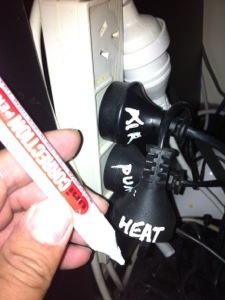
Have you ever had the problem of not knowing which plug belongs to which equipment?

Is there a mess of power boards and innumerable plugs for the number of electric gadgets? How can you tell which belongs to which? This is especially important when conducting water changes where you for want the heater to crack if the water level gets too low, or when treating fishes in the tank when you need to turn off the UV to prevent rapid breakdown of the drug? Of course, for this might not be a problem for fish owners because we can usually work out what’s what by trial and error, plugging and unplugging each one in turn. But what if you’re not going to be home for some time and require your partner or house mate to unplug something for you?

I’ve come up with a simple solution to your issue. Just use a liquid correction orn

20130324-090129.jpg

Thousands of dead fish wash up on Adelaide’s southern suburb beaches | adelaidenow

http://m.adelaidenow.com.au/news/south-australia/thousands-of-dead-fish-wash-up-on-adelaides-southern-suburb-beaches/story-e6frea83-1226603248282


Yours sincerely,

Dr Richmond Loh
DipProjMgt, BSc, BVMS, MPhil (Pathology) Murdoch, MANZCVS (Aquatics& Pathobiology).
The Fish Vet, Perth, Western Australia.
Veterinary Medicine for fish.
W: http://www.thefishvet.com.au
E: thefishvet
P: +61 (0)421 822 383

Light intensity also affects the growth, survival, reproductive and life span characteristics of Artemia.

Aquaculture Research
  Volume 44, Number 4 (March 2013)
     Effects of different light intensities on growth, survival, reproductive and life span characteristics of Artemia urmiana(Günther 1890)
   Authors: Shima Masoudi Asil, Abolghasem Esmaeili Fereidouni, Hossein Ouraji, Khosrow Jani Khalili
   Author Affiliations:
no affiliations available
   Source: Aquaculture Research, Volume 44, Number 4 (March 2013)
   Page Numbers: 554 – 566
   Available Full Text:
Full Text: Subscription Required to view full text
Format: PDF
Size: unknown
Location: Publisher’s Site
Authentication: EBSCOhost EJS
   Abstract: Effects of light intensities on growth, survival, reproductive and life span traits of Artemia urmianawere investigated under laboratory conditions. Nauplii of A. urmianawere hatched and raised in 100 g L-1at four illuminations including 0, 100, 2000 and 5000 lx with 14:10 (light:dark) photoperiod. Mating pairs of mature animals were randomly isolated and reared continuously under similar conditions. The mode and potential of reproduction as well as adult survival shown by each pair were determined throughout their life span. Results showed that percentages of nauplii survival were significantly (P =0.05) different at 5000 and 0 lx (76.50% compared with 26.25%) respectively. Total number of offspring was highly correlated with the light intensities showing increased numbers at higher light intensities compared with darkness or 100 lx. Reproduction mode was relatively affected by various light intensities. Significant (P =0.05) differences were found both in reproductive period and life span at different illuminations. Maximum and minimum offspring productions per reproductive day were found at 5000 and 100 lx respectively. The relative degree of oviparity increased as the illumination decreased (57.92% compared with 22.65% at 0 and 5000 lx respectively). The optimum light intensities appear to be between 2000 lx and 5000 lx in this study. These findings could probably be useful for mass culture of A. urmianain indoor or recirculating systems as well as in outdoor systems for intensive cyst and biomass production.
   Citation: Shima Masoudi Asil, Abolghasem Esmaeili Fereidouni, Hossein Ouraji, Khosrow Jani Khalili . Effects of different light intensities on growth, survival, reproductive and life span characteristics of Artemia urmiana(Günther 1890). Aquaculture Research, Volume 44, Number 4 (March 2013), pp. 554-566, <http://ejournals.ebsco.com/direct.asp?ArticleID=429198886C615FCEE332&gt;
   URL: http://ejournals.ebsco.com/direct.asp?ArticleID=429198886C615FCEE332

Light intensity affects smolt quality, development, welfare and growth in Atlantic salmon.

Much of the literature talks about photoperiods affecting fish growth and reproduction, but I think this is one of the few papers that address light intensity. This is interesting.

Aquaculture
Volume 387, Number 13 (March 2013)
Low light intensity can reduce Atlantic salmon smolt quality
Authors: Sigurd O. Handeland, Albert K. Imsland, Lars O.E. Ebbesson, Tom O. Nilsen, Camilla D. Hosfeld, Grete Baeverfjord, Åsa Espmark, Trond Rosten, Ove T. Skilbrei, Tom Hansen, Gunnar S. Gunnarsson, Olav Breck, Sigurd O. Stefansson
Author Affiliations:
no affiliations available
Source: Aquaculture, Volume 387, Number 13 (March 2013)
Page Numbers: 19 – 24
Available Full Text:
Full Text: Subscription Required to view full text
Format: PDF
Size: Unknown
Location: Publisher’s Site
Authentication: Publisher’s Site
Abstract: The objective of this study has been to investigate the effect of light intensity (10, 21, 43, 200 and 650lx) during smolting and its potential influence on gill Na+,K+-ATPase (NKA) activity, endocrinology, ion regulation, growth, morphology, and spinal development in Atlantic salmon. Gill Na+,K+-ATPase activity, plasma glucose and blood PCO2were all affected by time (study duration 176days), while no differences were seen as a result of the different light intensity treatments. Growth rate was positively correlated to light intensity. Lower body silvering index, reduced fin area (5–7% lower in the 10 and 21lux groups) and increased percentage of skeletal abnormalities (6.9% in the 10lux group vs. 1% in the 650lux group) at low light intensity were seen. In a second experiment juvenile Atlantic salmon parr were reared in August at LD12:12, at either 1lx or 1000lx and circulating plasma thyroxin (FT) levels measured. Plasma FT4 levels remained low in the low light intensity group (1lx), whereas FT4 levels increased significantly from 2 to 5h in the high intensity group (1000lx). Total T4 levels were nearly 2-fold higher 5h after lights-on in the high intensity group compared with the low. Overall, the present data suggests that a minimum light intensity of 43lx is needed to secure optimal smolt quality, development, welfare and growth in Atlantic salmon.
Citation: Sigurd O. Handeland, Albert K. Imsland, Lars O.E. Ebbesson, Tom O. Nilsen, Camilla D. Hosfeld, Grete Baeverfjord, Åsa Espmark, Trond Rosten, Ove T. Skilbrei, Tom Hansen, Gunnar S. Gunnarsson, Olav Breck, Sigurd O. Stefansson . Low light intensity can reduce Atlantic salmon smolt quality. Aquaculture, Volume 387, Number 13 (March 2013), pp. 19-24, <http://ejournals.ebsco.com/direct.asp?ArticleID=4A8F89D39BD2CC96FD9A&gt;
URL: http://ejournals.ebsco.com/direct.asp?ArticleID=4A8F89D39BD2CC96FD9A

DNA reveals giant squid had brush with death : Nature News & Comment

The findings not only make it clear that all giant squid around the world are the same species, but they also hint that the animals came close to extinction at some point in the not too distant past.

“What could possibly have caused giant squid to vanish on such a global scale? And what changed that allowed them to spread again?”

“… changes in ocean conditions somehow altering the nutrient-rich deep waters that these animals need?”

“It would be very interesting to compare patterns and timings of this low diversity and see if they correspond to some historic event,” says Morin.

Learn more here-
http://www.nature.com/news/dna-reveals-giant-squid-had-brush-with-death-1.12641


Yours sincerely,

Dr Richmond Loh
DipProjMgt, BSc, BVMS, MPhil (Pathology) Murdoch, MANZCVS (Aquatics& Pathobiology).
The Fish Vet, Perth, Western Australia.
Veterinary Medicine for fish.
W: http://www.thefishvet.com.au
E: thefishvet
P: +61 (0)421 822 383