Check out some of the great stuff that is available to the public.
Download the latest AVN that has become available by clicking on this link.
All about Fish Vetting – Dr Richmond Loh
Check out some of the great stuff that is available to the public.
Download the latest AVN that has become available by clicking on this link.
There’s this story I heard and that I’d like to share with you.
There once was an Emperor in China who wanted the best medical care he could get. So, he sent off his servants to scour the land for the best doctor they could find. His servants came across this village where there was a doctor renowned for being able to cure anyone and everyone. They were elated to find such a man and went to meet him. They discussed the reason for their meeting this doctor and the doctor said, “I’m only an OK doctor and I always try to do my best. You should really travel across those mountains to meet a different doctor who is even better than I.”
To this, the Emperor’s servants asked, “But you’re able to cure all illnesses. Why is this other doctor better than you?”
To which the doctor replied, “It is true that I cure patients with illnesses and they get better after seeing me. The reason why this other doctor is better, is because the patients he treats never get sick!”
Why am I sharing this story with you, you might ask.
With the water temperatures increasing and your pond fish coming out of their winter condition, this is the high risk period for fish to get sick. You’ve read about herbs and foods being good for your immune system such as green tea, garlic, cinnamon, etc. Earlier this year, I worked with the compounding pharmacy to create an immunostimulant feed additive called “immunoBOOSTER” which can be used as preventive medicine. Check out the information at this link – see link.
Some of you may be considering and planning artificial spawning of your koi, rather than leaving them to their own devices. There are many things that can help you increase your success/fertility rate (link to previous post) such as feeding them up, using hormonal induction methods (link to previous post), hand stripping (link to previous post), milt extenders (link to previous post) and others. This paper details efforts made by some scientists to increase the longevity of toad sperm and I wonder if the findings are transferable to fish.
| Aquaculture | |||||||||||||||||
| Volume 399, Number 2 (June 2013) | |||||||||||||||||
 |
Effects of aeration and antibiotics on short-term storage of Fowler’s toad (Bufo fowleri) sperm | ||||||||||||||||
| Authors: | Jennifer M. Germano, Lucía Arregui, Andy J. Kouba | ||||||||||||||||
| Author Affiliations: |
|
||||||||||||||||
| Source: | Aquaculture, Volume 399, Number 2 (June 2013) | ||||||||||||||||
| Page Numbers: | 20 – 24 | ||||||||||||||||
| Available Full Text: |
|
||||||||||||||||
| Abstract: | The importance of developing assisted reproductive technologies (ART) for captive assurance colonies of threatened amphibians is increasing as ex situmanagement of amphibians has been challenged with low reproductive outputs for some species. One hurdle to developing ART in amphibians is the short-term storage of gametes for in vitrofertilization. This study tested the application of two common aquaculture techniques, aeration or the addition of antibacterial solutions, to spermic urine to determine if this would improve the longevity and quality of non-invasively collected sperm samples using hormone therapy. Spermic urine samples were collected non-invasively from Fowler’s toads (Bufo fowleri) and either left alone, aerated for 30min a day, or treated with penicillin–streptomycin. All samples were kept refrigerated at 4°C. Sperm motility declined within each treatment group over time (P<0.01); however, aerated samples retained significantly greater motility (70%) during the first 24h after collection than samples in both the control (57%) and antibacterial group (51%). The addition of penicillin–streptomycin solution to spermic urine had a negative effect on viability; with significantly fewer sperm still alive 2–4days post collection (P=0.032). Sperm viability was highly correlated with motility on all days and with forward progression 1–4days post collection (P=0.002). Our results show that aerating amphibian spermic urine samples may provide a simple and low-cost method to improve sperm storage that could be used for in vitrofertilization and ex situmanagement of threatened amphibians. Antibiotics appeared to have a negative effect on sperm viability, suggesting that further research on bacterial contamination and antibiotic doses is necessary. | ||||||||||||||||
| Citation: | Jennifer M. Germano, Lucía Arregui, Andy J. Kouba . Effects of aeration and antibiotics on short-term storage of Fowler’s toad (Bufo fowleri) sperm. Aquaculture, Volume 399, Number 2 (June 2013), pp. 20-24, <http://ejournals.ebsco.com/direct.asp?ArticleID=44A386C579E93ABB4F5D> | ||||||||||||||||
| URL: | http://ejournals.ebsco.com/direct.asp?ArticleID=44A386C579E93ABB4F5D | ||||||||||||||||
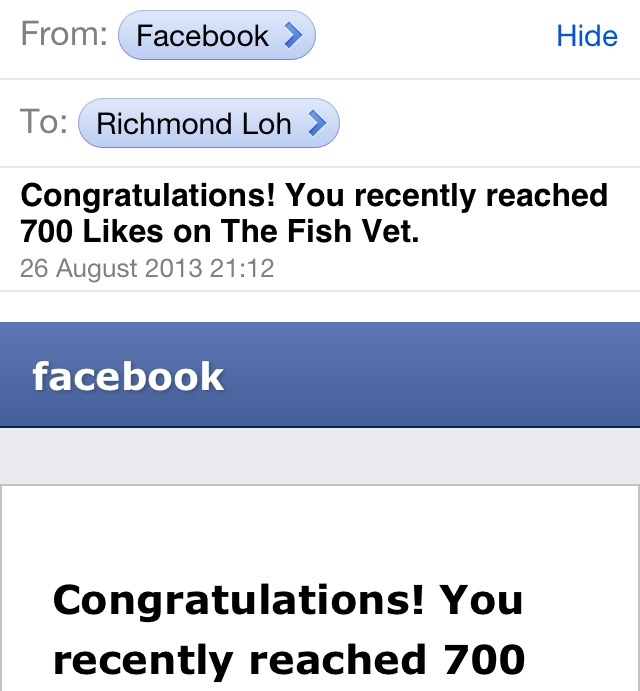
Thumbs up for this!
—
Yours sincerely,
Dr Richmond Loh
DipProjMgt, BSc, BVMS, MPhil (Pathology) Murdoch, MANZCVS (Aquatics& Pathobiology).
The Fish Vet, Perth, Western Australia.
Veterinary Medicine for fish.
W: http://www.thefishvet.com.au
E: thefishvet
P: +61 (0)421 822 383
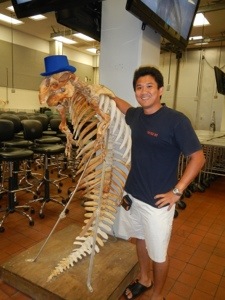
Oh the ‘Hu-manatee’!
Recently, I was asked whether there is a need in Australia to have the FASTest KOI HV ( KOI HERPESVIRUS RAPID TEST ).
My response:
KHV is currently exotic to Australia but there are 2 potential ways it’ll inevitably establish in Australia.
There is no need for it now, but in the future, it’ll be useful to have.
Additionally, because KHV is an OIE listed disease and Notifiable in Australia, a positive result (regardless of whether it is a true positive or a false positive) there would be potential significant political and economic implications. Thus, I suspect that the first definitive diagnosis needs to be conducted by the government laboratories at least, if not, by the AAHL.
Follow me on: Facebook “Fin Page” – YouTube – Blog – Linkedin – Twitter
—
Yours sincerely,
Dr Richmond Loh


KH stands for carbonate hardness and it’s a measure of the buffering capacity of your water against fluctuations in pH which could be stressful for fish. A KH of 3-4 degrees (or 50-70mg/L) is recommended as a minimum. A lower value means you need to add buffers.
Another great article illustrating the great potential for chemical-free ways of controlling fish pathogens.
| Aquaculture | |||||||||||||||||
| Volume 407, Number 13 (August 2013) | |||||||||||||||||
| |
Effects of temperature, diet, and bivalve size on the ingestion of sea lice (Lepeophtheirus salmonis) larvae by various filter-feeding shellfish | ||||||||||||||||
| Authors: | Janis L. Webb, Julie Vandenbor, Bradley Pirie, Shawn M.C. Robinson, Stephen F. Cross, Simon R.M. Jones, Christopher M. Pearce | ||||||||||||||||
| Author Affiliations: |
|
||||||||||||||||
| Source: | Aquaculture, Volume 407, Number 13 (August 2013) | ||||||||||||||||
| Page Numbers: | 9 – 17 | ||||||||||||||||
| Available Full Text: |
|
||||||||||||||||
| Abstract: | Filter-feeding shellfish could act as biological agents in the control of parasitic sea lice (Caligidae) at salmon farms as a benefit of integrated multi-trophic aquaculture. Determining the extent to which various bivalve species ingest sea lice (Lepeophtheirus salmonis) larvae under controlled laboratory conditions was an important first step towards understanding the potential for shellfish to reduce the number of these copepod larvae in the water column at net pens. A series of laboratory experiments examined the effects of temperature (~5, 10, and 15°C), diet (larvae alone or with phytoplankton), and bivalve size (small, medium, and large) on the amount of L. salmonislarvae ingested by basket cockles (Clinocardium nuttallii), Pacific oysters (Crassostrea gigas), mussels (Mytilusspp.), and Pacific scallops (unconfirmed hybrid: Mizuhopecten yessoensisx Patinopecten caurinus). Feeding rate was assessed by placing bivalves individually in 2-l containers holding approximately 450 larvae in 750ml of filtered seawater. Results of the temperature/diet experiments indicated that all four species of bivalves ingested sea lice larvae, regardless of phytoplankton presence or absence, and that temperature had no significant effect on the proportion of larvae ingested. All three sizes of oysters and scallops ingested sea lice larvae, with large shellfish consuming a significantly greater proportion of the larvae than small individuals. Future research, examining the role of bivalves in the control of sea lice, should be continued at a commercial scale at a salmon farm. | ||||||||||||||||
| Citation: | Janis L. Webb, Julie Vandenbor, Bradley Pirie, Shawn M.C. Robinson, Stephen F. Cross, Simon R.M. Jones, Christopher M. Pearce . Effects of temperature, diet, and bivalve size on the ingestion of sea lice (Lepeophtheirus salmonis) larvae by various filter-feeding shellfish. Aquaculture, Volume 407, Number 13 (August 2013), pp. 9-17, <http://ejournals.ebsco.com/direct.asp?ArticleID=42A981D148CF4977D402> | ||||||||||||||||
| URL: | http://ejournals.ebsco.com/direct.asp?ArticleID=42A981D148CF4977D402 | ||||||||||||||||
—
Yours sincerely,
Dr Richmond Loh
DipProjMgt, BSc, BVMS, MPhil (Pathology) Murdoch, MANZCVS (Aquatics& Pathobiology).
The Fish Vet, Perth, Western Australia.
Veterinary Medicine for fish.
W: http://www.thefishvet.com.au
E: thefishvet
P: +61 (0)421 822 383
I found this report very interesting and quite the opposite of what I thought because the majority of my pet fish clients are freshwater keepers.
From: “Dr. David Scarfe”
Date: 18 August 2013 20:36:02 AWST
Subject: AquaVetMed e-News: Provisions for Fish Pet in Wills
August 18, 2013
Fifteen Percent of Fish Owners Made Financial Provisions for Their Pet in Their Will
Including pets in the will is becoming ever-more popular! In preparation for the future, 15% of fish owners have made financial provisions in their will for their pet.
Financially providing for one’s fish is far more common among saltwater fish owners (36%) than owners of freshwater fish (4%). Twenty-one percent of all fish owners have named a caretaker/guardian for their fish. More saltwater owners have done so (37%) than freshwater fish owners (13%).
Have you made financial provisions in your will for your pet, or named a caretaker/guardian?
To learn more about this subject, go to page 290 in the 2013-2014 APPA National Pet Owners Survey (http://americanpetproducts.org/pubs_survey.asp).
___________________________
AquaVetMed e-News provides information to veterinary and veterinary-allied subscribers concerning aquatic animal medicine, health, welfare, public health and seafood safety, obtained from a variety of sources (largely AquaVetMed subscribers). While provided by the American Veterinary Medical Association’s, Aquatic Veterinary Medicine Committee and are for public distribution, they do not necessarily reflect the opinion of the AVMA or the veterinary profession. See the AVMA Terms of Use (http://tinyurl.com/29h2rf) for further information.
If e-News information is used elsewhere please acknowledge AquaVetMed as the source. Encourage individuals to subscribe rather than distribute through list serves.
Messages may contain attachments that will have been scanned for known viruses.
Subscription and Contributions: Interested veterinarians and veterinary-allied professionals can subscribe, unsubscribe, or contribute pertinent news or information, by sending a message with “For AquaVetMed -” and the topic in the subject line, to dscarfe@avma.org.
Note: Undelivered e-mails will not be resent; Subscribers will be deleted from the list after repeated undelivered or bounced messages and will have to re-subscribe.
Visit our website: http://www.avma.org
________________________________