What are your thoughts on GMO and transgenic foods?

I found this article very interesting. I’ve heard my virology lecturer describe us as being “walking viruses”, but it didn’t occur to me that this makes us “transgenic”!

The article attempts to normalise GMO and transgenics in fish culture. There are certainly a lot of unknowns and we cannot possibly know the consequences for we have not encountered it before. I believe a precautionary principle should apply.

Have a read of this article and see what you think – see link.

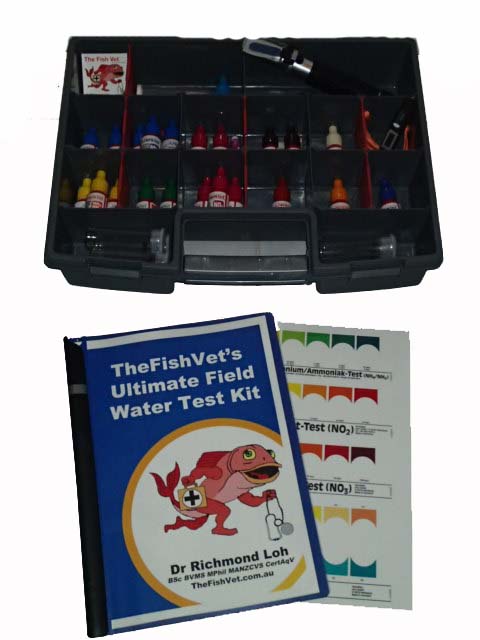
TheFishVet’s Ultimate Field Water Test Kit.

There are so many makes of water quality test kits. How do you know which is the best brand? And would you go for the droppers, test strips or meters? Which tests work in both fresh and salt water (including aquaponics)? How do you interpret the results? Are you confused?

The most important question is ,
"Do you want to use what TheFishVet uses?"

After having tried multiple test kits for reliability and ease of use, I’ve hand selected those that are essential for every practicing fish vet or fish doctor. It’ll take away the stress of researching and sourcing the individual tests. With this kit, you’ll be able to determine 16 water quality parameters!

They are perfect for freshwater aquaria/ponds, aquaponics, brackish and marine systems.

With TheFishVet’s Ultimate Field Water Test Kit, you’ll be able to determine values for:

  1. Ammonia (NH3/NH4)
  2. Nitrite (NO2)
  3. Nitrate (NO3)
  4. pH
  5. KH (alkalinity or carbonate hardness)
  6. GH (permanent hardness or general hardness)
  7. Calcium (Ca+2)
  8. Magnesium (Mg+2)
  9. Chlorine (Cl2)
  10. Dissolved Oxygen (O2)
  11. Copper (Cu+2)
  12. Phosphate (PO4)
  13. Carbon dioxide (CO2)
  14. Water temperature
  15. Specific gravity / salinity
  16. Water volume

All these come in a handy case because portability is very practical.

Charts are laminated to be waterproof, so you can use them next to ponds.

PLUS, it comes with easy instructions and a handy booklet of reference values for different biotypes and species-specific requirements (extracted from Fish Vetting Essentials).

This special introductory offer will end on June 30.

BUY NOW <TheFishVet’s Shopping Cart.>

—
Yours sincerely,

Dr Richmond Loh
DipProjMgt, BSc, BVMS, MPhil (Pathology), MANZCVS (Aquatics & Pathobiology), CertAqV, NATA Signatory.
Aquatic Veterinarian | Adjunct Lecturer Murdoch University | President WAVMA |

Secretary Aquatic Animal Health Chapter – ANZCVS.
THE FISH VET, Perth, Western Australia, AUSTRALIA.

Mobile Aquatic Veterinary Medical & Diagnostic Services.
http://www.thefishvet.com.au
Ph: +61 (0)421 822 383

?ui=2&ik=f5fe45e169&view=att&th=1467c619f76d8f73&attid=0.1.1&disp=emb&zw&atsh=1

Public Environmental Review – Western Australian Shark Hazard Mitigation Drum Line Program 2014-2017

The State of Western Australia (Department of the Premier and Cabinet) is proposing to set up to 60 static baited drum lines. These will be deployed approximately 1km offshore from selected high use swimming beaches and surf breaks within designated Marine Monitored Areas in the metropolitan and south west coastal regions of Western Australia. The static drum lines are to be deployed between 15 November and 30 April for a period of three years, commencing in 2014.

Twelve drum lines will be kept in reserve for temporary deployment in response to a shark threat or incident anywhere in Western Australian waters at any time throughout the year.

Public submissions close on Monday 7 July 2014.

Read more here.


Follow me on: Facebook “Fin Page” – YouTube – Blog – Linkedin – Twitter

—
Yours sincerely,

Dr Richmond Loh DipProjMgt, BSc, BVMS, MPhil (Pathology), MANZCVS (Aquatics & Pathobiology), CertAqV, NATA Signatory.
Aquatic Veterinarian | Adjunct Lecturer Murdoch University | President WAVMA |
Secretary Aquatic Animal Health Chapter – ANZCVS.
THE FISH VET, Perth, Western Australia, AUSTRALIA. Mobile Aquatic Veterinary Medical & Diagnostic Services.
http://www.thefishvet.com.au
Ph: +61 (0)421 822 383
Skype: thefishvet
The Fish Vet - Perth, WA

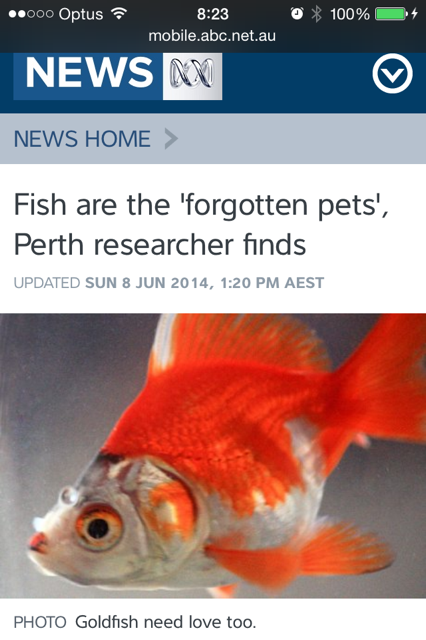
Fish are the ‘forgotten pets’, Perth researcher (Dr Miriam Sullivan) finds.

Check out this interesting article on one of my client’s research findings.

Dr Sullivan was also an invited guest on last week’s Radio National Talk Back.


The humble goldfish is as smart as a cat or dog, can live more than a decade and can even count, a Perth researcher believes.

And yet, she says, often owners do not give them nearly enough love and care.

Miriam Sullivan, a Lecturer from the University of Western Australia who is passionate about pet fish, has just completed a PhD on the subject.

She surveyed 600 fish owners, analysed people’s responses to the suggestion that they clean their pets’ tanks, and conducted her own research into whether goldfish prefer real or fake plants in their tanks.


http://mobile.abc.net.au/news/2014-06-08/fish-care-tanks-goldfish-intelligence-puppies-kittens/5500544

—
Yours sincerely,

Dr Richmond Loh
DipProjMgt, BSc, BVMS, MPhil (Pathology) Murdoch, MANZCVS (Aquatics& Pathobiology), CertAqV, NATA Signatory.
THE FISH VET, Perth, Western Australia.
Veterinary Medicine for fish.
W: http://www.thefishvet.com.au
E: thefishvet
P: +61 (0)421 822 383

Godzilla? Huge shark eaten by mystery sea monster, according to scientists | News.com.au

http://mobile.news.com.au/technology/science/godzilla-huge-shark-eaten-by-mystery-sea-monster-according-to-scientists/story-fnjwkt0b-1226947396017

—
Yours sincerely,

Dr Richmond Loh
DipProjMgt, BSc, BVMS, MPhil (Pathology) Murdoch, MANZCVS (Aquatics& Pathobiology), CertAqV, NATA Signatory.
THE FISH VET, Perth, Western Australia.
Veterinary Medicine for fish.
W: http://www.thefishvet.com.au
E: thefishvet
P: +61 (0)421 822 383

Fish Joke for Monday-itis: NOT funny!

A while ago, I told my friend that I’ve a series of great fish jokes for Mondayitis. But the one I floated with him wasn’t the best. He responded,”Do these jokes cure Mondayitis, or do they induce Mondayitis?”

Dr Jeffrey Go discussed “Experimental spread of megalocytivirus between freshwater and marine environments using a model euryhaline vector species”.

Last week, I attended a webinar on this topic. The investigator presented some very interesting findings. In the lab, he was able to infect several Australian species with the iridovirus that was isolated from the gourami. The methods and results haven’t been published, so I can’t go into more detail.

Some interesting questions were raised:

  • There is a huge difference between “possible” and “probable”. Are we taking an alarmist view?


  • The results suggest that disease transmission is possible experimentally, but is it probable in our environment? Consider the following:
  •       Studies have shown that diseases that cause high mortality rates are unlikely to establish.
  •       The fishes used in the experiment occupy very different habitats (freshwater versus marine, tropical versus temperate, still waters versus open waters, etc.).


  • How do we know that the virus is actually a disease of the gourami? Are we just victimising the ornamental fish industry?

The Ornamental Fish Industry Australia questions the validity of the original work (see link). More research would be needed to answer these questions.

The Pet Industry Association Australia defends the current quarantine practices are adequate (see link).

However, work by Dr Joy Becker, et al. (2009/044 Aquatic Animal Health Subprogram: surveys of ornamental fish for pathogens of quarantine significance) suggests otherwise:

“DGIV was consistently found in several species of gourami imported from six different countries. The virus was also found in stocks of gourami from wholesale premises, at retail outlets and one domestic fish farm. The findings indicate that the health certification at exporting countries was insufficient to detect and prevent fish with DGIV being exported to Australia¼ The findings of this project supports revision of policy to prevent incursion of exotic pathogens from imported ornamental fish¼”

A paper on the quarantine requirements for Australia and other countries can be found at this link.

How did all this interest in the research first come about?

In February 2003, an iridovirus-like virus was observed from the spleen and kidneys and gills of juvenile Murray cod held in a recirculating aquaculture system (Lancaster et al. 2003). This infection resulted in 90% mortality in fingerlings (40-60 mm) and 25% mortality in larger fish (100-150 mm).

See link to full article.

All things being said, I think it’s easy to be an armchair critic. It’s difficult to do the research, and I commend them on their work. We don’t know if we don’t look. I’ll have to wait for the published papers when they’re ready.

To summarise, I’m starting to be convinced about the potential threat, however, we don’t have enough information to make a decision to alter current practices.


Follow me on: Facebook “Fin Page” – YouTube – Blog – Linkedin – Twitter — Yours sincerely,
Dr Richmond Loh

DipProjMgt, BSc, BVMS, MPhil (Pathology) Murdoch, MANZCVS (Aquatics & Pathobiology), CertAqV, NATA Signatory.

Aquatic Veterinarian | Adjunct Lecturer Murdoch University | President WAVMA | Secretary Aquatic Animal Health Chapter – ANZCVS.

THE FISH VET, Perth, Western Australia, AUSTRALIA.

Mobile Aquatic Veterinary Medical & Diagnostic Services. http://www.thefishvet.com.au Ph: +61 (0)421 822 383

Skype: thefishvet

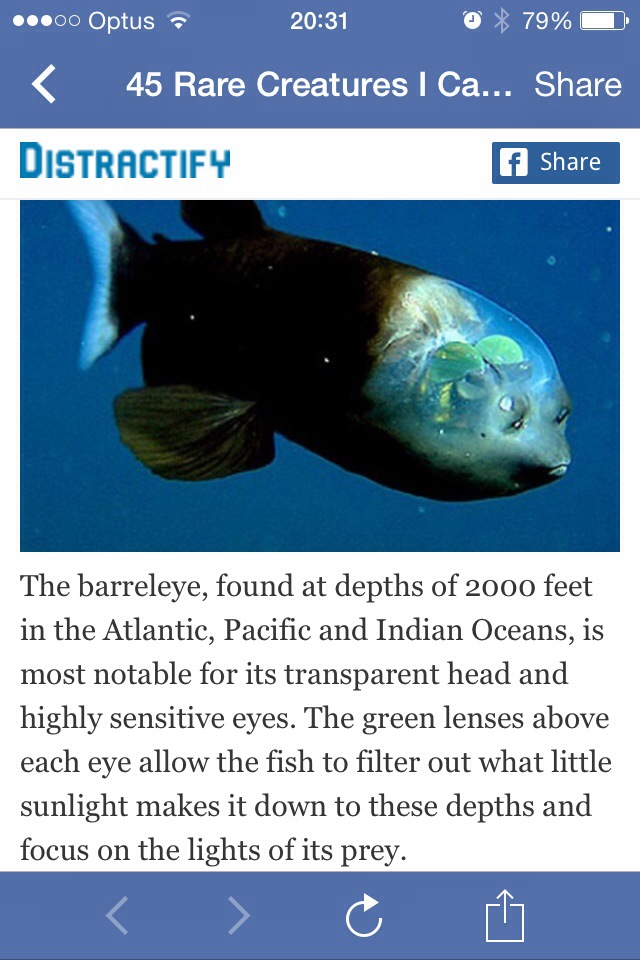
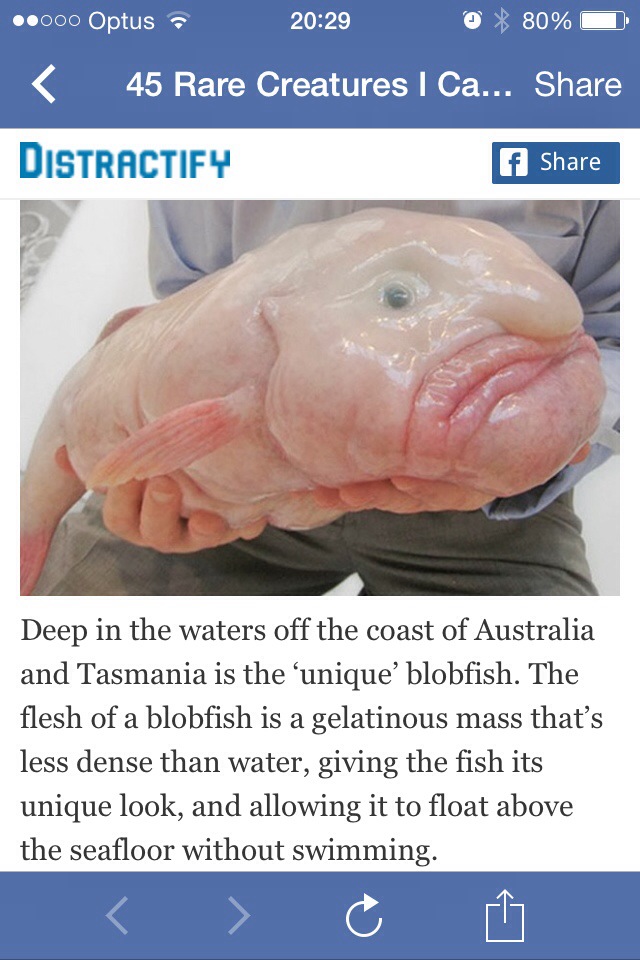
Learn about the P3nis snake, dumbo octopus, blobfish, goblin shark and sarcastic fringehead…

What weird and wonderful creatures fill our world. Check it out at this link.

20140604-204040-74440483.jpg

20140604-204040-74440105.jpg

AAPSP’s Fish Pathology Workshop instructed by Dr Judith Handlinger – Dates, Venues & Registration details.

Itinerary for the 2-day workshop which will be presented at the various cities around Australia (spanning June to September, 2014):

Day 1:

  • Introduction & basic anatomical differences – what they mean for pathologists
  • Immunological and physiological differences, and how these influence pathology.
  • What is different about the pathogens and host reactions (and what is the same).
  • Differences in routes of exposure.

Day 2

  • What is different about the pathogens and host reactions.
  • Nutritional problems – what we know.
  • Exotic diseases – national and State issues.
  • Pathology as part of the puzzle – complex cases, finding the cause.


DATES:

  • Wed 11 -Thur 12 June, TASMANIA.
  • Mon 23-Tues 24 June, VIC TORIA.
  • Mon 21-Tues 22 July, NEW SOUTH WALES.
  • Thurs 31st July – Fri 1st Sept, QUEENSLAND.
  • Mon 4-Tues 5th Aug, SOUTH AUSTRALIA.
  • Wed 27 – Thur 28 Aug, WESTERN AUSTRALIA.
  • Mon 1 –Tues 2 Sept, NORTHERN TERRITORY.


Contact Megan Wyllie (MWyllie@animalhealthaustralia.com.au) and prepay AU$827.00 (GST exclusive) for the 2 day workshop.


See the following link for more details – aapsp fishpathology jhandlinger


—
Yours sincerely,

Dr Richmond Loh

DipProjMgt, BSc, BVMS, MPhil (Pathology), MANZCVS (Aquatics & Pathobiology), CertAqV, NATA Signatory.
Aquatic Veterinarian | Adjunct Lecturer Murdoch University | President WAVMA |
Secretary Aquatic Animal Health Chapter – ANZCVS.
THE FISH VET, Perth, Western Australia, AUSTRALIA. Mobile Aquatic Veterinary Medical & Diagnostic Services.
http://www.thefishvet.com.au
Ph: +61 (0)421 822 383
Skype: thefishvet
The Fish Vet - Perth, WAwavma.jpg?w=780

Have you ever considered being an “invasivore”? What is it?

There’s a new trend in cuisine, taking the world by storm. Heard of the green movement, organic produce and others? Well, this “invasivore” involves you eating invasive organisms.


What are invasive organisms? They are species that when introduced into a new environment, they establish and dominate and overtake the habitat. In doing so, they cause significant environmental damage. For the fish people, the most common problem species are the carp, tilapia, lionfish and the like.


This article on the new cullinary wave was shared by my friend and it has some great ideas! I wonder if Master Chef, Iron Chef, Jamie Oliver, Gordon Ramsay, etc. will adopt this in their cuisine.


“When we decide something is pretty good to eat, we run right through it,” says Jackson Landers, a hunting educator and author of Eating Aliens. “There’s definitely precedent for human beings deciding to hunt something down in a systematic way, especially if we apply industrial harvesting methods.”


“Any economist will tell you, when you have a public resource, as long as policy does not limit the take,” it will be depleted.”


Some other great quotes in the article include “For many fisheries people, you may not be considered a real scientist until you’ve eaten your study organism.”


Read more here.