Dr Richmond Loh
DipProjMgt, BSc, BVMS, MPhil (Pathology), MANZCVS (Aquatics& Pathobiology), CertAqV, NATA Signatory.
Aquatic Veterinarian & Veterinary Pathologist.
PERTH | MELBOURNE | SYDNEY | TOWNSVILLE | BRIBIE ISLAND.
THE FISH VET – AUSTRALIA.
Aquatic Veterinary Medical & Diagnostic Services.
Web: http://www.thefishvet.com.au
Ph: +61 421 822 383
Mail: PO Box 5164, East Victoria Park, WA 6981, Australia.
Tecniplast are sponsoring a one day zebrafish husbandry workshop.
This full-day workshop brings a condensed version of the highly successful three-day Zebrafish Husbandry Course run bi-annually by Fondazione Guido Bernardini. The program includes talk presented by talks by Carrie Barton (Oregon State University), Jason Cockington (University Queensland) and Marco Brocca (Manager Aquatic Services, Tecniplast SpA, Italy).
Regardless of your level of experience with fish, this is a fabulous opportunity to get together and learn more about zebrafish husbandry and wellbeing with experts from the field. If you have time and you can stay another day then come see Carrie present another talk in the main ANZLAA program.
What: Full-day education workshop on zebrafish husbandry, care and welfare
Where: Sydney (Sheraton on the Park)
When: Tuesday 5 September 2017
Cost: $150 includes all meals and printed notes
Remember you can register just for the workshop if you can’t make the rest of the conference.
For registration to the workshop, please contact Danielle Fitzsimmons on the following email:
<danielle@cornerstoneevents.com.au>
For further detail see attached workshop pamphlet and conference program.
He is a Certified Aquatic Veterinarian and has been awarded the George Alexander International Fellowship by the International Specialised Skills Institute. He is an author and reviewer to several journals and other publications. He is an invited speaker nationally and internationally (Czech Republic, St Kitts & Nevis, New Zealand, Singapore, Thailand, USA, Australia).
Dr Loh started his professional career as a veterinary fish pathologist at Mt Pleasant Laboratories in Tasmania. His skill set is unique, having been admitted as a Member of the Australian & New Zealand College of Veterinary Scientists (ANZCVS) by examination in both the subjects of “Aquatic Animal Health” and in “Pathobiology”. This makes him a qualified aquatic veterinarian, as well as a qualified veterinary pathologist.
As “The Fish Vet”, he provides veterinary services for a range of clients and they include individual pet fish owners, public aquaria, retailers, wholesalers and fish farmers (ornamental and food fish); locally, interstate and in internationally. He is the consultant veterinarian to AQWA (the Aquarium of WA), is an adjunct lecturer at Murdoch University and provides advice on animal welfare as it pertains to fishes to several universities and the RSPCA.
Through his veterinary career, he has appeared on TV (Creature Features, Stateline, Catalyst, ABC news), been interviewed on radio (Curtin FM), appeared in newspapers (The Sunday Times UK, Herald Sun, The Examiner, Sunday Tasmanian, The Cairns Post, Canning Times), magazines (Australian Aquarium Magazine, Aquarium Keeper Australia, TIME Australia Magazine, Your Pet Magazine, Woman’s Day, Pets – Taking Care of Your Family’s Best Friend, Animals’ Voice) and appears on several local and international websites (ABC Online).
Pertinent posts:
• 2014 President of the World Aquatic Veterinary Medical Association (WAVMA),
• Secretary for the Aquatic Animal Health Chapter of the Australian and New Zealand College of Veterinary Scientists (ANZCVS),
• Adjunct Lecturer at Murdoch University and provides advice on fish health and welfare to several universities and the RSPCA, and
• WAVMA Webinar co-ordinator/moderator and WAVMA Executive Board Member (2013 to present).
Giana Bastos Gomes
Giana studied veterinary medicine in Brazil where she graduated in 2003. Her career in aquaculture started immediately, at the largest prawn hatchery from Brazil (Aquatec). After leaving the Brazilian company she went back to University and did her Masters on prawn diseases caused by intracellular bacteria (NHPB). In 2008 after finishing her Masters Giana migrated to Australia.
Since 2010, Giana worked for various renowned research institutions in Queensland including James Cook University, DEEDI-DPI QLD and Australian Institute of Marine Science (AIMS). She has has received a “2016 Science and Innovation Award” from Deputy Prime Minister and Minister for Agriculture and Water Resources, Barnaby Joyce. In addition, Ms Gomes also won the “2016 Minister’s Award”.
Currently Giana is undertaking a PhD on developing new tools for early detection of ciliate parasites in farmed barramundi from tropical Australia, at James Cook University under the supervision of Prof. Dean Jerry and Dr Kate Hutson. Her completion date is 2016.
Dr Alistair Brown
Dr Alistair Brown is an aquatic veterinarian and began his career in the aquatics field in 1991 when he began working for Marine Harvest Scotland (producers of Atlantic salmon). Since then, he has worked with a range of commercial species including Australian native fish, salmonids and abalone.
Dr Brown’s qualifications:
• Bachelor of Veterinary Medicine and Surgery, Murdoch University (1987),
• Bachelor of Science, Murdoch University (1985),
• Examined Member Australian and New Zealand College of Veterinary Scientists (Aquatic Animal Health) (1999, and
• Certificate in Fish Health and Production (Royal College of Veterinary Surgeons) (1995).
DR LUCIE NEDVED
Dr Lucie Nedved is a small animal veterinarian with a special interest in aquatic species. She has experience with aquatic species including fish, amphibians and reptiles as well as managing a large zebrafish facility in Sydney – overseeing the veterinary care and breeding programs. Dr Nedved has specialised experience in artificial breeding of zebrafish including in-vitro fertilization and sperm freezing. She is a member of the Zebrafish Husbandry Association and regularly contributes to meetings involving aquatic species in the laboratory animal setting. Dr Nedved lectures regularly at The University of Sydney and The University of NSW.
DR ORACHUN HAYAKIJKOSOL
Dr Orachun Hayakijkosol is an aquatic animal specialist who has a strong molecular background in aquatic animal diseases diagnostics. He has had experience in aquatic species including fish, crustaceans, freshwater turtles and sea turtles. Dr Hayakijkosol completed his Master degree and PhD in viral infectious diseases in crustacean species.
He is a member of the World Aquatic Veterinary Medical Association and is currently a lecturer within the Discipline of Veterinary Science at James Cook University.
Saw this clip and then thought about all the restaurants that offer live fish and shellfish on the menus – https://youtu.be/y8oyhEnu2Oc
Have you ever wondered if the fish are healthy? I always wonder who looks after the fishes, and ensures they’re safe for human consumption (in terms of chemical residues, and biological safety), and fish health while they’re on hold.
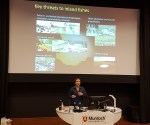
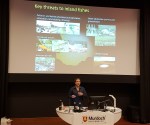
I attended a fantastic presentation by Dr Stephen Beatty last night.
Dr Stephen Beatty is a Senior Research Fellow at Murdoch University, and his work aims to make real impact on the conservation of aquatic ecosystems. Past and current research includes the impacts of water abstraction, climate change, introduced species, and water quality decline on aquatic ecosystems with a particular focus on fish communities.
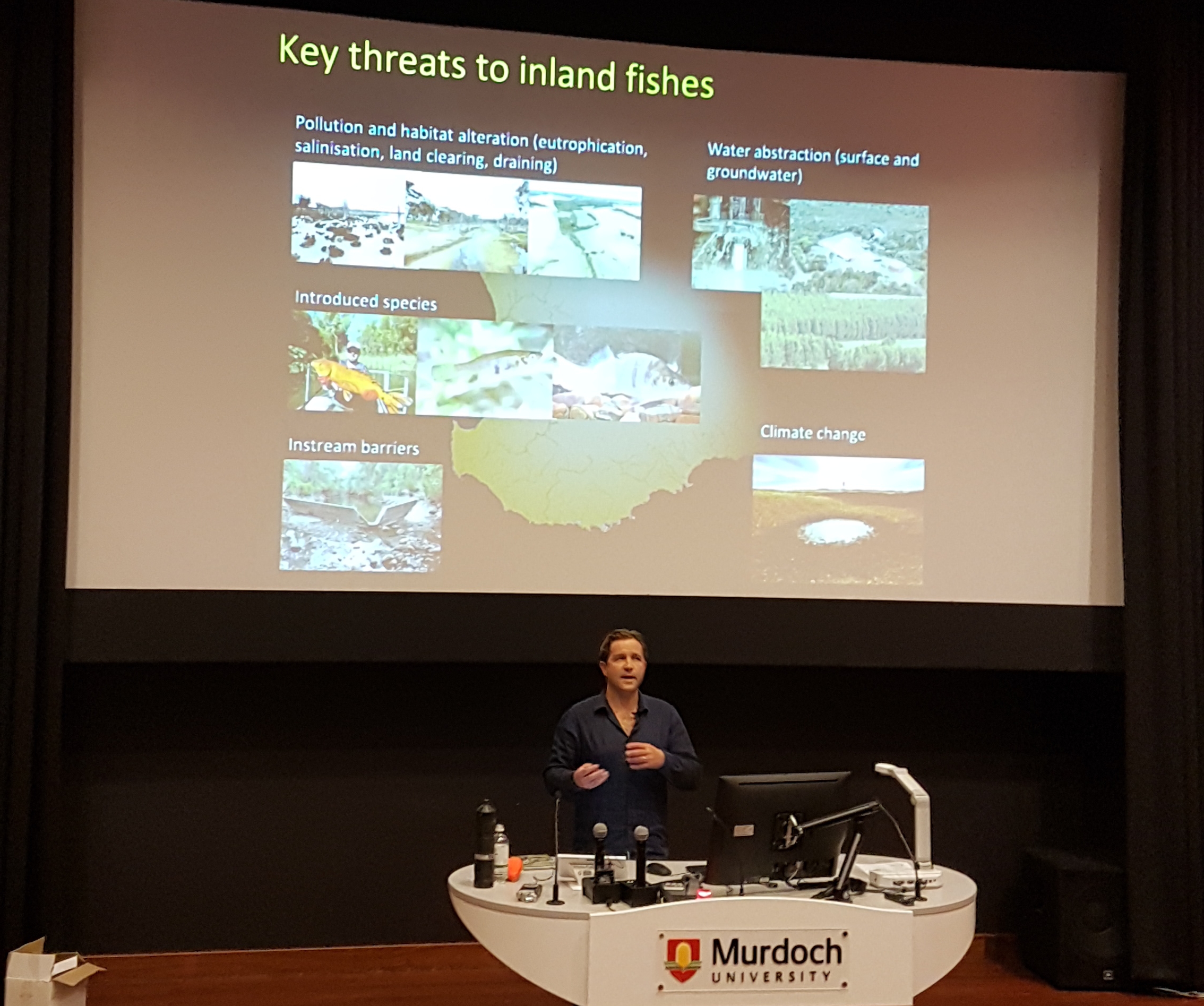
Dr Beatty spoke of the importance of riverine and estuarine fishes and crustacea, as being the connectors between the aquatic and terrestrial food webs. He briefed us on the threats to aquatic environments being:
Pollution and habitat alteration (eutrophication, salinisation, land clearing, draining)
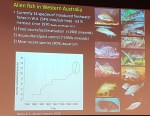
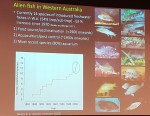
Introduced species (mosquito fish, redfin, yabbies, goldfish and carp)
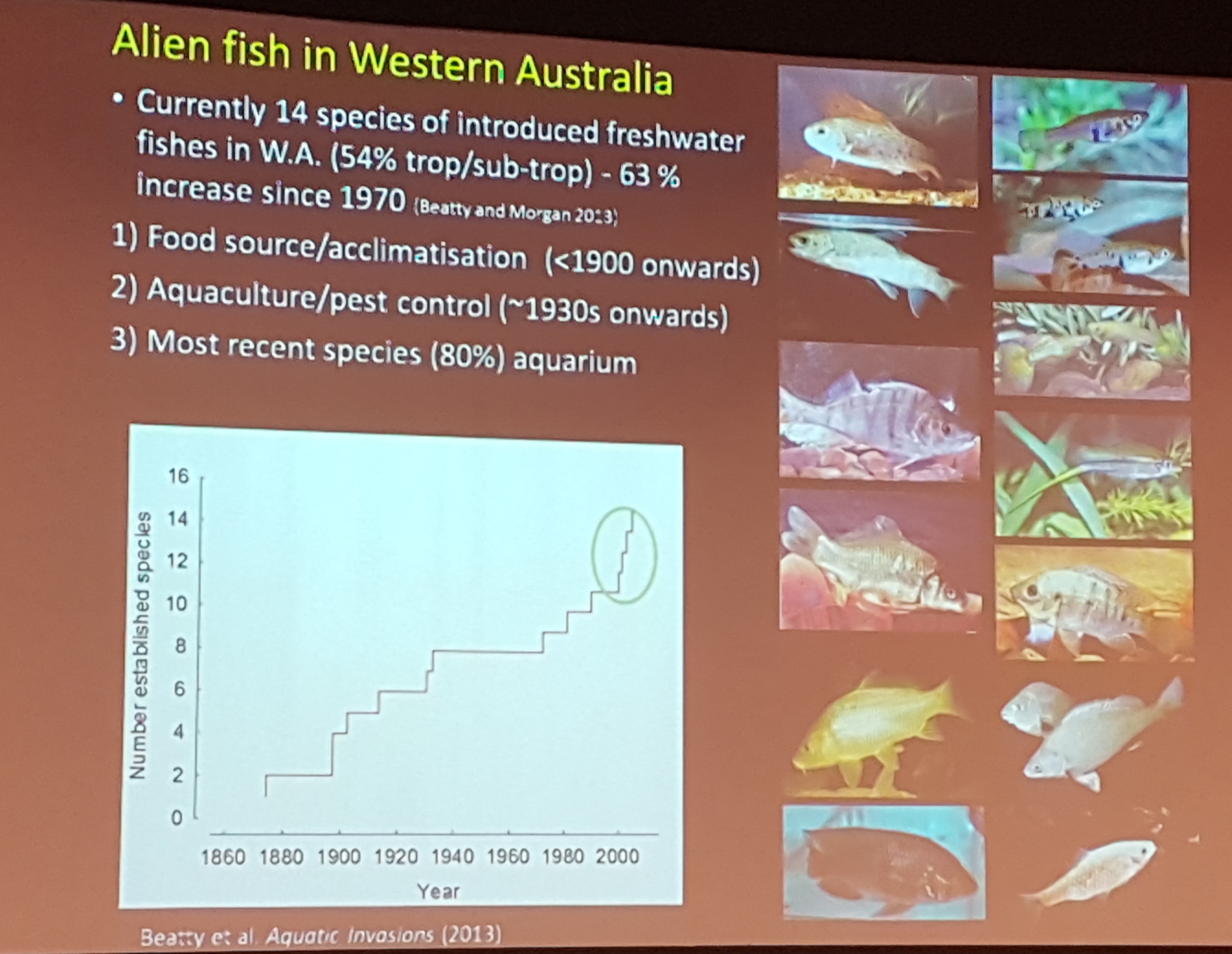
On the topic of introduced/alien species, he says the impacts are difficult to quantify, because we don’t have baseline data on how the aquatic environment was, prior to human influence. And the more altered the environment is, the more likely it is for an introduced species to flourish (much like rabbits). Controlling their abundance is the most viable option. And of the 14 alien species, the most harmful to river ecology is the little mosquito fish (Gambusia). Goldfish, on the other hand, tend to colonise areas that are affected by salinity higher than 3g/L (thus, the lack of freshwater mussels and other native species is not due to displacement by goldfish). He also warns that there would be significant resource investment, and can be a waste of time and money.
He spoke on the practical solutions they’ve had success with, for rehabilitating aquatic ecosystems:
Maintaining complex habitat (protecting and rehabilitating vegetation in the riparian zone, artificial habitats)
Oxygenation programs
Addressing nutrients and salinity
Fair allocation of water
Education (prevent alien species introduction)
Addressing high priority in-stream barriers (incorporate fishways)
Invest in monitoring for pollution and water quality at multiple trophic levels
Novel management approaches underpinned by research.
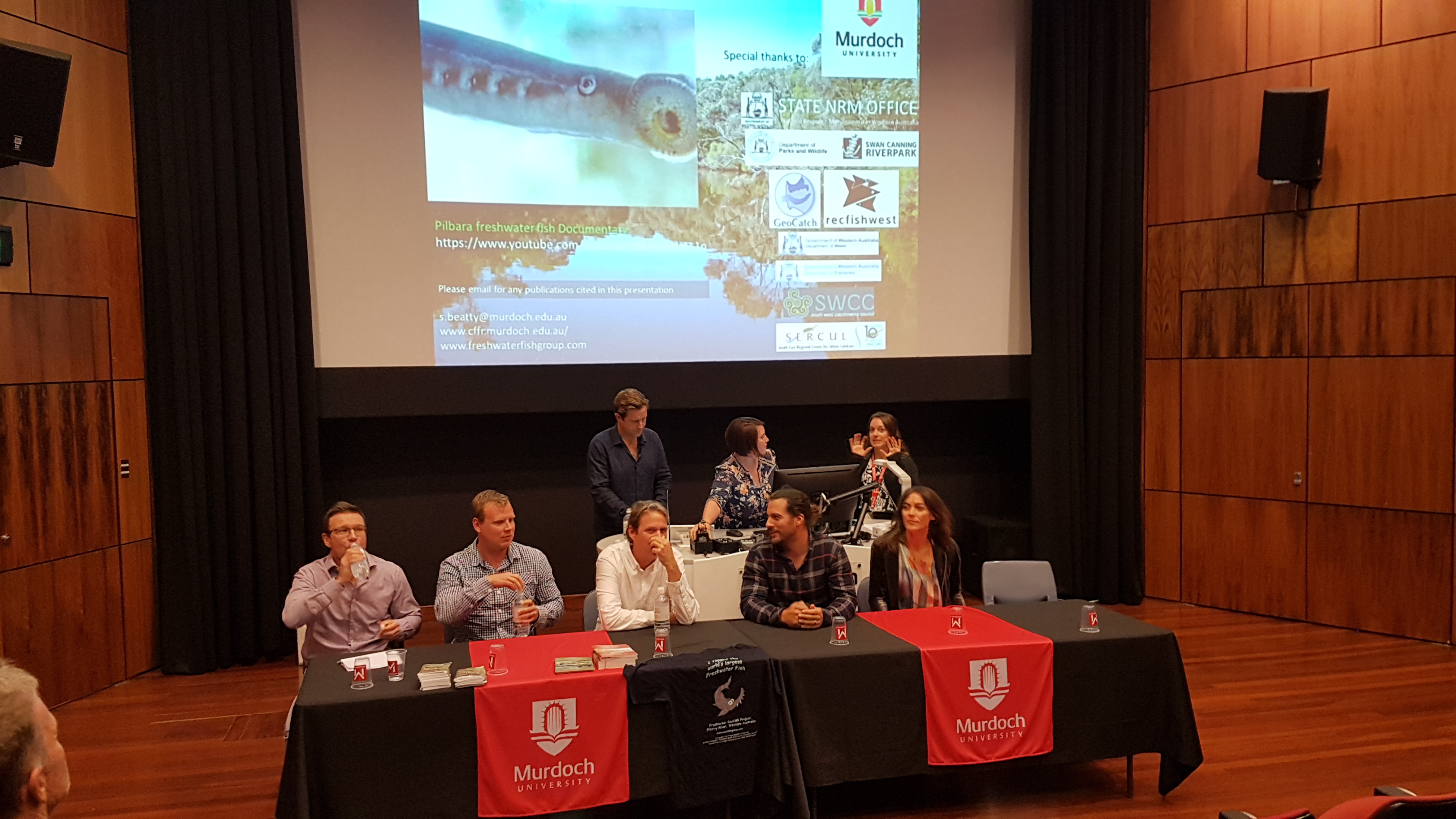
At the conclusion, I posed this question to the panel, “Are Carp and Goldfish, a cause, or the effect of, environmental degradation? What happens after KHV is released?”
Dr Beatty answered, “I’m very hesitant to point the finger at goldfish as a major ecological impact in its own right in south-western Australia. I don’t think it helps in terms of water quality, in the greater systems they’re in… the virus they’re releasing is specific for carp [including koi]… the one point I’d made to the researchers over east is that if all (80-90%) of koi/carp die, there is going to be a massive clean-up operation. If there is a free niche there, and goldfish occupy a similar niche, will goldfish do better than they currently do now. Anecdotally, over east, goldfish do very well where there is no carp. So research needs to be done on what the ecological impact goldfish will have in the Murray Darling Basin.”
If the release of KHV is a political stunt for freshwater angler votes, I wonder if, when it’s all over and done with, will anglers be happier to catch goldfish instead?
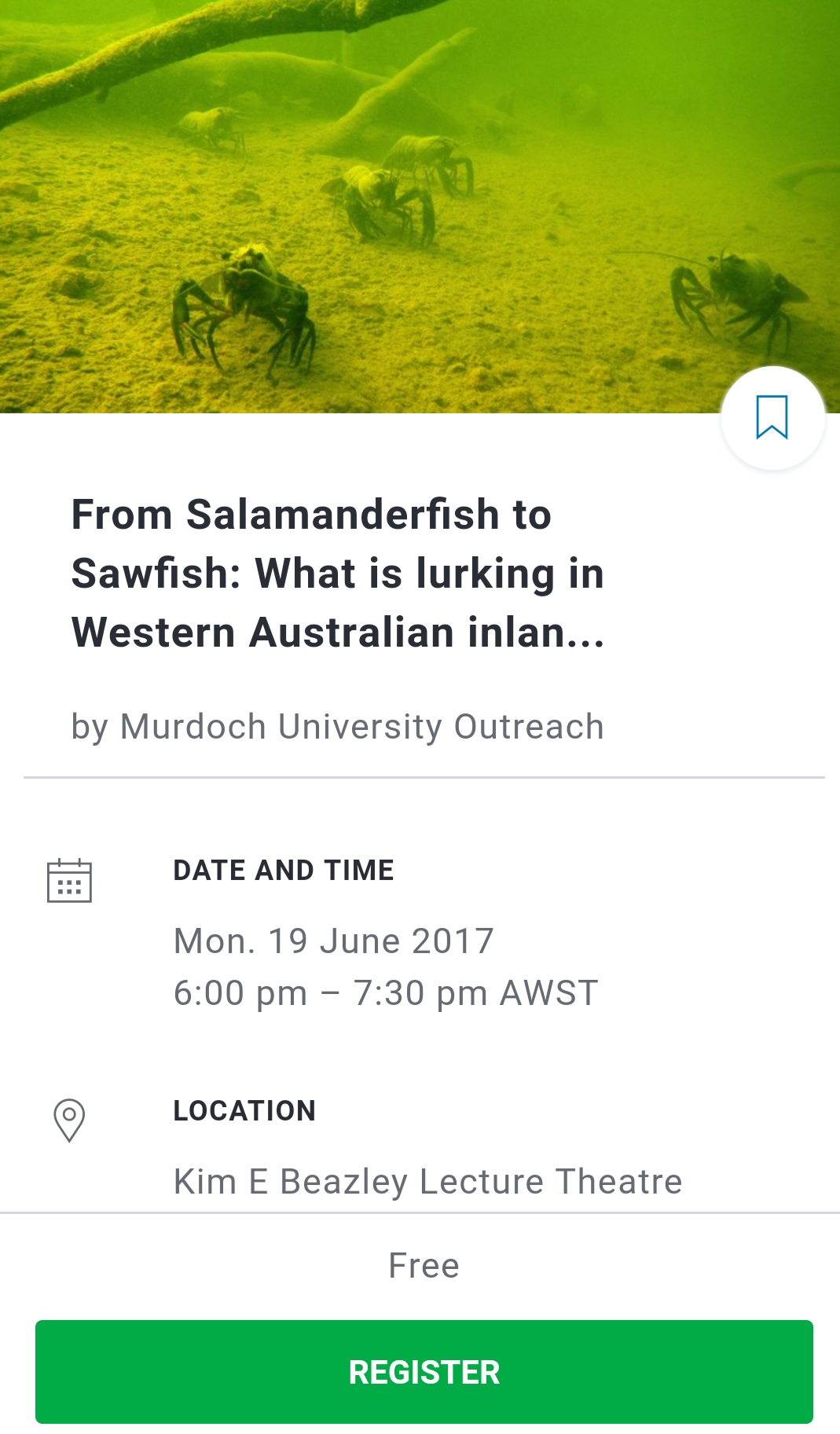
Title: From Salamanderfish to Sawfish: What is lurking in Western Australian inland waterways and how can we help them? Presenter: Dr Stephen Beatty Date: 19 June @ 6pm Location: Kim Beazley
RSVP here
See you there tomorrow if you make it!
—
Yours sincerely,
Dr Richmond Loh
DipProjMgt, BSc, BVMS, MPhil (Pathology), MANZCVS (Aquatics& Pathobiology), CertAqV, NATA Signatory.
Aquatic Veterinarian & Veterinary Pathologist.
PERTH | MELBOURNE | SYDNEY | TOWNSVILLE | BRIBIE ISLAND.
THE FISH VET – AUSTRALIA.
Aquatic Veterinary Medical & Diagnostic Services.
Web: http://www.thefishvet.com.au
Ph: +61 421 822 383
Mail: PO Box 5164, East Victoria Park, WA 6981, Australia.
A veterinary science degree takes around 5 to 6 years of study, depending on the university.
Australia has 7 universities offering undergraduate veterinary science courses.
These include:
Murdoch University, Perth WA – where Drs Richmond Loh & Alistair Brown attended.
University of Sydney, Sydney, NSW – where Dr Lucie Nedved attended.
University of Melbourne, Melbourne, Victoria.
Charles Sturt University, Wagga Wagga, NSW.
James Cook University, Townsville, Queensland.
University of Adelaide, Roseworthy, SA.
University of Queensland, Brisbane, Qld.
Once you graduate, you will need to register with the veterinary registration board in any state you will practice in. Registration with the board is your licence to practice veterinary medicine in that state.
Once you have completed this initial degree, you can start post-graduate studies towards specialising in a variety of species or disciplines:
School of Veterinary Medicine, City University of Hong Kong, is proud to announce the world’s newest aquatic veterinary course – a MSc in Aquatic Production and Veterinary Health. This will be delivered jointly with the University of Stirling, beginning in September 2017.
They will have a team of world leaders in their subject areas to teach the various units.
Aquaculture has been the fastest growing animal production sector globally for the past three decades and with Asia producing over 90% of the world’s aquatic products, it is essential that expertise is built up in the region to ensure the production of safe and sustainable products.