Carp-culling project will be a one-hit wonder, experts warn.

Herd immunity will allow invasive fish to repopulate waterways

Common carp are an introduced and invasive species in Australia’s waterways. Photo Pixabay
Associate Professor Joy Becker is a member of the National Carp Control Program Scientific Advisory Group. Her research suggests the CyHV3 virus will not overcome the carp’s ‘remarkable fecundity’.

A federal government plan to slash carp fish numbers in Australia’s waterways by infecting the pest-species with a herpes virus will be a one-hit wonder, University of Sydney experts are warning.

The warning published last week in Australian Zoologist comes as the Fisheries Research and Development Corporationinvestigates whether to go ahead with a planned release of the virus in an effort to help rebuild native fish numbers in Australia’s waterways.

“The release of this herpes virus in our waterways will undoubtedly cause a single epidemic of herpesvirus disease resulting in massive deaths among carp,” said the study’s lead author Associate Professor Joy Becker of the University’s School of Life Environmental Sciences.

“However, there’s little evidence to suggest that we will see repeated outbreaks of a magnitude to counter the reproductive potential of the surviving carp.”

This conclusion is based on a review of evidence from around the world examining the impact of the koi herpesvirus (CyHV3) on common carp in natural and farmed environments.

Associate Professor Joy Becker at the University’s Camden campus.
Photo by Rachael Di-masi

Associate Professor Becker and her author-colleagues, Professor Michael Ward and Dr Paul Hick from the Sydney School of Veterinary Science, say that the likelihood of carp population being controlled by releasing the virus is significantly reduced due to herd immunity and the carp’s “remarkable fecundity”.

They warn this means the government’s $15m culling program, which was announced in parliament by former deputy prime minister Barnaby Joyce, could be a one-hit wonder.

The research team said their great concern is how quickly the CyHV3 virus reaches balance in host populations, which occurred within two years in a study in Japan.

Dr Becker, who is a member of the government’s National Carp Control Program Scientific Advisory Group, has communicated her advice to the NCCP and to colleagues at scientific meetings.

Source: Pet Industry News Newsletter 19th November 2018.

BUT, “Barnaby Joyce has recently demanded the herpes virus be immediately released contrary to the advice of the experts.

Source – http://www.joelfitzgibbon.com/carp_eradication_plan_science_not_ego?fbclid=IwAR1ZomZ4uKPo6eOLbZgA4B57td9DxzRAVWcq69onDDOswMIl8fojdZPSjS4

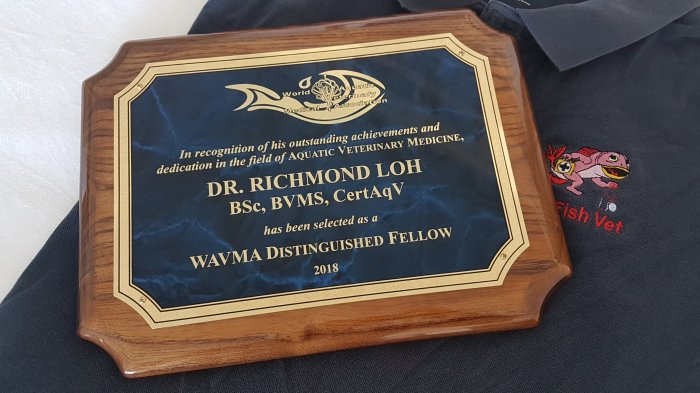
Congratulations to Dr Loh, the newest Distinguished Fellow of WAVMA!

[Each year the Board Members of WAVMA ask themselves this question…]

Are there any individual members that truly stand out, that have made a huge contribution, not only to the organisation itself, but have also made a contribution to aquatic veterinary medicine, and encouraging other people to get involved, to help them, mentor them and do it.

This might come as a little surprise because we don’t do this every year. When the board sits down and looks at this, they look for these people and they give them recognition as a Fellow of the WAVMA. This is rather a distinguished recognition, and I would like to as Dr Richmond Loh, to come up and accept the plaque…

Watch the event at this link.

The honor of Fellowship is bestowed to outstanding WAVMA members who have contributed significantly to the development of aquatic veterinary medicine practice, art and science. It is to honor those members who have distinguished themselves amongst their peers.

It requires three WAVMA members to nominate a member who has contributed significantly to the development of aquatic veterinary medicine. The nomination will subsequently be scrutinised by a committee of peers with the awarding of a fellowship recognising this contribution. The program was developed as there are few if any mechanisms to internationally recognise aquatic veterinarians who have contributed significantly to the field, except through academia. As such there are several categories of contribution which can lead to nomination.

WAVMA Fellows are full members of WAVMA who have been recognized by their peers and the WAVMA Executive Board as contributing to the development of aquatic veterinary medicine through clinical endeavor, scientific research, teaching or other significant ways. The WAVMA Fellow designation is a prestigious honorarium that recognizes the commitment to and achievement in the field of aquatic veterinary medicine.

Dr Loh will join the other ten in list of WAVMA fellows – https://www.wavma.org/WAVMA-Fellows

Richmond Loh (2018)

Nick Saint-Erne (2017)

Mohamed Faisal (2016)

Grace Karreman (2013)

Peter L. Merrill (2012)

Marian McLoughin (2013)

Dusan Palic (2013)

Ronald J. Roberts (2012)

A. David Scarfe (2012)

Julius M. Tepper (2012)

Christopher I. Walster (2012)

WAVMA conference 3 at St. Kitts

The World Aquatic Veterinary Medical Association’s Conference, held at St Kitts, has just come to an end.

I learnt a whole heap of new things from collegues from around the globe. I will be sharing these with my team Australia-wide, to consider different and perhaps improved ways of doing things in the plight to advance aquatic veterinary care.

I got to witness the enthusiasm of the veterinary students on aquatic animal health, at the largest WAVMA Student Chapter (kick-started by Dr Jenice Bell, now having had a few other successors including the two Courtney’s). They have all the backing of excellent student-centred lecturers (Drs Mark Freeman, Don Bergfeld and Michelle Dennis) plus the benefit of great facilities and tropical island at Ross University. With a strong focus on aquatics, it is becoming the go-to university for veterinarians who are wanting to pursue a career in this field.

To see what we got up to, check out the pictures at http://tinyurl.com/wavma-conf-stkitts

Fish Joke for Monday-itis: tree talk

One coconut tree asks another as as they stood by the beach:

Will there be fish around here?

It’s a shore bet!

Have a FINtastic week! R <+>{

Is the use of tonic immobility in sharks sufficient for surgical procedures?

Tonic immobility produces different responses in different animals. For example, in some reptiles it produces hyperalgesia (i.e. more intense feeling of pain), but in some rodents, it does produce some analgesia.

It has not been documented to have analgesic effects in sharks, and in some instances have been linked to hyperaesthesia (i.e. increased ability to feel).Therefore, additional analgesia is recommended when performing painful or invasive procedures

Therefore, additional analgesia is recommended when performing painful or invasive procedures

<https://books.google.com/books/about/Miller_Fowler_s_Zoo_and_Wild_Animal_Medi.html?id=f3haDwAAQBAJ&gt;

Some scientists also believe that tonic immobility can be a stressful experience for sharks. By measuring blood chemistry samples when the shark is immobile, it has been suggested that tonic immobility can actually put stress on the shark, and reduce breathing efficiency. However, it has also been proposed that sharks have a series of compensatory mechanisms that work to increase respiration rates and lower stress <https://ipfs.io/ipfs/QmXoypizjW3WknFiJnKLwHCnL72vedxjQkDDP1mXWo6uco/wiki/Apparent_death.html&gt;


Yours sincerely,

Dr Richmond Loh
DipProjMgt, BSc, BVMS, MPhil (Pathology), MANZCVS (Aquatics& Pathobiology), CertAqV, NATA Signatory.

Aquatic Veterinarian & Veterinary Pathologist.
Locations: Perth | Melbourne | Sydney | Canberra | Townsville | Singapore.
THE FISH VET – AUSTRALIA

Aquatic Veterinary Medical & Diagnostic Services.
Web: http://www.thefishvet.com.au
Ph: +61 421 822 383

WAVMA Aquatic Medicine Wetlab Workshop – WSAVA 2018

WAVMA Wetlab at WSAVA was Wonderful

By Nick Saint-Erne

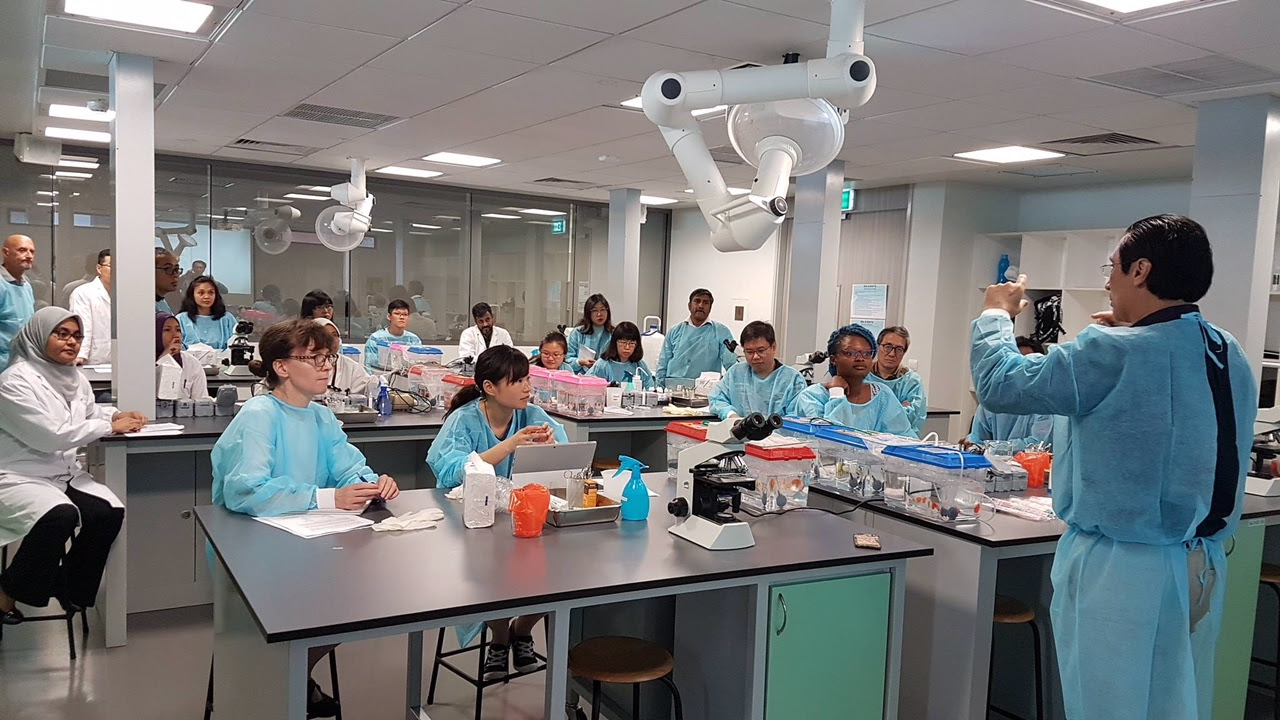
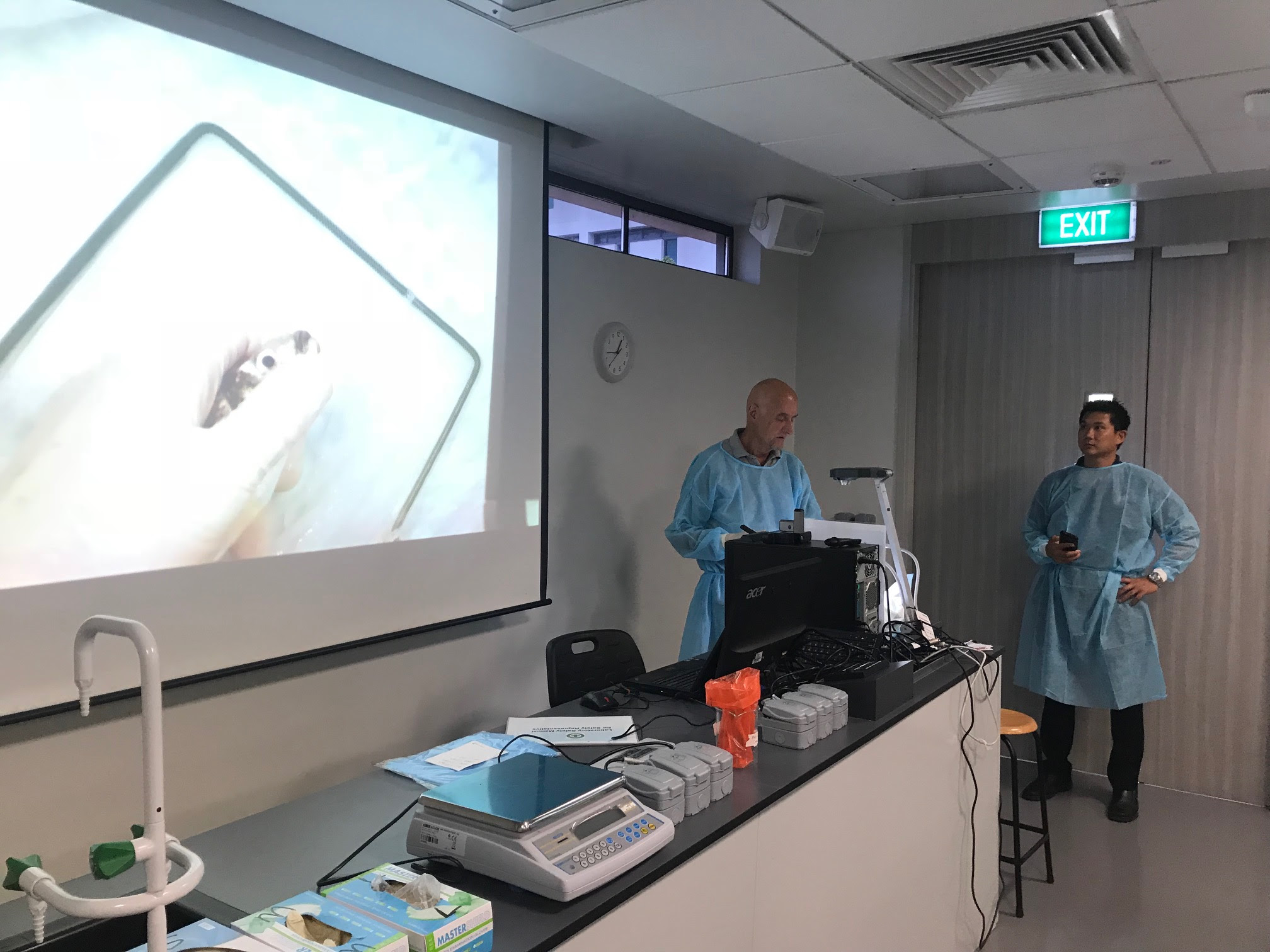
As part of the 43rd World Small Animal Veterinary Association Congress in Singapore, WAVMA sponsored an Aquatic Medicine Wetlab on Monday, September 24 prior to the start of the congress programs. Drs. Richmond Loh, Julius Tepper and Nick Saint-Erne presented the wetlab, held at the Temasek Polytechnic School, through the courtesy of Dr. Diana Chan, Head of the Centre for Aquaculture and Veterinary Science at the school.

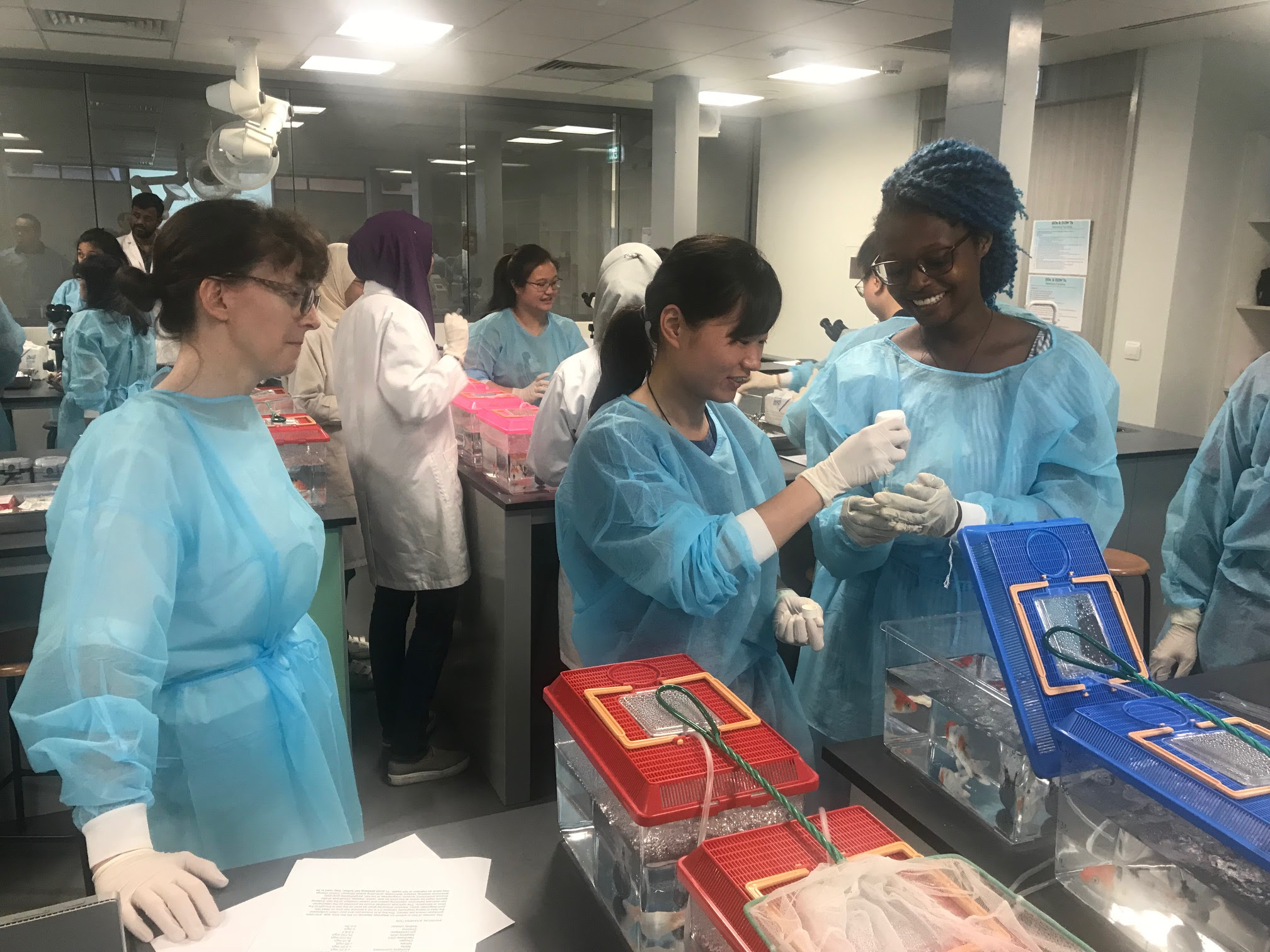
The program started with check-in at 9:00 and lectures beginning at 10:00 and the lab continuing until 16:00. Over 20 veterinarians and students attended the wetlab. The wetlab provided lectures introducing each topic, then a demonstration of the technique, followed by participants doing the procedure themselves on koi fish from the centre’s Aquaculture facility.

The topics covered were:

Water Quality Testing – Nick Saint-Erne
Aquatic Systems and Filtration – Julius Tepper
Fish Anesthesia – Nick Saint-Erne
Fin, Gill and Skin Mucous Biopsies – Richmond Loh
Blood Sampling Techniques – Julius Tepper
Necropsy and Sample Collection – Richmond Loh

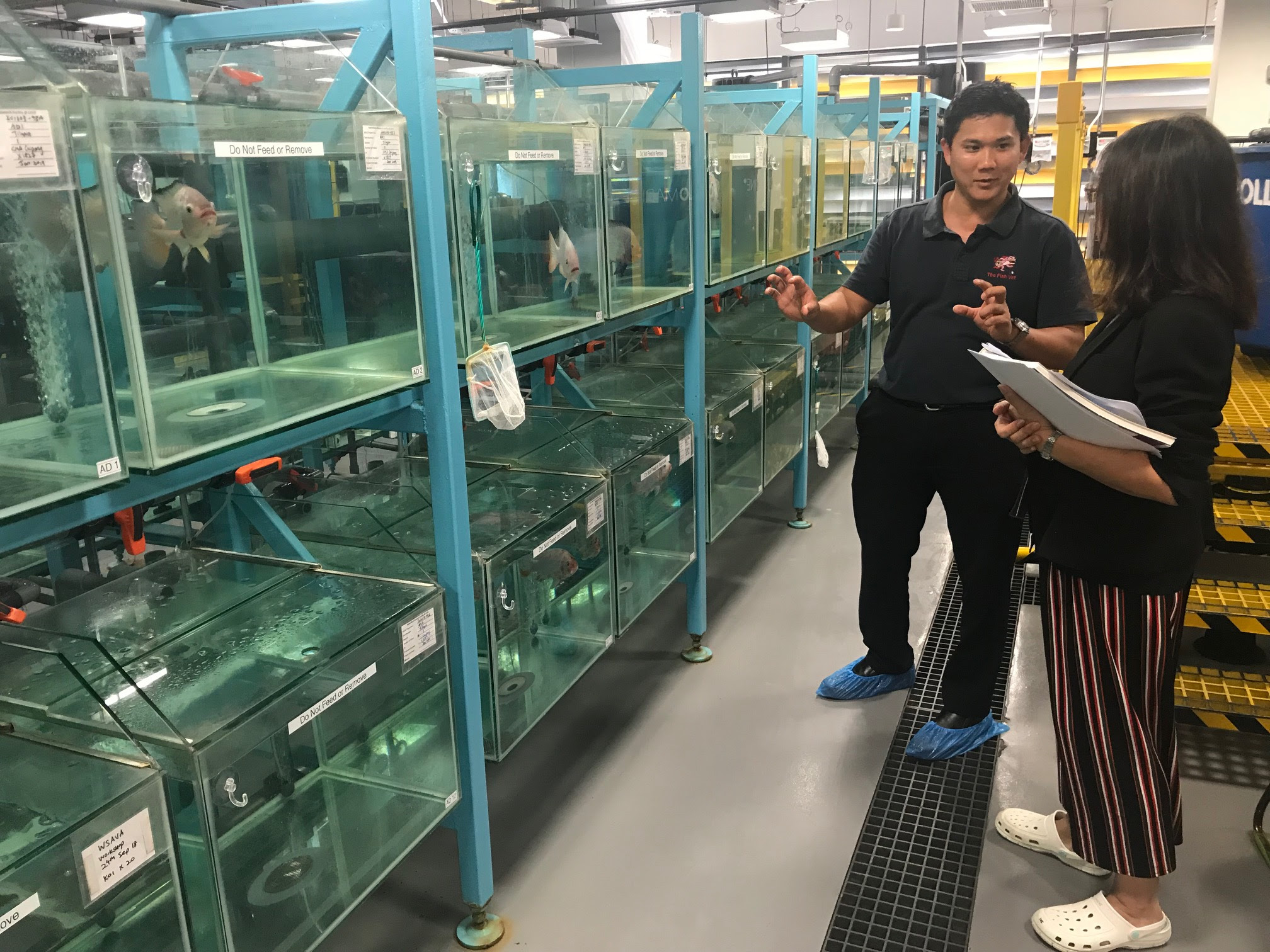
Following the wetlab, Dr. Chan provided us with a tour of the Aquaculture facility at the school, with its advanced holding tanks and filtration systems manufactured by Apollo Aquaculture Group, based in Singapore. The wetlab was very successful with lots of great interaction between the teachers and participants.

Fish Joke for Monday-itis: aquatic currencies

We’ve heard of world currencies and cryptocurrencies (bitcoin, ethereum, bitcash and more).

What currencies do fish use, to buy and sell?

Here are a few:

• ripple (cryptocurrency)

• silver dollar (USA)

• goldfish (China)

• kip (Laotian)

• gourami (Paraguayan)

Have a FINtastic week! R <+>{