2nd Global Webinar on Animal Welfare.

“The importance of new technologies to empower vets in the field of Animal Welfare”

8th December 2014 – 15:00-17:00 (Belgium time: GMT+1)

Following the success of the Global Webinar on AW (held on 29th April 2014), the WVA and the European Commission are organizing a second Global Webinar focusing on how new technologies can empower vets in the field of Animal Welfare.

The Webinar will include informative presentations, questions from public and a panel discussions with representatives of AWIN, AVMA, EFSA, EC, FAO, FVE, IVSA, OIE, WAP, WAVMA, WVA and others.


To register click here

 www.worldvet.org


What’s in your fish food? How do you know you’re getting what you paid for? I’ll tell you an easy, cheap, instant test.

Just last week, I came across a brand of fish food with a proximate analysis stating a relatively high protein content of 33%.

Let me tell you the very quick, simple and free test you can do.

Most fish foods with protein content 30% or greater will have a fragrant fishy smell. And the reason for the fishy smell is that the major protein source is fish meal. A quick sniff of the product suggested the food is not quite what I expected. It instead, had a bread-like smell.

Most fish foods will list the ingredients. But this product does not provide a list. Why the omission?

I’ve seen and smelt fish food similar to this, and instead of fish meal as the major protein source, it listed soy and other plant proteins. Could fish meal have been substituted with plant protein? How good is plant protein for fish? Are terrestrial-sourced plant proteins as nutritious? Quite possibly not…

On further reading of the label, it states that it should NOT be fed to any ruminants since it contains restricted animal material.

What is this restricted animal material? Since the outbreak of mad cow disease in the UK that was linked to feeding ruminant protein back to ruminants, such practices are now banned. For a restriction like this to be on this fish food’s label suggests that there must be elements of ruminant protein. Is there a problem with feeding your fish terrestrial animal protein?

It is generally accepted that terrestrial animal proteins (and fats) are not ideal for fish as it is poorly utilised. Chronic health problems may arise as a result. But what will become more obvious in the short to medium term, is that the poorly assimilated foods will produce more wastes. More wastes will mean that you’ll be in a constant battle with severe algae problems.

So, next time you feed your fish, go ahead and do the Litmus test, smell the food… and I dare you to taste it too 😛

Are you getting what you’ve paid for?

Is it good enough for your fish?

—
Yours sincerely,

Dr Richmond Loh
DipProjMgt, BSc, BVMS, MPhil (Pathology) Murdoch, MANZCVS (Aquatics& Pathobiology), CertAqV, CMAVA, NATA Signatory.
THE FISH VET, Perth, Western Australia.
Veterinary Medicine for fish.
W: http://www.thefishvet.com.au
E: thefishvet
P: +61 (0)421 822 383

President WAVMA.org

3rd OIE Global Conference on Aquatic Animal Health – “Riding the Wave of the Future”

This Conference will be held in Ho Chi Minh City (Vietnam) on 20-22 January 2015 and will build on the success of the First and Second OIE Global Conferences on Aquatic Animal Health held in Bergen, Norway (2006), and Panama City, Panama (2011), which helped to raise awareness about the importance of aquatic animal health and to build a global framework for improving management, prevention and control of aquatic animal diseases.

The conference will help to raise awareness of the need for good governance of Veterinary Services and Aquatic Animal Health Services (both governmental and private sector), and the involvement of veterinarians, aquatic animal health professionals, and other partners in assuring the production of aquaculture products that are safe for human consumption and appropriately certified to meet international trade requirements. To be addressed are the role and responsibilities of key players in the production chain, including producers, food processors, private veterinarians and aquatic animal health professionals, and the importance of effective working relationships between these players, the official Veterinary Services and, as appropriate, Aquatic Animal Health Services. It will feature presentations from speakers representing national Veterinary Services and Aquatic Animal Health Services, other relevant Competent Authorities, international organisations, industry, and aquatic animal health experts. Participants will be invited to share their experiences and to identify future needs and priorities for the OIE to address in order to minimise the burden of diseases in global aquatic animal production for Member Countries.

Participants will be able to share valuable experience in the prevention, detection and control of aquatic animal diseases, and how to ensure safe international trade in aquatic animals and their products. The conference will include ministerial statements, keynote addresses, technical presentations and discussions, from which participants will agree conference recommendations for both Member Countries and OIE to improve global aquatic animal health, and will specifically:
· focus on the requirements for effective aquatic animal health management, covering all matters under the OIE mandate, and provide practical advice on how to implement OIE standards published in the Aquatic Animal Health Code and the Manual for Diagnostic Tests for Aquatic Animals to ensure effective prevention and control of aquatic animal diseases; raise international awareness of OIE recommendations relevant to good governance in aquatic animal health including the quality and performance of Veterinary Services (VS) and Aquatic Animal Health Services (AAHS);
· discuss how OIE Members can improve VS and AAHS using elements of the OIE PVS framework (initial PVS evaluation, PVS gap analysis, PVS follow-up and veterinary legislation missions);
· review the experiences of OIE Members in developing and managing aquatic animal health programmes (prevention, detection and control) including the challenges and priorities of developing and emerging countries;
· identify practical steps to improve aquatic animal disease prevention and control (e.g. risk analysis, biosecurity systems, implementing zoning and compartmentalisation);
· raise awareness of the role of veterinarians and aquatic animal health professionals in both the public and the private sector and their role in strengthening aquatic animal health policies and programmes;
· raise awareness of the need to improve the undergraduate, post graduate and continuing education of veterinarians and aquatic animal health professionals in the public and the private sectors;
· raise awareness of the importance of effective communication, including media relations, amongst all concerned sectors, public and private;
· provide practical guidance on how OIE Members (particularly developing countries) can mobilise governments and donors to improve AAHS, including the role of VS (as appropriate), to meet the OIE standards for quality of VS and AAHS, good governance, and aquatic animal disease prevention and control methods;
· adopt recommendations for governments and the OIE aiming to minimise the risks of diseases for aquatic animal production.

Aquaculture in now recognised as the fastest growing food animal producing sector in the world with nearly 50% of the global supply of aquatic animals for human consumption now derived from aquaculture. However, aquatic animal disease outbreaks continue to cause significant losses in aquaculture production throughout the world and are having a major detrimental impact on national economies in some countries and regions. These disease outbreaks threaten to limit this rapidly expanding sector unless the governance of Veterinary Services and Aquatic Animal Health Services is strengthened and effective aquatic animal health policies and programmes complying with OIE standards are implemented to prevent or control these disease outbreaks.

A very high proportion of aquatic animal production is traded internationally, accounting for 10% of total global agricultural exports. Twice as much seafood (fisheries and aquaculture) is traded internationally compared to terrestrial animal meat products (beef, poultry, sheep and pig meat). Because of the rapid growth in aquaculture worldwide and the disease risks associated with the increasingly globalised trade in live aquatic animals and their products, OIE activities in the field of aquatic animal health and standards for the sanitary safety of global trade are important and relevant to all regions of the world. Effective implementation of OIE standards will contribute to ensuring a sustainable sector that can provide a key source of high quality animal protein for the growing human population.

For over 50 years the mandate of the OIE has included aquatic animals. The OIE constantly encourages Members to meet their OIE membership obligations, and to implement the OIE standards for disease prevention and control, and trade in aquatic animals in line with the WTO Agreement on the Application of Sanitary and Phytosanitary Measures. Veterinary and Aquatic Animal Health Services capacity to implement OIE standards is essential to safeguard aquatic animal health and facilitate trade. However, with most aquaculture production originating in developing and emerging countries, there is also an on-going need to build capacity to support implementation of the international standards by all OIE Members.

Approximately 300 international participants are expected to attend the Conference, including:
• OIE National Delegates and National Focal Points for Aquatic Animals
• Other national government representatives
• Representatives of OIE Collaborating Centers and References Laboratories
• Representatives of relevant International Organisations having official agreements with the OIE
• International and national/private sector organisations, and individual experts
• Potential donors from the public and private sector

Simultaneous interpretation in English/French/Spanish will be provided for all plenary sessions.

For details on the venue, program, registration, accommodation other information, go to:
http://oie.int/eng/A_AAHRWF2015/introduction.htm.
___________________________
AquaVetMed e-News provides information to veterinary and veterinary-allied subscribers concerning aquatic animal medicine, health, welfare, public health and seafood safety, obtained from a variety of sources (largely AquaVetMed subscribers). While provided by the American Veterinary Medical Association’s, Aquatic Veterinary Medicine Committee and are for public distribution, they do not necessarily reflect the opinion of the AVMA or the veterinary profession. See the AVMA Terms of Use (http://tinyurl.com/29h2rf) for further information.

Subscription and Contributions: Interested veterinarians and veterinary-allied professionals can subscribe, unsubscribe, or contribute pertinent news or information, by sending a message with “For AquaVetMed -” and the topic in the subject line, to dscarfe@avma.org. If e-News information is used elsewhere please acknowledge AquaVetMed as the source. Encourage individuals to subscribe rather than distribute through list serves.

Note: Undelivered e-mails will not be resent; Subscribers will be deleted from the list after repeated undelivered or bounced messages and will have to re-subscribe. Messages may contain attachments that will have been scanned for known viruses.

Visit our website: http://www.avma.org
________________________________

What’s The Catch? Matthew Evans reveals the true cost of Australia’s obsession with seafood.

THINK that Barramundi on your plate comes fresh from the Northern Territory?

If so, you probably also assume the fish and chips you had for lunch and the prawns you ate at the weekend have all been caught from the clear blue waters of Oz too.

Well prepare to rethink everything you know about Aussie seafood because the reality of what’s on our plates is far from the idyllic image we have in our heads.

Gourmet Farmer Matthew Evans knows all too well there’s a catch when it comes to the great Australian seafood obsession — and the truth is, and you’ll never look at prawns the same way again.

Evans delves into the shocking truth about Australia’s seafood in upcoming SBS documentary What’s The Catch?

See more – http://tinyurl.com/p5orysc

—
Yours sincerely,

Dr Richmond Loh
DipProjMgt, BSc, BVMS, MPhil (Pathology), MANZCVS (Aquatics & Pathobiology), CertAqV, CMAVA, NATA Signatory.
THE FISH VET, Perth, Western Australia, AUSTRALIA.
Mobile Aquatic Veterinary Medical & Diagnostic Services.
http://www.thefishvet.com.au
Ph: +61 (0)421 822 383
Skype: thefishvet

President WAVMA | Adjunct Lecturer Murdoch University | Secretary Aquatic Animal Health Chapter – ANZCVS.

Marine mammal vet job.

From: “Dr. David Scarfe”
Date: 23 October 2014 6:14:12 AWST
Subject: AquaVetMed e-News: Aquatic Veterinary Research Professor Position (FAU/HBOI, Ft. Pierce, FL USA)

October 22, 2015
Position Available – Assistant/Associate/Full Research Professor & Veterinary Scientist (DVM/PhD or DVM/MS)

Florida Atlantic University’s Harbor Branch Oceanographic Institute (HBOI) located in Ft. Pierce, FL, seeks a highly motivated, qualified veterinary scientist with research experience related to aquatic animal health. This scientist will be appointed at the Assistant, Associate, or Full Research Professor level, dependent upon qualifications. The scientist will be expected to develop a strong research program that integrates with existing research and new research opportunities at Harbor Branch and FAU colleges and campuses.

The scientist will work with internal and external collaborators while participating in clinical programs including: health assessments and stranding responses; rehabilitation activities; and environmental studies. The successful candidate will be expected to obtain external funding to successfully maintain and grow the program, and will participate in educational activities through training MS and PhD students and leading educational programs in aquatic animal health. The appointed veterinarian will also serve as an IACUC member bringing expertise on marine mammal and other marine species research to the committee and act as the Clinical Veterinarian responsible for overseeing IACUC protocols and associated activities at HBOI while working closely with the FAU Attending Veterinarian and FAU’s Division of Research.

REQUIRED:
· Doctor of Veterinary Medicine (DVM or equivalent) from an AVMA accredited program
· Additional graduate training to the M.S. or Ph.D. level, preferably in an area related to aquatic animal health such as pathology, microbiology and immunology, environmental medicine, toxicology, and/or environmental science
· Evidence of research productivity consistent with rank
· Must be licensed to practice veterinary medicine in the state of Florida or ability to acquire

PREFERRED:
· Training and experience in marine mammal research
· Evidence of strong program management skills consistent with rank
· Training and experience in any of the following areas: infectious diseases, pathology, immunology, toxicology, wildlife medicine, conservation medicine, environmental health or medicine, or related fields
· Clinical experience with marine mammals and other aquatic species desired
· Experience with supervision of graduate students desired

To Apply:
This position is open until filled and may close without prior notice. All applicants must apply electronically to the currently posted position on the Office of Human Resources’ job website (https://jobs.fau.edu) by completing the Faculty, Administrative, Managerial & Professional Position Application and submitting the related documents. Please apply for position #980505. The site permits the attachment of required/requested documentation. In addition to completing the online application, please upload the following: cover letter, CV, copies of official transcripts scanned into an electronic format, a statement of research experience and philosophy, and contact information for three references including email addresses. Degrees from outside the United States must be validated by an organization belonging to the National Association of Credential Evaluation Service (NACES), with an indication of the documents the evaluation was prepared from (official transcripts, diplomas, dissertation abstracts). The evaluation should be scanned and electronically attached to one’s application as with other US-based transcripts.

Prior to appointment, the candidate must submit official, sealed transcripts from all institutions where graduate coursework was attempted, whether or not a degree was obtained, as well as original NACES evaluation, if applicable. Transcripts must be issued to Florida Atlantic University, not to you as the student. A background check will be required for the candidate selected for this position. This position is subject to funding.

HBOI faculty and staff lead robust programs in estuarine, coastal and deep-sea research that include marine mammal research and conservation, population biology and behavioral ecology, marine ecosystem health, ocean exploration, aquaculture and stock enhancement, marine biomedical and biotechnology research, ocean engineering and technology, and ocean dynamics and modeling. Please see http://www.fau.edu/hboi for more information.

For further information contact:
Peter McCarthy, PhD, Search Committee Chair
Harbor Branch Oceanographic Institute
Florida Atlantic University
5600 US 1, North Fort Pierce, FL 34946
772-242-2400
pmccart5@fau.edu

___________________________
AquaVetMed e-News provides information to veterinary and veterinary-allied subscribers concerning aquatic animal medicine, health, welfare, public health and seafood safety, obtained from a variety of sources (largely AquaVetMed subscribers). While provided by the American Veterinary Medical Association’s, Aquatic Veterinary Medicine Committee and are for public distribution, they do not necessarily reflect the opinion of the AVMA or the veterinary profession. See the AVMA Terms of Use (http://tinyurl.com/29h2rf) for further information.

Subscription and Contributions: Interested veterinarians and veterinary-allied professionals can subscribe, unsubscribe, or contribute pertinent news or information, by sending a message with “For AquaVetMed -” and the topic in the subject line, to dscarfe@avma.org. If e-News information is used elsewhere please acknowledge AquaVetMed as the source. Encourage individuals to subscribe rather than distribute through list serves.

Note: Undelivered e-mails will not be resent; Subscribers will be deleted from the list after repeated undelivered or bounced messages and will have to re-subscribe. Messages may contain attachments that will have been scanned for known viruses.

Visit our website: http://www.avma.org
________________________________
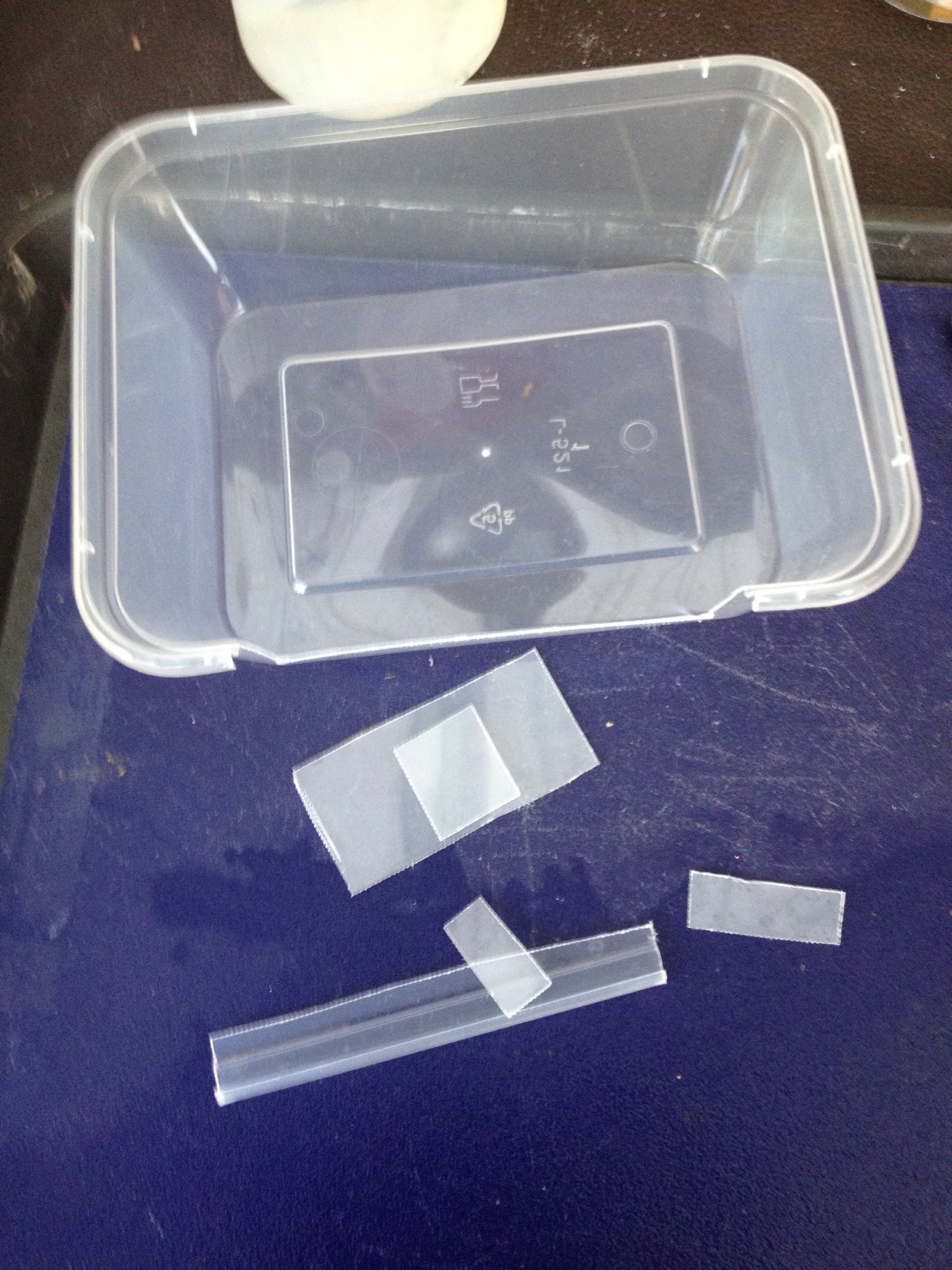
Using a take-away container for diagnosing fish diseases.

One day, I arrived at the clients to find I had forgotten to replenish my glass slides that I use for microscopic examination of wet mounts. Panic! What to do? Battle through traffic to return to base? Find a local veterinary clinic to supply?

I put on my “Bear Grylls” / improvisation thinking cap on, I asked the client, would you happen to have take-away containers?

Using my trusty scissors, I fashioned a slide and coverslip. Wallah!

IMG_5791.JPG

Forget the Pseudoscience : Fish Feel Pain

Check this out:
Forget the Pseudoscience : Fish Feel Pain

https://www.linkedin.com/today/post/article/20141021020027-22688801-forget-the-pseudoscience-fish-feel-pain

Supporting more veterinarians in aquatic veterinary medicine. Means more fish doctors for you!

It’s a common problem that many fish keepers and farmers encounter when they run into disease issues with their fish. No fish doctors can be found in their locality. But more correctly, no aquatic veterinarians available.

This year, as I serve as the President of the World Aquatic Veterinary Medical Association (WAVMA.org), much of the emphasis of my work has been in recruiting more veterinarians to support fish keepers and fish farmers by providing more tools and knowledge.

I’ve been working with the WebCEPD Committee at the WAVMA to recruit speakers for webinars. Webinars are the perfect way to connect people through space and time, and to upskill our colleagues. We’ve had excellent speakers present on diseases of barramundi and dolphins, surgery on fish and more to come including seahorses, koi, ornamental fish, amphibians. In return, the speakers will gain massive exposure and receive global recognition for their works.

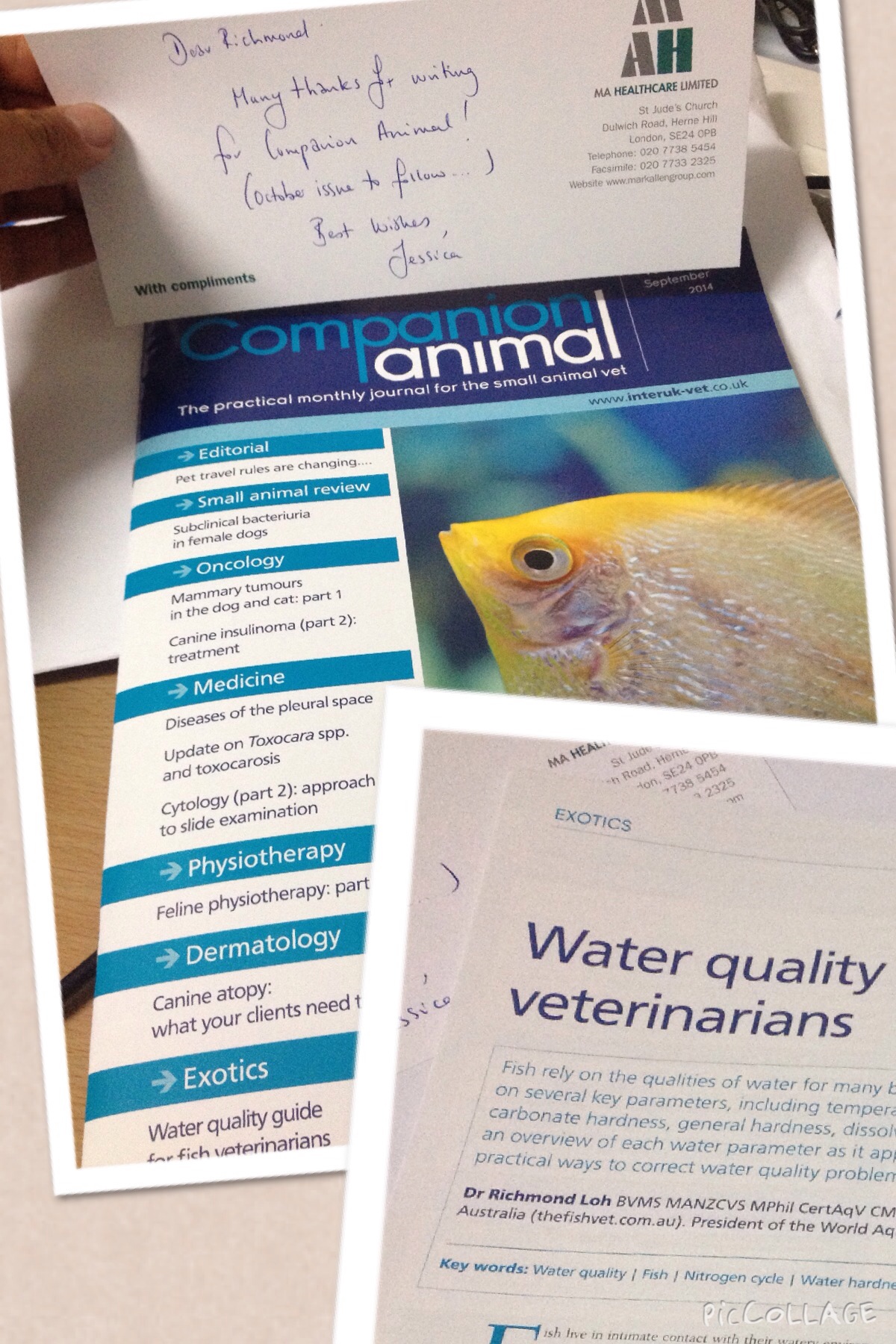
I’ve also contributed to a few articles to fish and pet magazines, but my emphasis this year is within the veterinary profession. I’ve published a series of articles with my colleagues in the Companion Animal Journal (pictured). I’ve also contributed a few unique cases to the second edition of Self-Assessment Color Review of Ornamental Fish.

IMG_5650.JPG

I’ve been spreading the message personally too, presenting at several international conferences (Sydney Zebrafish Conference, Denver AVMA Convention and St Kitts Ross University guest lecturer). This years not out yet and I’ve a full week scheduled in Singapore, come Nov/Dec when I present at the FAVA-SVA Convention, to the NUS-SALAS group and a three-day ornamental fish biosecurity workshop to the AVA-FQIA.

I’ve also supported the formation of WAVMA Student Chapters at Murdoch University, Sydney University, and we have the University of Queensland following suit.

These are all tools to help recruit more veterinarians to assist with fish clients and, to know who and where to refer fish clients to.