|


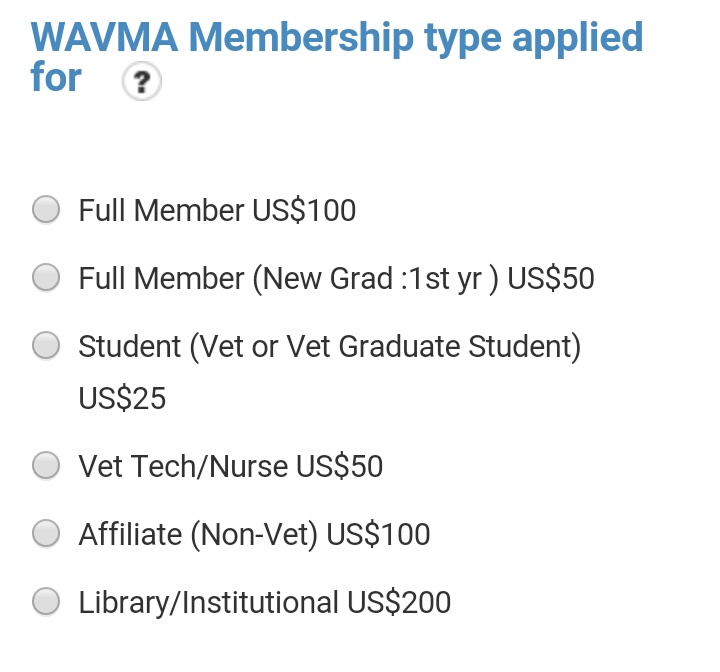
Would you like to join a global professional association of fish vets?
At the World Aquatic Veterinary Medical Association, we are all inclusive, having categories for those who’re veterinarians, technicians, nurses, students, libraries and new graduates.
Membership runs a calendar-year.
JOIN NOW, and get the most out of your membership!
http://www.wavma.org/Become-a-member
Or come see what we are all about.
Aquatic Animal Health Chapter Science-Week: call for speakers.
Be at the forefront of aquatic veterinary sciences.
On behalf of the Aquatic Animal Health Chapter of the Australian and New Zealand College of Veterinary Scientists, we would like to invite you to register
your interest in presenting a talk at this year’s Science Week conference.
Science Week will be held at the usual venue, the QT Gold Coast, Surfers Paradise, on the 7th and 8th July 2016.
Speakers’ costs for conference registration are waived on the day of the presentation.
Please submit your expression of interest including proposed topic, and length of address, by 25th February.
To allow more content, to showcase the breadth AAH covers, we ask for fifteen (15) minute talks, though there is room for longer talks if required. Please also indicate if there are any times in the 2 days in which you cannot present due to other commitments.
DOWNLOAD
ANZCVS AAH SW Flyer – Call for Speakers v2
Kind regards,
Aquatic Animal Health Chapter Science-Week Conveners.
Roger Chong <roger.chong@daf.qld.gov.au>
and
Richmond Loh <thefishvet@gmail.com>
Australia’s Vibrio outbreak in shrimp farms.
Australia is currently dealing with a new emerging disease that has similarities to “early mortality syndrome” (EMS), aka “acute hepatopancreatic necrosis disease” (AHPND).
Refer to full article at this link.
Prawn farming is a highly risky business. When disease strikes, it spreads rapidly, and can kill large numbers of stock.
Check out some ways you mitigate the risks at this link.
—
Yours sincerely,
Dr Richmond Loh
DipProjMgt, BSc, BVMS, MPhil (Pathology), MANZCVS (Aquatics& Pathobiology), CertAqV, NATA Signatory.
THE FISH VET, AUSTRALIA.
Mobile Aquatic Veterinary Medical & Diagnostic Services.
http://www.thefishvet.com.au
Ph: +61 (0)421 822 383
Hot off the press! Ornamental Fishes and Aquatic Invertebrates: Self-Assessment Color Review, Second Edition.
This new book has contributions from experts from around the world (including from Dr Richmond Loh, The Fish Vet!)
The CRC press is listing the book with a July 15, 2016 publication date.
Here’s the link – http://tinyurl.com/SACR-Aq2
This is a new edition in the Self-Assessment Colour Review series that covers ornamental fish. It includes 200 colour illustrated cases in random order, as they would be presented in practice. It presents questions based on each case with answers that fully explore the disease/disorder. This new edition contains >250 new cases. The book should appeal to candidates preparing for examinations and to practitioners in their continuing education.
Follow me on: Facebook "Fin Page" – YouTube – Blog – Linkedin – Twitter
—
Yours sincerely,
Dr Richmond Loh
DipProjMgt, BSc, BVMS, MPh (Pathology), MANZCVS (Aquatics & Pathobiology), CertAqV, CMAVA, NATA Signatory.
Aquatic Veterinarian & Veterinary Pathologist
THE FISH VET, Perth, Western Australia, AUSTRALIA.
Mobile Aquatic Veterinary Medical & Diagnostic Services.
http://www.thefishvet.com.au
Ph: +61 (0)421 822 383

Fish joke for Monday-itis: What do fish smoke?
Answer: sea weed!
Have a FINtastic week! R <+>{
Prepare your fish to survive the next heat wave.

There’s going to be another long hot dry spell.
If you’ve outdoor ponds, are keeping temperate or coldwater species, you’ll need to prepare.
Check out some tips on surviving the heat.
https://thefishvet.com/2012/01/24/how-do-protect-fish-from-the-heat/
Recorded Aquatic Veterinary Lectures & Presentations – Select University of Florida, College of Veterinary Medicine Guest Lecture Series
Check out these great resources available at – wavma.org
Ellen Ariel, PhD “Turtle Tribulations in Australia” discussing different types of marine turtles and problems they encounter (45 minutes, given June 4, 2015)
Matt Gray, PhD “Ranaviruses: Cry Wolf or Real Threat?” dealing with the pathobiology & epidemiology of ranaviruses in amphibians & fish (1 hr, given Feb 3, 2014)
Laurie Richardson, PhD “Challenges and Approaches to the Study of Coral Health and Disease” about coral reef conservation issues, trends, drivers & causes of coral reef die offs, and challenges posed by diseases (1 hr, given Feb 26, 2014)
John Reynolds, PhD “Aquatic Animal Health in a Changing World: What is a health professional to do?” concerning conservation medicine and ecological biodiversity of marine mammals, and what may be achievable in the future (1 hr, given March 26, 2014)
Iske Larkin, PhD “Conservation Issues of Aquatic Animals” dealing with how aquatic animals & human activities fit into conservation medicine, and the interactions that are necessary for balanced ecosystems (1 hr, given Aug. 21, 2013)
Martine de Wit, DVM “Unusual Manatee Mortality Events” explaining a variety of manatee deaths & how they were investigated to determine the actual cause (1 hr, given Oct 30, 2013)
Michelle Davis, DVM, DACZM “Stranding & Rehabilitation Programs" covering an overview of Sea World’s veterinary rehabilitation of marine mammal, sea turtle, avian & other species, and research programs with these animals (51 min, given Nov. 20, 2013)
Follow me on: Facebook "Fin Page" – YouTube – Blog – Linkedin – Twitter
—
Yours sincerely,
Dr Richmond Loh
DipProjMgt, BSc, BVMS, MPh (Pathology), MANZCVS (Aquatics & Pathobiology), CertAqV, CMAVA, NATA Signatory.
Aquatic Veterinarian & Veterinary Pathologist
THE FISH VET, Perth, Western Australia, AUSTRALIA.
Mobile Aquatic Veterinary Medical & Diagnostic Services.
http://www.thefishvet.com.au
Ph: +61 (0)421 822 383
Skype: thefishvet
President WAVMA 2014
Adjunct Lecturer Murdoch University
See advert on YouTube.
Ewww! Oysters with herpes! Bloody POMS!
Just did an attention-grabbing headline. It could give people the wrong impression. But seriously, this is why biosecurity is a must for all farmed animals, supported by good surveillance and comprehensive testing.
Read more about the incident at this link –
http://mobile.abc.net.au/news/2016-02-02/poms-oyster-disease-found-in-tasmania-for-first-time/7132580
A fact sheet produced by the government and oyster growers can be accessed at this link.
2011-043-POMS Long Version – Q A Fact Sheet.pdf
—
Yours sincerely,
Dr Richmond Loh
DipProjMgt, BSc, BVMS, MPhil (Pathology), MANZCVS (Aquatics& Pathobiology), CertAqV, NATA Signatory.
THE FISH VET, Perth, Western Australia, AUSTRALIA.
Mobile Aquatic Veterinary Medical & Diagnostic Services.
http://www.thefishvet.com.au
Ph: +61 (0)421 822 383
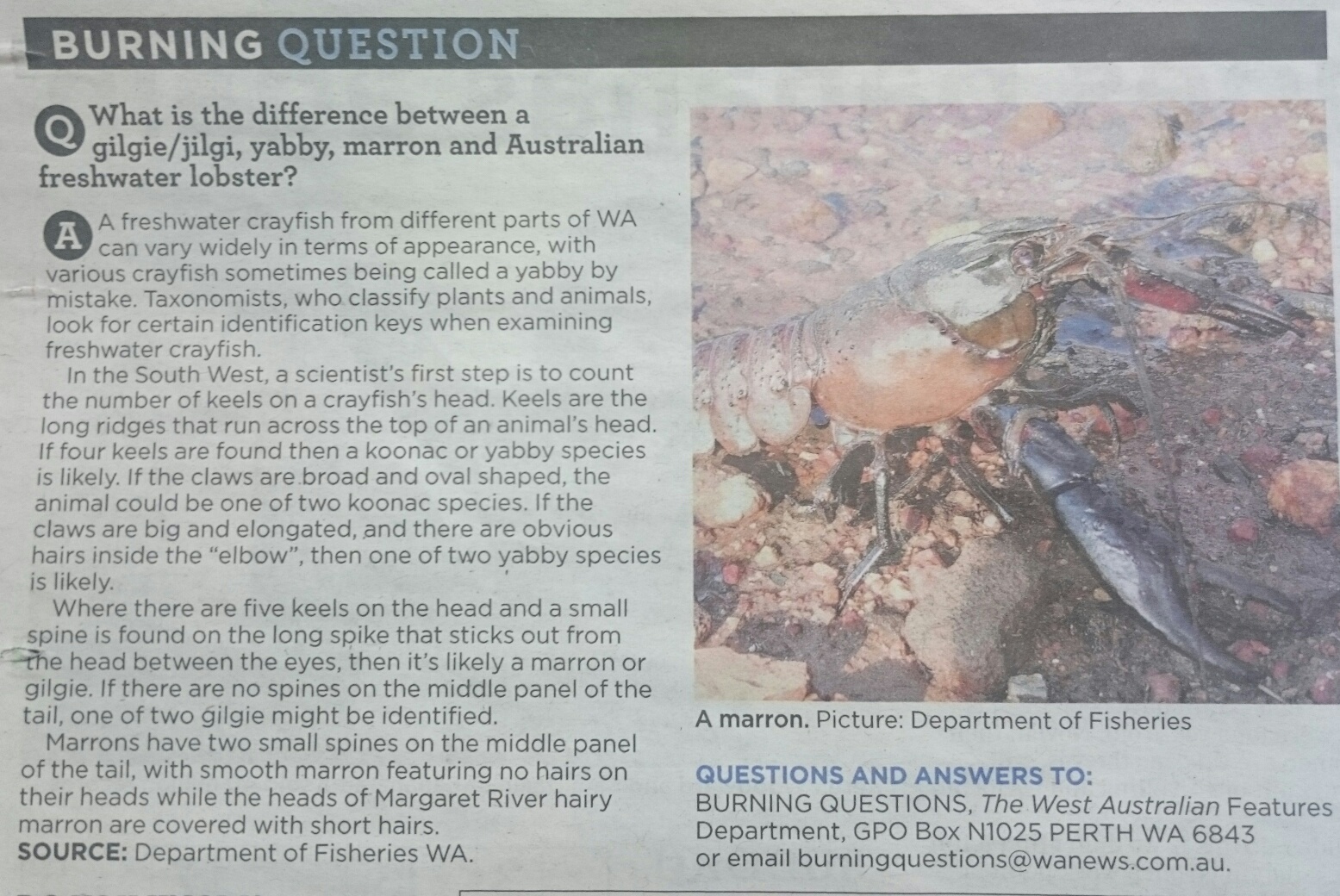
What’s the difference between a yabby, marron, gilgie/jilgie, and Australian freshwater lobster?
Nice one I came across in today’s newspaper.