Aquaponics

I’ve spent this weekend attending my 10 year university reunion and worked on my Aquaponics setup in my backyard.

I’ve got the fish side of things figured out but may need to read up a little more on the plant aspects.

Just a few more bits and bobs and we’re good to go!

New Issue of the AADAP Newsletter

From: Thomas_A_Bell

Subject:
New Issue of the AADAP Newsletter

Hello Everyone,

The latest issue of the AADAP Newsletter (Vol 7-3) is now available to view or download for printing. To view click on the following link and click on the pdf version link to download.

As always, please contact us if you have any questions or comments on recent changes, or anything else related to the Newsletter or AADAP’s website. Don’t forget to pass this on to others that you feel may benefit from the information within the Newsletter.

Please accept our apologies if by chance you receive more than one email notice of availability from AADAP.

Cheers.
<1E327585.jpg>
Thomas A. Bell, PhD
U.S. Fish & Wildlife Service
Aquatic Animal Drug Approval Partnership
4050 Bridger Canyon Road
Bozeman, Montana 59715
Phone: 406-994-9911
Fax: 406-582-0242
Email: thomas_a_bell
Webpage:

What type of salt is used for treating fish ailments??

The literature often says to avoid iodised salt. Rock salt, aquarium salt and sea salt are the recommended safe options. But this study tells us may be we don’t need to worry so much…

Journal of Applied Aquaculture
Volume 23, Number 4 (October 2011)
Use of Iodized Versus Non-iodized Sodium Chloride in Therapeutic Dips and Baths for Freshwater Fish
Authors: AlexaJ. McDermott 1
Author Affiliations:
1: University of Florida, College of Veterinary Medicine, Department of Large Animal Clinical Sciences
Source: Journal of Applied Aquaculture, Volume 23, Number 4 (October 2011)
Page Numbers: 351 – 357
Available Full Text:
Full Text: Subscription Required to view full text
Format: PDF
Size: unknown
Location: Publisher’s Site
Authentication: EBSCOhost EJS
Abstract: Salt (NaCl) is a common therapeutant in fish culture. The use of salt containing iodine may be harmful to fish. The goal of this study was to determine if using iodized saltfor dips and baths increases morbidity/mortality of fish and establishes the LC50of iodine for three commercially important species: koi, Cyprinus carpi;guppy, Poecilia reticulata;and Jack Dempsey, Rocio octofasciata. Fish were exposedto a salt bath (4 g/L) or a salt dip (25 g/L) using either iodized or non-iodized salt and observed for clinical signs of iodine toxicity or death. For the LC50trials, one fish of each species was exposed to a range of iodine concentrations for a period of 24 h. There were no significant differences in mortality between fish treated with iodized vs. non-iodized salt. The use of iodized salt for baths and dips appears to be safe in the three species tested. LC50of iodine in these species appears to be greater than 1.4 mg/L.
Citation: AlexaJ. McDermott . Use of Iodized Versus Non-iodized Sodium Chloride in Therapeutic Dips and Baths for Freshwater Fish. Journal of Applied Aquaculture, Volume 23, Number 4 (October 2011), pp. 351-357,
URL: http://ejournals.ebsco.com/direct.asp?ArticleID=45818605B8C66ABCF8AD

Cinnamon as a health booster for fish?

Journal of Applied Aquaculture
Volume 23, Number 4 (October 2011)
Effect of Cinnamon (Cinnamomum zeylanicum) on Growth Performance, Feed Utilization, Whole-Body Composition, and Resistance to Aeromonas hydrophilain Nile Tilapia
Authors: MohammadH. Ahmad 1
Author Affiliations:
1: Department of Biochemistry, Faculty of Science, Zagazig University
Source: Journal of Applied Aquaculture, Volume 23, Number 4 (October 2011)
Page Numbers: 289 – 298
Available Full Text:
Full Text: Subscription Required to view full text
Format: PDF
Size: unknown
Location: Publisher’s Site
Authentication: EBSCOhost EJS
Abstract: Four isonitrogenous (30% crude protein) and isocaloric (4.40 kcal/g) experimental diets were formulated to contain 0.0% (control), 0.5%, 1.0%, or 1.5% cinnamon. The diet containing 1% cinnamon resulted in significantly greater (P 0.05) contents due to cinnamon supplementation. Blood plasma profile showed an improvement in hemoglobin (HB), red blood cell (RBCS), hematocrite (PCV), total protein, and total lipids, while there was a decrease in creatinin, urea, aspartate aminotransferase (AST), alanine aminotransferase (ALT), and glucose in fish fed 1% cinnamon. Cinnamon was found to have an antibacterial activity antagonistic to Aeromonas hydrophilainfection in fish. Performance and FCR improvement translated into a 10% decrease in feed costs associated with the 1% cinnamon diet.
Citation: MohammadH. Ahmad . Effect of Cinnamon (Cinnamomum zeylanicum) on Growth Performance, Feed Utilization, Whole-Body Composition, and Resistance to Aeromonas hydrophilain Nile Tilapia. Journal of Applied Aquaculture, Volume 23, Number 4 (October 2011), pp. 289-298,
URL: http://ejournals.ebsco.com/direct.asp?ArticleID=4A95AE27B73BB48D060D

Wild-caught fish are more easily stressed than captive-breds.

Aquaculture   Volume 321, Number 3-4 (December 2011)     

A non-invasive assay for monitoring stress responses: A comparison between wild and captive-reared rainbowfish (Melanoteania duboulayi)    

Authors: Amina Zuberi, Sinan Ali, Culum Brown     Author Affiliations:

no affiliations available

Source: Aquaculture, Volume 321, Number 3-4 (December 2011)     Page Numbers: 267 – 272      Available Full Text:

Full Text: Subscription Required to view full text
Format: PDF
Size: Unknown
Location: Publisher’s Site
Authentication: Publisher’s Site


Abstract: The stress response of wild and captive reared rainbowfish (Melanoteania duboulayi) following chasing by a simulated predator was examined. Cortisol release rate was monitored using a flow through system by measuring water borne hormone levels. Tests using known cortisol concentrations revealed that the technique yielded 95% of the cortisol present in the water. Cortisol release rates increased several fold in both populations after being chased but peaked at different time periods. Wild fish showed a typical stress response with release rate rising to (2.29±0.22ngg-1h-1) 2h after exposure followed by rapid recovery. The captive-reared population by contrast showed an atypical response with cortisol release rate peaking 4h post exposure but reaching only half the level of the wild fish (1.19±0.11ngg-1h-1). The implications for the release of hatchery-reared fish for stock enhancement are discussed.      Citation: Amina Zuberi, Sinan Ali, Culum Brown . A non-invasive assay for monitoring stress responses: A comparison between wild and captive-reared rainbowfish (Melanoteania duboulayi). Aquaculture, Volume 321, Numbers 3-4 (December 2011), pp. 267-272, <http://ejournals.ebsco.com/direct.asp?ArticleID=43498EAFD18D5EF408E8&gt;

Sperm/milt extender for rainbow trout.

With spring well under way, breeding will be on the top of your mind… or maybe just on the top of your fishes’ minds.

But what do you do if the males are ready to go, but the females are not quite ripe. Do you know that it is possible to store the milt from the male fish for use later? It’s exactly like the techniques used for artificial insemination in other animals and even in humans!

The abstract below may be relevant for your situation.

Journal of Applied Aquaculture
Volume 23, Number 4 (October 2011)
Short-Term Storage of Semen of Rainbow Trout: Interactions of Time, Antibiotic, and Activator
Authors: Hamid Niksirat 1
Author Affiliations:
1: Department of Fisheries and Environmental Sciences, Faculty of Natural Resources, University of Tehran
Source: Journal of Applied Aquaculture, Volume 23, Number 4 (October 2011)
Page Numbers: 358 – 366
Available Full Text:
Full Text: Subscription Required to view full text
Format: PDF
Size: unknown
Location: Publisher’s Site
Authentication: EBSCOhost EJS
Abstract: This study was designed to examine the main effects and interactions of time, presence of antibiotics, and type of sperm activators on the fertilization capacity (eyeing rate) of refrigerated semen of rainbow trout, Oncorhynchus mykiss. The semen samples were stored in the presence or absence of 250 IU ml-1penicillin and 250 µg ml-1streptomycin sulfate. Freshwater and a saline solution were used as sperm activators. The semen samples were stored at 2–3°C and fertilized after 0, 6, 8, 12, 19, and 25 days of storage. Fertilizing capacities of semen samples stored in the presence of antibiotics (63.8 ± 5.6%) were significantly (p < 0.05) higher than those stored in the absence of antibiotics (46.2 ± 6.7%). Also, the fertilizing capacities of stored semen samples activated using saline solution (70.7 ± 5.7%) had significantly (p < 0.05) higher values than those activated using freshwater (39.3 ± 5.9%). Semen samples stored in the absence of antibiotics completely lost fertilizing capacity within 19 days of storage. After 25 days of storage in the presence of antibiotics, induction of fertilization using freshwater and saline solution resulted in 0% and 79.8 ± 1.7% fertility, respectively.
Citation: Hamid Niksirat . Short-Term Storage of Semen of Rainbow Trout: Interactions of Time, Antibiotic, and Activator. Journal of Applied Aquaculture, Volume 23, Number 4 (October 2011), pp. 358-366,
URL: http://ejournals.ebsco.com/direct.asp?ArticleID=4E5183DC4350DC322E76

Traditional Western fishing methods and rules are unsustainable

> BID TO CUT FISH DISCARDS
> http://www.fishupdate.com/news/fullstory.php/aid/16562
>
>
>
> The Scottish Government is seeking support from the EU and Norway to expand its innovative scheme that cuts cod discards while allowing fishermen to land more fish. >
> An expansion of catch quotas for 2012 is dependent on the outcome of the annual negotiations with Norway, during which fishing quotas for the shared fish stocks between the EU and Norway – including North Sea whitefish which is of vital importance to Scotland – will be agreed. >
> The catch quota scheme provides an alternative to traditional quotas, when vessels have set limits and are forced to throw excess fish back in the sea, dead. Under catch quotas, fisherman land more fish whilst catching less – in return for landing all cod without discards. >
> Senior Scottish Government officials are taking part in the first round of the negotiations, which get underway in Brussels tomorrow (November 15). >
> Scottish Fisheries Secretary Richard Lochhead said: “Discards are enforced on our fishermen by a failing Common Fisheries Policy and are a shocking waste of a precious food resource. We want to see our fishermen land all they catch and command a price for each fish – in return for taking less out of the sea in the first place. >
> “That is what catch quotas help to achieve. For 2011 we were able to expand the scheme to 23 vessels, around a quarter of the whitefish fleet. However, many more skippers wanted to join, which is why I am seeking agreement to allow all Scottish vessels who wish to take part to do so. >
> “As the European Commission has acknowledged, catch quotas can form an important of the solution as we build towards a discard-free fishery. We now need the Commission and Norway to back our efforts and agree to an expanded scheme next year.” >
> The first round of the annual EU-Norway fishery negotiations is from November 15 to November 18. The key shared fishery quotas to be agreed are cod, haddock, whiting, saithe and herring. A second round of negotiations is planned to take place at the end of this month. >
> Following successful catch quota trials in 2010 involving 17 Scottish boats, an expanded 23 vessel scheme took place in 2011. >
> Under catch quotas vessels can land, rather than be forced to discard, an extra amount equal to 12 per cent of the Total Allowable Catch (TAC) for cod. This is less than the amount fishermen are estimated to have discarded under the traditional quota system. To ensure there are no discards, the fishing practices of participating vessels is fully documented through on-board cameras. >
> In 2009, Scottish vessels were forced by the Common Fisheries Policy to discard almost 28,000 tonnes of fish, around a quarter of the whitefish catch, valued at 33 million pounds.

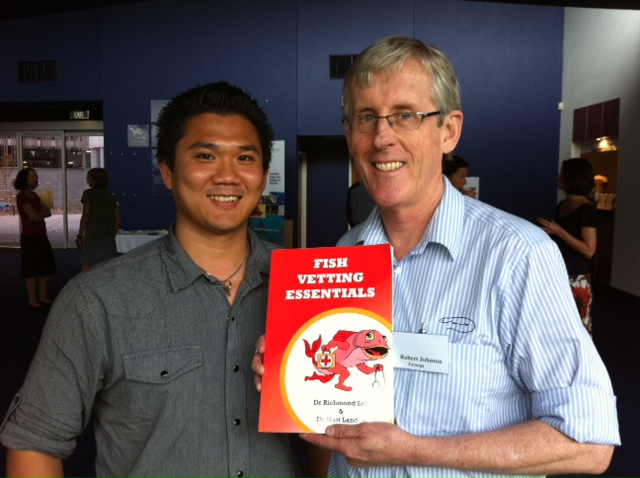
Fish Vetting Essentials book – update

Fish Vetting Essentials has sold out!

Another print run is underway. They will be available in the next few weeks.

Apologies for the wait, but you won’t be disappointed.