I’m running out of jokes to cure Mondayitis.
Does anyone have more fishy jokes?
I’m running out of jokes to cure Mondayitis.
All about Fish Vetting – Dr Richmond Loh
I’m running out of jokes to cure Mondayitis.
As evidenced by the health section on the Koimag online forum, keeping Koi disease-free and in top condition is of paramount importance.
What’s also obvious is the thirst for knowledge on this subject, as there are so many ailments and conditions that can affect
your fish. Although aimed at vets, Fish Vetting Essentials by Dr Richmond Loh and Dr Matt Landos makes for a fascinating read. Covering a wealth of topics in a thorough yet accessible manner, it not only looks at fish health, but also provides information about different species, along with chapters devoted to ponds, equipment and aquarium setups. Water quality is also given a substantial section with easily digestible breakdowns of target parameters. This comprehensive guide will make a useful addition to any pond keeper’s bookshelf.
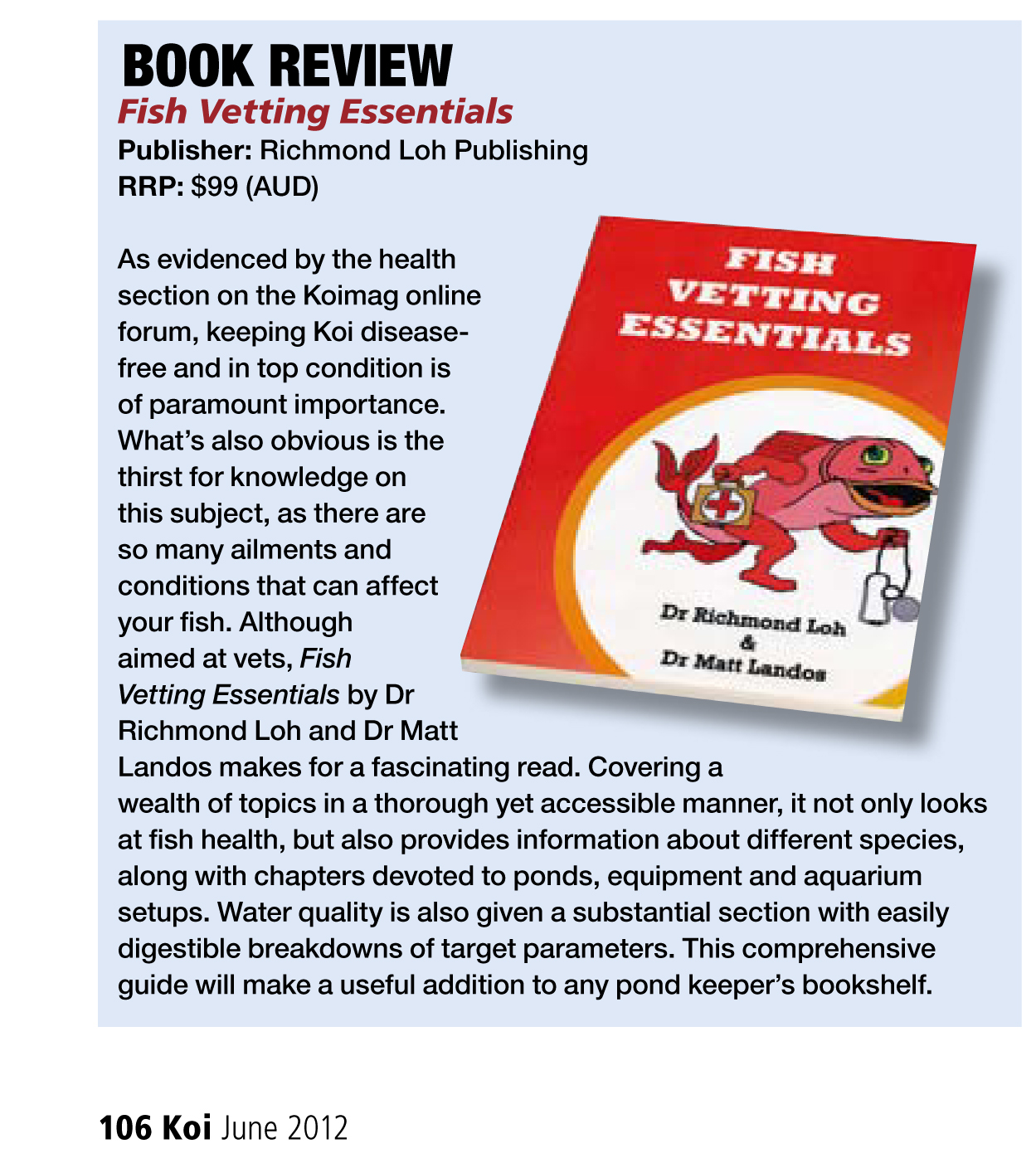
To order your copy of the latest Fish Vetting Essentials (only $A99 per copy plus $A15 for postage and handling within Australia), visit www.thefishvet.com.au or click here to proceed directly to the shopping cart.
AquaticHealth.net (www.AquaticHealth.net) — a free open-source intelligence gathering and analysis network for aquatic animal diseases.
Gathering, storing, sharing and analysing information on the health status of aquatic animals — including finfish, molluscs and crustaceans — around the world presents a particular challenge. Official reporting of pests and diseases in these species, and unofficial reports in the media or in systems such as ProMED (see: http://www.promedmail.org/), do not feature as prominently as, for example, reports of outbreaks in people or animals such as cattle (e.g. foot-and-mouth disease) or poultry (e.g. H5N1 avian influenza or ‘bird flu’). Geoff Grossel and Mike Nunn in the Australian Government Department of Agriculture, Fisheries and Forestry (DAFF) recognised this gap and worked with Aidan Lyon and Mark Burgman of the Australian Centre of Excellence in Risk Analysis (ACERA) to develop an innovative information technology solution that has dramatically improved the capacity for intelligence-gathering and analysis in aquatic animal health: AquaticHealth.net (see: http://www.AquaticHealth.net).
The team developed a system for searching internet sites worldwide and collating all information available on aquatic animal diseases and signals, such as market prices, that can give early warning of outbreaks occurring. The system automatically removes duplicates and collates all relevant reports into a summary that an analyst can quickly scan each day. The daily summary keeps critical information such as the location of outbreaks and enables geocoding and storage of detailed information on a world map for easy storage, retrieval and analysis of patterns and trends over time. The system offers the opportunity to share, store, collate and analyse open-source information on aquatic animal health. Users can easily focus and fine-tune the search system to their own specific areas of interest (e.g. by disease, host species or geographical location).
AquaticHealth.net gathers between 50 and 100 articles daily using a list of search terms entered by the intelligence community users. Of these, only about 10 articles are published and tagged by users as useful. Of the published reports, the system tags about 10 articles each week as ‘disease news’. Over time, this builds into a collection of information that enables analysts to identify and interpret emerging issues and trends. It can sometimes be difficult initially to determine what is relevant information, so the system archives all the data and information it gathers.
AquaticHealth.net includes a range of user-friendly tools such as search terms and tags, daily scans, published reports, maps, wikis, research news, industry news and RSS feeds. It automatically detects Through the wiki pages, users can edit and update entries on diseases and other topics related to aquatic animal health. Each wiki page about aquatic animal diseases also includes a forecasting section, in which users can make and debate forecasts of disease outbreaks that may affect aquatic industries. The system effectively ‘learns’ what is relevant from what information that is kept and published on the website, relying on users to decide what is relevant and what is not. This innovative approach of using a balance of programmed automation with the ‘wisdom of crowds’ underpins the system’s success.
The analysis identifies patterns and trends that can be used to forecast likely future events as input to strategic decision-making. One of the aims of building AquaticHealth.net was to lift planning horizons from three-day ‘reactive’ and three-month ‘tactical’ focus to a strategic one that explores what might be coming in the next 5–10 years. Analysts can determine what needs to be done now to be best prepared to meet these challenges — what is important is not ‘predicting’ what will happen, but being more prepared to engage with whatever may happen.
Emerging trends in aquatic animal diseases each six-months are collected and entered into the ‘emerging diseases’ wiki. A quarterly report is produced from the wiki and provided to various Australian government committees responsible for aquatic animal health. The report allows the committees to monitor potential emerging disease threats and to recommend response actions on significant issues as required.
AquaticHealth.net can be used to capture emerging disease information, analyse disease trends, map diseases, organise data, forecast disease events, provide biosecurity alerts, build biosecurity risk profiles and support decision-making relating to imports and exports. Some of the forecasting applications have already proven to be accurate and potentially very useful for improving biosecurity planning. The approach is now being extended to other areas where there is a similar lack of such capacity internationally, including plant health.
What do you call a colourful fish?
A rainbow fish.
Just got
Off a 3 hour Skype meeting with the WAVMA communications committee.
Hello WAVMA Members!
WAVMA has incorporated the use of the Network Of Veterinary ICT [information & communications technology] in Education (NOVICE).
You must be a veterinarian, veterinary student, ICT educator or veterinary educator to become a member of the NOVICE network.
Once you have become a member, which is free of costs, you will be able to use group discussion boards, blogs and wikis to discuss veterinary topics with like-minded people.
Currently there are over 2000 members of NOVICE. The website was founded by five European Veterinary Schools and is funded by the European Commission.
See the attached document for more information about the development of NOVICE.
WAVMA has built a section for Aquatic Veterinary Medicine on the NOVICE website.
We will be able to have computer-based learning programs, web conferences, and other educational programs available on the site for our members.
We are only just getting started, but go ahead and sign up and take a look:
Nick Saint-Erne
WAVMA Newsletter Editor
Saint-Erne@Q.com
#####################################################################################
The information contained in this electronic mail message, including attachments, if any, is PetSmart confidential information. It is intended only for the use of the person(s) named above. If the reader of this message is not the intended recipient, or has received this message in error, you are hereby notified that any review, dissemination, distribution or copying of this communication is strictly prohibited. If you are not the intended recipient or have received this message in error, please notify the sender via e-mail and promptly delete the original message.
#####################################################################################
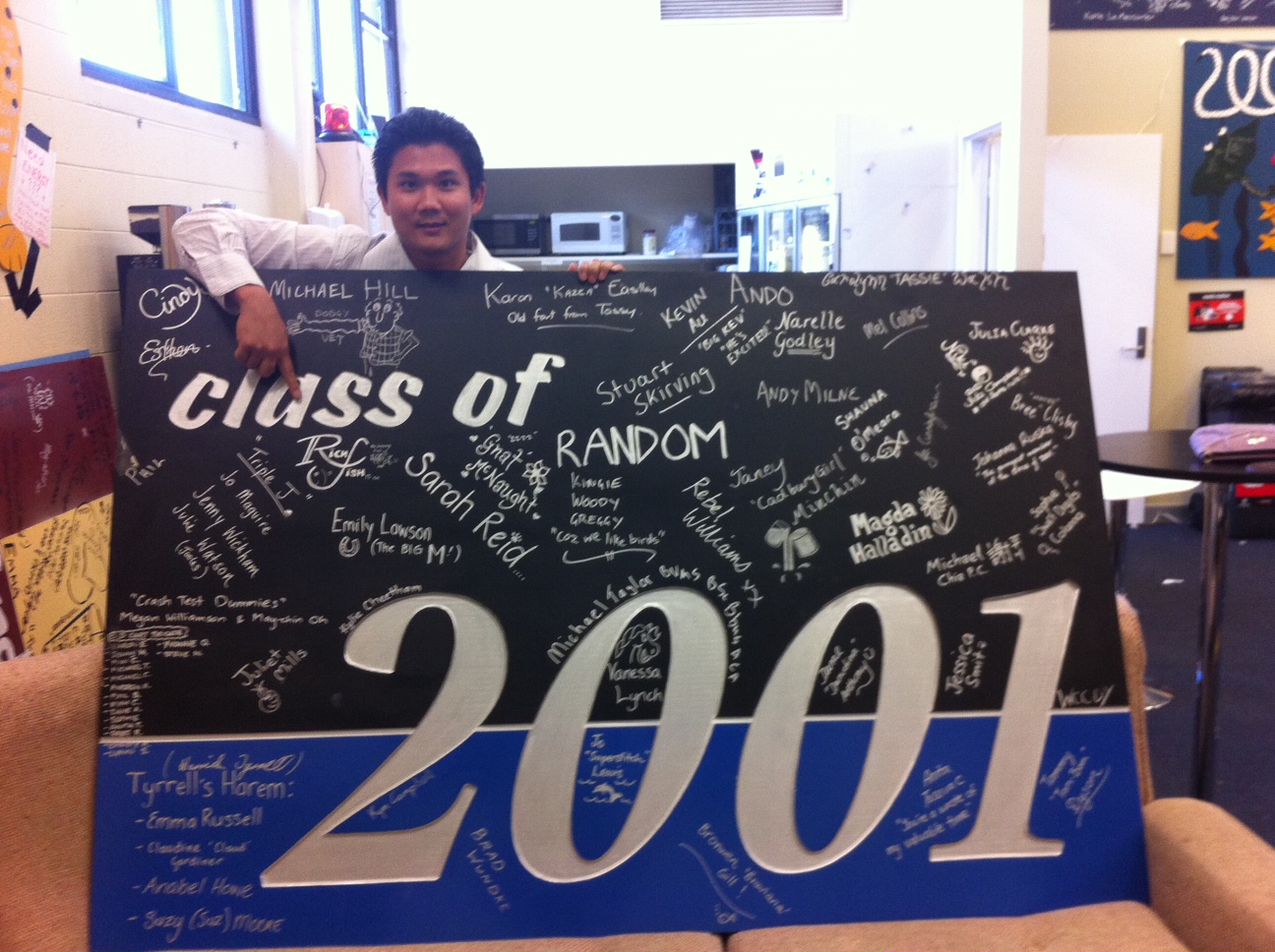
Got to check out the old name board of veterinary graduates. So many years have passed that this board has been taken off the wall for storage! I’m pointing to my name.
Today I will be attending and presenting at Murdoch Veterinary Business Management Association with the conference theme, “Finding your niche.”
This is a student initiative because they realise that there is more to veterinary medicine than the technical skills gained from the (now) 6 year course. Interpersonal skills, business skills, interview techniques are just some of the things that most of the older graduates would only have stumbled upon post-graduation. I am very impressed and honoured to be invited to speak with the students today.
It happens a lot in the field of fish medicine as well.
From today’s West Australian…
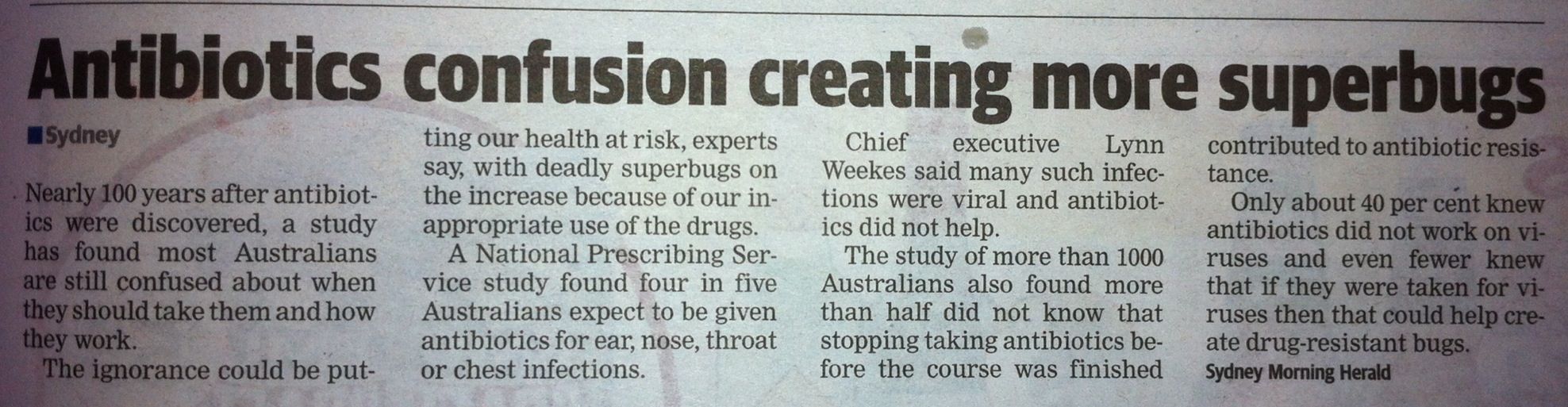
Male fertility in a number of animals are usually assessed by microscopic analysis of the number, motility and shape of spermatozoa. However, in the case of this prawn, more sophisticated means may be necessary.
| Aquaculture | |||||||||||||||||
| Volume 341, Number 5 (March 2012) | |||||||||||||||||
 |
A novel approach to evaluate the relationship between measures of male fertility and egg fertilization in Penaeus monodon | ||||||||||||||||
| Authors: | Stuart J. Arnold, Greg J. Coman, Charis Burridge, Min Rao | ||||||||||||||||
| Author Affiliations: |
|
||||||||||||||||
| Source: | Aquaculture, Volume 341, Number 5 (March 2012) | ||||||||||||||||
| Page Numbers: | 181 – 189 | ||||||||||||||||
| Available Full Text: |
|
||||||||||||||||
| Abstract: | Discriminating the male influence on egg fertilization in Penaeus monodonis needed so that accurate measures of male fertility can be developed and subsequently used to evaluate methods aimed at improving fertility. In this study, we employed a novel, pairwise comparison approach to discriminating the fertilization influence of males: female broodstock were artificially inseminated with one spermatophore each from a pair of males. We achieved 22 successful ‘spawnings’ involving selected pairs from 33 males, and estimated the proportion of embryos fertilized by each paired male by individual genotyping of embryos. The non-inseminated, ‘twin’ spermatophore was used to estimate measures of male fertility; sperm number and the number of normal sperm of each inseminated spermatophore. Relationships between measures of male fertility and egg fertilization were then evaluated. Using this approach we were able to show that the egg fertilization potential of males could not be determined simply by total sperm number or the number of normal sperm (as determined by gross morphology under light microscopy). We also found extremely high variability in fertilization between paired males. The results highlighted male infertility issues (e.g. sperm viability) that are not simply overcome by greater sperm numbers. Our novel approach provides a method that can be used to determine whether more complex measures of male fertility can reliably predict egg fertilization potential. | ||||||||||||||||
| Citation: | Stuart J. Arnold, Greg J. Coman, Charis Burridge, Min Rao . A novel approach to evaluate the relationship between measures of male fertility and egg fertilization in Penaeus monodon. Aquaculture, Volume 341, Number 5 (March 2012), pp. 181-189, <http://ejournals.ebsco.com/direct.asp?ArticleID=4E9BBA60948ECD2BB5E8> | ||||||||||||||||
| URL: | http://ejournals.ebsco.com/direct.asp?ArticleID=4E9BBA60948ECD2BB5E8 | ||||||||||||||||