How can you mark fish to tell them apart?

If all fish look alike, how can you tell them apart?

In the past, many researchers have used pit tags, microchips and maybe even suture material. These can travel or fall out and may not be suitable for small subjects. Also, it may be difficult to identify the fish without catching them out to get a closer look or to scan them.

So what’s the newest method of giving the fish a unique identity?

The newest method uses Visible Implant Elastomer Tags (VIE tags). There are several advantages for using this method:
-can be used in very small animals,
-a variety of colours available,
-some are fluorescent so you can use UV light to identify them (very useful if they are nocturnal creatures),
-tend not to migrate,
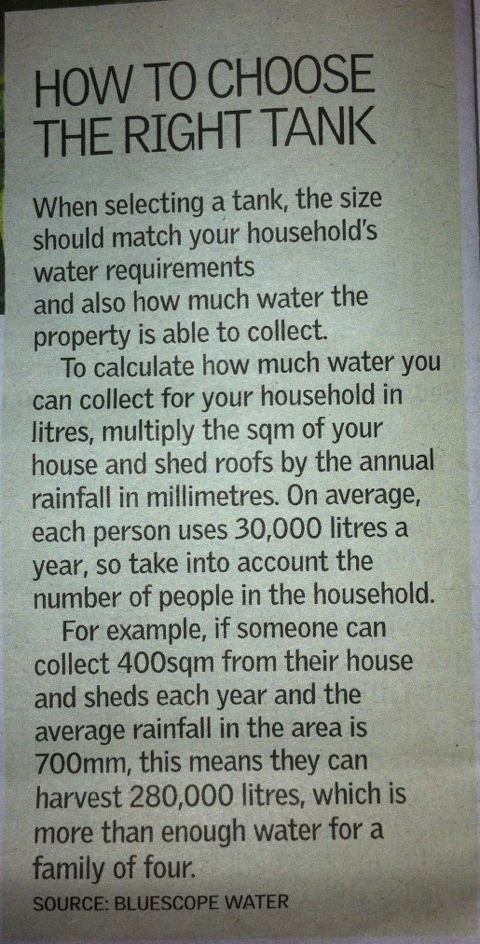
-little host reaction to the material (see picture below, a green VIE with only a mild granulomatous reaction exists).
20120523-175029.jpg

Check out this site for more detailed information.

http://www.nmt.us/test/index.shtml

NB: Dr Loh, The Fish Vet, did not receive any financial gain for writing this post.

Dr Loh dedicates the next 2 weeks for continuing professional development.

Dr Loh is passionate and dedicated to improving the health of aquatic animals, with clients ranging from your individual pet goldfish, through to public aquaria (like AQWA), aquaculture farms and educational institutions (e.g. Murdoch University). The scope of his work is indeed massive. He constantly strives to provide the best veterinary service he can by attending courses and private study.

The Australian Government recognises that there is limited advanced training available in Australia for professional consultants in this specialised field. Dr Loh has been given the opportunity to travel to Rhode Island later this week to attend the Aquavet II course as part of the People development program: 2011 Aquatic Animal Health Training Scheme is supported by funding from the FRDC on behalf of the Australian Government.

Click on the link below for more details on what Dr Loh, The Fish Vet, will be learning in the advanced course:

AQV2 2012 Itinerary

This is one of the many ways Dr Loh strives to deliver his clients the best possible service.

Where will The Fish Vet go with the George Alexander Foundation International Fellowship grant?

Dear Clients of The Fish Vet,
I’ve some good news I thought I might share with you.

Dr Richmond Loh has been awarded the George Alexander Foundation International Fellowship 2012.

I intend to use the grant to attend courses, meet colleagues and visit premises at the University of Florida and the University of Hawaii next year.

So, if you have any persistent issues that you have never been able to find the solution for, log them with me and I’ll bring your question/s along to see if the international experts are able to shed more light on the issue.

When I return, I will be disseminating the information learnt, to be made widely available in various formats – printed report, webinars, lectures and more.


Follow me on: TwitterBlogFacebookLinkedinYouTube
Yours sincerely,

Dr Richmond Loh
BSc, BVMS, MPhil (Vet Path), MANZCVS (Aquatics), MANZCVS (Pathobiology), DipPM.
Veterinarian | Adjunct Senior Lecturer Murdoch University | WAVMA Communications Committee Member |
Secretary Aquatic Animal Health Chapter – Australian and New Zealand College of Veterinary Scientists (ANZCVS)

The Fish Vet, Perth, Western Australia. Mobile Veterinary Service for fish and other aquatic creatures.
http://www.thefishvet.com.au
Ph: +61 (0)421 822 383

Looking for more books? Check out this site.

Fish Vetting Essentials’ presence at Interzoo 2012.

Bob Croucher with a copy of Fish Vetting Essentials at Interzoo 2012, Germany, for the pet supply trade show.

For only AUD$99 (plus postage and handling), get your very own copy now at
http://thefishvet.com.au/shop/shopping.html

Quantification of traumatic injuries in fish caused by the cormorant.

Aquaculture International: Journal of the European Aquaculture Society
Volume 20, Number 3 (June 2012)
Scoring of the extent and intensity of carp (Cyprinus carpio) skin changes made by cormorants (Phalacrocorax carbo sinensis): relationship between morphometric and histological indices
Authors: Stefan Skoric 1, Božidar Raškovic 2, Vesna Poleksic 2, Zoran Gacic 1, Mirjana Lenhardt 1
Author Affiliations:
1: Institute for Multidisciplinary Research, University of Belgrade, Kneza Višeslava 1, 11030 Belgrade, Serbia
2: Faculty of Agriculture, University of Belgrade, Nemanjina 6, 11081 Zemun, Belgrade, Serbia
Source: Aquaculture International: Journal of the European Aquaculture Society, Volume 20, Number 3 (June 2012)
Page Numbers: 525 – 535
Available Full Text:
Full Text: Subscription Required to view full text
Format: PDF
Size: unknown
Location: Publisher’s Site
Authentication: EBSCOhost EJS
Abstract:
Abstract

Cormorants cause damage to fish in aquaculture not only by consuming large number of fish but also by wounding them. Quantification of the actual damage in fish induced by wounding is important for reliable estimations of the overall loss in aquaculture caused by cormorants. In this study, specimens of mirror and scaly carp (Cyprinus carpio L.) injured by attacks of great cormorant (Phalacrocorax carbo L.) were collected from the “Ecka” fish farm in Serbia. Surfaces of superficial and open subepithelial wounds (expressed as a percent of the total body surface), estimated by computer-assisted image analysis, had mean values 10.66 ± 1.86 and 0.85 ± 0.90, respectively. Histological evaluation of wounds was performed by two scoring systems: system proposed by Bernet et al. (J Fish Dis 22:25–34, 1999) and modified system described by Wahli et al. (Aquaculture 225:371–386, 2003). The most frequent histopathological changes were disturbed epidermal structure and surface cell morphology and increased number of club cells (on more than 75% of specimens); increased number of melanocytes and their distribution in different layers in dermis; and enlarged hypodermis (more than 80% of samples) and myolysis (50% of samples). Comparison of wounds’ surfaces (surface of superficial injures) and histopathological changes, estimated by two scoring systems, revealed significant positive correlation. Bernet’s scoring system showed higher correlation coefficients, when compared with the modified Wahli’s scoring system.
Citation: Stefan Skoric, Božidar Raškovic, Vesna Poleksic, Zoran Gacic, Mirjana Lenhardt . Scoring of the extent and intensity of carp (Cyprinus carpio) skin changes made by cormorants (Phalacrocorax carbo sinensis): relationship between morphometric and histological indices. Aquaculture International: Journal of the European Aquaculture Society, Volume 20, Number 3 (June 2012), pp. 525-535, <http://ejournals.ebsco.com/direct.asp?ArticleID=44239164CD6023F39F03&gt;
URL: http://ejournals.ebsco.com/direct.asp?ArticleID=44239164CD6023F39F03

Congratulations to Dr Richmond Loh who has been awarded the George Alexander Foundation International Fellowship 2012.

Congratulations to Dr Richmond Loh who, through a competitive basis, was awarded the George Alexander Foundation International Fellowship 2012, which is administered through the International Specialised Skills Institute.

The aim of this Fellowship is to promote the acquisition of higher-level skills and an appreciation of international best practice in several areas.

Dr Loh has been selected because of his passion and it is genuine recognition of the significant contribution he has already made and will be making in the years to come.

Letters supporting his application are available via the links below:

Letter of Support – Agrifood Industry Skills Council

Letter of Support – Australian & NZ College of Veterinary Scientists (ANZCVS)

Letter of Support – Murdoch University

Salmonella Outbreaks Linked to Undersized Turtles

“The turtles responsible for the infections predominantly have shell lengths of less than 4 inches and were likely purchased from street vendors….. Nineteen people have been hospitalized….”

http://www.veterinarypracticenews.com/vet-breaking-news/2012/05/15/salmonella-outbreaks-linked-to-undersized-turtles.aspx

Thinking about installing a rainwater tank?

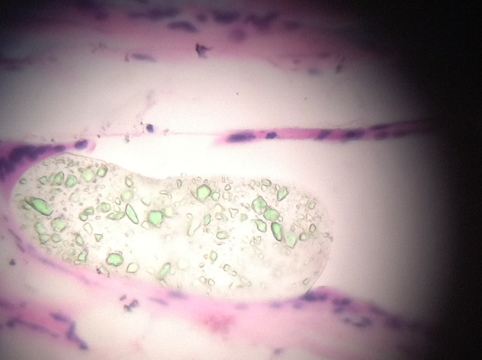
Now is the perfect time to invest in rainwater tanks. But what size should you get? I found this nifty section about choosing the right size to fit your needs in today’s West Australian lift out.

20120518-142346.jpg