Three bacterial strains isolated from an abalone postlarval culture system.


Aquaculture International: Journal of the European Aquaculture Society
Volume 20, Number 5 (October 2012)
Effect of three bacterial isolates from a commercial hatchery on early red abalone (Haliotis rufescens) postlarvae
Authors: Casandra Anguiano-Beltrán, Ricardo Searcy-Bernal 1, Adrián García-Ortega 2, Zaúl García-Esquivel 1, Enrique Valenzuela-Espinoza 1
Author Affiliations:
1: Instituto de Investigaciones Oceanológicas, Universidad Autónoma de Baja California, Km 107 Carretera Tijuana-Ensenada, CP 22860 Ensenada, BC, Mexico
2: Laboratorio de Virología y Biología Molecular, Centro Regional de Estudios y Diagnóstico Fitosanitario del Comité Estatal de Sanidad Vegetal de Baja California, Km 1.5 Carretera a San Felipe s/n, Col. Ex-Ejido Xochimilco, CP 21380 Mexicali, BC, Mexico
Source: Aquaculture International: Journal of the European Aquaculture Society, Volume 20, Number 5 (October 2012)
Page Numbers: 993 – 1001
Available Full Text:
Full Text: Subscription Required to view full text
Format: PDF
Size: unknown
Location: Publisher’s Site
Authentication: EBSCOhost EJS
Abstract:
Abstract

Three bacterial strains, GHrC11, GHrC13 and GHrC15, were isolated from an abalone postlarval culture system in a commercial farm at Baja California, México. The strains were phenotypically characterized and sequenced (16S rDNA). Strain GHrC11 was a Gram-positive coccobacillum, while strains GHrC13 and GHrC15 were Gram-negative bacilli. Strain GHrC11 was identified as Exiguobacterium sp. The strains GHrC13 and GHrC15 were identified as Vibrio splendidus. The effects of these strains for the development of early abalone postlarvae (2 days old) were evaluated following a completely randomized design with three replicates using 5-mL-volume Petri dishes as experimental units. The experiment considered two different bacterial concentrations of each strain (103 and 105 cells ml-1) and two controls (with and without the benthic diatom Navicula incerta). After 10 days of experimentation, the highest mortality (90 ± 5.8 %) and the lowest growth rate (4.1 ± 0.1 µm day-1) were recorded for the strain GHrC11. In contrast, the lower mortality (16.7 ± 3.3 %) and the highest growth rate (11.2 ± 0.9 µm day-1) corresponded to the control fed N. incerta. Our results suggest that pathogenic effects of these bacterial strains were stronger than any potential benefits derived from the ingestion of bacteria by early abalone postlarvae. In conclusion, the most pathogenic strain was GHrC11, and the intensity of pathogenicity could be ordered as Exiguobacterium sp. > V. splendidus (C13) > V. splendidus (C15).
Citation: Casandra Anguiano-Beltrán, Ricardo Searcy-Bernal, Adrián García-Ortega, Zaúl García-Esquivel, Enrique Valenzuela-Espinoza . Effect of three bacterial isolates from a commercial hatchery on early red abalone (Haliotis rufescens) postlarvae. Aquaculture International: Journal of the European Aquaculture Society, Volume 20, Number 5 (October 2012), pp. 993-1001, <http://ejournals.ebsco.com/direct.asp?ArticleID=4DD58EC89147A1B5302E&gt;
URL: http://ejournals.ebsco.com/direct.asp?ArticleID=4DD58EC89147A1B5302E

21 Of The Freakiest Fish Caught On “River Monsters”

This arrived in my email inbox. I thought I should share this with you.


21 Of The Freakiest Fish Caught On River Monsters
All of these were caught by Jeremy Wade, the silver-fox madman who hosts River Monsterson Animal Planet. And, yes, he releases everything he catches.
1
A 7-feet-long, 111-pound alligator gar caught in the Trinity River in Texas.
2.
A 150-pound arapaima was caught in the Rio Maderia floodplain lake in Brazil.
3.
A massive bull shark caught in southern Africa’s Zambezi River.
4.
An electric eel found in the Amazon River, which can grow up to eight feet long and weigh up to 44 pounds.
5.
A freshwater sawfish, which can grow to 20 feet and over 400 pounds.
6.
A giant Siamese carp, or giant barb, caught in the Mekong river. Only a fraction of its adult size, this fish is capable of growing to 10 feet and 660 pounds, making it one of the largest species of freshwater fish on the planet.
7.
A giant freshwater stingray. At roughly 400 pounds, this is the largest river fish Jeremy Wade has ever captured.
8.
A goliath tigerfish, a giant-sized relative of the piranha, found in the Congo River in the heart of central Africa.
9.
A 161-pound goonch catfish, caught in a river in northern India. This catch measured 5 feet, 7 inches from head to tail with a 41-inch girth and 44-inch “wingspan.”
10.
An African lungfish. The largest specimens can reach about 6.6 feet in length.
11.
A small Vundu catfish. This fish is capable of reaching over 5 feet in length, and its maximum known weight is 121 pounds.
12.
A New Zealand longfin eel, which can reach up to 5 feet in legth.
13.
A Nile perch. This species can grow to 6 feet in length and weigh over 500 pounds.
14.
A 1-pound black piranha, the largest of the roughly 40-known piranha species.
15.
A Cuiu-Cuiu, a prehistoric-looking catfish found in the Orinoco and surrounding rivers of the Amazon. The Cuiu-Cuiu can grow to 3 feet in length and weigh over 40 pounds. It has scutes along the back half of its body that give support to the tail fin; these give the Cuiu-Cuiu an armored appearance, common in ancient fish.
16.
The red-bellied pacu is related to the flesh-eating piranha, but unlike its notorious cousin it feeds mainly on insects and vegetation. It uses its large, humanlike choppers as a tool for cracking open rubber tree nuts, crushing seeds and chopping up sea herbs and various other food sources.
17.
A short-tailed river stingray. This fish typically grows to 4.9 feet in diameter and over 450 pounds in weight.
18.
A wels catfish weighing 163 pounds and measuring 7 feet, 4 inches from head to tail. The largest wels can reach up to 10 feet and weigh over 330 pounds.
19.
A white sturgeon, the largest and most primitive freshwater fish in North America. The biggest white sturgeon on record stretched more than 20 feet in length and weighed almost 1,800 pounds.
20.
A Japanese giant salamander, the second largest salamander in the world, after the Chinese giant salamander. It grows to around five feet in length. (Not a fish, granted, but still freaky)
21.
A close relative of the piranha, the payara is often called the “vampire fish” because of its long fangs, which can grow to 6 inches in length. This little-known but frightening-looking fish is found in the Orinoco River in Venezuela.


Follow me on: Facebook “Fin Page” LinkedinYouTubeTwitterBlog

Yours sincerely,

Dr Richmond Loh

BSc, BVMS, MPhil (Vet Path), MANZCVS (Aquatics), MANZCVS (Pathobiology), DipPM.
Veterinarian | Adjunct Senior Lecturer Murdoch University | WAVMA Communications Committee Member |
Secretary Aquatic Animal Health Chapter – Australian and New Zealand College of Veterinary Scientists (ANZCVS)
The Fish Vet, Perth, Western Australia, AUSTRALIA. Mobile Veterinary Service for fish and other aquatic creatures.
http://www.thefishvet.com.au
Ph: +61 (0)421 822 383

World Suicide Prevention Day.

Subject: Let’s breakdown isolation and treat depression!

From: Brian Mc Erlean
Sent: Monday, 10 September 2012 4:18 PM
To: YOU!

Hi all

Please find attached some information you might like to pass on to your colleagues in WA and perhaps keep on file.

It is World Suicide Prevention Week and as a profession we top the Western Australian suicide statistics in conjunction with Aboriginal youth.

In addition to the attached information (WA-info-sheet Flier For Suicide Prevention Week) we have our own AVA site which is open to members and non-members (thank you AVA for opening the Vethealth section to all veterinarians).

www.ava.com.au/resources/vethealth

There is also great information in the UK site www.vetlife.org.uk

It is not all bad news. There are now many veterinarians, researchers and health professionals working on suicide prevention and I know AVA WA President Paul Davey is a firm supporter.

Consider becoming a mentor or help in distributing information to colleagues who may still be reluctant to talk to anyone about their issues. Help breakdown isolation.

Remember the pathway for those in trouble is: GP with an interest in mental health, clinical psychologist +/- counsellor. Attending workshops is another avenue.

Stay sane and happy! If you need any additional information email or phone.

Dr Brian Mc Erlean MVB MRCVS

Australian Veterinary Association Community Coordinator WA

One Life Suicide Prevention Strategy

Mob: 043 356 1922

H. 08 9296 4887

bmcerlean@onelifewa.com.au
www.onelifewa.com.au

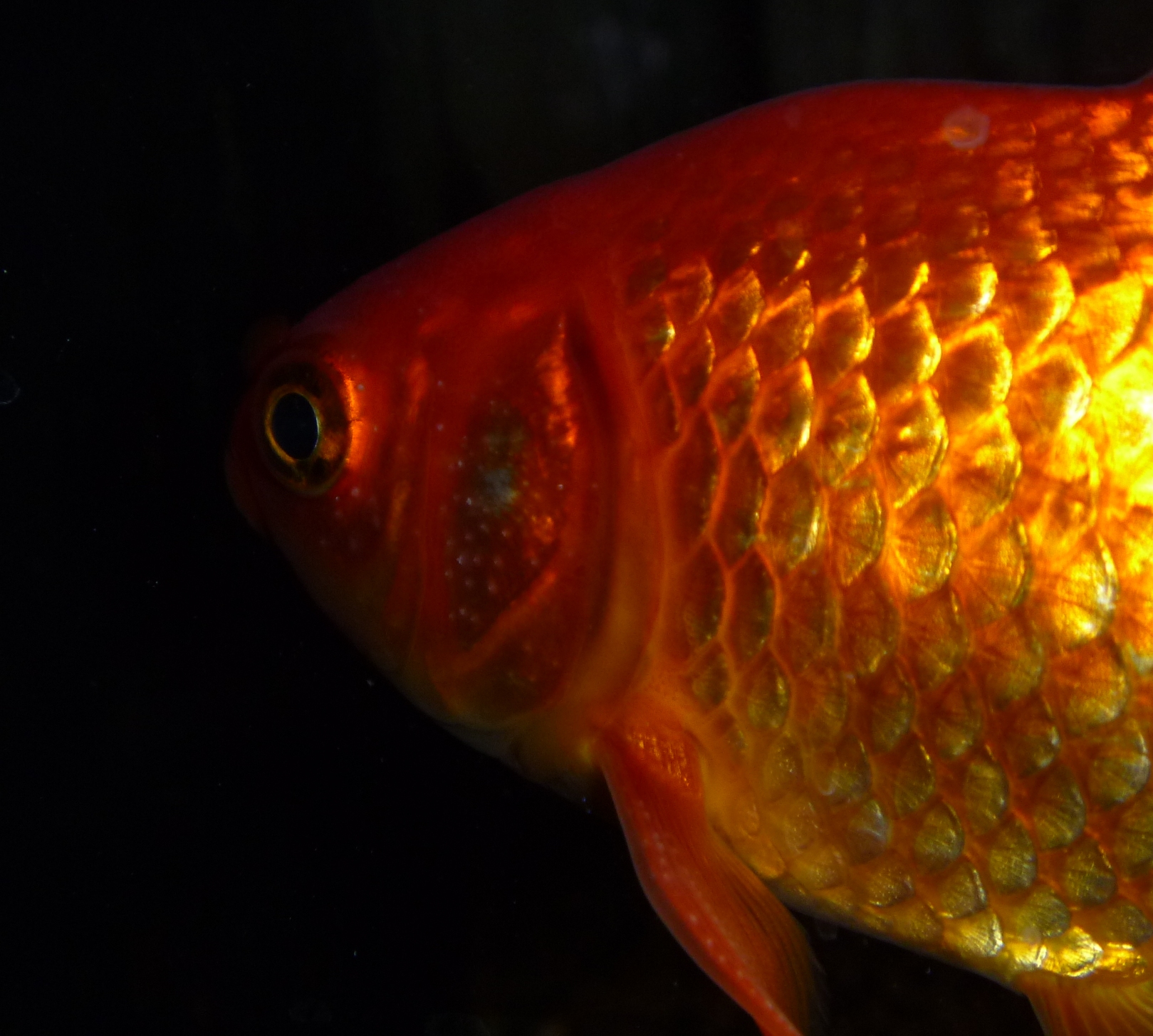
White spots on my goldfish – what are they?

There is no cause for alarm, particularly if the spots:

  • arise only during spring;
  • they are localised to the gill covers and the leading edge of the pectoral fins;
  • they are only on the male fish;
  • the fish with such spots do not show signs of ill-health.
Breeding tubercles appear as small white raised pimples on the gill covers and the leading edge of the pectoral fins of male goldfish.

If unsure, consult your fish veterinarian as it could be confused with serious diseases such as white spot disease, lymphocystis and velvet disease for example.

How do you clean the prefilter cage?

I’ve just cleaned my dad’s pond filter before the weather warms up and he showed me a great way of cleaning the pre filter cage. So I thought I’d share it with you.

The filter box was quite mucky and the filter material in it was given a quick rinse in pond water. We will be good for at least the next month or so.

Gyotaku, Japanese fish printing.

These workshops will be presented by Japanese master artist Mineo Ryuka Yamamato who will come to Perth specifically
to conduct two workshops on fish printing.

Check out the details on the flyer below.

Fish Printing Workshop Flyer

Shared by Ms Amber Howard, Department of Fisheries, Western Australia.

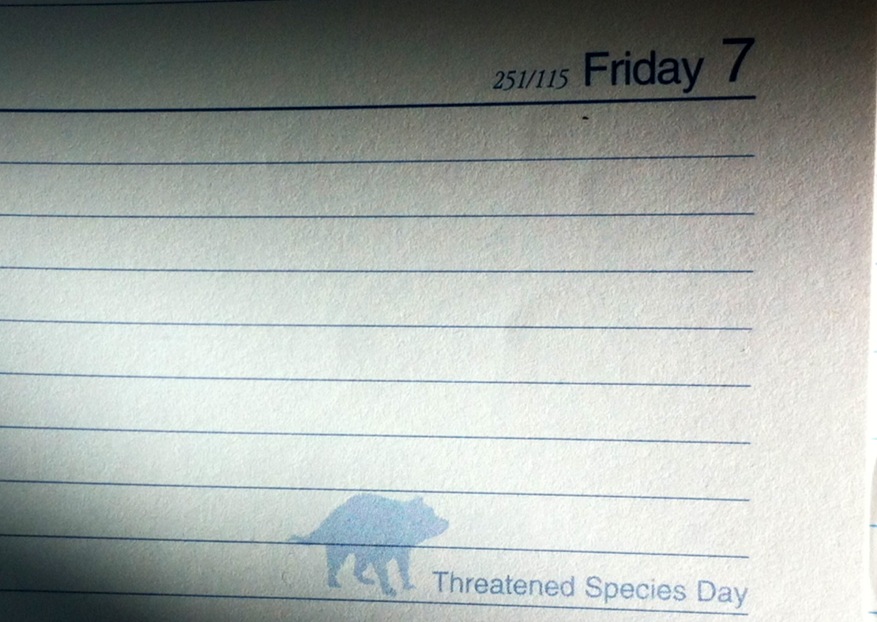
Today is Threatened Species Day

I have always been a fishy person, but not always been a fish vet. Some work I did when I worked in Tasmania was on the diagnosis of Devil Facial Tumour Disease and this formed part of my Masters Degree and Diploma of Project Management. See links to a couple of papers I had published:

http://vet.sagepub.com/content/43/6/890.abstract?etoc

http://vet.sagepub.com/content/43/6/896.abstract?etoc

See this site for more information on the research and how it is progressing – http://www.tassiedevil.com.au


Yours sincerely,

Dr Richmond Loh
BSc BVMS MPhil MANZCVS (Aq & Pathol)
The Fish Vet, Perth, Western Australia.
Veterinary Medicine for fish.
http://www.thefishvet.com.au
Ph: +61 (0)421 822 383