Dr Loh has added a heap of new photos on his Facebook fan page (http://www.facebook.com/thefishvetdrloh/photos_stream). Be sure to LIKE it to get more regular updates on that platform.
Results from a diet trial for the common octopus (Octopus vulgaris) – should we be culturing them?
This critter seems very expensive to grow and you almost have to feed it a diet entirely of squid or fish to make some octopus. This high protein dietary requirement, plus their ingenuity in not staying put might mean putting this species in the large, growing pile of non-culturable species. I believe we should be directing the limited resources for aquaculture/fisheries research into known culturable species, into replenishing wild stocks and into looking after our environment which is the real resource.
See a previous post – https://thefishvet.com/2012/02/21/fish-are-fed-fish-to-grow-fish-should-we-be-farming-carnivores-or-vegetarians/
See the article below:
| Aquaculture | |||||||||||||||||
| Volume 369, Number 1-2 (November 2012) | |||||||||||||||||
 |
Growth and digestibility of formulated diets based on dry and freeze-dried ingredients in the common octopus (Octopus vulgaris) | ||||||||||||||||
| Authors: | P.S. Morillo-Velarde, J. Cerezo Valverde, M.D. Hernández, F. Aguado-Giménez, B. García García | ||||||||||||||||
| Author Affiliations: |
|
||||||||||||||||
| Source: | Aquaculture, Volume 369, Number 1-2 (November 2012) | ||||||||||||||||
| Page Numbers: | 139 – 144 | ||||||||||||||||
| Available Full Text: |
|
||||||||||||||||
| Abstract: | We studied the growth of O. vulgaris and the digestibility of two semi-moist diets (50% water) based exclusively on dry and freeze-dried ingredients (Diet S: 20% gelatin, 10% egg yolk powder, 5% Sardinella aurita and 15% Todarodes sagittatus; and Diet P: the same as the previous diet but substituting T. sagittatus by pea). Both diets had a similar macronutrient composition (70–73% protein DW, 12–13% lipids DW), a firm texture when introduced into the water and good acceptability. Survival was 100% with both diets. The specific feeding rates were also similar for both diets (1.0% body weight/day; P0.05), although the best results were obtained with diet S, which was responsible for an absolute growth rate of 9.6g/day and a feed conversion rate of 1.0, compared with the 2.2g/day and 3.9 obtained with diet P; P<0.05). The protein and lipid productive values were significantly higher for diet S than for diet P (43.6 and 13.3% vs. 20.2 and -0.5%, respectively). The good results obtained with diet S may be explained by its greater digestibility (93.3% for dry matter, 97.0% for proteins and 87.9% for lipids) compared with the corresponding value for diet P (73.8%, 92.1% and 85.0%, respectively). The findings demonstrate that O. vulgaris can be fed with dry or freeze-dried ingredients that have undergone mild heat treatments since they lead to good growth, feed efficiency and digestibility. Future studies on octopus on-growing could use a similar base to that proposed in this paper to obtain diets with better acceptability, stability or nutritional composition for commercial purposes. | ||||||||||||||||
| Citation: | P.S. Morillo-Velarde, J. Cerezo Valverde, M.D. Hernández, F. Aguado-Giménez, B. García García . Growth and digestibility of formulated diets based on dry and freeze-dried ingredients in the common octopus (Octopus vulgaris). Aquaculture, Volume 369, Numbers 1-2 (November 2012), pp. 139-144, <http://ejournals.ebsco.com/direct.asp?ArticleID=4FA5AD831B216E8D179E> | ||||||||||||||||
| URL: | http://ejournals.ebsco.com/direct.asp?ArticleID=4FA5AD831B216E8D179E | ||||||||||||||||
Free online info for ornamental fish owners has been unveiled.
Check out – http://www.aquariumindustries.com.au/fish-school/
And for those who want more advanced knowledge and some of the fish veterinary secrets, check out "Fish Vetting Essentials" manual at https://thefishvet.com/
Cool video of a rare transversotrematid worm from the skin of a Frontosa.
Check out this cool critter I uploaded to my youtube channel –
You need to watch it with sound. I had a bit of a chuckle when the client described it as resembling his wife! Not quite the late Steve Irwin, the Crocodile Hunter, but it could be his twin!
Can you identify this bug in the wet preparation? It’s apparently a transversotrematid, possibly Prototransversotrema steeri. It’s one of the few digeneans (they have an indirect life cycle via an intermediate snail host) that are ectoparasitic, living in the scale pockets (and for this reason, they are wider than they are long). Because they’re not exposed to the water, bath treatments won’t work. Oral praziquantel might be more efficacious, although it is unlikely to spread in an aquarium without the snail host. It’s not a common freshwater fish critter and this is why it has taken me over 10 years for my first encounter. There’s a species called T. haasi that has an especially broad host range among the Indo-Pacific reef fishes.
The two black spots are its eyes and between them is its pharynx/mouth. The loop with fluid moving through it is the gut, and it’s called a cyclocoel.
The information provided above has been the combined responses of Drs Marty Deveney and Al Dove. Thanks guys!
—
Follow me on: Facebook "Fin Page" – YouTube – Blog – Linkedin – Twitter —
Yours sincerely,
Dr Richmond Loh
BSc, BVMS, MPhil (Vet Path), MANZCVS (Aquatics), MANZCVS (Pathobiology), DipPM.
Veterinarian | Adjunct Senior Lecturer Murdoch University | WAVMA Communications Committee Member |
Secretary Aquatic Animal Health Chapter – Australian and New Zealand College of Veterinary Scientists (ANZCVS)
The Fish Vet, Perth, Western Australia, AUSTRALIA. Mobile Veterinary Service for fish and other aquatic creatures.
http://www.thefishvet.com.au
Ph: +61 (0)421 822 383
Thinking of using fish pedicures? Think again.
From: “Dr. David Scarfe”
Date: 28 November 2012 20:08:08 AWST
Subject: AquaVetMed: Fish Pedicures & Possible Zoonotics
November 28, 2012
Agency warns of dangers of fish pedicures
In 2008, a pedicure trend swept the nation: tiny fish eating the dead skin off customers’ feet. Now the Centers for Disease Control and Prevention warn that the “doctor fish” may carry bacteria that could cause serious infections. Shortly after the fish pedicures began, public health agencies spoke out against the practice, and California, Florida and several other states banned it. Texas banned such pedicures in 2008.
The CDC published a report Wednesday by the Centre for Environment, Fisheries & Aquaculture Science in the United Kingdom, which studied the kinds of bacteria carried by the doctor fish, Garra rufa, an inch-long silver carp native to Southeast Asia.
“To date there has been only limited information on the types of bacteria associated with these fish,” lead researcher David Verner-Jeffreys said. “Our study identified some of the species of bacteria associated with this fish species, including some that can cause infections in both fish and humans.”
It’s no secret that water provides a breeding ground for all kinds of bacteria. Mix that with bacteria living on fish scales or in their waste and even the tiniest cut from an overzealous doctor fish, and the risk of infection is very real. Doctor fish are generally imported to salons from Indonesia or Malaysia, which can make it difficult to control the quality of the fish breeding and environment.
After an outbreak of strep bacteria last year in a shipment of the fish, the British government seized five containers from London Heathrow Airport to study what kinds of bacteria the fish were carrying. “The [strep] strain we isolated typically only causes disease in fish,” Verner-Jeffreys said. “We then went on to look at other consignments of apparently healthy imported G. rufa and found some other species of bacteria that can cause disease in humans and fish.” These bacteria included Aeromonas, which causes wound infections and gastrointestinal problems in humans; Streptococcus agalactiae, which causes skin and soft-tissue infections; and Mycobacteria, which the study reported have been responsible for skin infections in some pedicure clients in the U.K.
The researchers also found that these bacteria are often resistant to multiple drugs and therefore difficult to kill. “To date, there are only a limited number of reports of patients who might have been infected by this exposure route,” the report says. “However, our study raises some concerns over the extent that these fish, or their transport water, might harbor … pathogens of clinical relevance. It should be emphasized that neither us nor the [British] Health Protection Agency are advising that the practice should be banned,” Verner-Jeffreys said. “Any risks may be reduced by use of disease-free fish reared in controlled facilities under high standards of husbandry and welfare.”
See the source (http://tinyurl.com/c7gfovk) for the full story.
[The information referred to in this news story is neither a CDC or a CEFAS “Report.” It is actually a letter to the editor from David W. Verner-Jeffreys (CEFAS, UK), published in Emerging Infectious Diseases, 18 (6), June 2012. It is accessible at http://wwwnc.cdc.gov/eid/article/18/6/11-1782_article.htm. ADS-Mod]
___________________________
AquaVetMed e-News provides information to veterinary and veterinary-allied subscribers concerning aquatic animal medicine, health, welfare, public health and seafood safety, obtained from a variety of sources (largely AquaVetMed subscribers). While provided by the American Veterinary Medical Association’s, Aquatic Veterinary Medicine Committee and are for public distribution, they do not necessarily reflect the opinion of the AVMA or the veterinary profession. See the AVMA Terms of Use (http://tinyurl.com/29h2rf) for further information.
If e-News information is used elsewhere please acknowledge AquaVetMed as the source. Encourage individuals to subscribe rather than distribute through list serves.
Messages may contain attachments that will have been scanned for known viruses.
Subscription and Contributions: Interested veterinarians and veterinary-allied professionals can subscribe, unsubscribe, or contribute pertinent news or information, by sending a message with “For AquaVetMed -” and the topic in the subject line, to dscarfe@avma.org.
Note: Undelivered e-mails will not be resent; Subscribers will be deleted from the list after repeated undelivered or bounced messages and will have to re-subscribe.
Visit our website: http://www.avma.org
________________________________
The Fish Vet’s veterinary services – integrated innovative solutions.
In veterinary health care, there may be service boundaries defined by providers’ clinical specialties. The results will be fragmented, inconvenient, inefficient and the outcomes compromised for the solutions you needed yesterday. The Fish Vet’s services are designed to achieve excellent outcomes for clients with customised needs.
Most veterinarians have expertise in single fields. Dr Loh is unique in that he is one of only two veterinarians globally who has post-graduate, Membership qualifications in aquatic animal health and in veterinary pathology, admitted by examination to the Australian and NZ College of Veterinary Scientists. He also holds a research Masters degree. This means that he can solve your problems in the field or laboratory, and can devise strategies for research if the problems are more complex.
Dr Loh is affiliated with many world class organisations, serving as the Secretary of the Aquatic Animal Health Chapter of the Australian and New Zealand College of Veterinary Scientists, President-elect of the World Aquatic Veterinary Medical Association, a Senior Adjunct Lecturer at Murdoch University’s Veterinary and Biomedical Sciences section and a past Treasurer for the Australian Society of Veterinary Pathologists. He is also a member of the International Association for Aquatic Animal Medicine and a member of the European Association of Fish Pathologists.
The Fish Vet as a one-stop shop, gives the clients a personal connection to the all the veterinary services you require. The Fish Vet’s clients benefit from more convenient and better coordinated access to veterinary services and improved outcomes. The Fish Vet operates a mobile consultancy service and so no matter where you are in Australia, Dr Loh can organise delivery of his services to your pet, your business or your farm.
To find out more, go to –
TheFishVet’s site or
see the adverts:

Check out this flatworm from a skin scrape of a Frontosa. Do you know what it is?
TheFishVetDrLoh has shared a video with you on YouTube:
“Trematode from a skin scrape of Cyphotilapia frontosa Tembwe.”
I had a bit of a chuckle when the client described it as having two eyes and a mouth, resembling his wife!…
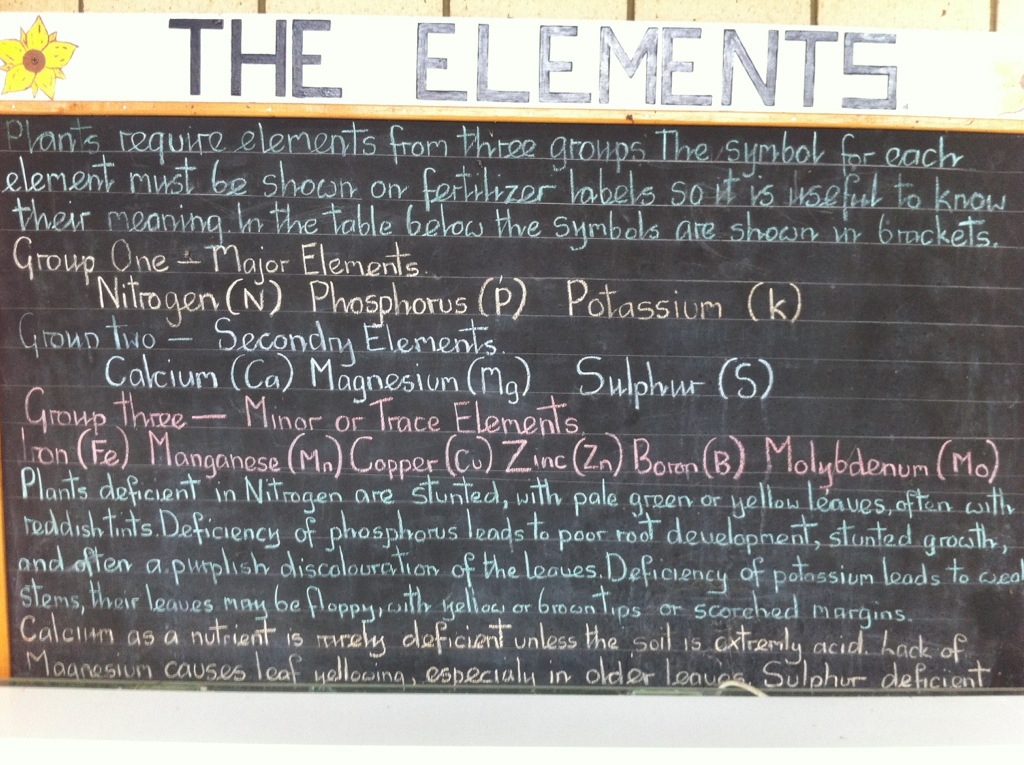
All you wanted to know with trouble shooting your aquaponically grown plant problems.
Found this on a blackboard at the Backyard Aquaponics store in Jandakot last Saturday.
Fish joke for Monday-itis: Anatomy of sea creatures.
Check these out. Shared by Dr Bannister.
Love the Nemo one the best!
http://www.pleated-jeans.com/2012/05/15/anatomy-of-sea-life-8-pics/
Sea cucumber culture, farming and sea ranching in the tropics: Progress, problems and opportunities.
Back in 2004/2005, I had the opportunity to visit an oyster farm in Moreton Island, just east of Brisbane, Australia. I saw a great number of sea cucumbers (also called “sand fish” or even “sea turds”!) around the place and wondered why haven’t anyone thought of culturing these critters. I’m not a big fan of sea cucumbers (which are not vegetables, but are related to starfish) myself, but I brought that idea up with the oyster farmer. I believe he’s been working on this side of his business since then.
One of my friends quoted me this though,”“Sell a man a fish, he eats for a day, teach a man how to fish, you ruin a wonderful business opportunity.”
| Aquaculture | |||||||||||||||||
| Volume 369, Number 1-2 (November 2012) | |||||||||||||||||
| |
Sea cucumber culture, farming and sea ranching in the tropics: Progress, problems and opportunities | ||||||||||||||||
| Authors: | Steven W. Purcell, Cathy A. Hair, David J. Mills | ||||||||||||||||
| Author Affiliations: |
|
||||||||||||||||
| Source: | Aquaculture, Volume 369, Number 1-2 (November 2012) | ||||||||||||||||
| Page Numbers: | 68 – 81 | ||||||||||||||||
| Available Full Text: |
|
||||||||||||||||
| Abstract: | Tropical sea cucumber mariculture has potential to become a profitable industry and contribute towards natural population replenishment. Here, we synthesise the fields of progress, current impediments and research opportunities in tropical sea cucumber aquaculture arising from recent studies and an Indo-Pacific symposium. We present novel comparisons of data from hatcheries, earthen ponds and sea pens from published and unpublished studies in various countries. Of the few tropical species to have been cultured, only the sandfish Holothuria scabrahas been bred extensively. While risks from hatchery-produced sea cucumbers are recognised, more genetic research is needed in farming and sea-ranching programmes. Advances have been made in the culture and nursery rearing of tropical sea cucumber juveniles but few have been published. Sandfish larvae have now been grown successfully on just one microalga species, but experimental studies to optimise culture conditions are needed urgently. Disease of tropical sea cucumbers in culture is infrequent but the treatment of disease and parasites is understudied. Earthen ponds are currently most effective for nursery rearing of juvenile sandfish to a size for stocking. Growth rates and survival of sandfish in ponds to market size are also favourable, and should improve via studies on stocking density, feeding regimes and pond management. Sea pens confer ownership of released stock and can provide a means of limiting predation in natural habitats but the costs of materials, maintenance and surveillance against poaching can diminish profitability. Sea ranching has minimal material costs but needs a large leased area and may require juveniles to be marked prior to release. Retail prices of sandfish in Hong Kong increased exponentially with body size. A cost-benefit analysis illustrated that labour and utility costs in pond farming will preclude profitability of monoculture in some cases, forcing proponents to look towards co-culture or gamble with uncertain survival in sea ranching. Better governance and consultation regarding the stocking of sea cucumbers have been advocated. We conclude that well-designed experiments and meta-analyses are needed to fill critical knowledge gaps if sea cucumber mariculture is to expand in the tropics as it has in temperate Asia. Co-culture remains a burgeoning frontier despite poor success of initial studies. Sea cucumbers have superb potential to diversify mariculture industries in the tropics and potentially ameliorate the detrimental effects of mariculture on coastal ecosystems. | ||||||||||||||||
| Citation: | Steven W. Purcell, Cathy A. Hair, David J. Mills . Sea cucumber culture, farming and sea ranching in the tropics: Progress, problems and opportunities. Aquaculture, Volume 369, Numbers 1-2 (November 2012), pp. 68-81, <http://ejournals.ebsco.com/direct.asp?ArticleID=40398E174CF298AB5094> | ||||||||||||||||
| URL: | http://ejournals.ebsco.com/direct.asp?ArticleID=40398E174CF298AB5094 | ||||||||||||||||