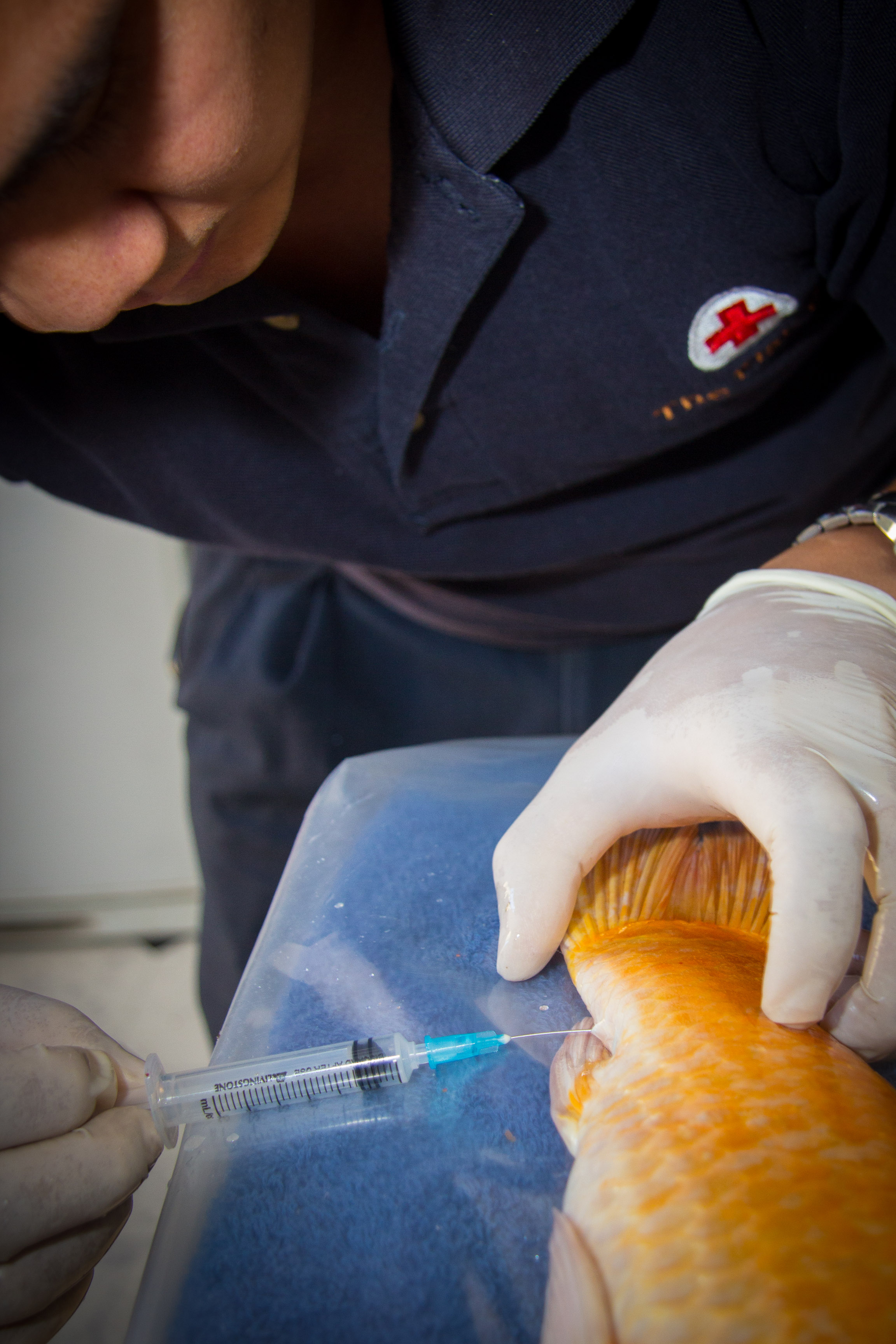
What do you call a fish that’s been body building?
Mussels!
All about Fish Vetting – Dr Richmond Loh
What do you call a fish that’s been body building?
Mussels!
Forwarded message below:
From: “Dr. David Scarfe”
Date: 4 April 2013 0:35:05 AWST
Subject: AquaVetMed: Zebrafish Biomedical Research Workshop (King’s College, UK) – May 3-4, 2013
Zebrafish: an animal model in biomedical research – International Workshop (May 3-4, 2013)
Location: King’s College London (UK) harboring one of the largest European Zebra fish research facilities.
This workshop is the result of a collaboration between University College London, King’s College London, FGB, and COST action BM0804, the European Network on Fish Biomedical Models (EuFishBioMed).
Lectures will provide the latest information on the organisation of a modern Zebrafish (zebra danio) facility, animal husbandry and care, health monitoring, GMO technology, international legislation and guidelines and applied research technologies. Demonstrations of frequently used techniques are part of the programme.
For a more detailed brochure and registration details, follow this link- http://tinyurl.com/d59r5hb
___________________________
AquaVetMed e-News provides information to veterinary and veterinary-allied subscribers concerning aquatic animal medicine, health, welfare, public health and seafood safety, obtained from a variety of sources (largely AquaVetMed subscribers). While provided by the American Veterinary Medical Association’s, Aquatic Veterinary Medicine Committee and are for public distribution, they do not necessarily reflect the opinion of the AVMA or the veterinary profession. See the AVMA Terms of Use (http://tinyurl.com/29h2rf) for further information.
If e-News information is used elsewhere please acknowledge AquaVetMed as the source. Encourage individuals to subscribe rather than distribute through list serves.
Messages may contain attachments that will have been scanned for known viruses.
Subscription and Contributions: Interested veterinarians and veterinary-allied professionals can subscribe, unsubscribe, or contribute pertinent news or information, by sending a message with “For AquaVetMed -” and the topic in the subject line, to dscarfe@avma.org.
Note: Undelivered e-mails will not be resent; Subscribers will be deleted from the list after repeated undelivered or bounced messages and will have to re-subscribe.
Visit our website: http://www.avma.org
________________________________
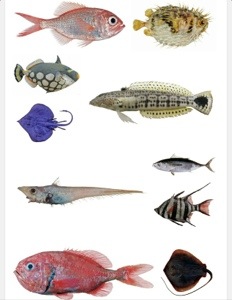
With FishMap you can find out what fish occur at any location or depth in the waters of Australia’s continental shelf and slope. You can also create species lists for any region that include photographs and illustrations, distribution maps and current scientific and common names.
It has the known geographical and depth ranges of over 4500 Australian marine fishes – including our 320 sharks and rays.
According to the Australian Bureau of Statistics more than five million Australians take part in recreational fishing in Australia as a leisure activity.
There is also a large commercial seafood and aquaculture industry which is worth over $2 billion annually and employs around 16,000 people.
Combined with the number of people who love a good feed of fish, there are a lot of people with a direct interest in the oceans and seas of Australia and what is in them.
Huw Morgan
Check out a gallery of images from FishMap in this blog post.
Some examples taken from the site:
Read more about Australia’s climate this last summer:
http://www.facebook.com/ScienceAlert/posts/10151607668437518:0
—
Yours sincerely,
Dr Richmond Loh
DipProjMgt, BSc, BVMS, MPhil (Pathology) Murdoch, MANZCVS (Aquatics& Pathobiology).
The Fish Vet, Perth, Western Australia.
Veterinary Medicine for fish.
W: http://www.thefishvet.com.au
E: thefishvet
P: +61 (0)421 822 383
Some researchers have found a way of depurating oysters so that the remaining bacterial counts in the oyster is minimal, and without sacrificing taste, texture and health of the oyster.
The process involves chilling the water to between 45 and 55 degrees Fahrenheit and sterilized it with ultraviolet light. Their method eliminated 99.9 per cent of the bacteria after four to five days. The oysters stayed alive during the purification, and their texture and taste were not altered.
Why shellfish can become deadly
AN adult oyster filters and cleans up to 190 litres of water a day.
They swallow algae, and remove dirt and nitrogen pollution.
Sometimes during the filtering process, bacteria can trigger norovirus which remains in the oyster.
Eating shellfish infected with a norovirus can lead to food poisoning with vomiting, diarrhoea and abdominal pain.
Noroviruses are the most common cause of viral gastroenteritis in humans.
The disease is usually self-limiting and severe illness is rare but it can lead to blood infections of people with compromised immune systems – especially those with chronic liver disease – and can cause severe and life-threatening reactions.
Sourced from – http://www.themercury.com.au/article/2013/04/03/375973_tasmania-news.html
In commercial aquaculture operations, the temperature to maximise growth is around 27-30°C. But what’s their tolerance limits? And what happens in their natural settings?
In this handbook – Schipp, G, Bosmans, J & Humphrey J (2007) Northern Territory Barramundi Farming Handbook. Third revision. Northern Territory Government. – under 2.5 Environmental requirements, it states that “Barramundi fingerlings are known to survive in water… temperatures up to 35°C. They can also survive temperatures as low as 16°C.”
In this factsheet – Q. Allsop, P. de Lestang, R. Griffin and G. White, (2006) Barramundi – Your Questions Answered. Fishnote, No 27, DPIFM – it states that “Barramundi inhabit areas where the water temperature ranges between 23°C to 35°C, from the Ashburton River in the west to the Mary River in Queensland.”
In a dry season day, the ambient temperature in Northern Territory can fall to 15°C and the water temperature in barramundi farms in can drop to around 20°C.
I have had a case where a client with aquaponics setup saw their fish become sick in the middle of May in Perth, when water temperature ranges dropped to as low as 13-17°C. In another case, a barramundi in an outdoor aquarium became ill during the month of July in an unheated outdoor tank.
My colleague’s experience is that the water temperatures in barramundi farms get down to 15°C most years without mass mortality. Two years ago, in dams located in Queensland, water temperatures dropped to 11°C (which was extreme), and it was then that it caused mass mortality.
So, based on a combination of literature reviews of natural occurrences, experimental data and professional experience, the optimal temperature range for barramundi is between 25-30°C. The tolerance range for them would 16-35°C.
Here we should make a distinction that tolerance range means that they can survive this, but only for short periods and only if exposed to the extremes gradually.
This live event is free of charge.
For more information, go to –
https://thefishvet.com/2013/04/02/dont-forget-to-join-dr-lohs-free-webinar-on-how-to-become-a-fish-veterinarian/
Note that a recording will be made, but this will only be available for people who subscribe to TheWebinarVet (and for a fee).
Follow me on: Facebook "Fin Page" – YouTube – Blog – Linkedin – Twitter
—
Yours sincerely,
Dr Richmond Loh DipProjMgt, BSc, BVMS, MPhil (Pathology) Murdoch, MANZCVS (Aquatics & Pathobiology).
Veterinarian | Adjunct Lecturer Murdoch University | WAVMA President-Elect |
Secretary Aquatic Animal Health Chapter – Australian and New Zealand College of Veterinary Scientists (ANZCVS).
The Fish Vet, Perth, Western Australia, AUSTRALIA. Mobile Veterinary Medical & Diagnostic Services for fish and other aquatic creatures.
http://www.thefishvet.com.au
Ph: +61 (0)421 822 383
Looking for more books? Check out this site.
We did a total of 2063.7 km, north of my base in Perth, WA. That’s a lot of road covered!
I got to see dolphins, dugongs, sea turtles, sea snakes, sharks and more! On the terrestrial front, some kangaroos, emus, pelicans and others.
Check out some of the pictures on my Facebook Fanpage.
Follow me on: Facebook "Fin Page" – YouTube – Blog – Linkedin – Twitter
—
Yours sincerely,
Dr Richmond Loh DipProjMgt, BSc, BVMS, MPhil (Pathology) Murdoch, MANZCVS (Aquatics & Pathobiology).
Veterinarian | Adjunct Lecturer Murdoch University | WAVMA President-Elect |
Secretary Aquatic Animal Health Chapter – Australian and New Zealand College of Veterinary Scientists (ANZCVS).
The Fish Vet, Perth, Western Australia, AUSTRALIA. Mobile Veterinary Medical & Diagnostic Services for fish and other aquatic creatures.
http://www.thefishvet.com.au
Ph: +61 (0)421 822 383
Looking for more books? Check out this site.
Locals no longer stop to drink the water or swim at Hanrahan’s Creek. The water is freakish green and blue.
The copper concentrations they measured were about 377 milligrams per litre, where a pristine or high conversation stream would be about 0.001 milligrams per litre.
When Redbank Copper acquired the mine in 2006 (some ten years after it was closed) it inherited legal responsibility for the environmental problems. The company is currently attempting to raise $7.5m from investors, arguing that the only way to correct the problems is to restart the mine.
Learn more here –
the-redbank-copper-mine-poisoned-hanrahans-creek
Dr Loh, The Fish Vet, has joined with The Webinar Vet to create a free Webinar event. I’d like to invite you to learn a bit about how I came to be The Fish Vet and how others may follow. I hope to be able to ‘virtually’ meet you.
For more information, see below:
|
||||||||||||||||||||||||||||||||||||||
|
|
(be sure to check http://www.timeanddate.com/worldclock/converter.html for your local time)
Choose: Australia – Western Australia – Perth’s,
Thursday, 4th April, 4:30pm.
—
Follow me on: Facebook “Fin Page” – YouTube – Blog – Linkedin – Twitter
—
Yours sincerely,
Dr Richmond Loh
BSc, BVMS, MPhil (Vet Path), MANZCVS (Aquatics), MANZCVS (Pathobiology), DipPM.
Veterinarian | Adjunct Senior Lecturer Murdoch University | WAVMA President-Elect |
Secretary Aquatic Animal Health Chapter – Australian and New Zealand College of Veterinary Scientists (ANZCVS)
The Fish Vet, Perth, Western Australia, AUSTRALIA.