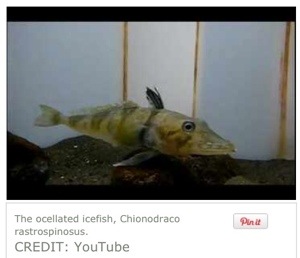
What’s this fish that’s got no red blood cells?

If you attended the Webinar given by my colleague, Dr Robert Jones The Aquarium Vet, he was discussing about fish blood and that some fish actually do not have red blood cells. I came across this article and thought if share it with you.

Check out the icefish at a Japanese aquarium – http://www.livescience.com/28504-ocellated-icefish-clear-blood.html

20130409-072254.jpg

20130505-091300.jpg

Breaking news! The mystery of the silent and deadly prawn killer, Early Mortality Syndrome, has been discovered!

This is what my friend, Loc Tran, from Vietnam is researching with Dr Lightner.


Yours sincerely,

Dr Richmond Loh
DipProjMgt, BSc, BVMS, MPhil (Pathology) Murdoch, MANZCVS (Aquatics& Pathobiology).
The Fish Vet, Perth, Western Australia.
Veterinary Medicine for fish.
W: http://www.thefishvet.com.au
E: thefishvet@gmail.com
P: +61 (0)421 822 383

Begin forwarded message:

From: “Dr. David Scarfe”
Date: 2 May 2013 19:46:01 AWST
Subject: AquaVetMed e-News: Phage infected bacterium thought to be cause of shrimp EMS

May 2, 2013
Cause Of EMS Shrimp Disease Identified

After months of investigation by a research team led by Donald Lighter at the University of Arizona, the elusive pathogen causing early mortality syndrome (EMS), an emerging shrimp disease in Southeast Asia more technically known as acute hepatopancreatic necrosis syndrome (AHPNS), has been identified. The researchers found that EMS is caused by a bacterial agent, which is transmitted orally, colonizes the shrimp gastrointestinal tract and produces a toxin that causes tissue destruction and dysfunction of the shrimp digestive organ known as the hepatopancreas.

Lightner’s team identified the EMS/AHPNS pathogen as a unique strain of a relatively common bacterium, Vibrio parahaemolyticus, that is infected by a virus known as a phage, which causes it to release a potent toxin. A similar phenomenon occurs in the human disease cholera, where a phage makes the Vibrio cholerae bacterium capable of producing a toxin that causes cholera’s life-threatening diarrhea.

Research continues on the development of diagnostic tests for rapid detection of the EMS/AHPNS pathogen that will enable improved management of hatcheries and ponds, and help lead to a long-term solution for the disease. It will also enable a better evaluation of risks associated with importation of frozen shrimp or other products from countries affected by EMS.

Some countries have implemented policies that restrict the importation of frozen shrimp or other products from EMS-affected countries. Lightner said frozen shrimp likely pose a low risk for contamination of wild shrimp or the environment because EMS-infected shrimp are typically very small and do not enter international commerce. Also, his repeated attempts to transmit the disease using frozen tissue were unsuccessful.

Since EMS was first reported in China in 2009, it has spread to Vietnam, Malaysia and Thailand, and now causes annual losses more than U.S. $1 billion. EMS outbreaks typically occur within the first 30 days after stocking a newly prepared shrimp pond, and mortality can exceed 70%.

In an effort to learn from past epidemics and improve future policy, the World Bank and the Responsible Aquaculture Foundation, a charitable education and training organization founded by the Global Aquaculture Alliance, initiated a case study on EMS in Vietnam in July 2012. Its purpose was to investigate the introduction, transmission and impacts of EMS, and recommend management measures for the public and private sectors.

The study team included Lightner, who with University of Arizona co-workers recently identified the EMS/AHPNS pathogen. At a panel discussion on EMS at the Global Aquaculture Alliance’s GOAL 2012 meeting in October 2012, Lightner and Timothy Flegel speculated that the elusive nature of the disease might be explained by a bacteriophage.

Source: http://tinyurl.com/bnk8o9x.
___________________________
AquaVetMed e-News provides information to veterinary and veterinary-allied subscribers concerning aquatic animal medicine, health, welfare, public health and seafood safety, obtained from a variety of sources (largely AquaVetMed subscribers). While provided by the American Veterinary Medical Association’s, Aquatic Veterinary Medicine Committee and are for public distribution, they do not necessarily reflect the opinion of the AVMA or the veterinary profession. See the AVMA Terms of Use (http://tinyurl.com/29h2rf) for further information.

If e-News information is used elsewhere please acknowledge AquaVetMed as the source. Encourage individuals to subscribe rather than distribute through list serves.

Messages may contain attachments that will have been scanned for known viruses.

Subscription and Contributions: Interested veterinarians and veterinary-allied professionals can subscribe, unsubscribe, or contribute pertinent news or information, by sending a message with “For AquaVetMed -” and the topic in the subject line, to dscarfe@avma.org.

Note: Undelivered e-mails will not be resent; Subscribers will be deleted from the list after repeated undelivered or bounced messages and will have to re-subscribe.

Visit our website: http://www.avma.org

________________________________
Scholarships available for budding fish vets.

———- Forwarded message ———-
From: Dr. David Scarfe <DScarfe@avma.org>
Date: Tue, Apr 30, 2013 at 7:39 AM
Subject: WAVMA Members-L: 2013 Veterinary Student/New Graduate Scholarship Program (May 15 Application Deadline)
To: WAVMA_Members-L@wavma.org

2013 Veterinary Student/New Graduate Scholarship Program


Applications for 2013 Scholarships are now open.

ALL application materials must be submitted by May 15, 2013.

Scholarship Award Intent & Criteria 

Awards will be made to WAVMA/SAVMA Members in good standing based on academic merit, past involvement in aquatic veterinary medicine, and the likelihood that the applicant will continue a career in private veterinary practice and provide aquatic veterinary services to clients. Awardees will provide a written report for possible publication in the WAVMA Newsletter within 30 days after completion of the meeting or project and, when possible, awardees are expected to give a presentation about their scholarship experience to veterinary students.

Awards are intended to support involvement and aquatic veterinary education of:

  • ·        Students enrolled in a recognized academic program leading to a veterinary degree;
  • ·        Graduate veterinarians enrolled in recognized post-graduate veterinary education programs; or,
  • ·        Veterinarians who have graduated within the previous 24 months and are in private practice.

Scholarships may be used to offset personal costs for:

  • ·        Travel, accommodation or registration at aquatic veterinary conferences, symposia and other continuing education and professional development (CEPD) meetings, including on-line aquatic CEPD;
  • ·        Travel, accommodation and other activities directly associated with externships that expose veterinary students to clinical aquatic veterinary medicine;
  • ·        Equipment and supplies needed for aquatic veterinary research projects not funded by other financial sources.

For more information and to apply, go to http://www.wavma.org/scholarships.

_________________________________

A. David Scarfe PhD, DVM, MRSSAf

Assistant Director, Scientific Activities Division

American Veterinary Medical Association

1931 N. Meacham Rd., Suite 100

Schaumburg, IL 60173

Direct phone: (847) 285-6634

Fax: (847) 925-9329

(800) 248-2862 Ext 6634

Visit our website – www.avma.org and the AVMA Convention

July 20-23, 2013 – Chicago, IL

July 26-29, 2014 – Denver, CO

July 11-14, 2015 – Boston, MA

Aug 5-8, 2016 – San Antonio, TX

New and practical information on the maturation of females seahorses exposed to different temperatures and photoperiods.

Pertinent findings below in bold.


Aquaculture
Volume 391, Number 2 (April 2013)
Maturation of Hippocampus guttulatus and Hippocampus hippocampusfemales by manipulation of temperature and photoperiod regimes
Authors: Miquel Planas, Patricia Quintas, Alexandro Chamorro
Author Affiliations:
no affiliations available
Source: Aquaculture, Volume 391, Number 2 (April 2013)
Page Numbers: 147 – 152
Available Full Text:
Full Text: Subscription Required to view full text
Format: PDF
Size: Unknown
Location: Publisher’s Site
Authentication: Publisher’s Site
Abstract: The present study provides new and practical information on the maturation of females seahorses Hippocampus guttulatus and Hippocampus hippocampus exposed to different temperatures (15°C constant, 15–18°C or 15–21°C) and photoperiods (10L:14D–16L:8D cycle or 10L:14D constant). Egg production (total eggs, clutch size and clutches per female) resulted notably reduced under both short photoperiods and low temperature, especially in H. guttulatus. Egg clutches were mainly released with temperatures above 16°C and increasing photoperiods beyond 14L:10D. The highest efficiency under a natural light regime was achieved at 21°C. Biometrics performed in H. guttulatus eggs showed that egg volume (VE) was not affected by temperature level but yolk volume (VY) and VY/VEratio in eggs of females exposed at 15°C were lower than in eggs released at 15–18°C and 15–21°C cycles. VE, VYand VY/VEin eggs were not correlated with the photoperiod regimes applied. The present study also provides the first results on shifting of maturation in H. guttulatus females submitted to photothermic manipulation of the environment (Treatment D — advanced and drastic change; Treatment A — advanced and accelerated change) or to natural conditions (Treatment N). The response of females to artificial environmental changes was successful and fast. First egg clutches in treatments D and A were released 11 (Treatment D) and 9 (Treatment A) weeks before than in females exposed to natural temperature and photoperiod regimes. However, the best overall results were achieved under natural regimes. In Treatment N, total eggs production and average egg clutch size (3690 and 461 eggs, respectively) were noticeable higher than in treatments D (3533 and 294 eggs, respectively) and A (150 and 1809 eggs, respectively). The study demonstrates the feasibility of shifting in female maturation of seahorses and its practical use in the artificial manipulation of the breeding season under captive conditions.
Citation: Miquel Planas, Patricia Quintas, Alexandro Chamorro . Maturation of Hippocampus guttulatus and Hippocampus hippocampusfemales by manipulation of temperature and photoperiod regimes. Aquaculture, Volume 391, Number 2 (April 2013), pp. 147-152, <http://ejournals.ebsco.com/direct.asp?ArticleID=47AE83EF758BE7B1E4A5&gt;
URL: http://ejournals.ebsco.com/direct.asp?ArticleID=47AE83EF758BE7B1E4A5

Real life ecotoxicology – metal pollutants effects in fish.

Fish Cannot Smell in Polluted Waters

Fish in lakes tainted with heavy metals are losing their sense of smell.

By Brian Bienkowski and Environmental Health News

“We’ve tested everything from leeches to water fleas to several species of fish,” Pyle said. “Every species and every metal we’ve observed has had effects at low, environmentally relevant concentrations.”

Some metals attack specific neurons in the nostrils that respond to certain smells, Pyle said. Nickel targets the neurons that help fish smell food, while copper – at low concentrations – targets the neurons that help fish avoid predators. At higher concentrations, copper impairs their smell for everything.

“Copper is intensively used as a pesticide, fungicide…It’s found in cars, in boat paint, so boatyards are often contaminated. And it’s often found in industrial discharge and near legacy mining operations. It’s a rare pollutant that’s both agricultural and urban.”

The problem is “likely to be widespread in many freshwater aquatic habitats,” according to a NOAA report. The report said that increases in salmon response time to smells came within 10 minutes of exposure in some cases.

Some pesticides also affect fish smell, including atrazine and chlorpyrifos, according to research by Oregon State University and Canadian scientists, respectively.

Learn more here: http://www.scientificamerican.com/article.cfm?id=fish-cannot-smell-in-polluted-waters

Happy World Veterinary Day!

From: “Dr. David Scarfe”
Date: 26 April 2013 22:46:25 GMT+08:00
Subject: AquaVetMed e-News: World Veterinary Day – April 27, 2013

April 27, 2013
WORLD VETERINARY DAY – 27th April 2013

Tomorrow in many countries around the world, World Veterinary Day (WVD) will be celebrated for its thirteenth year. On this occasion the veterinary profession highlights its various contributions to the health of both animals and humans, underlining the vital role of veterinarians in also ensuring animal welfare, food safety, food security, safe world trade in animals and animal products as well as protecting public health.

World Veterinary Day was initiated by the World Veterinary Association (WVA) in 2000 in order to celebrate the veterinary profession annually on the last Saturday of April. The objective is to bring the importance of the Veterinary Profession to the society as well as individuals in focus and World Veterinary Day activities around the world vary from seminars, workshops, “open doors” activities at clinics, hospitals and veterinary schools, social and media events to inform the general public about the key role played by veterinarians in our daily life.

In 2008 the WVA and the World Organisation for Animal Health (OIE) agreed on the creation of the World Veterinary Day Award. The aim of this award is to reward the most successful celebration of the veterinary profession. The first WVA-OIE World Veterinary Day Award was given in July 2008 to the Kenya Veterinary Association. Every year the WVA and OIE are choosing a different theme for the World Veterinary Day Award. The selected theme for World Veterinary Day Award 2013 is Vaccination. In previous years themes were Antimicrobial Resistance, Rabies, the One Health Concept and the Diversity of the veterinary profession.

The veterinary profession, through effective and efficient Veterinary Services, is crucial to the success of vaccination campaigns in animal health and consequently, in protecting human health from diseases of animal origin.

A vaccine is a biological preparation that improves immunity to a particular disease. The term vaccine derives from Edward Jenner’s 1796 use of cow pox, to inoculate humans, providing them protection against smallpox. Today, vaccines are valuable tools to stop the spread of a large number of transmissible diseases that threaten the health and welfare of animals and people. Through well organised campaigns, vaccination contributes to the eradication of diseases from certain areas and even from the world. The use of mass vaccination campaigns also limits, in many situations, recourse to depopulation in case of disease outbreaks.

___________________________
AquaVetMed e-News provides information to veterinary and veterinary-allied subscribers concerning aquatic animal medicine, health, welfare, public health and seafood safety, obtained from a variety of sources (largely AquaVetMed subscribers). While provided by the American Veterinary Medical Association’s, Aquatic Veterinary Medicine Committee and are for public distribution, they do not necessarily reflect the opinion of the AVMA or the veterinary profession. See the AVMA Terms of Use (http://tinyurl.com/29h2rf) for further information.

If e-News information is used elsewhere please acknowledge AquaVetMed as the source. Encourage individuals to subscribe rather than distribute through list serves.

Messages may contain attachments that will have been scanned for known viruses.

Subscription and Contributions: Interested veterinarians and veterinary-allied professionals can subscribe, unsubscribe, or contribute pertinent news or information, by sending a message with “For AquaVetMed -” and the topic in the subject line, to dscarfe@avma.org.

Note: Undelivered e-mails will not be resent; Subscribers will be deleted from the list after repeated undelivered or bounced messages and will have to re-subscribe.

Visit our website: http://www.avma.org

________________________________
How do you hand feed a seadragon?

If your fish is failing in sight, you can hand feed them.

Check out this link to a video a colleague shared with me –  http://interactive.sheddaquarium.org/2013/04/blind-seadragon-gets-a-helping-hand.html

Notice that the fish is held underwater at all times.

BBC’s Seas of Life: extraordinary footage of sea life.

Learn about the hagfish, flying fish, fishing fish (frog fish), stingrays, face changing flounder and buoyancy control.

It’s not all about fish, but also smart squids, scallops with eyes, sea squirts, super snails, stromatolites and smashing mantis shrimp with their eyes!

Check out some of the extraordinary footage of sea life at the following link:

http://www.bbc.co.uk/programmes/p002sjrb/clips

Fish Pathology Workshop by international expert fish veterinarian, Prof. Miyazaki, Murdoch University, WA – 16 May 2013.

Don’t miss this great opportunity to learn about fish diseases.

Topics covered include:

9.00 – 9.45 Lecture 1: Chasing the true pathogen – investigating the aetiology of new and emerging diseases in finfish.(Loneragan LT)

  • Re-emerging ulcer disease of koi
  • Goldfish sleepy disease
  • Koi sleepy disease
9.45 – 10.30 Lecture 2: Disease investigations and pathology of shrimp and mollusks. (Loneragan LT)

  • Pearl oyster mass mortality
  • Taura syndrome of vannamei shrimp
  • WSS in kuruma prawn
10.30 – 11.30 Morning tea and coffee
11.30 – 13.30 Practical glass slides session – conundrums. (Microscope suite VBSEC3.107)
13.30 – 14.30 Lunch
14.30 – 15.15 Lecture 3: Newly emerging and exotic diseases, highlighting the role of electron microscopy in the investigation of aquatic animal health, to reveal the nature of viruses. (VBS3.023)

  • Alloherpesviruses
  • IgY-immunizathion for Goldfish hematopoietic necrosis with CyHV-2
  • Megalocytivirus disease
15.15 – 16.00 Lecture 4: Newly emerging nutritional and metabolic disease of finfish. (VBS3.023)

  • Methemoglobinemia
  • Melamine-induced nephropathy
  • Nutritional myopathy syndrome in cultured fishes
16.00 – 16.30 Afternoon tea
16.30 – 17.15 Lecture 5: Special topics – To be announced (VBS3.023)


Click on the link below to download the detailed itinerary and registration form.

Registration form

Please complete this form and send to: Dr. Susan Kueh

Email: S.Kueh@murdoch.edu.au

A background on visit

2012-2013 FRDC Visiting Expert Bursary – Prof. Eimeritus Teruo Miyazaki.

This visit forms part of an Australia wide tour by Prof. Miyazaki under the ‘People development program: Aquatic animal health training scheme’ and is funded by the FRDC on behalf of the Australian Government.

Improving aquatic animal health diagnostic capacity is a priority for FRDC specifically to prevent and manage disease incursions, and to develop diagnostic procedures and techniques to rapidly detect and identify pathogens. This is also a priority for state jurisdictions.

Viral diseases are among the most important of all health issues in aquaculture and fisheries. Their rapid and accurate recognition is central to the prevention of spread and the control of emerging diseases. Morphological diagnosis based on gross pathology, histopathology and electron microscopy is vital in the diagnostic process, and is essential to complement accurate molecular aetiolgical diagnosis. However, practitioners of morphological diagnosis are becoming scarce.

The FRDC Visiting Expert Bursary awarded to Dr Teruo Miyazaki from Japan enables knowledge transfer from one of the world’s foremost experts, in a small group setting, with plenty of opportunity for discussion. In addition to viral diseases, Dr Miyazaki has career long expertise in general fish pathology, so his visit presents diverse opportunities for continuing education of Australian aquatic animal health diagnosticians. Molluscs and crustaceans will also be covered at the workshops.

Beneficiaries include aquatic animal health diagnostic laboratories throughout Australia and the potential impact is enhanced diagnostic capacity, enabling more rapid and accurate diagnosis of finfish diseases, which facilitates disease prevention and control, and greater industry awareness of aquatic animal health. The visit provides a unique opportunity for exchange of technical information pertaining to the diagnosis of internationally significant diseases of aquatic animals, and for specific instruction of Australian laboratory diagnosticians.

Dr Teruo Miyazaki is Professor Emeritus in the Graduate School of Bioresources, Mie University, Japan. He has an extraordinary career history spanning 40 years of active engagement in aquatic animal health. He is the author of several textbooks including the highly regarded “Color Atlas of Fish Histopathology” (Vols 1 and 2) and numerous scientific papers.

Professor Teruo Miyazaki

Teruo Miyazaki is Professor Emeritus at the Graduate School of Bioresources, Mie University since 2012. From 1973 to 1975 he was Assistant Professor at the Faculty of Fisheries, MiePrefecturalUniversity, from 1975 to 1984 Assistant Professor at the Faculty of Fisheries, MieUniversity, from 1984 to 1987 Associate Professor in the Faculty of Fisheries, MieUniversity, and from 1987 to 1994 Associate Professor in the Faculty of Bioresources, MieUniversity. He gained a Bachelor of Fisheries (1971) in Mie Prefectural University, a Master of Agriculture (1973) in the University of Tokyo, and a Ph. D. (1979) also in the University of Tokyo.

His research is focused on histopathological features of major bacterial, fungal, parasitic, nutritional and viral diseases of cultured marine and freshwater fishes. His work has also involved demonstrating the ultrastructural features of major viral diseases by TEM. He has published over 100 papers in international journals and two books entitled “ Color Atlas of Fish Histopathology; Volumes 1 & 2”. He is also involved in supervision of many Japanese and foreign students for doctorate and master degrees.

Click on the link below to download the itinerary and registration form.

Registration form