Q: What fish do catfish not get along with?
A: Dogfish.
All about Fish Vetting – Dr Richmond Loh
Q: What fish do catfish not get along with?
A: Dogfish.
Interesting article I thought I’d share with you.
Read more here.
http://phys.org/news/2013-10-electric-fish-ac-dc.html
I often receive requests for advice on how veterinarians could go about developing their skills and knowledge as an aquatic veterinarian. Many explain that CPD courses are few and infrequent and that there are a lack of suitably qualified mentors. They often ask me to point them in the direction to acquire further educations, CPDs or readings in which could enrich their knowledge on aquatic medicine.
I always encourage them to join the World Aquatic Veterinary Medical Association (WAVMA) as this global group of aquatic veterinarians are exactly the types of professionals that would be helpful to one another. There is a particularly active email list-serve where members can ask questions, contribute answers and everyone can learn at the same time.
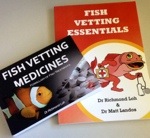
The majority of requests for advice I receive are from small animal veterinarians. And so I recommend texts like the BSAVA’s Manual of Ornamental Fish, Helen Roberts’ Fundamentals of Ornamental fish, Noga’s Fish Disease – Diagnosis and Treatment and (of course!) my Fish Vetting Essentials. If they’re after drug dose rates, my Fish Vetting Medicines would serve them well. For those heading down the laboratory analysis side of things and are interested in fish pathology, you can’t go past Ferguson’s Pathology of Fishes and Roberts’ Fish Pathology. There is also a comprehensive list of recommended reading in WAVMA’s latest The Aquatic Veterinarian journal (TAV7[3]2013) as outlined in the Certified Aquatic Veterinarian (CertAqV) program.
If they’re after actual physical crash courses, they should check out Aquavet, Marvet and Seavet. These are also detailed in WAVMA’s latest TAV(3)2013. I’ve been invited to form part of the team to present some of a comprehensive series of talks with workshops at the AVMA Conference during July in Denver 2014 and at the joint FAVA/SVA conference in Nov 2014.
If they’re after practical material, I’m at the final stages of putting together a Fish Vetting Practical Tips type DVD.
We’re going to ramp up the webinars for WAVMA in 2014, and I’m also planning to do some of my own private ones for fish owners. So, stay tuned.
Follow me on: Facebook “Fin Page” – YouTube – Blog – Linkedin – Twitter
—
Yours sincerely,
Dr Richmond Loh
DipProjMgt, BSc, BVMS, MPhil (Pathology) Murdoch, MANZCVS (Aquatics & Pathobiology), CertAqV.
Aquatic Veterinarian | Adjunct Lecturer Murdoch University | President-elect WAVMA |
Secretary Aquatic Animal Health Chapter – ANZCVS.
The Fish Vet, Perth, Western Australia, AUSTRALIA.
Mobile Veterinary Medical & Diagnostic Services for fish and other aquatic creatures.
http://www.thefishvet.com.au
Ph: +61 (0)421 822 383
Looking for more books? Check out this site.
Did you know that normally, when you need antibiotics for yourself, or for your pet dog/cat, you can only get it on prescription from your doctor or veterinarian? At the chemist, pharmacists can dispense antibiotics only if they are given a prescription by the doctor or veterinarian to fill. Why is there such a tight control over antibiotics? It’s because they are miracle drugs that help keep us safe from infections. Click here to learn more about antibiotic resistance and the importance of taking antibiotics correctly.
Although it is so tightly regulated in the medical and veterinary realms, did you know that you can easily buy antibiotics like tetracycline and triple sulpha, over the counter from the local fish shops? Why is this still allowed?
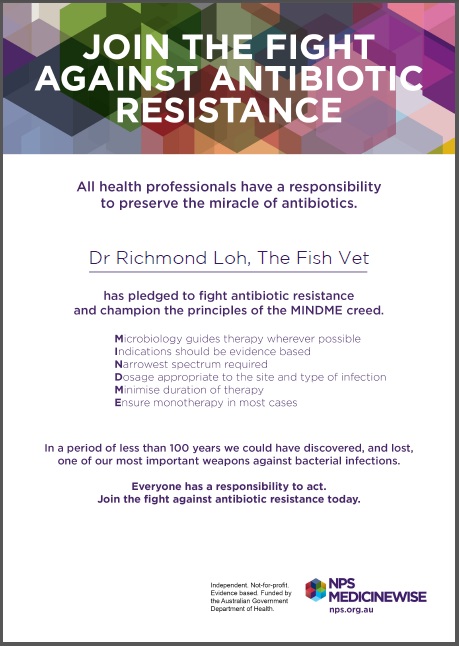
We all have a responsibility to fight antibiotic resistance.
This year, we’re asking consumers, policy-makers, and health professionals across the agricultural, veterinary and health sectors to band together to preserve the miracle of antibiotics. Whether you use, prescribe, dispense or provide advice about antibiotics, you can make a difference.
Pledge to join the fight against antibiotic resistance today!
Further info at:
http://www.nps.org.au/about-us/what-we-do/campaigns-events/antibiotic-resistance-fighter
With thanks to my colleague (Ari) who’s a member of the WAVMA, he’s shared this new finding. For a long time, HLLE has been a difficult to diagnose condition because of the multifactorial nature. New evidence suggests the use of activated charcoal is contributory.
And in another article, it found that the loose/powdery lignite carbon is worse than pelleted carbon.
It’s these new gems of relevant and practical information that I’m definitely including for my next edition of Fish Vetting Essentials.
Check out the abstract of one of the mentioned articles below:
Walt Disney World Resort, Epcot, The Seas, 2016 North Avenue of the Stars, Lake Buena Vista, Florida 32803, USA. andy.m.stamper@disney.com
Head and lateral line erosion syndrome (HLLES) is a common but very poorly understood disease of marine aquarium fish. One suspected etiology is the use of granulated activated carbon (GAC) to filter the water. Seventy-two ocean surgeons Acanthurus bahianus were distributed among three carbon-negative control systems and three GAC-treated systems such that each tank contained approximately the same total body mass. Each replicate system was made up of two 250-L circular tanks with a common filtration system (6 fish per tank, 12 fish per replicate system). The GAC-treated tanks were exposed to full-stream, extruded coconut shell activated carbon, which produced a mean total organic carbon content of 0.4 mg/L. The results of this study indicate that extruded coconut shell activated carbon filtering at full-stream rates can cause HLLES-type lesions in ocean surgeons. The HLLES developed exponentially over 15 d, beginning in the chin region. This was followed by pitting in the cheek region, which expanded until erosions coalesced. Once the carbon was discontinued, the processes reversed in a mean time of 49 d. As the lesions healed, they reverted from the coalesced to the pitted stage and then darkened before returning to normal.
Check out the interview here –
http://www.smallanimaltalk.com/2013/11/does-goldfish-have-three-second-memory.html
Dr Anne Fawcett is a Sydney-based small animal veterinarian and journalist who also lectures in veterinary science at the University of Sydney. "Small Animal Talks" is for veterinarians, pet owners and anyone who thinks about how they might improve the lot of non-human animals.
Q: Where do fish go to get some handy work done?
A: A watershed.
Tadpoles are commonly used in school classrooms to teach us about growth, development and the environment. Did you know that you can tell a lot about the tadpole’s environment just by looking at their tails? This report concludes that stressed tadpoles have shorter and taller tails.
http://www.sciencedaily.com/releases/2013/03/130305200204.htm
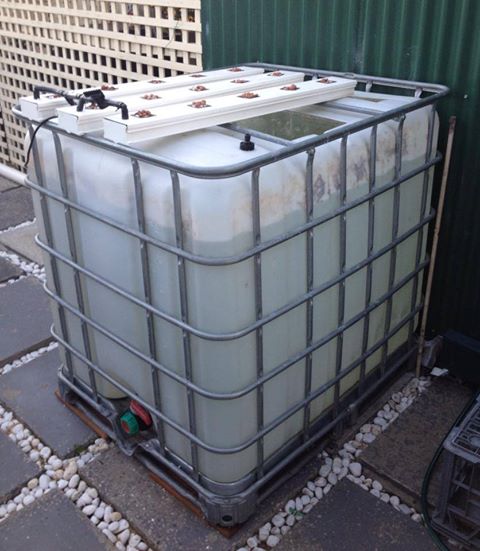
I learnt a thing or two about aquaponics by building my own and after attending an aquaponics conference in Hawaii last June. I learnt that five Australian cities occupied the top six positions in keyword searches for ‘aquaponics’, followed only by Honolulu. These cities have a keen interest in leading the way towards creating sustainable food production with minimum carbon footprint. This is truly an excellent way to grow vegetables and fish, and at the same time, recycle the water over and over again.
After examining many commercially available and backyard aquaponics setups, I have learnt that many aquaponics systems do not cater for the needs of fish. The Fish Vet’s system puts the health and welfare of fish at the forefront and yet does not compromise the productivity of plants.
The stand alone system is fully self-contained, is environmentally friendly and has a low carbon footprint because it is made partially from recycled materials. It is truly self-sufficiency made simple.
The system can also be customised to suit your needs.
Place an order today on page 9 of the shopping cart – http://thefishvet.com.au/shop/shopping.html
Follow me on: Facebook "Fin Page" – YouTube – Blog – Linkedin – Twitter
—
Yours sincerely,
Dr Richmond Loh DipProjMgt, BSc, BVMS, MPhil (Pathology) Murdoch, MANZCVS (Aquatics & Pathobiology), CertAqV.
Aquatic Veterinarian | Adjunct Lecturer Murdoch University | President-elect WAVMA |
Secretary Aquatic Animal Health Chapter – ANZCVS.
The Fish Vet, Perth, Western Australia, AUSTRALIA.
Mobile Veterinary Medical & Diagnostic Services for fish and other aquatic creatures.
http://www.thefishvet.com.au
Ph: +61 (0)421 822 383
It’s the pacu and apparently they may be lurking in a river near you!