Man Caught With 51 Live Turtles in His Pants at Detroit-Windsor Border
The Canadian Press reports…
Read more.
All about Fish Vetting – Dr Richmond Loh
Man Caught With 51 Live Turtles in His Pants at Detroit-Windsor Border
The Canadian Press reports…
Read more.
WAVMA’s free webinar will be on in 45 minutes.
Be quick! Sign up at –
http://tinyurl.com/n3gv4lo
—
Yours sincerely,
Dr Richmond Loh DipProjMgt, BSc, BVMS, MPhil (Pathology), MANZCVS (Aquatics & Pathobiology), CertAqV, CMAVA, NATA Signatory.
Aquatic Veterinarian | Adjunct Lecturer Murdoch University | President WAVMA |
Secretary Aquatic Animal Health Chapter – ANZCVS.
THE FISH VET, Perth, Western Australia, AUSTRALIA. Mobile Aquatic Veterinary Medical & Diagnostic Services.
http://www.thefishvet.com.au
Ph: +61 (0)421 822 383
Skype: thefishvet
Looking for more books? Check out this site.


Q: How do clams enjoy their festivities?
A: They Shellebrate!
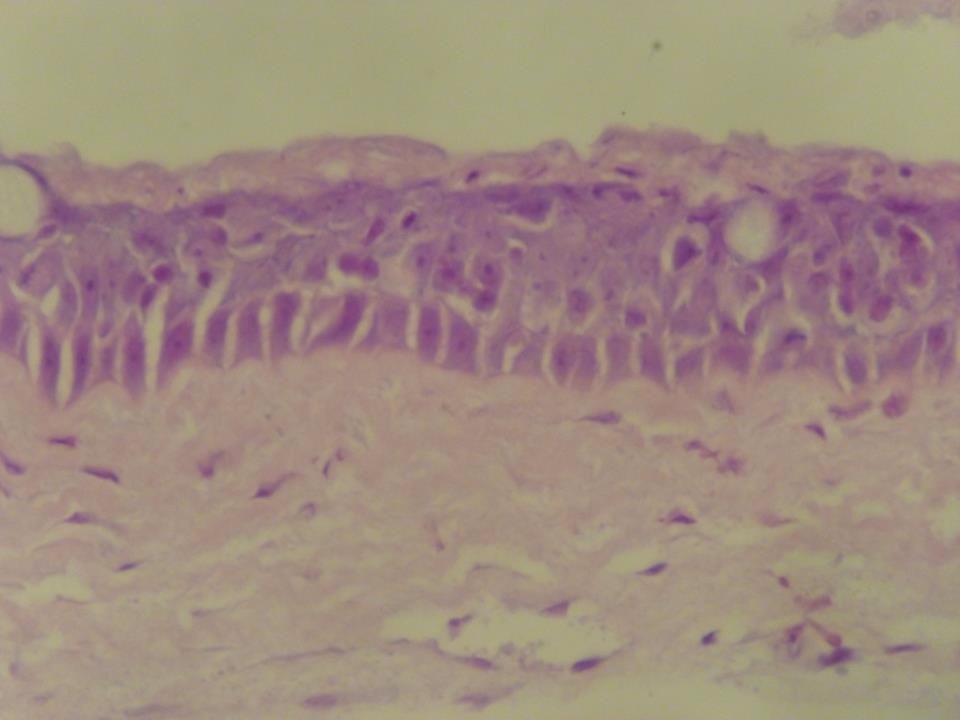
I was taking to some clients about why it is that we can feel that male koi get rougher around their gill covers and along their bodies. I remarked that I studied sections under the microscope, comparing male to female koi.
Normally, fish have living epithelial cells right up to the surface; unlike us, who have skin cells that form keratinised dead cell layers. But in the male koi, they seem to produce bits on their skin surface that appear like keratin on histology sections. I concluded that this is the reason that males are rough.
One of them remarked, “But fish have carotene, it gives them their colour and that’s what we feed them.”
And so we began our lesson in spelling and pronunciation.
“Ke-ra-tin”, not “ka-ro-teeeeen”.
Enjoy your day!

—
Yours sincerely,
Dr Richmond Loh
DipProjMgt, BSc, BVMS, MPhil (Pathology) Murdoch, MANZCVS (Aquatics& Pathobiology), CertAqV, CMAVA, NATA Signatory.
THE FISH VET, Perth, Western Australia.
Veterinary Medicine for fish.
W: http://www.thefishvet.com.au
E: thefishvet
P: +61 (0)421 822 383
The Marine Mammal Center International Veterinary In-Residence (IVIR) training program
provides marine mammal veterinarians across the globe an opportunity to gain experience in
marine mammal medicine and rehabilitation. It is expected that successful applicants will return
to their pre-existing programs prepared to implement training programs of their own.
This position requires a DVM degree or equivalent. Preference will be given to
veterinarians that are currently employed with a marine mammal rehabilitation program
or non-profit equivalent. This is an unpaid position. Airfare to San Francisco, CA, as well as
shared housing at the TMMC Guest House located within the Marin Headlands, will be provided
as part of the program. The house is shared during the busy season with other students,
researchers, externs and the veterinary intern. This position is available during the busy
season for three months at a time, either from March-May, May-July or July-September.
The applicant is responsible for completing all required visa paperwork, and is required
to have an international driver’s license.
The Marine Mammal Center veterinary staff includes full and part time veterinarians, three
veterinary technicians, a medical technologist and research staff. Goals of the program include
assisting the veterinary medical staff in providing medical management of a large number of
stranded marine mammals (mostly pinnipeds); performing post mortem examinations, sample
collection for various research projects, and record keeping. Collaborative research is highly
valued at TMMC, and development of a research project, either clinical or using retrospective
necropsy data, is highly encouraged.
If qualified, applicants should submit the following materials:
1. A cover letter/statement outlining the applicant’s goals and interests in the area of
aquatic animal medicine.
2. Three letters of recommendation from individuals familiar with the applicant’s academic
and/or clinical performance.
3. A current curriculum vitae, limited to 4 pages.
4. Selection of preferred dates (applicants will only be selected during the busy season
(March-September), but slight flexibility in scheduling will be accommodated on a case-
by-case basis
Please submit your application via E-mail if possible:
To: vetsciadmin@tmmc.org
Subject: 2015 International Veterinary In-Residence Program
Dr. Claire Simeone
Conservation Medicine Veterinarian, The Marine Mammal Center
2000 Bunker Road, Fort Cronkhite Sausalito, CA 94965-2619
Applications are due by Friday, November 28th, 2014. A selection will be made by the first
week in January 2015.
It was like dragging two sacks of potatoes through the water’: Huge catfish caught by British man Tom Herron | News.com.
Tom Herron (centre) with his record breaking 221lb catfish. Also pictured are his friends Ashley Scott (left) and Andy Cooper. Mr Herron said it was like “dragging two sacks of potatoes through the water”. Source: Snapper MediaIT could so easily have been the one that got away. A story about that giant fish that no one but the guy who almost caught it could vouch for.
Except Tom Herron, 68, did catch it — a mammoth 8ft 1in long and 221lbs rare albino catfish. In doing so he smashed a record his mate John Edwards, 74, set only an hour before when he reeled in an albino catfish that weighed 205lbs.
Cornwall-based Mr Herron told the Daily Star: “It was like dragging two sacks of potatoes through the water, it was unbelievable. I’ve been fishing for 50 years and this was the biggest fight I’ve ever had.”
John Edwards (left) with his catfish and Tom Herron (right) with his record breaking catfish with their friend Ashley Scott. The two friends hooked the rare fish just minutes apart. Source: Snapper Media
Tom Herron with his record-breaking catfish. Source: Snapper MediaIt was the biggest albino they have ever seen caught on the river. “Apparently they make good eating — but you’d need a lot of chips,” he told the newspaper.
The trip, two hours south of Barcelona, was organised by a British tour firm, whose staff couldn’t believe what they were seeing.
They had never seen a brace of albino catfish, let alone two world records smashed in one day.
A spokesman said: “Albino catfish of that size are very rare indeed. This is the biggest we’ve ever seen.”
The albino catfish gets its unusual appearance as a result of a genetic anomaly that causes the fish to lack pigment and thereby appear white. They are considered trophy fish.
At the recent AVMA Convention I attended, Dr Myron Kebus presented on this great program their state government in cooperation with the University of Wisconsin had set up. The online courses are expected to reduce the risk of diseases on fish farms by increasing the number of trained fish producers and veterinarians. Additionally, veterinary involvement at fish farms will improve the health of fishes, reduce losses and ultimately, increase profitability for the farmer.
Although open to anyone, this training program is targeted at veterinarians and fish producers in their state.
Follow the headings below for more information about the courses:
Programs for Veterinarians:
Programs for Fish Producer:
So the last couple of weeks, I had a couple of posts, to share what we learnt about the 7 special senses of sharks, and some of the shark deterrents for protection from shark attacks.
The research can’t have been done at a more appropriate time since a 23-year-old surfer has lost an arm and his other hand in a shark attack at a beach near Esperance in southern Western Australia last week. This is tragic. What can we do?
What’s the most simple, promising and effective solution to protect beaches and divers from shark attacks?
BUBBLES!
In the lab, they separated the Port Jackson shark from a piece of food by a curtain of bubbles. The Port Jackson shark never swum through the curtain to get to the food. This was also trialed in the field in relatively shallow water depth and they found the nurse shark never crossed the curtain of bubbles to get at food. In fact, they appeared to be unaware of the food on offer.
So why does this work?
Well, bubbles work by causing multisensory disruption.
Having learnt all this, how would I put this into practice? I envision a beach that is protected by a wall of bubbles. Some extra bubbles may be directed in shallow areas so we can use it as a spa. And to satisfy the neophobia parts of the shark senses, I’d install bright flashing laser lights to go with the bubbles so that we can have an underwater light show for the snorkellers and divers. And to go with the light show, some 1980’s synthesiser music played in between the relaxing predatory orca sounds.
Is that a great plan or what?
Hindquarter paralysis is not uncommon in pet koi carps. Information posted by pet koi owners online suggests that paralysis often showed a sudden onset.
This project will investigate possible causes of hindquarter paralysis in pet koi using radiographs, clinical examinations and necropsies.
If you are in the Perth area and have fish that fits this description, please contact my colleage, Dr Susan Gibson-Kueh at s.kueh@murdoch.edu.au by Friday 10 Oct. 2014.
Follow me on: Facebook "Fin Page" – YouTube – Blog – Linkedin – Twitter
—
Yours sincerely,
Dr Richmond Loh DipProjMgt, BSc, BVMS, MPhil (Pathology), MANZCVS (Aquatics & Pathobiology), CertAqV, CMAVA, NATA Signatory.
Aquatic Veterinarian | Adjunct Lecturer Murdoch University | President WAVMA |
Secretary Aquatic Animal Health Chapter – ANZCVS.
THE FISH VET, Perth, Western Australia, AUSTRALIA. Mobile Aquatic Veterinary Medical & Diagnostic Services.
http://www.thefishvet.com.au
Ph: +61 (0)421 822 383
Skype: thefishvet
Looking for more books? Check out this site.


