This article speaks of the monetary loss of fish. One of my colleagues pointed out that the article completely ignores the effect on fish welfare –

All about Fish Vetting – Dr Richmond Loh
This article speaks of the monetary loss of fish. One of my colleagues pointed out that the article completely ignores the effect on fish welfare –
See details on how you can get individual attention by following this link:
—
Yours sincerely,
Dr Richmond Loh
DipProjMgt, BSc, BVMS, MPhil (Pathology) Murdoch, MANZCVS (Aquatics& Pathobiology), CertAqV, CMAVA, NATA Signatory.
THE FISH VET, Perth, Western Australia.
Veterinary Medicine for fish.
W: http://www.thefishvet.com.au
E: thefishvet
P: +61 (0)421 822 383
2014 President WAVMA.org
Recently, I have sparked an interest in our veterinary community over how much we need more veterinarians to service fish owners. I understand completely, the likes of the busy GP veterinarian who do not have the time to dedicate specialised knowledge in the face of having to know about so many species (dogs, cats, rabbits, rodents, the bird groups, horses, camelids, cattle, sheep, goats, etc.), and about the veterinary aspects (radiology, medicine, surgery, dentistry, clinical pathology, pathology, etc.). That’s a lot to handle! Though, I believe there ought to be at least 2-3 (and the more, the merrier) aquatic veterinarians in each capital city to respond to the needs of pet fish owners.
As a veterinary profession, I believe it is our responsibility to provide for the health and welfare of all animals, including fishes. It was not long ago that it was common place for veterinarians to refer cases involving birds, reptiles, rodents and rabbits to the pet store. We have come a long way very quickly.
Every year, I lecture to the veterinary students at Murdoch University on fish welfare (see https://thefishvet.com/2012/10/22/free-lecture-on-fish-welfare/). This debate is much the same as what we had for terrestrial farmed animals just over ten years ago. To summarise, fish are sentient, they do feel pain, they are intelligent (capable of learning), they have complex relationships and social structures and so on and so forth.
There are currently a number of non-veterinarians who practice as “fish doctors”, much to the detriment of our profession. Is it justifiable for a veterinarian to refer to lay people, for the treatment and surgical intervention of animals? It may result in misdiagnoses, treating without a diagnosis and irresponsible use of medicines, especially antibiotics. Two major things wrong with this: It prolongs suffering (and death ensues) and can contribute to antimicrobial resistance. Increased veterinarian oversight and supervision of such drug use will contribute to efforts to control the spread of antimicrobial resistance. It is our responsibility to protect the health of the animals and humans, in the “one-health” concept.
There’s the common argument that veterinary clinics are the last port of call, and perhaps you’ve never had anyone call the clinic about fish. It is true that many search the internet, speak with their peers and perhaps ask the pet shop; long before they contemplate calling the veterinarian. I believe this is true also for any industry from human medicine through to home renovations. But could it be that our colleagues are helping perpetuate the lack of veterinary engagement with fish owners? Maybe not you, but could your colleagues be referring fish owners back to the pet store? We need to either welcome the clients, or at the very least, refer them an aquatic veterinarian. There is a free aquatic veterinarian directory at < http://www.aquavetmed.info/>.
My colleagues and I have been helping fellow veterinarians for over a decade. We also have a very supportive group called the World Aquatic Veterinary Medical Association <http://www.wavma.org> and it has many useful resources including networking for members through the member-only list-serves, as well as WAVMA’s e-News, WAVMA@Work blog, Facebook, Twitter, LinkedIn, a quarterly journal and other media, to help promote the discipline. I especially like the series of webinars (see – http://www.wavma.org/WebCEPD). WAVMA is dedicated to reinvent veterinary science by bringing aquatic veterinary medicine to the forefront, creating new opportunities, positioning ourselves for the future, by building a competitive advantage and harnessing the skills of its members.
I also keep an e-mailing list of interested veterinarians with interesting pointers and opportunities. If you’d like to join it, please fill in your details at <http://thefishvet.com.au/contact_us.html>. So, if you’re a veterinarian, I hope you’ll join with me and my colleagues to provide for our fishes.
Follow me on: Facebook “Fin Page” – YouTube – Blog – Linkedin – Twitter
—
Yours sincerely,
Dr Richmond Loh DipProjMgt, BSc, BVMS, MPhil (Pathology), MANZCVS (Aquatics & Pathobiology), CertAqV, CMAVA, NATA Signatory.
THE FISH VET, Perth, Western Australia, AUSTRALIA.
Mobile Aquatic Veterinary Medical & Diagnostic Services.
http://www.thefishvet.com.au
Ph: +61 (0)421 822 383
Skype: thefishvet
President WAVMA 2014

Adjunct Lecturer Murdoch University | Secretary Aquatic Animal Health Chapter – ANZCVS.
Recently, I have sparked an interest in our veterinary community over how much we need more veterinarians to service fish owners. I understand completely, the likes of the busy GP veterinarian who do not have the time to dedicate specialised knowledge in the face of having to know about so many species (dogs, cats, rabbits, rodents, the bird groups, horses, camelids, cattle, sheep, goats, etc.), and about the veterinary aspects (radiology, medicine, surgery, dentistry, clinical pathology, pathology, etc.). That’s a lot to handle! Though, I believe there ought to be at least 2-3 (and the more, the merrier) aquatic veterinarians in each capital city to respond to the needs of pet fish owners.
As a veterinary profession, I believe it is our responsibility to provide for the health and welfare of all animals, including fishes. It was not long ago that it was common place for veterinarians to refer cases involving birds, reptiles, rodents and rabbits to the pet store. We have come a long way very quickly.
Every year, I lecture to the veterinary students at Murdoch University on fish welfare (see https://thefishvet.com/2012/10/22/free-lecture-on-fish-welfare/). This debate is much the same as what we had for terrestrial farmed animals just over ten years ago. To summarise, fish are sentient, they do feel pain, they are intelligent (capable of learning), they have complex relationships and social structures and so on and so forth.
There are currently a number of non-veterinarians who practice as “fish doctors”, much to the detriment of our profession. Is it justifiable for a veterinarian to refer to lay people, for the treatment and surgical intervention of animals? It may result in misdiagnoses, treating without a diagnosis and irresponsible use of medicines, especially antibiotics. Two major things wrong with this: It prolongs suffering (and death ensues) and can contribute to antimicrobial resistance. Increased veterinarian oversight and supervision of such drug use will contribute to efforts to control the spread of antimicrobial resistance. It is our responsibility to protect the health of the animals and humans, in the “one-health” concept.
There’s the common argument that veterinary clinics are the last port of call, and perhaps you’ve never had anyone call the clinic about fish. It is true that many search the internet, speak with their peers and perhaps ask the pet shop; long before they contemplate calling the veterinarian. I believe this is true also for any industry from human medicine through to home renovations. But could it be that our colleagues are helping perpetuate the lack of veterinary engagement with fish owners? Maybe not you, but could your colleagues be referring fish owners back to the pet store? We need to either welcome the clients, or at the very least, refer them an aquatic veterinarian. There is a free aquatic veterinarian directory at < http://www.aquavetmed.info/>.
My colleagues and I have been helping fellow veterinarians for over a decade. We also have a very supportive group called the World Aquatic Veterinary Medical Association <http://www.wavma.org> and it has many useful resources including networking for members through the member-only list-serves, as well as WAVMA’s e-News, WAVMA@Work blog, Facebook, Twitter, LinkedIn, a quarterly journal and other media, to help promote the discipline. I especially like the series of webinars (see – http://www.wavma.org/WebCEPD). WAVMA is dedicated to reinvent veterinary science by bringing aquatic veterinary medicine to the forefront, creating new opportunities, positioning ourselves for the future, by building a competitive advantage and harnessing the skills of its members.
I also keep an e-mailing list of interested veterinarians with interesting pointers and opportunities. If you’d like to join it, please fill in your details at <http://thefishvet.com.au/contact_us.html>. So, if you’re a veterinarian, I hope you’ll join with me and my colleagues to provide for our fishes.
Follow me on: Facebook “Fin Page” – YouTube – Blog – Linkedin – Twitter
—
Yours sincerely,
Dr Richmond Loh DipProjMgt, BSc, BVMS, MPhil (Pathology), MANZCVS (Aquatics & Pathobiology), CertAqV, CMAVA, NATA Signatory.
THE FISH VET, Perth, Western Australia, AUSTRALIA.
Mobile Aquatic Veterinary Medical & Diagnostic Services.
http://www.thefishvet.com.au
Ph: +61 (0)421 822 383
Skype: thefishvet
President WAVMA 2014
Adjunct Lecturer Murdoch University | Secretary Aquatic Animal Health Chapter – ANZCVS.
If you liked this week’s Monday-itis joke about parasites, you’ll find this very interesting –
http://www.ted.com/talks/ed_yong_suicidal_wasps_zombie_roaches_and_other_tales_of_parasites
—
Yours sincerely,
Dr Richmond Loh
DipProjMgt, BSc, BVMS, MPhil (Pathology) Murdoch, MANZCVS (Aquatics& Pathobiology), CertAqV, CMAVA, NATA Signatory.
THE FISH VET, Perth, Western Australia.
Veterinary Medicine for fish.
W: http://www.thefishvet.com.au
E: thefishvet
P: +61 (0)421 822 383
2014 President WAVMA.org
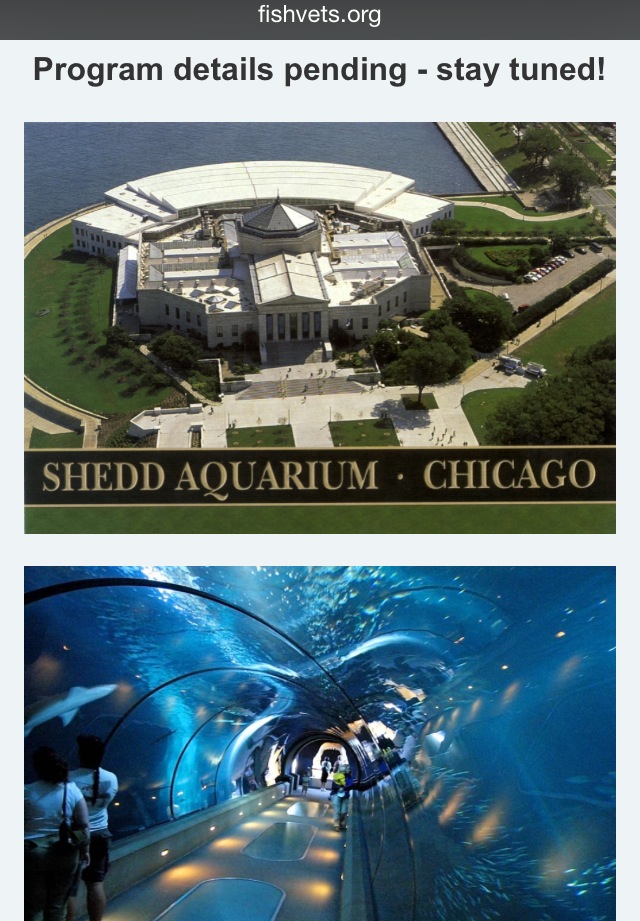
WAVMA is glad to sponsor the International Association for Aquatic Animal Medicine’s meeting at the Shedd Aquarium in Chicago, April 6-10, 2015.
Registration for the 2015 IAAAM Conference (April 6-10) & associated workshops (April 11) in Chicago, IL, USA is now open. To take advantage of early registration fees for the conference and all associated events or workshops, please be sure to register prior to March 1, 2015.
To submit an abstract for a Conference presentation, follow the formatting instructions on the IAAAM website and e-mail them to murphylp no later than 11:59 PM (US EST), January 15, 2015. Every submission will receive a response within 48 hours; if not please phone +1 (610) 925-6217.
Students Travel Awards are available and applications are due January 15, 2015.
In addition, consider attending the following workshops after the IAAAM Conference (Saturday, 11 April 2015).
• American Association of Fish Veterinarians (AAFV) Workshop
The 2nd annual AAFV meeting (8:00 am to 8:00 pm at the Shedd Aquarium) with lectures covering clinically-relevant fish veterinary issues for RACE-approved CE. Registration fees (includes lunch, and dinner) is $150 for AAFV/IAAAM members, $200 for non-members, $75 veterinary students and will be limited to 50 participants. Please contact Dr. Brian Palmeiro petfishdoctor or visit www.fishvets.org for more information.
• CL Davis Pathology Workshop
For the tenth year, Dr. Judy St. Leger of Sea World will host a full-day seminar combining didactic lectures, case presentations, and audience interaction to cover what’s new and exciting in the pathology of sea creatures. This year’s keynote speaker will be Dr. Karen Terio of the Illinois Zoological Pathology Program, will present a keynote lecture on “Using Molecular Diagnostics in Pathology”. Registration before March 1, is $100 ($125 thereafter) and includes continental breakfast, refreshments, syllabus, and a DVD of the case slides for review. For more info, visit: http://www.cldavis.org/courses/upcoming.html.
• Marine Mammal Radiology Workshop
The 3rd annual IAAAM Marine Mammal Radiology Workshop will be from 9 am-12 pm at the Shedd Aquarium. Presented by board-certified radiologist Marina Ivančić of AquaVetRad and the National Marine Mammal Foundation, the workshop will cover a variety of both fundamental and advanced concepts in marine mammal imaging. It is geared towards all aquatic animal veterinarians with marine mammals in their care, as well as veterinary students pursuing a career in radiology. Topics include principles of diagnostic image acquisition and interpretation, a discussion of the five imaging modalities as they pertain to aquatic animal medicine, cases presentations, and an informal question/answer session. A $10 fee will be required, with coffee provided. For more information, please contact Dr. Ivančić at marina.
• Marine Mammal Water Quality Workshop
This workshop will present a Steering Committee’s efforts on drafting a contemporary "Marine Mammal Water Quality” that may replace a 1998 USDA APHIS Technical Bulletin, and help revise regulations for optimizing water quality for housed animals. The document is intended as a new centralized source of information for marine mammal animal health professionals that would guide decision making to modernize standard practices. The current draft document will be reviewed and suggestions for input or changes will be sought through active participation of the attendees. Registration fee (includes lunch) is $25 and the workshop is limited to 50 participants.
For complete registration, accommodation, abstract submission, student travel awards, and other information, go to www.iaaam.org/2015-iaaam-conference-and-meeting.
The AAFV 2nd ANNUAL MEETING AND C.E.’s will be held on
Saturday, April 11, 2015
John G. Shedd Aquarium
Chicago, IL
More information at –http://fishvets.org/annualmeeting.html
Looks like heaps of fun learning.
—
Yours sincerely,
Dr Richmond Loh
DipProjMgt, BSc, BVMS, MPhil (Pathology) Murdoch, MANZCVS (Aquatics& Pathobiology), CertAqV, CMAVA, NATA Signatory.
THE FISH VET, Perth, Western Australia.
Veterinary Medicine for fish.
W: http://www.thefishvet.com.au
E: thefishvet
P: +61 (0)421 822 383
President WAVMA.org
When the types of antimicrobials important for human medicine are sold for use in farm animals, only a small portion require a veterinarian’s signature for purchase.
Little of the volume of such drugs sold now will be available over the counter two years from now…
Out of 19.6 million pounds of such drugs approved for livestock use in 2012, more than 19 million pounds were shipped by pharmaceutical companies to be available over the counter… 94% [of which] were distributed for use in livestock feed or water, and all uses of those antimicrobials will require veterinarian oversight or be prohibited within the next two years.
Q: At the end of the dinner party, what did the parasite say to the fish?
A: Thank you. You have been a great host!
I get this question a lot. They don’t have eyelids… how do they sleep?
If you’ve seen people sleeping with their eyes open, then you’re halfway there.
This is how (pictured below):
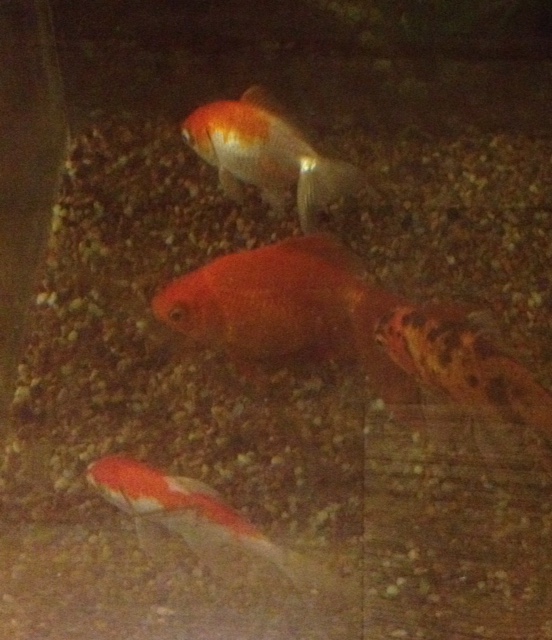
They stay still, moving their fins intermittently, to maintain their position in the water.
—
Yours sincerely,
Dr Richmond Loh
DipProjMgt, BSc, BVMS, MPhil (Pathology) Murdoch, MANZCVS (Aquatics& Pathobiology), CertAqV, CMAVA, NATA Signatory.
THE FISH VET, Perth, Western Australia.
Veterinary Medicine for fish.
W: http://www.thefishvet.com.au
E: thefishvet
P: +61 (0)421 822 383
2014 President WAVMA.org