What causes spinal deformities in koi? Answers revealed tomorrow night.

Join us at the Southern Branch KSWA meeting on Wed 26 August

Dr Richmond Loh (The Fish Vet) has organised for one of his vet students to make a presentation on Spinal Deformities. Hui Nee Chin is originally from Melbourne, where she completed a Bachelor of Environmental Science (Marine Biology) and is currently a final year veterinary student at Murdoch University.

A study on spinal deformity in koi carp: Adult koi with spinal deformities were sampled from private collections. These koi were presenting with difficulties swimming, were showing changes in swimming behaviour and had visible spinal deformities. After euthanasia, radiographs of each koi were taken at the Veterinary Hospital at Murdoch University. Bony changes suggestive of congenital abnormalities and degenerative changes were found. The cause is unknown, however a variety of factors are known to cause spinal deformities in fish. These will be presented.

Details:
7:30pm, Wednesday 26 August 2015
South Perth Rotary Hall, Sandgate St, South Perth.

A study on spinal deformity in koi carp by Hui Nee Chin.

Southern Branch KSWA meeting – Wed 26 August

Dr Richmond Loh (The Fish Vet) has organised for one of his vet students to make a presentation on Spinal Deformities. Hui Nee Chin is originally from Melbourne, where she completed a Bachelor of Environmental Science (Marine Biology) and is currently a final year veterinary student at Murdoch University.

A study on spinal deformity in koi carp: Adult koi with spinal deformities were sampled from private collections. These koi were presenting with difficulties swimming, were showing changes in swimming behaviour and had visible spinal deformities. After euthanasia, radiographs of each koi were taken at the Veterinary Hospital at Murdoch University. Bony changes suggestive of congenital abnormalities and degenerative changes were found. The cause is unknown, however a variety of factors are known to cause spinal deformities in fish. These will be presented.

Details:
7:30pm, Wednesday 26 August 2015
South Perth Rotary Hall, Sandgate St, South Perth.

Divers Find The Flying Spaghetti Monster Under The Ocean

I believe this is what the Pastafarians have been following.

Discover more at –
http://www.iflscience.com/flying-spaghetti-monster-real

What are your recommendations for underwater CCTV surveillance system?

Some of my clients are so into their fish that they like to be able to watch them even if they’re not physically at their pond.

Great to be on the lookout for predators, and for potential fish kidnappers! Yes, some have had their koi stolen! Though fish can be microchipped, it’s useless unless you can identify your suspects.

Some clients want to go that extra step amd install underwater cameras too.

Do you have recommended products? I’d love to hear from you.


Yours sincerely,

Dr Richmond Loh 

DipProjMgt, BSc, BVMS, MPhil (Pathology), MANZCVS (Aquatics& Pathobiology), CertAqV, NATA Signatory.
THE FISH VET, Perth, Western Australia, AUSTRALIA. 

Mobile Aquatic Veterinary Medical & Diagnostic Services.
http://www.thefishvet.com.au
Ph: +61 (0)421 822 383

The Fish Vet’s secret black book for drug dosages.

Have you ever wanted to know what other drugs you can use to treat your sick fish patient? Wait no longer. This quick reference black book has all the necessary details to get you on your way to treating sick fish successfully.

Grab your copy now!

Visit – http://thefishvet.com.au/shop/shopping.html

Look for "Fish Vetting Medicines – Formulary Of Fish Treatments"

Some keywords:

Medicine, medication, treatment, fish dose rate, remedy, therapy, care, pharmacy, chemist,

Dip, prolonged immersion, Parenteral, intramuscular injection, intraperitoneal injection, bath treatment.

Antibiotic, Baytril, enrofloxacin, trimethoprim sulfa, triple sulfa, nitrofurazone, oxytetracycline, tetracycline, betadine, iodine, potassium permanganate, methylene blue, peroxide, acriflavin,

Metronidazole, flagyl, copper sulphate,

Wormer, anthelmintic, levamisole, fenbendazole, praziquantel

Trichlorfon, fenthion, organophosphate

Formalin, malachite green, melafix, pimafix, bactonex, sterazin, protozin

Anti-algae, antichlorine, salt, carbon, activated charcoal, Epsom salt, magnesium sulphage, sea salt, rock salt, pool salt, sodium chloride, NaCl,

Anaesthetic, anaesthesia, clove oil, eugenol, aqui-s, iso-eugenol, alfaxan, alfaxolone, ms222, tricaine methanosulphonate,

Appetite stimulant, garlic, fish pheromone,

Fish hormone, steroid, ovaprim, gnrh,

Follow me on: Facebook "Fin Page"YouTubeBlogLinkedinTwitter


Yours sincerely,

Dr Richmond Loh DipProjMgt, BSc, BVMS, MPhil (Pathology), MANZCVS (Aquatics & Pathobiology), CertAqV, CMAVA, NATA Signatory.
THE FISH VET, Perth, Western Australia, AUSTRALIA.
Mobile Aquatic Veterinary Medical & Diagnostic Services.
http://www.thefishvet.com.au
Ph: +61 (0)421 822 383
thefishvet_logo_medical-20130107.jpg
Skype: thefishvet

President WAVMA 2014

wavma.jpg?w=780

Adjunct Lecturer Murdoch University | Secretary Aquatic Animal Health Chapter – ANZCVS.

Looking for more books? Check out this site.

See advert on YouTube.
Who’ll be on the new WAVMA executive board.

I’ve enjoyed my time serving my colleagues on the WAVMA Executive Board, that I’m running for another term.

See who else are running here – http://www.wavma.org/elections

Aquatic veterinary officer jobs at the federal Department of Agriculture.

This is the extra blurb from the recruiter regarding the job advertised –

"Note that the description doesn’t give a lot of detail as there are several positions available across different areas (aquatics & terrestrial). Roles are varied. Animal Health Policy is largely domestic focus, national strategy (AQUAPLAN), surveillance and reporting, emergency response. Animal Biosecurity (current role) has more international focus, risk assessments of aquatic animal imports (live and commodities), plus support for export of live aquatic animals. This area is also merged with the marine pest team so there may be some involvement with ballast water management and biofouling. Also, some international travel opportunities for overseas Competent Authority assessments and support exists for learning and development. Canberra isn’t a bad place to work and live, lots of professional families end up here. Good work-life balance etc."

See advert below:

Ongoing Veterinary Officer positions at the Australian Government Department of Agriculture

Salary range AU$92,404 – 109,584 plus superannuation

The Australian Government Department of Agriculture is seeking veterinarians for its central office.

The vacancies will be notified in the Australian Public Service (APS) government gazette at www.apsjobs.gov.au under ‘gazette downloads’. To apply go to the jobs section of the Department of Agriculture website: http://agriculture.nga.net.au/fnt_jobs_list.cfm?mode=daff

https://www.apsjobs.gov.au/SearchedNoticesView.aspx?Notices=10647999%3A1&mn=JobSearch

The work of central office vets varies between branches. The positions are located in Canberra at the APS 6 (Veterinary Officer 2) level with a salary range of $92,404 – 109,584 plus superannuation. Conditions of employment will be as set out in the department’s enterprise agreement available on the department’s website at www.agriculture.gov.au/about/jobs/ea2011.

Positions are available in these areas of the department:

· Animal Biosecurity Branch

· Animal Health Policy Branch

Animal Biosecurity Branch provides an international focus through science-based risk assessments and advice to protect Australia’s favourable pest and disease status. The branch also prepares scientific and technical submissions to maintain or open export markets for animals and animal products (terrestrial, aquatic and avian). The branch also provides policy and technical advice on marine pest biosecurity.

Animal Health Policy Branch contributes to the protection of the health of Australian animals and environment by working closely with government and industry stakeholders. The Branch mitigates the potential impacts of emergency animal diseases through strengthening national prevention, preparedness, detection and response capacities and capabilities including through working off- shore with our near neighbours. The Branch also provides scientific advice to underpin priority national animal health policy and programs in order to minimise the potential impact of disease on Australia’s animal, human and environmental health.

Suitably qualified vets are invited to submit a written application addressing the selection criteria, supported by a resume/CV.

Selection criteria:

Successful applicants will be required to be able to work as a member of a small team. The work will require a good understanding of animal pests and diseases affecting Australia’s import and export market access. Depending on the position, successful applicants will be expected to have:

· A sound understanding of Australian agricultural or aquatic industries and import and export supply chains

· A sound understanding of international trade rules and regulations

· A proven ability to maintain professional and constructive working relationships with staff from other government bodies, external agencies and industry

· A knowledge and experience of pests and infectious diseases of animals (including aquatic animals) and animal products

· The ability to research, analyse and prepare accurate, complex reports in a government context

· The ability to deliver projects against tight deadlines

· Well developed written and oral skills along with good liaison and negotiation skills

For some positions the following qualities are highly desirable:

· Experience in negotiating market access with international trading partners

· Practical experience in auditing or inspection of industry, government or laboratories

· Qualifications and experience in veterinary epidemiology.

The applicant must possess a Bachelor of Veterinary Science (or registrable equivalent) and must be currently registered or eligible for registration with a relevant Australian State or Territory Veterinary Board. Australian citizenship requirements apply to all Australian Public Service positions.

The department will consider meeting reasonable relocation expenses if required.

The contact officer at the department is Dr Carol Sheridan, (carol.sheridan@agriculture.gov.au). Dr Sheridan is available to discuss the positions by email or telephone 02 6272 5160.

Applications for these positions should be made through the department’s website before the closing date. The department will provide feedback to unsuccessful applicants upon request.

The department is committed to the principles of workplace diversity and actively encourages applications from women, people with disabilities, people from diverse linguistic and cultural backgrounds and Aboriginals and Torres Strait Islanders.

Please feel free to share this with others who might be interested in these positions.

Follow me on: Facebook "Fin Page" YouTube Blog Linkedin Twitter


Yours sincerely,

Dr Richmond Loh
DipProjMgt, BSc, BVMS, MPhil (Pathology), MANZCVS (Aquatics & Pathobiology), CertAqV, CMAVA, NATA Signatory.
THE FISH VET, Perth, Western Australia, AUSTRALIA.
Mobile Aquatic Veterinary Medical & Diagnostic Services.
http://www.thefishvet.com.au
Ph: +61 (0)421 822 383
Skype: thefishvet

President WAVMA 2014

Adjunct Lecturer Murdoch University | Secretary Aquatic Animal Health Chapter – ANZCVS.

See advert on YouTube.

Fish health professionals, here are some tips to help your aquatic veterinarians.

The secret’s out!

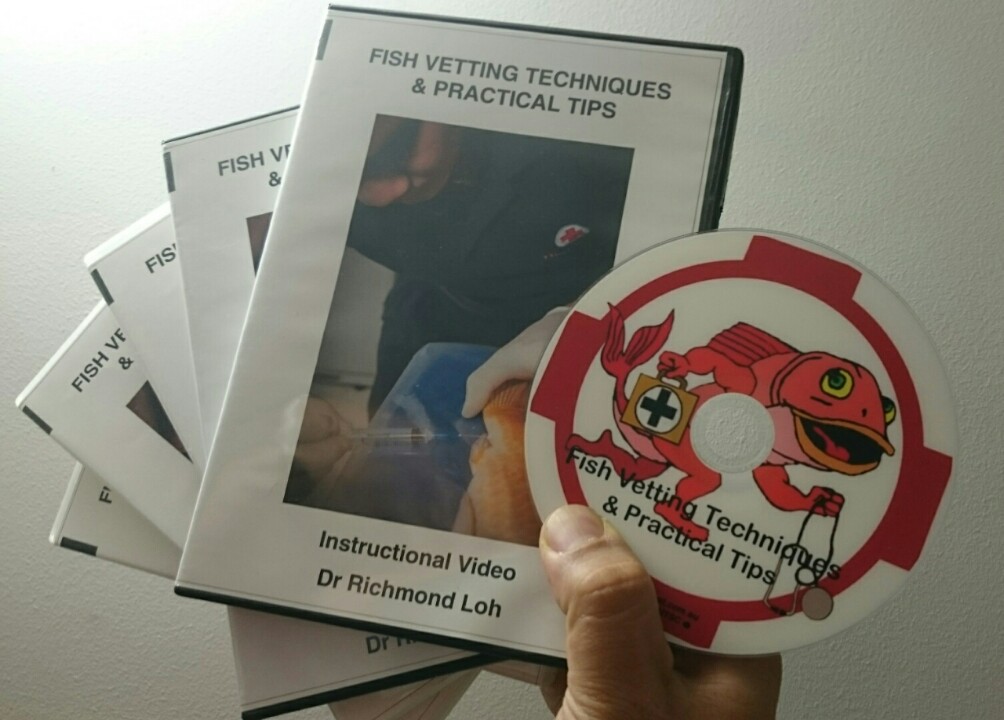
Fish Vetting Techniques & Practical Tips (DVD) reveals the best ways to handle, diagnose and treat any type of fish with diseases.

Read more – https://thefishvet.com/2015/08/11/pssst-the-secrets-out/

What physiological mechanisms allow the salmon to make the arduous journey to spawn?

Have you ever wondered, how salmon make that long arduous journey to spawn? How do they get the energy to jump up waterfalls, and how do they suddenly change their appearance from something you would eat, to something that looks more like a monster?

I learnt a fewer things from the recent conference on endocrine pathology instructed by Prof. Tom Rosol last week.

In salmon, there is increased hypothalamic-pituitary-adrenal activity, in a physiological condition known as "hyperadrenocorticism". In salmon, this goes into overdrive! Their cortisol levels peak and this enables them to catabolise their muscles, to give them fuel for their long journey without having to stop to feed. It’s like a fish on some performance enhancing drug!

But there are some side effects. These include increased pigmentation, atrophy of the skin (increasing the likelihood of skin infections), osteoporotic changes in the bone, marked growth of their jaws and accelerated premature ageing. In fact, a salmon ages in 2-4 weeks, as much as a human in 20-40 years!

By the time they arrive at their spawning grounds, these fish are beyond repair. Exhausted, emaciated and all beaten up, they die shortly after spawning.

Do you think it’s worth it?