Why do aquaculture farmers need veterinarians?

Let’s answer this question with another question. How different is farming pigs and poultry to farming fish and prawns?

The clearest commonality among these industries is the fact that we are farming animals. And in farming animals, poor animal health decreases the performance of farm animals, leading to lowered production and associated economic losses due to mortality and morbidity. Additionally, poor animal health has a negative impact on animal welfare.

"It is not a secret that livestock farms relied on veterinarians for many decades to improve their animal health, and consequently promote efficient farm production and increase farm profits to their current levels. Using mortality rates as an indicator, the beef, dairy, broiler and swine industries report rate of 1%, 5%, 4% and 5% (Hickey, 2015) through a production cycle. Compare this with salmon production, where fish still suffers mortality rates as high as 20-25% (Hickey, 2015).

Are fish farmers aware of how much they are missing out on by not employing veterinarians to work within the aquaculture industry?"

So how and where do veterinarians fit into the scheme of farming animals? Terrestrial or aquatic, for that matter? What are the barriers (perceived or real) to utilising veterinarians on fish farms?

Read more in the article below.
Why aquaculture farmers need vets.pdf

What killed the fish at Cockburn Sound? The official report.

Here’s the official documentation for the explanation for the deaths of fish at Cockburn Sound late 2015.

To summarise, they’ve reported to have found severe gill damage in the fishes examined, linking this to Chaetoceros algal bloom that occurred around the same time (a result of nutrient-rich waters with poor flushing).

See the report at the link below.

Fish Kill Report Cockburn Sound.pdf

A respected and inspiring source of up-to-date information at TheFishVet.com

Did you know that there’s a "search" function in the top right corner of the blog? This way you won’t miss anything that’s been published at http://www.thefishvet.com

You can also follow TheFishVet on other platforms such as Facebook, Twitter, and Linkedin.

TheFishVet’s official website is still at http://www.thefishvet.com.au

Nanopesticide more toxic to fish than the pesticide’s active ingredient alone.

Changes to pesticide formulation may be making the actives more toxic to fish embryos.

http://www.capitalpress.com/Research/20151218/study-suggests-nanotechnology-may-have-unintended-impact-on-pesticides

The new formulation may require the APVMA to take another look at toxicological studies.

Follow me on: Facebook "Fin Page" – YouTube – Blog – Linkedin – Twitter

—
Yours sincerely,

Dr Richmond Loh
DipProjMgt, BSc, BVMS, MPh (Pathology), MANZCVS (Aquatics & Pathobiology), CertAqV, CMAVA, NATA Signatory.
Aquatic Veterinarian & Veterinary Pathologist
THE FISH VET, Perth, Western Australia, AUSTRALIA.
Mobile Aquatic Veterinary Medical & Diagnostic Services.
http://www.thefishvet.com.au
Ph: +61 (0)421 822 383
Skype: thefishvet

President WAVMA 2014

Adjunct Lecturer Murdoch University

See advert on YouTube.

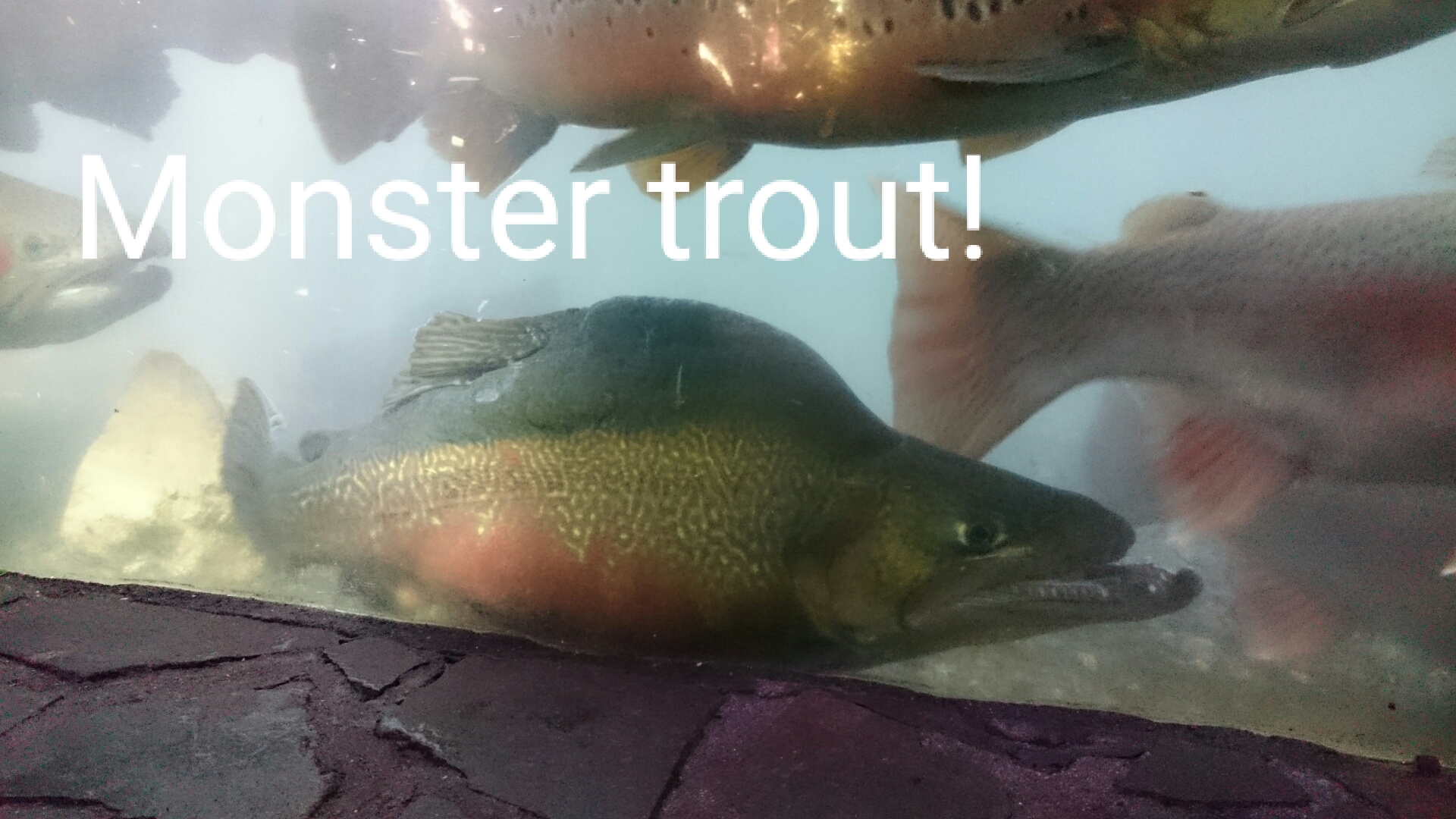
Monster trout!

I’ve been doing a little sightseeing in New Zealand, currently in Rotorua.

Heard an interesting frank presentation at the Rainbow Springs trout display.

“The trout are actually a pest. They eat anything and everything in the rivers [including the native fish, frogs and invertebrates]. They live for about 7-10 years. However, the hybrid Tiger Trout (pictured) can live for decades because they are sterile.

The only reason they’re in our waters is because they’re a valuable sport fish. You can’t buy it in restaurants or in supermarkets. The only way you can get it is by buying a fishing licence and fish for them yourselves.”

“The early Europeans… did not see the price the native animals and plants were playing.”


There was no pretence on the nature of the beast. I’m all for farming domesticated animals like trout and salmon, however, I’m not sure about releasing feral animals into our waterways.

Tell us your thoughts.

—
Yours sincerely,

Dr Richmond Loh 

DipProjMgt, BSc, BVMS, MPhil (Pathology), MANZCVS (Aquatics& Pathobiology), CertAqV, NATA Signatory.
THE FISH VET, Perth, Western Australia, AUSTRALIA. 

Mobile Aquatic Veterinary Medical & Diagnostic Services.
http://www.thefishvet.com.au
Ph: +61 (0)421 822 383

Future-proof your prawn farm – The right diagnosis is the magic bullet you’ve been looking for.

Usually when diseases strike, everyone wants to reach for the magic bullet. Does it exist?

Following on from last week’s blog on "biosecurity risks on shrimp farms", this article is timely. Having good biosecurity practices is one of the ways where your on-site team can help with early detection of disease, or of factors that may lead to disease. However, what do you do if diseases show up at your farm? What can you do?

What’s the use of diagnostics on the farm? Is it a little too late? Does the normal lab tests take too long for it to make a difference?

At TheFishVet, we use proven diagnostic methods to help you solve your problems. By using hard scientific evidence to back up the reason for doing things, you’re half-way there to becoming the top farm. And we can deliver results more quickly than the regular lab.

My colleage, Dr Giana Bastos Gomes, has prepared another practical article (see article link for details).

The Fish Vet’s Team is able to leverage technologies to serve our clients in timely and practical ways.

Follow me on: Facebook "Fin Page" – YouTube – Blog – Linkedin – Twitter

—
Yours sincerely,

Dr Richmond Loh
DipProjMgt, BSc, BVMS, MPh (Pathology), MANZCVS (Aquatics & Pathobiology), CertAqV, CMAVA, NATA Signatory.
Aquatic Veterinarian & Veterinary Pathologist
THE FISH VET, Perth, Western Australia, AUSTRALIA.
Mobile Aquatic Veterinary Medical & Diagnostic Services.
http://www.thefishvet.com.au
Ph: +61 (0)421 822 383
Skype: thefishvet

President WAVMA 2014

Adjunct Lecturer Murdoch University

Supposedly Extinct Sea Snakes Spotted Off The Coast Of Western Australia.

How vast our waters are. It’s great to see come-backs.

http://www.gizmodo.com.au/2015/12/supposedly-extinct-sea-snakes-spotted-off-the-coast-of-australia/

Vets eye aquaculture opportunities » FishFarmingExpert – SalmonView

I’d like to add that the Tasmanian salmonid industry is larger than the cattle and sheep production.

There’s scope for veterinarians in keeping our aquatic animals healthy and free from diseases. That’s our training.

http://www.fishfarmingexpert.com/news/vets-eye-aquaculture-opportunities/