TheFishVet is everywhere.

Dr Richmond Loh , THEFISHVET, is now registered to work in ALL states in Australia. AND with his team mates based in Townsville, Melbourne and Perth, we’ve got everything covered.

We have expertise in coldwater and tropical cultured fishes, including crustaceans and molluscs.

—
Yours sincerely,

Dr Richmond Loh

DipProjMgt, BSc, BVMS, MPhil (Pathology), MANZCVS (Aquatics& Pathobiology), CertAqV, NATA Signatory.
THE FISH VET – Perth, Melbourne, Townsville – AUSTRALIA.

Mobile Aquatic Veterinary Medical & Diagnostic Services.
http://www.thefishvet.com.au
Ph: +61 (0)421 822 383

Don’t Miss Out on becoming a WAVMA for 2016 and beyond! Consider joining/renewing Now!

Dear Colleagues,

We want you to know that WAVMA has greatly expanded its programs, and we plan to improve these and develop more to help people like you boost your capacity to practice aquatic veterinarian medicine.

To see what you might have missed out on, either visit www.wavma.org/Member-Resources or look through the attached WAVMA brochure.

Renewal is easy; you still have a member profile. Simply click on administrators.

Whether or not you renew your membership, we’d love to know what you think about WAVMA’s current and future programs – please click on https://www.surveymonkey.com/r/2015-16_Member_Pgm_Input to give us your input in a brief (<5 min) survey.

With members from more than 69 countries, the opportunity to ensure the voice aquatic veterinarian’s is clearly heard is now assured. Renew your membership to ensure our collective efforts continue to have an impact!

Warmest regards,
Sharon R. Tiberio, DVM, CertAqV (Treasurer)

treasurer@wavma.org 

WAVMA Brochure.pdf

CVMA Position Statement Strengthening the Role of Aquatic Vets in Canada.

Earlier this year the CVMA released the following updated position statement strengthening the roll of aquatic veterinarians in Canada (see http://tinyurl.com/jt5nqh6).

Aquatic Animal Veterinary Medicine

The Canadian Veterinary Medical Association (CVMA) recognizes that veterinarians are mandated to perform activities that contribute to the health and welfare of aquatic species used for food, as with other species of animals. In addition the CVMA recognizes the contributions of aquatic animal professionals and technical experts in this regard.

It is the position of the CVMA that veterinarians must play a lead role in aquatic animal health and welfare management, including disease prevention and control, diagnosis of diseases, implementation of biosecurity programs and food safety. The CVMA supports veterinarians in the proper and prudent use, prescribing of therapeutants, vaccines, and other health- related products. The CVMA supports veterinary involvement in food safety including the inspection of products derived from aquatic animal production as for other food animal production.

The CVMA encourages continuing education programs, health management programs and curricula focused on aquatic animal species and aquaculture at veterinary colleges.

Background

1. Veterinarians play a pivotal role in the health and welfare of animals, including aquatic species;

2. Veterinarians play a key role in assuring the production of aquaculture products are safe for human consumption and appropriately certified to meet international trade requirements. This also requires contributions from both governmental and private sectors, as well as aquatic animal health professionals and other partners.

3. Aquatic animal production is a vast and rapidly expanding sector involving a variety of vertebrate and invertebrate species, including finfish, crustaceans, mollusks, in food producing aquaculture and fisheries. It also includes marine mammals, reptiles, amphibians, ornamental species and others although all of these lie outside the scope of this position statement.

4. Canadian veterinarians practice aquatic animal medicine in various fields including: private client animal treatment, commercial fish farms, stock enhancement hatcheries, academic research and teaching, municipal marine parks, public aquaria and government regulatory programs; involving veterinary medical disciplines of clinical diagnoses, pathology, pharmacology, vaccinology, epidemiology, preventative medicine, laboratory animal medicine, toxicology, as well as seafood inspection and regulations;

5. Canadian consumers, food animal producers and trading partners rely on veterinarians in order to ensure that appropriate preventive and therapeutic products are used in animals and that foods of animal origin are safe;

6. Veterinarians provide essential expertise in regional and national aquatic animal health and disease surveillance programs supporting protection of aquatic animal resources and international seafood trade;

7. Veterinarians assist in sustainable aquatic animal production and are involved in the protection of the aquatic environment and wild stocks, protection of public health and socio-economic development;

8. CVMA and aquatic animal veterinarians support the National Aquatic Animal Health Program (NAAHP) and are actively working to ensure that aquatic animal policies, programs, regulations and legislation that exist or develop, and involve the charge of the profession, are consistent with the Canadian Food Inspection Agency’s existing policies, programs, regulations and legislation dealing with “terrestrial” animals. The CVMA, when necessary, also engages with Provinces and federal government bodies to provide advice on appropriate aquatic animal health policy and legislation.

[1] For the purposes of this position statement “aquatic animal” refers to any aquatic species used for food, with the exception of marine mammals.
Cobia – it’s not salmon, barramundi or trout – Pacific Reef Fisheries cobia farm.

There is an interesting piece on the farming of cobia in prawn farms in this weeks issue of Landline. 

Aquatic equivalent of Kobe beef!

How do they farm a pelagic species in prawn ponds?

It’s the second topic in the program, runs from 15 to 30 minutes.

View at the link below:

http://iview.abc.net.au/programs/landline/RA1601Q010S00“>http://iview.abc.net.au/programs/landline/RA1601Q010S00

THEFISHVET team are glad to have helped this farm with some of their diagnostics.
 
—
Yours sincerely,

Dr Richmond Loh 

DipProjMgt, BSc, BVMS, MPhil (Pathology), MANZCVS (Aquatics& Pathobiology), CertAqV, NATA Signatory.
THE FISH VET – Perth, Melbourne, Townsville – AUSTRALIA. 

Mobile Aquatic Veterinary Medical & Diagnostic Services.
http://www.thefishvet.com.au
Ph: +61 (0)421 822 383

Interesting initiative from US, to promote aquaculture.

"Improving fish health and welfare directly increases on-farm production. It is widely accepted that disease prevention is more cost effective than trying to treat disease."

Read more –
http://www.thefishsite.com/fishnews/27339/improving-us-aquaculture-health-through-programme-standards/

–
Yours sincerely,

Dr Richmond Loh

DipProjMgt, BSc, BVMS, MPhil (Pathology), MANZCVS (Aquatics& Pathobiology), CertAqV, NATA Signatory.
THE FISH VET – Perth, Melbourne, Townsville – AUSTRALIA.

Mobile Aquatic Veterinary Medical & Diagnostic Services.
http://www.thefishvet.com.au
Ph: +61 (0)421 822 383

New Animal Health Law – EU – the provisions on farm animal health visits.

Professional animal owners are to receive regular animal health visits from a veterinarian, for disease prevention, detection and biosecurity.

Farmers and other animal owners will be required to apply the principles of good animal husbandry and the prudent and responsible use of veterinary medicines.

Read more at this link.

Is it only me, or does it look like we don’t need KHV to “clean-up” the Murray Darling Basin?

Phillip Glyde (Chief Executive of the Murray-Darling Basin Authority) addresses the plan.

At the conferece – ” ​​​​​​​​​​​​​​​​​​​​​​​​​​​​​​​​​​​​​​​​OUTLOOK 2016 ~ Investing in agriculture – growing our future”

“So why do we need a [Murray-Darling Basin] plan?”

“Simply because successive governments, over a long period of time, have over-allocated water entitlements in relation to the Murray-Darling itself. And the industries and the communities that are supported by the Murray-Darling Basin … don’t have a sustainable future, unless we were to address that over-allocation.”

“… just to remind you about the complexity and the size of what we’re dealing with– 4 states; 1 territory; 2 million people; provides water for over 3 million people; 40 aboriginal nations; 30,000 wetlands; more than 35 endangered bird species; more than 16 endangered mammals; 49% of Australia’s irrigated farms; $18.6 billion worth of agricultural production, of which $7.1 billion is from irrigation. It’s a really iconic part of our history. It’s an iconic part of the country. It’s a large part of the country.”

Importance of MDBasin


“since 2007 and 2008, there’s been $5.3 billion invested in a combination of infrastructure and buybacks, $3 billion in infrastructure, and $2.3 billion in buybacks…”

“And particularly, $1.5 billion dedicated to so-called efficiency measures, which are about lining – things like lining irrigation channels, so that you reduce your losses, and some of that water can be returned to the environment. And it doesn’t necessarily impact on the economic performance of the people who are using that water for consumptive uses…”

“In terms of water recovery… we’ve [been able to recover] 1,951 gigalitres of the 2,750 gigalitres that are required in order to get to a sustainable level of diversion… We’re 71% of the way there…”

“We’re seeing some really good breeding outcomes for native fish, Murray cod, golden perch, and silver perch. And in addition to recovering water, we’ve also seen the completion of fish waste from the Hume to the Murray mouth. And that’s also showing– that’s another way of making sure that we’re improving the environmental health of the river.”


“the point I really want to try and make is that in making this change, making this huge structural adjustment, for the irrigation industry, for the farming sector, and for the communities that depend on it…”


Source:

http://www.agriculture.gov.au/abares/outlook-2016/Pages/Conference-Program.aspx

Specifically – http://www.agriculture.gov.au/abares/outlook-2016/Pages/presentation-videos-transcripts/phillip-glyde.aspx


Phillip Glyde

Murray-Darling Basin Authority

​​Phillip Glyde was appointed Chief Executive of the Murray-Darling Basin Authority in January 2016. Prior to this, Phillip was a deputy secretary in the Department of Agriculture and Water Resources since November 2006. In that role he was responsible for agriculture, fisheries and forestry.

Phillip has previously had responsibility for international trade and market access, export certification services and the department’s research division, the Australian Bureau of Agricultural and Resource Economics.

Prior to this Phillip worked on natural resource management, industry and environment policies and programs in a number of Australian Government departments, including the Departments of the Prime Minister and Cabinet, Environment and Resources and Energy.

Phillip has also worked overseas. In the mid 1980s he worked for the Environment Directorate of the Organisation of Economic Co-operation and Development in Paris and in the late 1990s was seconded to the Department of Environment, Food and Rural Affairs in the United Kingdom.

Phillip has an Honours Degree in Natural Resource Management from the University of New England and a Bachelor of Economics Degree from the Australian National University.


Fish joke for Monday-itis: What do you get when you cross seaweed and maths?

Q: What do you get if you cross “seaweed” with “maths”?

Answer: You get Algae-bras.

Have a FINtastic week! R <+>{

Is a pregnant goldfish called a twit, twat or twerp?

None of the above.

Read more here – https://thefishvet.com/2011/12/05/what-is-a-pregnant-goldfish-called/

—
Yours sincerely,

Dr Richmond Loh

DipProjMgt, BSc, BVMS, MPhil (Pathology), MANZCVS (Aquatics& Pathobiology), CertAqV, NATA Signatory.
THE FISH VET – Perth, Melbourne, Townsville – AUSTRALIA.

Mobile Aquatic Veterinary Medical & Diagnostic Services.
http://www.thefishvet.com.au
Ph: +61 (0)421 822 383

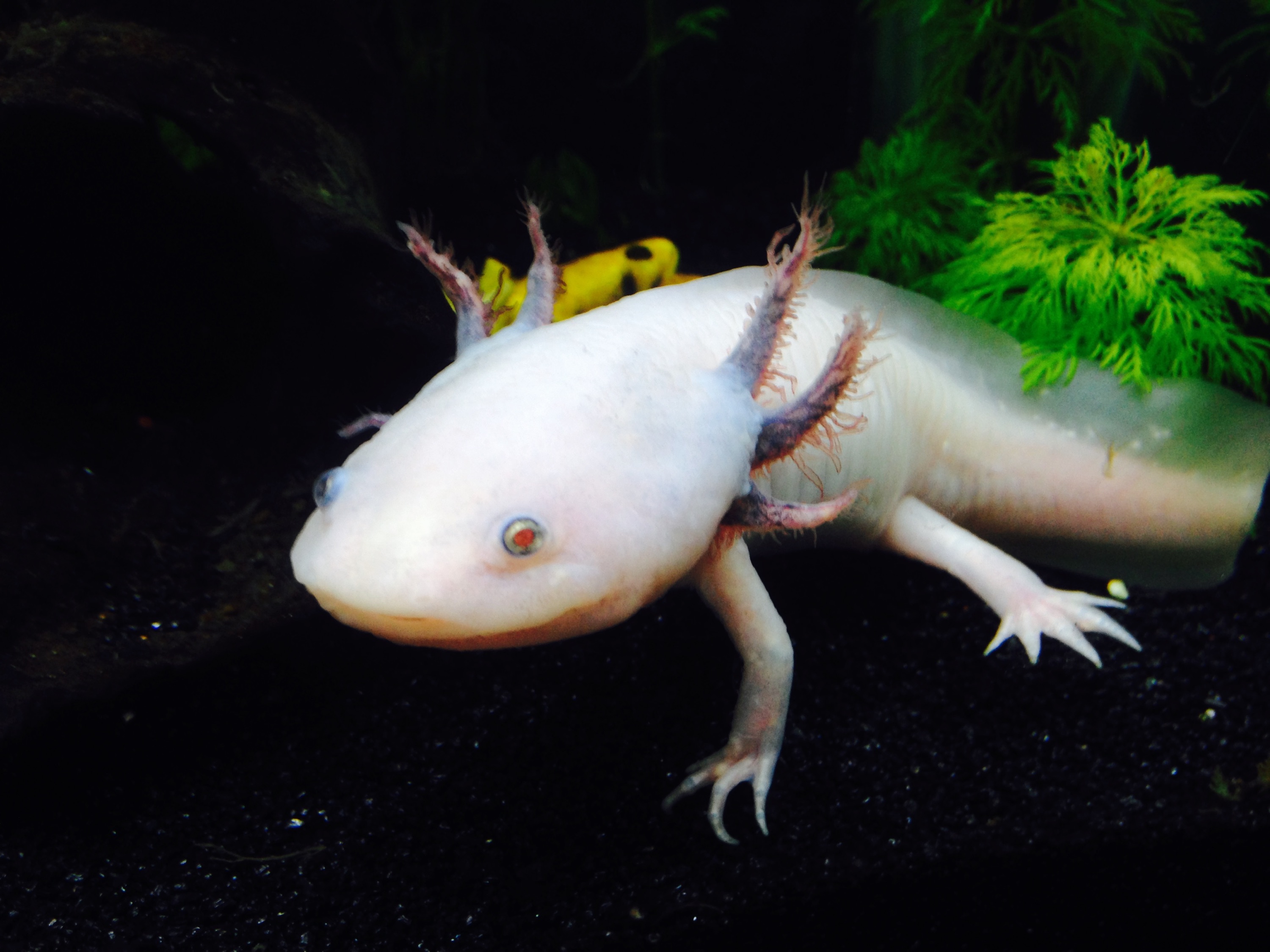
Axolotl, from SAD :( to HAPPY :) A case of severe anchor worm infestation.

This poor guy was infected with anchor worm (Lernaea spp.). We were able to get to him in the nick of time. With initial manual removal, and then a course of medications, we were able to turn him around to a healthy axie with beautiful frilly gills!

Axie, 3 weeks later.

My, what a big smile!

Follow me on: Facebook "Fin Page" – YouTube – Blog – Linkedin – Twitter

—
Yours sincerely,

Dr Richmond Loh DipProjMgt, BSc, BVMS, MPh (Pathology), MANZCVS (Aquatics & Pathobiology), CertAqV, CMAVA, NATA Signatory.
Aquatic Veterinarian & Veterinary Pathologist
THE FISH VET, AUSTRALIA (Perth, Melbourne & Townsville).

Mobile Aquatic Veterinary Medical & Diagnostic Services.
http://www.thefishvet.com.au
Ph: +61 (0)421 822 383
thefishvet_logo_medical-20130107.jpg
Skype: thefishvet

President WAVMA 2014

wavma.jpg?w=780

Adjunct Lecturer Murdoch University

Looking for more books? Check out this site.

See advert on YouTube.