Non-specific Immunity of Fish Skin: watch free webinar recording. 

The recorded WebCEPD webinar B-1030: Non-specific Immunity of Fish Skin Mucus presented by Dr. Tae Sung Jung, is now available at https://www.wavma.org/Webinars/b-1030-non-specific-immunity-of-fish-skin-mucus.  Other previously recorded webinars are available at www.wavma.org/WebCEPD.


Viewing Recorded Webinars & Obtaining Veterinary CEPD Credit

As WAVMA WebCEPD recorded webinars become available, they will be incorporated to the new WAVMA e-Learning Portal.  With WAVMA now part of theWorld Continuing Education Alliance (WCEA), a network of veterinary organizations and other educators that is being spearheaded by the World Veterinary Association, WAVMA’s e-Learning Portal will serve as a source of web-based Continuing Education and Professional Development (CEPD) for veterinarians, veterinary students and veterinary technicians/nurses throughout the world.


Currently the recorded webinars can be viewed at no charge.  However, because of the investment WAVMA has made to join the WCEA initiative, obtaining CEPD credit by taking a KSA associated with each webinar (a short knowledge & skills assessment or quiz to ensure you have met the learning objectives) WAVMA has to charge a nominal fee (US$5.00 for WAVMA Student Members, $15.00 for all other Members, and $25.00 for non-members/guests). 


Below each webinar announcement on the WebCEPD page (www.wavma.org/WebCEPD), clicking on “Training materials and Credits are now available for this event” will take you to the KSA.  WAVMA Members will be provided a discount code for taking the KSA and receiving a CEPD certificate. Copy or write this code down as it will needed when you click on “Buy e-Learning” and proceed to PayPal.  WAVMA’s secure PayPal account allows you to use a credit card, or if you have a PayPal account, your bank account or PayPal credit.  A PDF handout of the presentation is downloadable once you are in the WAVMA e-Learning system.


We hope the information in this and other WAVMA WebCEPD session will be useful for understanding the art and science of aquatic veterinary medicine.


WAVMA WebCEPD/e-Leaning Administrators

administrators@wavma.org


Discover more about the World Aquatic Veterinary Medical Association at www.WAVMA.org.

Get listed in the on-line Directory of Aquatic Veterinarians by registering atwww.AquaVetMed.info.


— 

*******************************************
Jung, Tae Sung  D.V.M., M.Sc., Ph.D.
Lab. of Aquatic Animal Diseases
College of Veterinary Medicine
Gyeongsang National University
900 Gazwadong, Jinju, 
Gyeongnam, South Korea 660-701
Office: +82-55-772-2350

Mobile: +82-10-8545-9310

Fax: +82-55-762-6733

E-mail: jungts@gnu.ac.kr/jungts@gmail.com

*********************************************

Our fish vet mascot makes a splash!

Just for laughs, we strategically placed our mascot to pose as a legitimate “sculpture by the sea” in Cottesloe last weekend. 

Here are some of the responses it got:

“That’s my favourite sculpture in the whole place!”

“Is that a frog or a fish?”

“It’s to represent evolution..(and some B.S. later…)… it’s a good omen.”

“What’s your sculpture called?”

“Urgh! Where’s the QR code?”

(A little girl cuddled it and didn’t want to let it go).

Join us at the koi autumn harvest.

Looking for something fishy to do , during the April 1 weekend? 

Come join our fishy friends at Noran Fish Farm’s koi autumn harvest sale.

I’ll be there on the Saturday. 

Why are fishers fighting the reduced size limits?

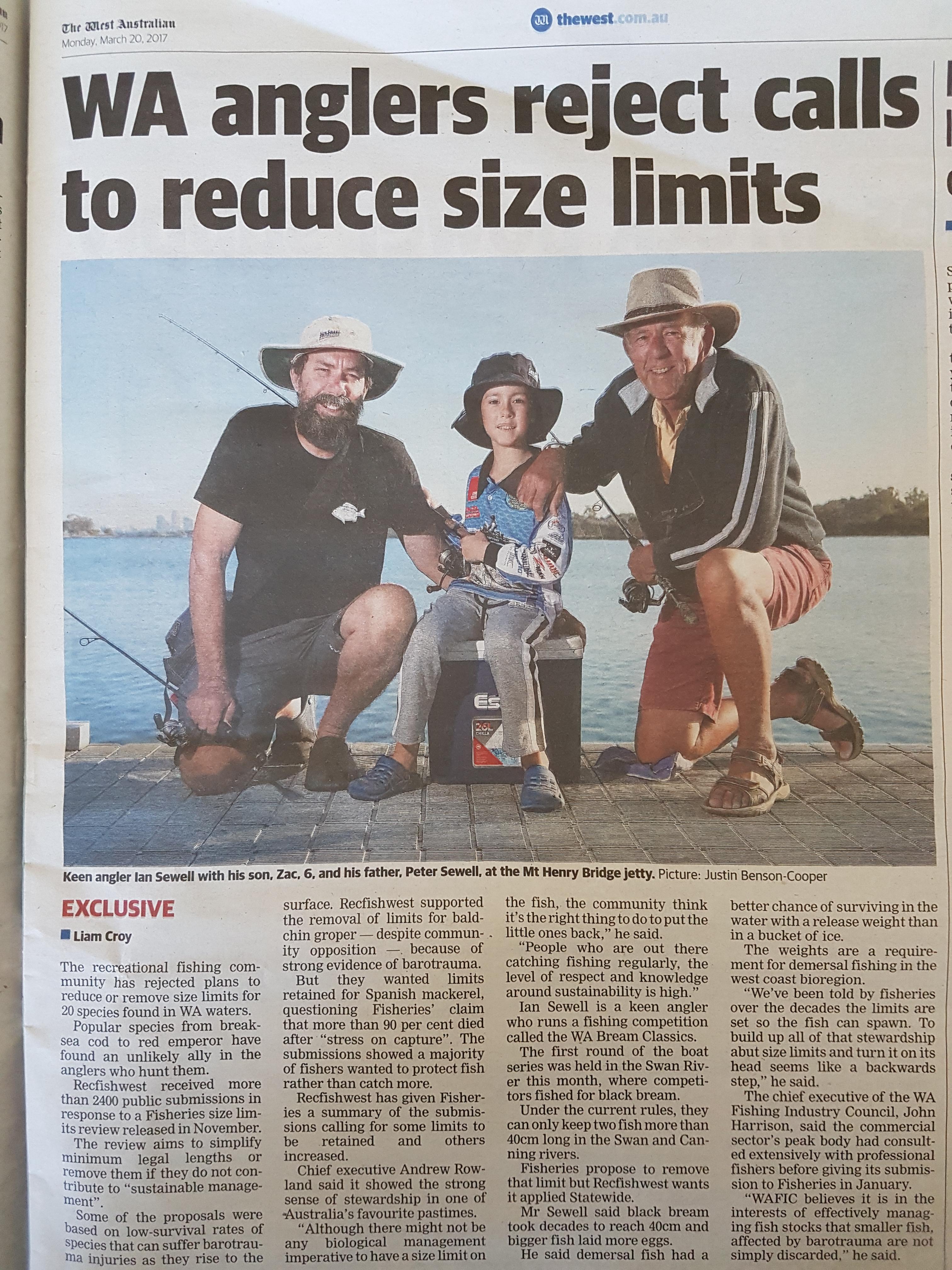
Reading the article in today’s West Australian newspaper makes me wonder why the recreational fishers are against the recommendations to reduce size limits. It makes perfect sense that fish which cannot be rehabilitated prior to release, be humanely slaughtered for consumption. Perhaps this change in ruling is unwelcome becauss it may cut short fishing expeditions because people may reach their bag-limit sooner?

Seems like scientific evidence may be defeated by public opinion.

Read more about the arguments for and against size-limits for recreational fishing, in my previous blog –

https://thefishvet.com/2016/11/17/sensible-fishing-rules/

Yours sincerely,

Dr Richmond Loh
DipProjMgt, BSc, BVMS, MPhil (Pathology), MANZCVS (Aquatics& Pathobiology), CertAqV, NATA Signatory.

Aquatic Veterinarian & Veterinary Pathologist.
PERTH | MELBOURNE | SYDNEY | TOWNSVILLE | BRIBIE ISLAND.
THE FISH VET – AUSTRALIA.

Aquatic Veterinary Medical & Diagnostic Services.
Web: http://www.thefishvet.com.au

Ph: +61 421 822 383
Mail: PO Box 5164, East Victoria Park, WA 6981, Australia.

Fish joke for Monday-itis: ego.

Q: Which fish has the biggest ego?

A: The blowfish – they sometimes have an overinflated view of themselves. 

Have a FINtastic week! R <+>{

Troubled goldfish gets its own customised wheelchair – BBC News

You have to be rather innovative when treating fish ailments.
These people have made a nice contraption for what’s normally an untreatable condition (swimbladder  disorders that makes fish negatively buoyant)  that leaves fish heavy in the water. 

http://www.bbc.com/news/blogs-trending-39278010

Global trends in ornamental fish-keeping: HIGHLIGHTS from the International Ornamental Fish Conference.

This post is a combination of talking points presented by Mr Shane Willis (President, Ornamental Fish International), and Michael Tuccinardi (Senior Editor, Amazonius), with my personal thoughts/comments.

The ornamental fish industry has been a great blessing for developing nations by providing an income source for those living in rural areas, in the wilds of many developing nations in what is termed, “Trade, Not Aid”. The economic value of these aquatic organisms also promote environmental conservation efforts to effect sustainability. There are so many more new species to yet to be discovered!

The nations with the greatest craving for fishes in order of monetary value of imports are: UK (USD 24M), Germany (USD 18M), France (USD 12M), Netherlands (USD 12M), Italy (USD 10M), Spain (USD 7M), Belgium (USD 6M), and Czech Republic (USD 4M) – figures by Paul Bakuwel.

The general trend is that aquarium equipment technology is getting better, and cheaper, allowing us to keep coldwater fishes in tropical climates, and warm water fishes in cold climates. Logistics of fish transport is more efficient, and technology and techniques for packing fish have improved. There are more captive-bred species, and an increase in “designer” fish (e.g. more varieties of guppies, clownfish, Bettas).

However, there is also a gloomy trend that smaller independent shops are closing down, largely due to competitive pressures imposed by larger chain stores, and online-shops. There was a recent decline in economic value of fishes in the major importing countries, but there’s strong growth in countries like India and China. That is the general trend. But if we take a closer look, the trends are different between freshwater, and marine aquarists.

Freshwater hobbyists are moving from medium-sized, colourful-themed aquaria, towards nano tanks, or larger, self-contained aquaria. Those who go nano, seek small invertebrates (e.g. shrimp), smaller “dwarf” fish species, and smaller plants (i.e. all those species that were once considered too small for ornamental aquaria). On the otherhand, there are more people are getting into aquascaped planted aquaria, that are large, and has a bio-type theme. Due to years of enjoying captive-bred fishes, hobbyists are now seeking wild-type “authentic” fish, caught from the wild. I have seen this among keepers of discus, guppy, otocynclus, Corydoras, Frontosas and others.

There was a short-lived fad of wall-mounted narrow aquaria, dyed/ painted/tattooed fishes, but fish keepers soon realised that these imposed poor welfare to fishes during the procedure, and shortened lives due to the stress, immunosuppression, and predisposition to diseases, especially lymphocystis.

In the marine world, fish-only tanks with artificial corals are now giving way to coral-only tanks that may house invertebrates, or few “reef-safe” fishes.
In the past, the majority of specimens are wild-sourced, and some collected with the use of cyanide. This practice of using cyanide is no longer acceptable and is illegal, because it destroys reefs, and the fishes collected in this way die a slow death, effectively from starvation.
There are more marine species that are captively-bred (including the blue tang). In 2001, only ~25 species could be bred in captivity, and in 2016, there are >90 species. The market welcomes these because of perceived better sustainability, and minimising impacts on wild reefs. It’s actually a wonder why Australia does not permit imports of captively-reared marine ornamentals. Though, the captive breeding is more commonly done in importing nations, and so the socioeconomic implications would be that the livelihoods of many wild-collectors would be threatened.


With captive-breeding, there is the appearance of “designer fishes” with different colour variants and extended finnage in clownfishes (check out the range of percula and ocelaris clowns available).


I’ve to add that more and more fish people are becoming aware of fish welfare, and there is a growing number who form emotional bonds with their aquatic pals. People are also becoming more educated on aquatic medicine, and that there are experienced fish veterinarians around, whom they can seek help to diagnose and cure fish ailments.

Check out some of the sights I’ve taken in – see link.

Australian consideration to release KHV condemned internationally.

In yet another paper, the warnings on the repercussions of purposely releasing KHV into Australian waterways is a short -sighted and dangerous thing to do.

Authors concluded, “We fear serious ecological, environmental and economic ramifications, whilst its long-term objective to control carp is at best uncertain.”

Check out the journal article at this link.

​What are fish vets / aquatic veterinarians? 

Fish veterinarians are veterinary practitioners who work in the health and welfare of aquatic animals. This includes diagnostics, therapeutics and surgery, to name a few.

Some say this is such a “specialised” area, but to tell you the truth, you have really got to be a generalist to do aquatic veterinary medicine. Why so?
Well, a human physician need only concentrate on one species, and when they specialise, they hone in on a particular organ, or discipline. General small animal veterinary practitioners work primarily with dogs and cats. General large animal veterinary practitioners deal with a range of species including cattle, sheep, horses and more. 

Now why I say fish veterinarians are specialist generalists is because we deal not only with multiple species, but phylums of animals! We are licensed veterinarians who are qualified to diagnose and treat a wide variety of aquatic species which can include fish, marine mammals, sea turtles, and other wildlife.
Aquatic veterinarians may work in private practice, aquaculture facilities, aquariums, zoos, museums, laboratories and marine parks. 
All aquatic veterinarians must successfully graduate with a  Veterinary Degree and be registered with the relevant Veterinary Surgeon’s Board. 
(Find out more about what makes a veterinarian at https://www.avma.org/KB/Policies/Pages/Principles-of-Veterinary-Medical-Ethics-of-the-AVMA.aspx).
After completing their studies, veterinarians may pursue post-graduate examinations and certifications to earn the title of being an aquatic veterinarian. This involves several additional years of practical training and testing under the supervision of top professionals in the specialty field.
The World Aquatic Veterinary Medicine Association (WAVMA) is a professional membership group that was founded in 2006 as a resource for aquatic veterinarians, technicians, students, and others with an interest in aquatic veterinary medicine. The WAVMA provides a variety of opportunities for continuing education to its members via their WebCEPD, email list-serve, and publications. Find out more about aquatic veterinarians at http://wavma.org 

If you require a fish vet in Australia, check out our five locations http://thefishvet.com.au

If you’re overseas, find a fish veterinarian at http://www.aquavetmed.info/