Fish Joke for Monday-itis: nationalities.

Q: How can you tell where fish come from?

A:

•American fish live in WATR.

•Australian fish live in WOTA.

•New Zealand fush live in WATER.

Have a FINtastic week! R <+>{

Fish Joke for Monday-itis: childish.

Q: What do you say to a childish glow fish?

A: Why don’t you glow up!

Have a FINtastic week! R <+>{

NB: TFV is not associated with GloFish.

A good plan to help Darling River fish recover exists

Discover reasons why the fish kills have occurred and the measures that have been proposed to help

the basin’s fish communities recover from where they are now, at 10% of pre-European levels (0% in some parts), back to 60% over 50 years.

http://theconversation.com/a-good-plan-to-help-darling-river-fish-recover-exists-so-lets-get-on-with-it-110168

Another veterinarian joins The Fish Vet’s team.

The Fish Vet’s team is expanding, making more fish vets available to you.

Our newest recruit will service fish keepers in Sydney’s south and west, including Bankstown region.

Dr Aivee Huynh graduated with a Bachelor of Veterinary Science (BVSc) at the University of Sydney in 2017.

She is a small animal veterinarian based in Sydney, with a keen interest in aquatic medicine. She grew up with a Saratoga and spent her days fishing and snorkelling.

Aivee is a member of the World Aquatic Veterinary Medical Association (WAVMA) and her goal is to become a certified aquatic vet.

She is owned by a “catfish” called Vegemite.

Our other fish veterinarians are located in Perth (Welshpool), Melbourne (Brunswick), Canberra (Duffy) and Sydney (Gosford).

Download and keep a copy of our details in case of emergency – TFV Services and Fees 2019

Fish Joke for Monday-itis: world wide web

INTERNET: Where you want the fish to go.

NETSCAPE: What the fish do when they discover a hole in the net

Have a FINtastic week! R <+>{

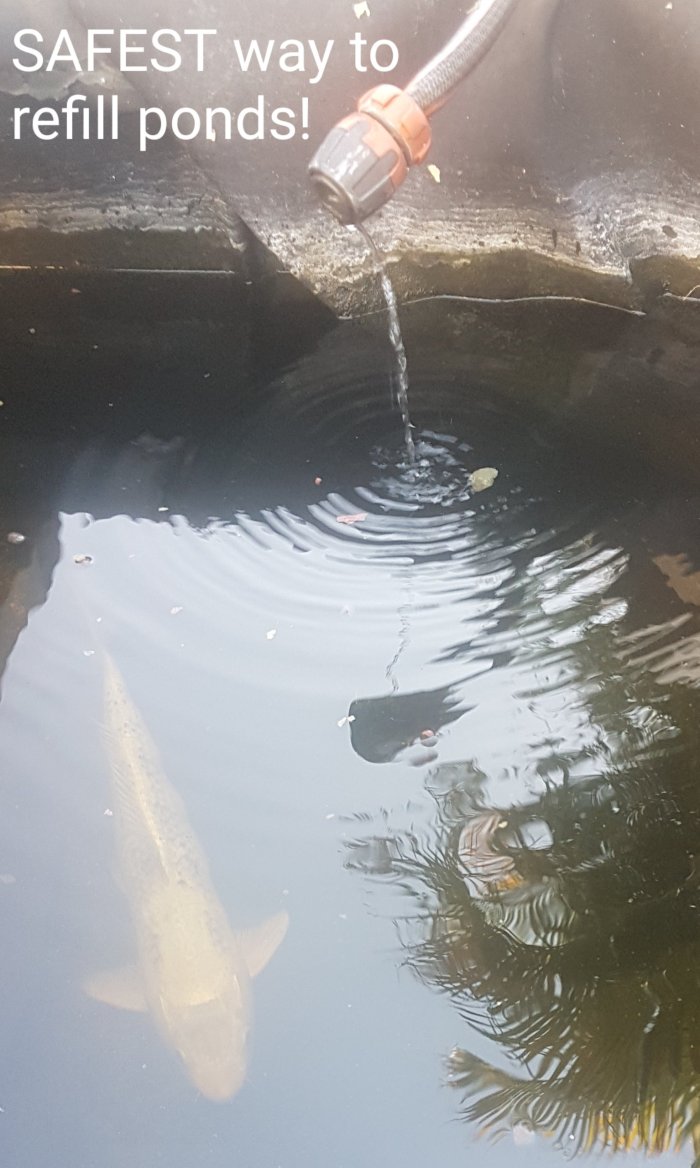
What’s the safest way to top up your fish pond?

Every so often, we receive calls from owners with fish dying from chlorine toxicosis because they had inadvertently left the hose on for too long while refilling their fish pond.

Chlorine and chloramine has been added to our tap water supplies as a disinfectant, making it safe for us to drink straight from the tap. But these chemicals are toxic to fish. Normally, we use anti-chlorine that is in proprietary water conditioners from your local fish shops. But when you forget, and leave your hose on full for too long, toxic levels of chlorine can build up in your pond.

So I’d like to share with you, a very simple, way of avoiding disasters, and at no cost, and no fancy gadgets!

Next time you need to refill your pond, why not turn the tap to a trickle, instead of a full blast?

Everyone feeds their fish once to thrice daily, so in this time, you’d be able to turn off the tap, before it overflows, and long before the entire pond volume is displaced by toxic levels of chlorinated water.

Please share this with all fish keepers, so we won’t get another case of fish kills in ponds again.

What do you call a group of mermaids?

That’s an interesting question. Merpeople are thought of as half fish, half human.

If mermaids were fish, a group of them would be called a school.

If they were classed as humans, they’d be called a tribe.

But perhaps they’re sea mammals, similar to dolphins, where a group of them are called pods.

Manatees are, after all, what sailors once mistook as mermaids. As such it would make sense to call them similar to a group of manatees – an aggregation.

But if they were Australian, they’d be dugongs. And so, a group of a dugongs is called a herd.

So, what do you think a group of Merpeople are called?

Let’s count your votes.

1. Herd.

2. Aggregate.

3. Pod.

4. School.

5. Tribe.