Q: Which shark shouldn’t you trust?
A: Bull shark because they’re full of BS!
Have a FINtastic week! R <+>{
All about Fish Vetting – Dr Richmond Loh
Q: Which shark shouldn’t you trust?
A: Bull shark because they’re full of BS!
Have a FINtastic week! R <+>{
Q: What do you call baby snappers?
A: Young whipper snappers!
Have a FINtastic week! R <+>{
And the second was
Pasar Hewan Sanglah, Jalan Sudirman, Denpasar, Bali.
Dr Richmond Loh
DipProjMgt, BSc, BVMS, MPhil (Pathology), MANZCVS (Aquatics& Pathobiology), CertAqV, Fellow WAVMA.
Aquatic Veterinarian & Veterinary Pathologist.
THE FISH VET
Aquatic Veterinary Medical & Diagnostic Services.
Locations: Perth | Melbourne | Sydney | Canberra | Townsville | Hong Kong | London (UK)
Web: thefishvet.com.au
Ph: +61 421 822 383
Mail: PO Box 5164, East Victoria Park, WA 6981, Australia.
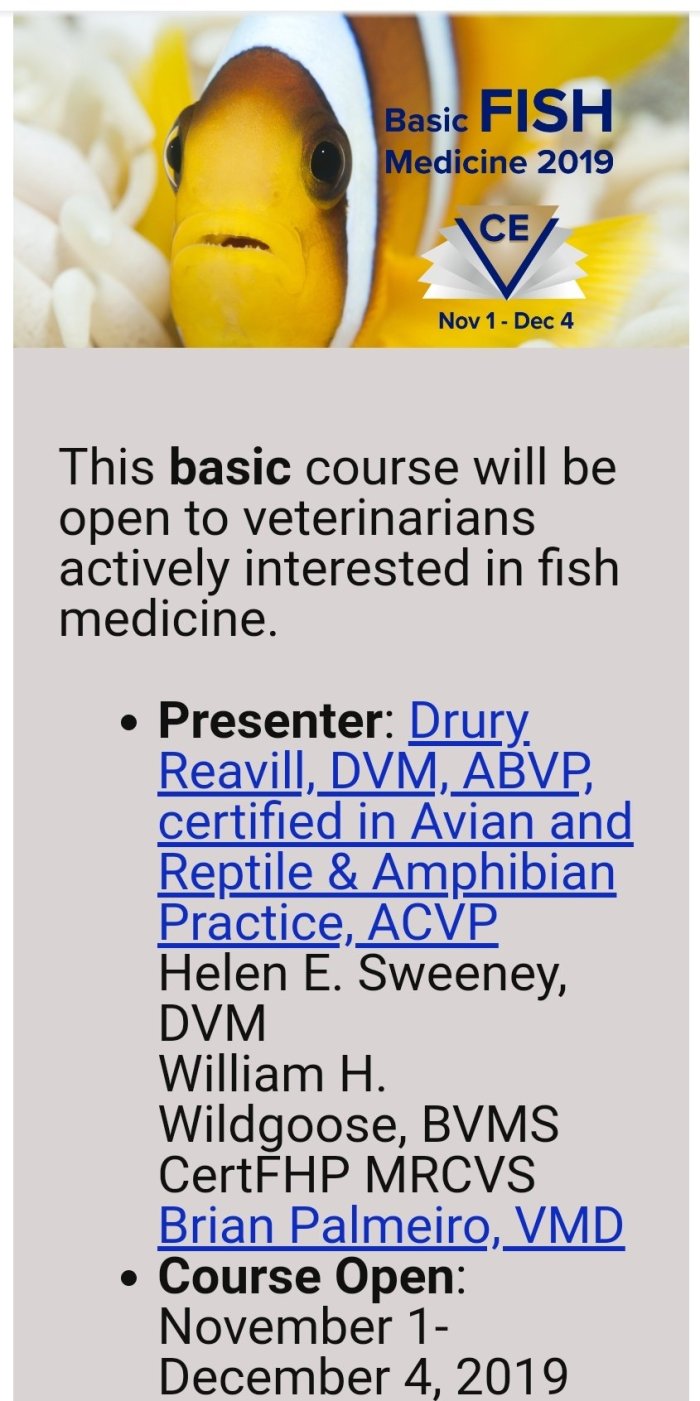
The lectures for this course will be presented in an audio format using a webinar platform.
Q:
Why do koi hang around in groups of four?
A:
In times of danger. A-koi will swim away and B- and C-koi will swim away leaving only the D-koi.🤣
With thanks to KJD.
Have a FINtastic week! R <+>{
What are your thoughts?
Read more – https://www.channelnewsasia.com/news/cnainsider/pet-fish-fins-cosmetic-procedures-10278656
Q: which fish has a big ego?
A: a puffer fish!
Have a FINtastic week! R <+>{
I was fortunate enough to be able to visit one of these facilities when I was in Bali last week,
and help with releasing some.
The baby turtles are soooo cute!
We made a short video about it (link below). Hope you’ll like it.
You can hear that we couldn’t contain the excitement of my son.
Watch video – https://youtu.be/KgwhLgot4ik
I’d like to thank my fellow Indonesian fish veterinarian, Dr Handi Putra Usman, who helped with filming this video.
Or more correctly, are you looking for a veterinarian for your fish? You may be frustrated to find that not all veterinarians will book you in for an appointment.
So, are all vets, fish vets? Those following our social media, in particular our YouTube channel – http://tinyurl.com/thefishdoctor are well-aware that veterinarians can and do provide medical services for fishes.
Actually all veterinarians, upon graduation have learnt all the skills they need to deal with any species of animal. Over the last 10 years or so of lecturing at the local veterinary university, I have been regularly asking the students, how many of them have ever kept fish in their life. Approximately half of the students in each year level would raise their hands, so you would expect there ought to be a huge number of veterinarians graduating that will see your sick fish.
Interestingly, when the same question is asked of the students who select the wildlife/exotics streaming in their final year, approximately 80-90% would have kept fish in their life. Of these, a quarter still keep fish. These subset of students are planning to work in wildlife or exotics. So if you’re looking for a veterinarian to see your fish, your best bet would be to find a veterinary clinic that has a wildlife or exotics component to their general practice.
From the students I take on practicals with me, there are usually one or two students from each year level of 70-100 that are particularly interested in fish. These students take it upon themselves to gain as much experience as they can with what ever opportunities they can make happen. At Murdoch University, we have a Student Chapter of the WAVMA that is active. The chapter has organised fish necropsy sessions, histopathology sessions, and field trips to the local aquarium and aquatic wildlife rehabilitation centres as examples.
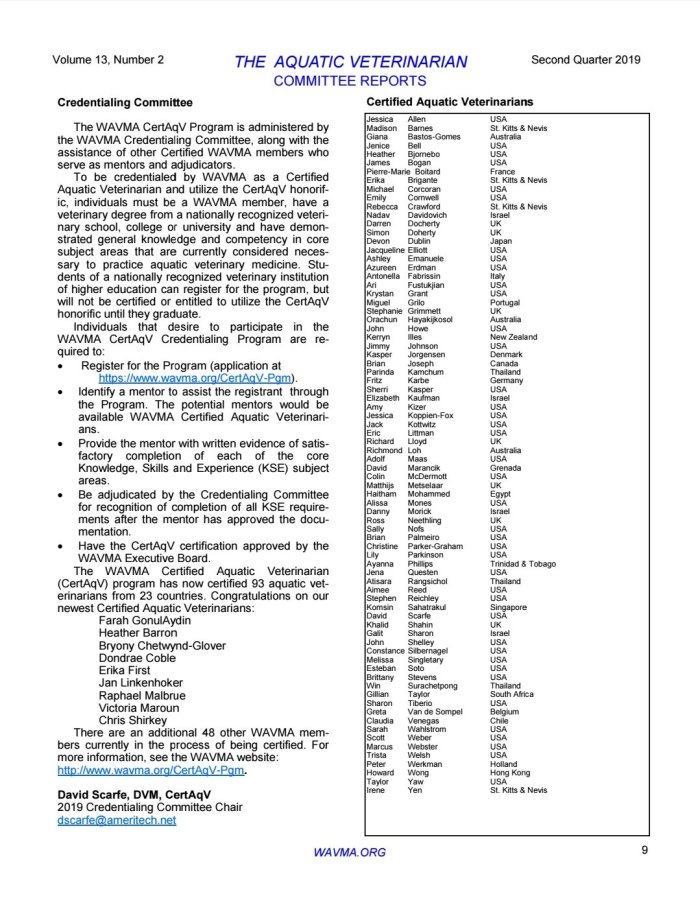
Then there are graduate veterinarians who take it upon themselves to further develop their skill, knowledge and experiences by attending external post-graduate courses and self-learning. In fact, the World Aquatic Veterinary Medical Association has certified a number of veterinarians around the world as being competent at working with a whole host of aquatic animals.
Find out more about the program here <https://www.wavma.org/CertAqV-Pgm>
Below is a page showing all the qualifed veterinarians. See if any of us are operating within your locality.
Remember, at The Fish Vet, we have mobile veterinarians in Perth (WA), Melbourne/Brunswick (Victoria), Sydney/Gosford/Bankstown (NSW) and Duffy (ACT); and aquatic specialists in Townsville (Qld). Internationally, we have fish veterinarians in London (UK – http://thefishvet.co.uk) and Hong Kong.
If our locations are not in your vicinity, please contact your local veterinarian.
Alternatively, please check
our YouTube channel <http://tinyurl.com/thefishdoctor>
—
Yours sincerely,
Dr Richmond Loh
DipProjMgt, BSc, BVMS, MPhil (Pathology), MANZCVS (Aquatics& Pathobiology), CertAqV, Fellow WAVMA.
Aquatic Veterinarian & Veterinary Pathologist.
Locations: Perth | Melbourne | Sydney | Canberra | Townsville | Hong Kong | London.
THE FISH VET – AUSTRALIA
Aquatic Veterinary Medical & Diagnostic Services.
Web: http://www.thefishvet.com.au
Ph: +61 421 822 383
Mail: PO Box 5164, East Victoria Park, WA 6981, Australia.
