It has been just over a month since I ran this experiment just for the fun of it, for my interest and for those who’re following me in my journey of collating more useful and fun information about fish health.
I was sent some BioChips to try. I had a little spare time and the equipment and facilities to do so. Plus my son could help me out a little bit.
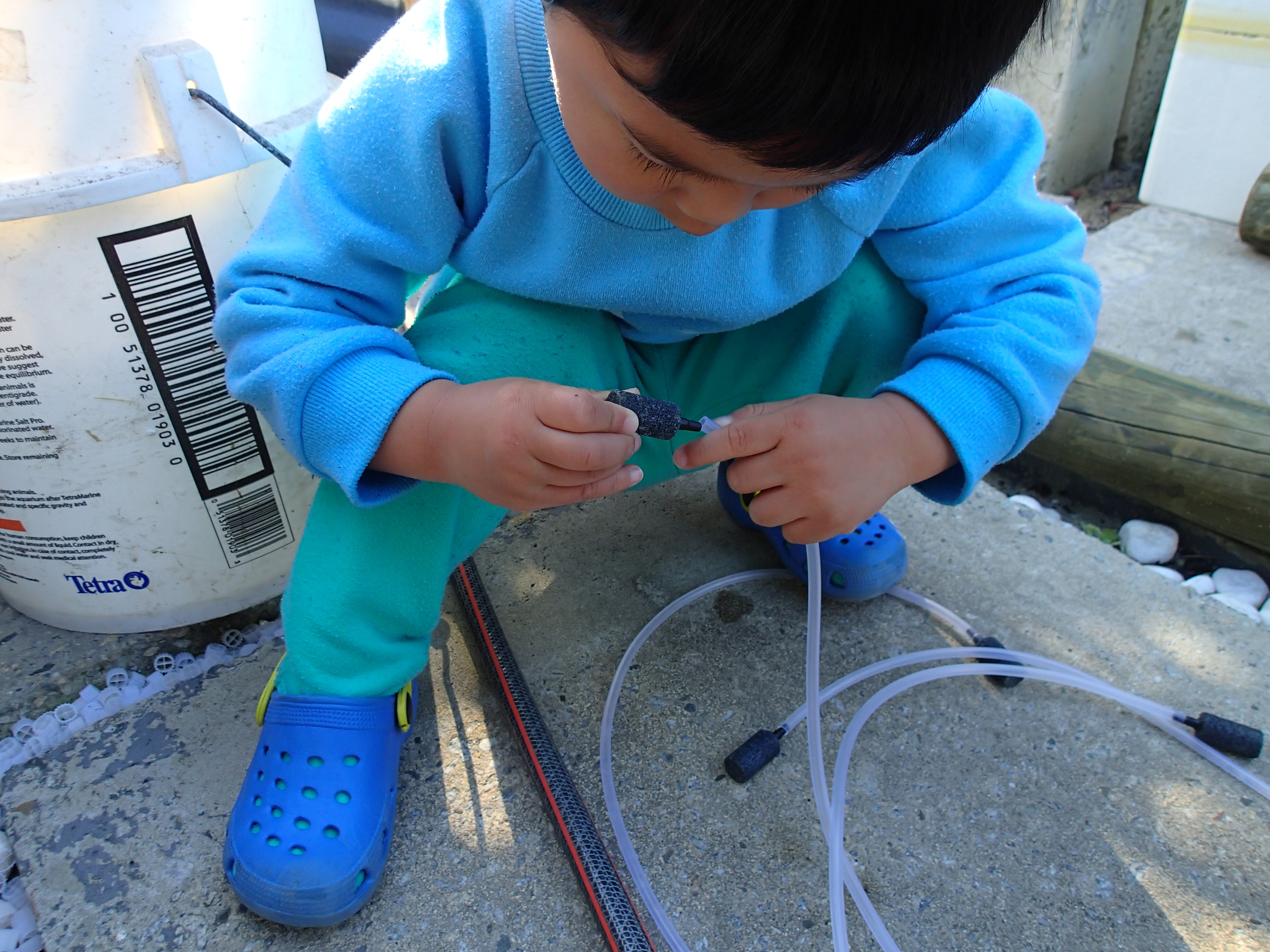
The results were interesting.
Download the findings using this link –

Great to get some factual information of anything to do with fish husbandry! Enjoyed reading this very much and although not conclusive gives hobbyists the satisfaction that both media do a good job. Is there any significant difference in price? Good work also by junior! Regards aLLAN
LikeLike
I don’t know about pricing. The BioChips are from http://www.gideup.com.au
LikeLike
Hi richmond,
Having worked with K1 extensively in aquaculture, and other moving bed media for that matter, there is one thing above all that will test this new media.
Blocking and suspended solids.
With such an advertised hogh surface area, and apparent difficulty in moxing and smaller pore structure allowing the higher surface area per cubic meter of media, the cleaning. And exfoliating of waste and bacteria from the media would, in my opinion and experience, be much harder to achieve with the biochip.
Obviously in a clean water application with only bacteria on the surface area on the biochip, digestion rates are much higher.
Put the biochip in an aquaculture situation with even moderate loading and suspended solids, and i don’t know how well it would perform. I would like to see data from farm and industry applications on any media, do they have this available?
Interested to hear your thoughts.
LikeLike
Hi Gareth,
I agree with your thoughts completely. This is a “rough as guts” experiment. We’d need more time and resources to run dedicated trials and ensure repeatability.
One potential application I can see for the BioChip is to use it as a final “water-polishing” step. Possibly allow them to float on the surface to grow a biofilm, to trap minute solids at the last pass prior to returning water to fish. Then rigorous aeration is applied intermittently to clean the trapped debris for waste.
The BioChip’s larger size makes it easier to keep the filter media in the right compartments. I find K1 tends to “stray”. Although there is K3 available on the market too.
LikeLike
The biochips are made from polyethylene; are they thin slices of polyethylene foam? Or are they more rigid than polyethylene foam? More like plastic? I wonder if I cloud cut up polyethylene pool noodles to make my own. I can’t seem to find a supplier to buy them.
LikeLike
They’re harder plastic. Foam may be too buoyant.
LikeLike