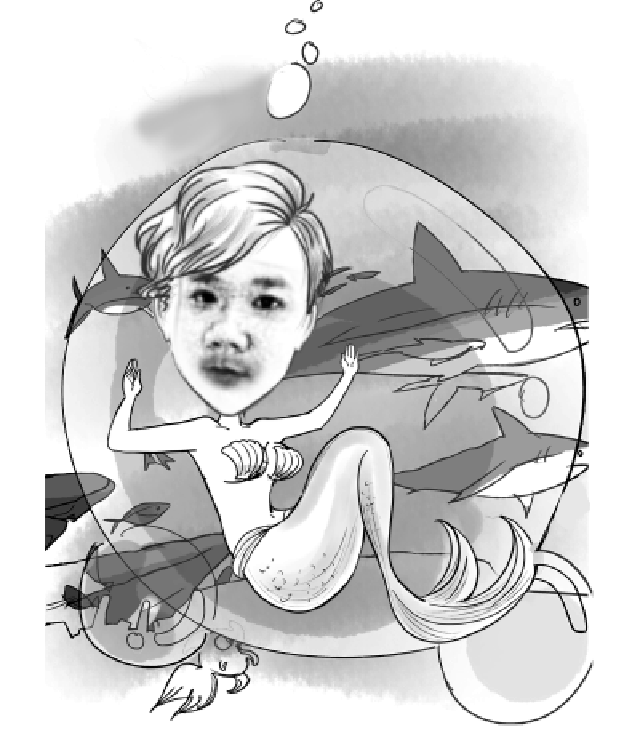
So the last couple of weeks, I had a couple of posts, to share what we learnt about the 7 special senses of sharks, and some of the shark deterrents for protection from shark attacks.
The research can’t have been done at a more appropriate time since a 23-year-old surfer has lost an arm and his other hand in a shark attack at a beach near Esperance in southern Western Australia last week. This is tragic. What can we do?
What’s the most simple, promising and effective solution to protect beaches and divers from shark attacks?
BUBBLES!
In the lab, they separated the Port Jackson shark from a piece of food by a curtain of bubbles. The Port Jackson shark never swum through the curtain to get to the food. This was also trialed in the field in relatively shallow water depth and they found the nurse shark never crossed the curtain of bubbles to get at food. In fact, they appeared to be unaware of the food on offer.
So why does this work?
Well, bubbles work by causing multisensory disruption.
- It works on the visual system in that when applied as a bubble curtain, sharks cannot see past it.
- It works on the auditory system because the bubbles create a lot of noise and it can scare them off.
- It works on the lateral line system because it creates a water current unlike any other.
Having learnt all this, how would I put this into practice? I envision a beach that is protected by a wall of bubbles. Some extra bubbles may be directed in shallow areas so we can use it as a spa. And to satisfy the neophobia parts of the shark senses, I’d install bright flashing laser lights to go with the bubbles so that we can have an underwater light show for the snorkellers and divers. And to go with the light show, some 1980’s synthesiser music played in between the relaxing predatory orca sounds.
Is that a great plan or what?