Month: May 2013
Reminder! Fish Pathology Workshop by international expert fish veterinarian, Prof. Miyazaki, Murdoch University, WA – Thursday 16 May 2013.
It’s not often that we get this opportunity to have a world reknowned fish disease expert speak to us. He will be discussing diseases of koi, goldfish, shrimp and food fish and more.
Make sure you register to attend the one day seminar to be held next Thursday.
Registration is only $50. The bulk of the costs for bringing Professor Miyazaki to Australia has been covered by the FRDC.
Download the registration & information form by clicking on the link below.
Registration closes tomorrow (10/5/2013).
Key steps on how to become a fish veterinarian.
The key and first step, for any veterinarian interested in a discipline they are interested in and want to become more familiar with, is to get into the networks of colleagues that deal with the discipline.
For Aquatic Veterinary Medicine, I would recommend subscribing to AquaVetMed e-News (simply register in the free on-line Aquatic Veterinary Directory at www.AquaVetMed.info and select the e-News option).
I would also recommend joining the World Aquatic Veterinary Medical Association (www.WAVMA.org) that currently has members from over 40 countries on all continents. WAVMA member services and programs, including newsletters, discussion listservs, Continuing Education & Professional Development (CEPD) meetings and webinars, etc., bring together individuals and allow networking between experts and those just starting out.
To help veterinary students WAVMA is helping develop WAVMA Student Chapters at veterinary schools throughout the world. A new Aquatic Veterinary Practitioner Certification (Cert-AqVP) Program is being initiated in 2013. The Cert-AqVP Program is intended to help any veterinarian acquire “Day-1” competency in 9 core areas, that are necessary to practice aquatic veterinary medicine, but is generally not covered in most veterinary curricular.
______________________
A. David Scarfe PhD, DVM, MRSSAf
American Veterinary Medical Association
Direct phone: (847) 285-6634
dscarfe@avma.org
Prevent fish diseases with TheFishVet’s Immuno-BOOSTER designed specially for fish.
You’ve heard about it…from the creator of nutritional supplements for sharks at AQWA (the Aquarium of Western Australia), TheFishVet’s immuno-BOOSTER mix is now available! Immunostimulants work! Check out some scientific articles at this link.
Dr Loh has been working with the compounding pharmacist to create an additive that you can mix with your fish food, to boost your fishes’ immune system. This is a great, natural way for preventing fish diseases and to help fishes recover more quickly from diseases. It’s perfect for changing weather conditions (autumn & spring), high temperatures (summer), transport (moving fish), grading/sorting and at any time your fish are exposed to stress.
This is TheFishVet’s immunoBOOSTER. It is a blend of powerful herbs and nutrients to help fish overcome infections. The recipe is based on the most current literature reviews.
Watch how TheFishVet’s immunoBOOSTER is prepared with the fish food of your choice on TheFishVet’s YouTube Channel.
Each capsule contains enough of the mix to add to 100g of fish food.
Place your orders now for a low price of $37.50 (+P&H) for 6 capsules.
Fish joke for Monday-itis: Noah’s ark.
Noah: he didn’t just build one ark but several arks for various parts of the animal kingdom. One for the fish turned into a split level job, or a multi-storey carp ark.
This one’s from Toni Erkinhaju as well.
What a mouthful! Male fish takes on the task of protecting its eggs… by cramming them into its mouth.
See spectacular pictures and read more about it here –
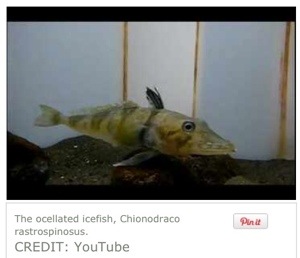
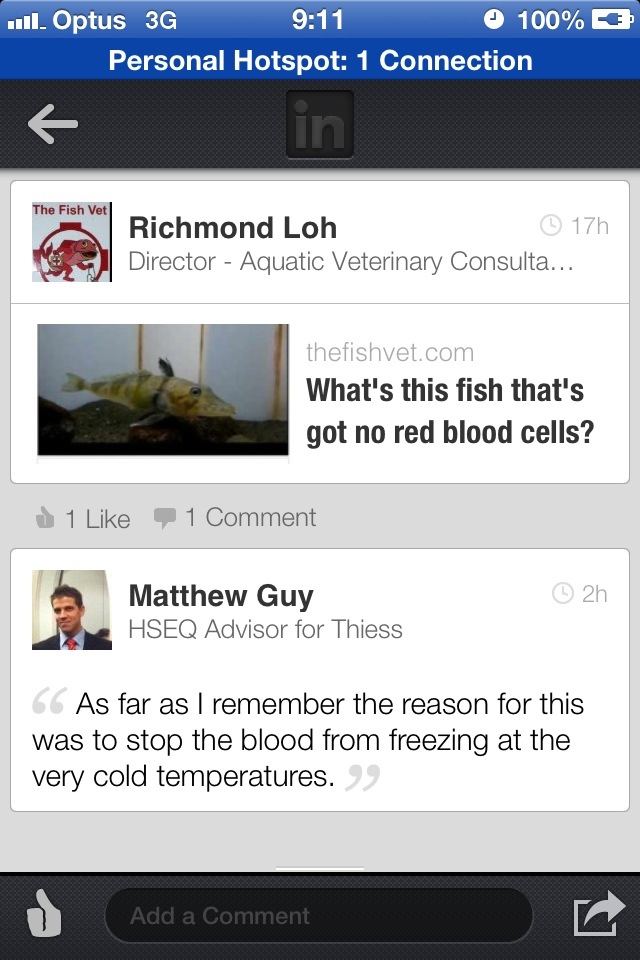
What’s this fish that’s got no red blood cells?
If you attended the Webinar given by my colleague, Dr Robert Jones The Aquarium Vet, he was discussing about fish blood and that some fish actually do not have red blood cells. I came across this article and thought if share it with you.
Check out the icefish at a Japanese aquarium – http://www.livescience.com/28504-ocellated-icefish-clear-blood.html
Breaking news! The mystery of the silent and deadly prawn killer, Early Mortality Syndrome, has been discovered!
This is what my friend, Loc Tran, from Vietnam is researching with Dr Lightner.
—
Yours sincerely,
Dr Richmond Loh
DipProjMgt, BSc, BVMS, MPhil (Pathology) Murdoch, MANZCVS (Aquatics& Pathobiology).
The Fish Vet, Perth, Western Australia.
Veterinary Medicine for fish.
W: http://www.thefishvet.com.au
E: thefishvet@gmail.com
P: +61 (0)421 822 383
Begin forwarded message:
From: “Dr. David Scarfe”
Date: 2 May 2013 19:46:01 AWST
Subject: AquaVetMed e-News: Phage infected bacterium thought to be cause of shrimp EMS
May 2, 2013
Cause Of EMS Shrimp Disease Identified
After months of investigation by a research team led by Donald Lighter at the University of Arizona, the elusive pathogen causing early mortality syndrome (EMS), an emerging shrimp disease in Southeast Asia more technically known as acute hepatopancreatic necrosis syndrome (AHPNS), has been identified. The researchers found that EMS is caused by a bacterial agent, which is transmitted orally, colonizes the shrimp gastrointestinal tract and produces a toxin that causes tissue destruction and dysfunction of the shrimp digestive organ known as the hepatopancreas.
Lightner’s team identified the EMS/AHPNS pathogen as a unique strain of a relatively common bacterium, Vibrio parahaemolyticus, that is infected by a virus known as a phage, which causes it to release a potent toxin. A similar phenomenon occurs in the human disease cholera, where a phage makes the Vibrio cholerae bacterium capable of producing a toxin that causes cholera’s life-threatening diarrhea.
Research continues on the development of diagnostic tests for rapid detection of the EMS/AHPNS pathogen that will enable improved management of hatcheries and ponds, and help lead to a long-term solution for the disease. It will also enable a better evaluation of risks associated with importation of frozen shrimp or other products from countries affected by EMS.
Some countries have implemented policies that restrict the importation of frozen shrimp or other products from EMS-affected countries. Lightner said frozen shrimp likely pose a low risk for contamination of wild shrimp or the environment because EMS-infected shrimp are typically very small and do not enter international commerce. Also, his repeated attempts to transmit the disease using frozen tissue were unsuccessful.
Since EMS was first reported in China in 2009, it has spread to Vietnam, Malaysia and Thailand, and now causes annual losses more than U.S. $1 billion. EMS outbreaks typically occur within the first 30 days after stocking a newly prepared shrimp pond, and mortality can exceed 70%.
In an effort to learn from past epidemics and improve future policy, the World Bank and the Responsible Aquaculture Foundation, a charitable education and training organization founded by the Global Aquaculture Alliance, initiated a case study on EMS in Vietnam in July 2012. Its purpose was to investigate the introduction, transmission and impacts of EMS, and recommend management measures for the public and private sectors.
The study team included Lightner, who with University of Arizona co-workers recently identified the EMS/AHPNS pathogen. At a panel discussion on EMS at the Global Aquaculture Alliance’s GOAL 2012 meeting in October 2012, Lightner and Timothy Flegel speculated that the elusive nature of the disease might be explained by a bacteriophage.
Source: http://tinyurl.com/bnk8o9x.
___________________________
AquaVetMed e-News provides information to veterinary and veterinary-allied subscribers concerning aquatic animal medicine, health, welfare, public health and seafood safety, obtained from a variety of sources (largely AquaVetMed subscribers). While provided by the American Veterinary Medical Association’s, Aquatic Veterinary Medicine Committee and are for public distribution, they do not necessarily reflect the opinion of the AVMA or the veterinary profession. See the AVMA Terms of Use (http://tinyurl.com/29h2rf) for further information.
If e-News information is used elsewhere please acknowledge AquaVetMed as the source. Encourage individuals to subscribe rather than distribute through list serves.
Messages may contain attachments that will have been scanned for known viruses.
Subscription and Contributions: Interested veterinarians and veterinary-allied professionals can subscribe, unsubscribe, or contribute pertinent news or information, by sending a message with “For AquaVetMed -” and the topic in the subject line, to dscarfe@avma.org.
Note: Undelivered e-mails will not be resent; Subscribers will be deleted from the list after repeated undelivered or bounced messages and will have to re-subscribe.
Visit our website: http://www.avma.org
________________________________
Scholarships available for budding fish vets.
———- Forwarded message ———-
From: Dr. David Scarfe <DScarfe@avma.org>
Date: Tue, Apr 30, 2013 at 7:39 AM
Subject: WAVMA Members-L: 2013 Veterinary Student/New Graduate Scholarship Program (May 15 Application Deadline)
To: WAVMA_Members-L@wavma.org
2013 Veterinary Student/New Graduate Scholarship Program
Applications for 2013 Scholarships are now open.
ALL application materials must be submitted by May 15, 2013.
Scholarship Award Intent & Criteria
Awards will be made to WAVMA/SAVMA Members in good standing based on academic merit, past involvement in aquatic veterinary medicine, and the likelihood that the applicant will continue a career in private veterinary practice and provide aquatic veterinary services to clients. Awardees will provide a written report for possible publication in the WAVMA Newsletter within 30 days after completion of the meeting or project and, when possible, awardees are expected to give a presentation about their scholarship experience to veterinary students.
Awards are intended to support involvement and aquatic veterinary education of:
- · Students enrolled in a recognized academic program leading to a veterinary degree;
- · Graduate veterinarians enrolled in recognized post-graduate veterinary education programs; or,
- · Veterinarians who have graduated within the previous 24 months and are in private practice.
Scholarships may be used to offset personal costs for:
- · Travel, accommodation or registration at aquatic veterinary conferences, symposia and other continuing education and professional development (CEPD) meetings, including on-line aquatic CEPD;
- · Travel, accommodation and other activities directly associated with externships that expose veterinary students to clinical aquatic veterinary medicine;
- · Equipment and supplies needed for aquatic veterinary research projects not funded by other financial sources.
For more information and to apply, go to http://www.wavma.org/scholarships.
_________________________________
A. David Scarfe PhD, DVM, MRSSAf
Assistant Director, Scientific Activities Division
American Veterinary Medical Association
1931 N. Meacham Rd., Suite 100
Schaumburg, IL 60173
Direct phone: (847) 285-6634
Fax: (847) 925-9329
Visit our website – www.avma.org and the AVMA Convention
July 20-23, 2013 – Chicago, IL
July 26-29, 2014 – Denver, CO
July 11-14, 2015 – Boston, MA
Aug 5-8, 2016 – San Antonio, TX
New and practical information on the maturation of females seahorses exposed to different temperatures and photoperiods.
Pertinent findings below in bold.
| Aquaculture | |||||||||||||||||
| Volume 391, Number 2 (April 2013) | |||||||||||||||||
 |
Maturation of Hippocampus guttulatus and Hippocampus hippocampusfemales by manipulation of temperature and photoperiod regimes | ||||||||||||||||
| Authors: | Miquel Planas, Patricia Quintas, Alexandro Chamorro | ||||||||||||||||
| Author Affiliations: |
|
||||||||||||||||
| Source: | Aquaculture, Volume 391, Number 2 (April 2013) | ||||||||||||||||
| Page Numbers: | 147 – 152 | ||||||||||||||||
| Available Full Text: |
|
||||||||||||||||
| Abstract: | The present study provides new and practical information on the maturation of females seahorses Hippocampus guttulatus and Hippocampus hippocampus exposed to different temperatures (15°C constant, 15–18°C or 15–21°C) and photoperiods (10L:14D–16L:8D cycle or 10L:14D constant). Egg production (total eggs, clutch size and clutches per female) resulted notably reduced under both short photoperiods and low temperature, especially in H. guttulatus. Egg clutches were mainly released with temperatures above 16°C and increasing photoperiods beyond 14L:10D. The highest efficiency under a natural light regime was achieved at 21°C. Biometrics performed in H. guttulatus eggs showed that egg volume (VE) was not affected by temperature level but yolk volume (VY) and VY/VEratio in eggs of females exposed at 15°C were lower than in eggs released at 15–18°C and 15–21°C cycles. VE, VYand VY/VEin eggs were not correlated with the photoperiod regimes applied. The present study also provides the first results on shifting of maturation in H. guttulatus females submitted to photothermic manipulation of the environment (Treatment D — advanced and drastic change; Treatment A — advanced and accelerated change) or to natural conditions (Treatment N). The response of females to artificial environmental changes was successful and fast. First egg clutches in treatments D and A were released 11 (Treatment D) and 9 (Treatment A) weeks before than in females exposed to natural temperature and photoperiod regimes. However, the best overall results were achieved under natural regimes. In Treatment N, total eggs production and average egg clutch size (3690 and 461 eggs, respectively) were noticeable higher than in treatments D (3533 and 294 eggs, respectively) and A (150 and 1809 eggs, respectively). The study demonstrates the feasibility of shifting in female maturation of seahorses and its practical use in the artificial manipulation of the breeding season under captive conditions. | ||||||||||||||||
| Citation: | Miquel Planas, Patricia Quintas, Alexandro Chamorro . Maturation of Hippocampus guttulatus and Hippocampus hippocampusfemales by manipulation of temperature and photoperiod regimes. Aquaculture, Volume 391, Number 2 (April 2013), pp. 147-152, <http://ejournals.ebsco.com/direct.asp?ArticleID=47AE83EF758BE7B1E4A5> | ||||||||||||||||
| URL: | http://ejournals.ebsco.com/direct.asp?ArticleID=47AE83EF758BE7B1E4A5 | ||||||||||||||||