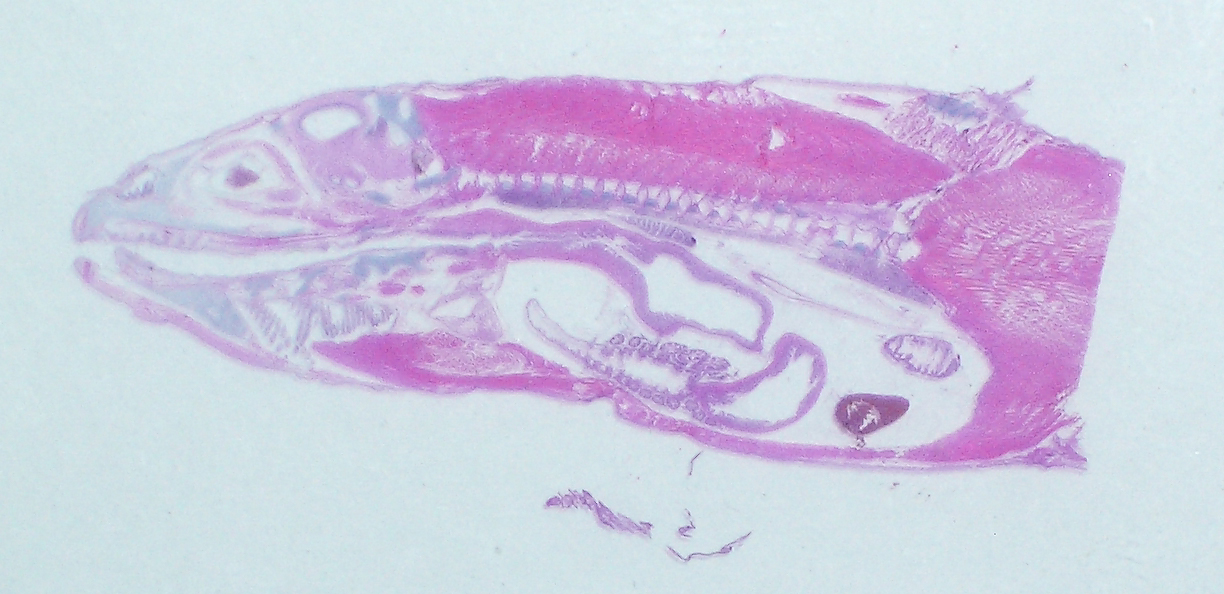
Fish gross and histologic anatomy – FREE DOWNLOAD.

Have you ever wondered what’s what in a fish? Whether you’re gutting them for the frypan, performing a necropsy for sampling, or treating a fish, it’s handy to know what’s where in a fish.

And… Have you ever wondered what a fish looks like when they’re sliced wafer-thin and special stains are applied? Pictured above is a histology image of a baby Atlantic salmon. This is how trained Veterinary Pathologists (like myself) examine fish for diseases. We can look for patterns of organ damage at the cellular level, using microscopes, to arrive at a diagnosis. With this method, I’m able to examine fish from all parts of the country, and even the world!

See the pdf document for a labelled diagram of fish anatomy, comparing a line drawing to the histology presentation.

CLICK TO DOWNLOAD Salmon anatomy labelled.pdf


Yours sincerely,

Dr Richmond Loh 

DipProjMgt, BSc, BVMS, MPhil (Pathology), MANZCVS (Aquatics& Pathobiology), CertAqV, NATA Signatory.
THE FISH VET AUSTRALIA. 

Mobile Aquatic Veterinary Medical & Diagnostic Services.
http://www.thefishvet.com.au
Ph: +61 (0)421 822 383

Update on the fish-kill investigation at Cockburn.

This is from a media release issued by the Dept Fisheries WA.

Fishing and swimming okay again in Cockburn Sound


The Department of Fisheries testing on water samples as part of the multi-agency investigation into last weekend’s fish deaths in Cockburn Sound has so far found no evidence of a chemical source being responsible.


Biosecurity research scientist Dr Michael Snow said the tests on water and fish tissue samples from the sound had been inconclusive but they did indicate elevated levels of a naturally-occurring bacterium that may be harmful to fish, however, this was unlikely to be the primary cause of the event.


“Testing will continue on samples of dead fish, along with further monitoring of water, but for now health authorities have given the all clear for fishers and swimmers,” he said.

The Department of Health advises people:

·      The water is suitable for swimming, diving and other forms of recreation;

·      The area is also suitable for fishing; and

·      We remind anyone not to swim or fish in water that looks discoloured, murky, or smells unpleasant, or where there are large numbers of dead fish.


Dr Snow said an investigation by the Department of Environment Regulation had to date not identified evidence of a significant reported pollution event in Cockburn Sound.


“Screening of water samples for the presence of harmful algal bloom species and their toxins by the Department of Health has also not identified levels of concern to human health,” he said.

“The search continues for a possible cause, through laboratory investigations on dead fish samples collected from the sound, but the wide range of tests required means that reports will not be available until at least late next week,” Dr Snow said.


“We investigate somewhere between 20-30fish kills per year in Western Australia. The majority are in inland waters and caused by low water quality often associated with algal blooms.

“The fact this event has occurred in more open ocean means we have less evidence of a direct cause to go on and we are having to explore all possible explanations. It may be the case that a single definitive cause cannot be identified, but we are continuing the search.”


Any fish kills should be reported to FISHWATCH on 1800 815 507. More information about fish kills can be found on the Department of Fisheries’ website at www.fish.wa.gov.au.

People are reminded that fishing for crabs in Cockburn Sound is prohibited, due to an ongoing closure. In addition, both Cockburn and Warnbro sounds have spawning closures on pink snapper fishing in place and the sounds are also subject to the annual West Coast demersal finfish closure.


MEDIA CONTACT: Ashley Malone 0418 901 767


Yours sincerely,

Dr Richmond Loh 

DipProjMgt, BSc, BVMS, MPhil (Pathology), MANZCVS (Aquatics& Pathobiology), CertAqV, NATA Signatory.
THE FISH VET, Perth, Western Australia, AUSTRALIA. 

Mobile Aquatic Veterinary Medical & Diagnostic Services.
http://www.thefishvet.com.au
Ph: +61 (0)421 822 383

How will your pets die once the highly infectious deadly virus gets out?

If you answer YES to any of below, read on.

*Do you keep koi?
*Are your koi kept out doors?
*Have water birds ever visited your pond?
*Do you ever show koi?
*Do you introduce new fish to your collection?
*Do you have fellow koi keepers visit your pond?
*Do you visit places that have koi?

If you answered YES to any of the above, your koi are AT RISK!

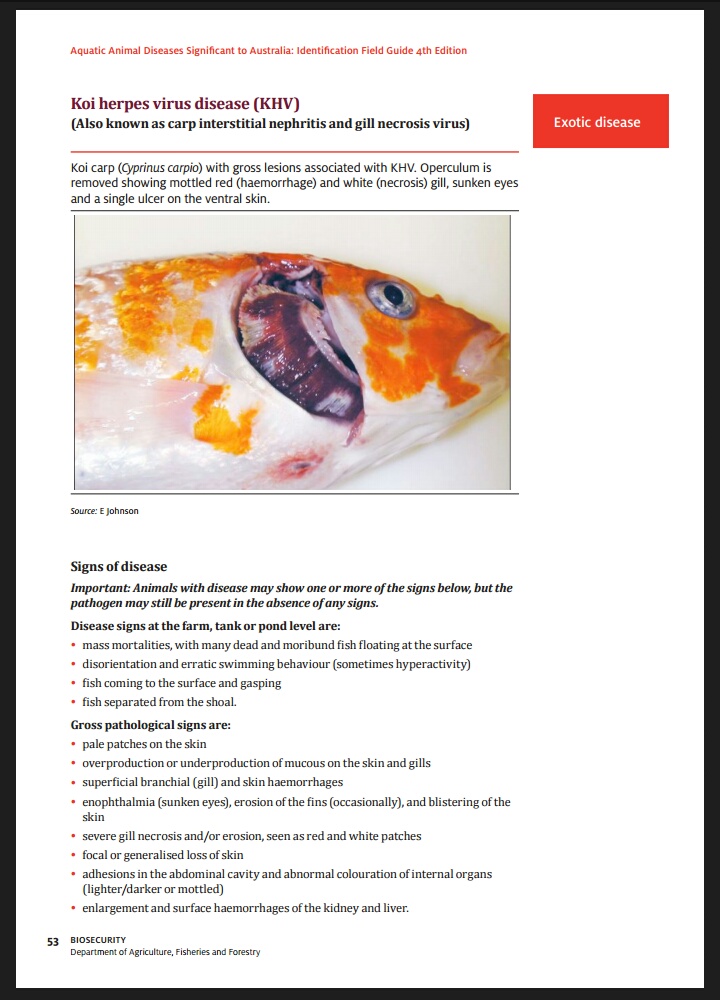
Infected fish will have multiple organs decomposing, and death ensues.

See pictured below, and read more here about koi herpesvirus –
http://tinyurl.com/ocjnn9n

HERPES IS FOR LIFE!

Is it OK if someone kills your pet?

What does your fish mean to you? Are they more than just dollars swimming in your pond? Are they a pet? A family member? An heirloom? A life-time of dedication?

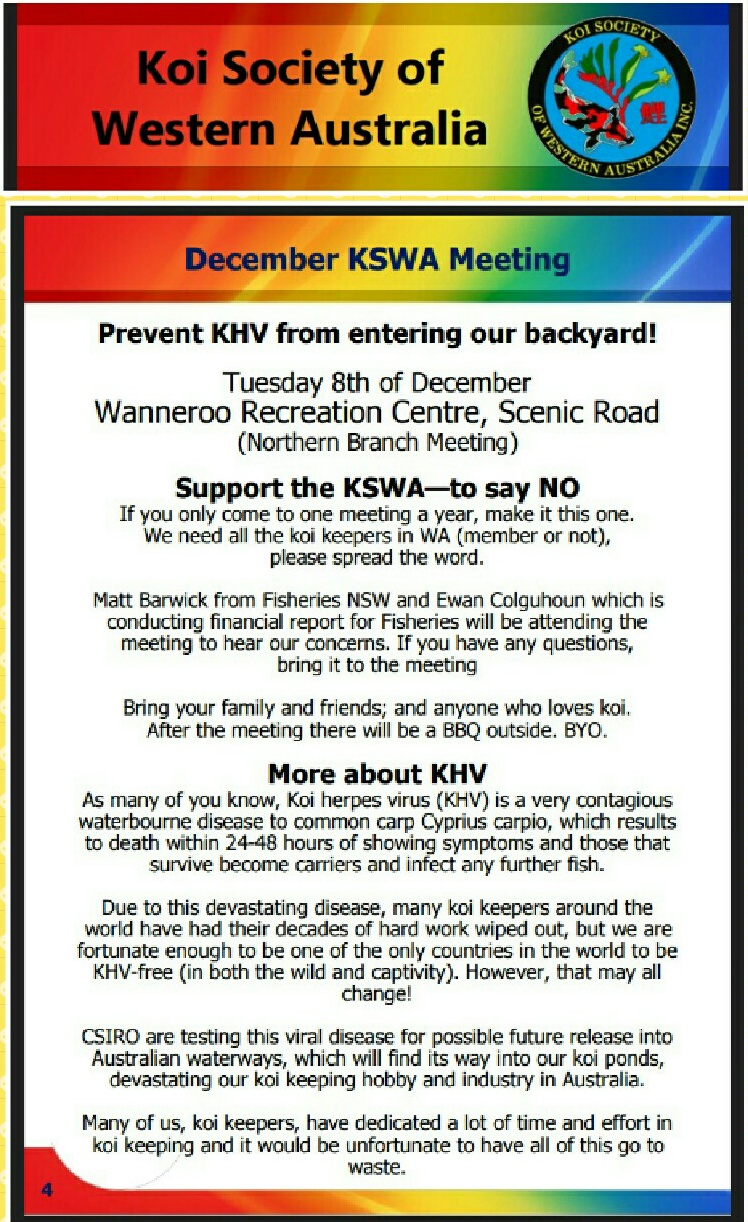
What if someone were to release a killer virus that’s highly infectious, and your entire pond of koi dies from rotting and bleeding of gills and internal organs? How would you feel?

If you’d like to have your say, come join me and the Koi Society of WA on Tuesday 8 December, 7:30pm at the Wanneroo Recreation Centre, 275 Scenic Drive (near cnr Church St), Wanneroo, WA.

Read more at this link.

Follow me on: Facebook "Fin Page"YouTubeBlogLinkedinTwitter


Yours sincerely,

Dr Richmond Loh DipProjMgt, BSc, BVMS, MPh (Pathology), MANZCVS (Aquatics & Pathobiology), CertAqV, CMAVA, NATA Signatory.
Aquatic Veterinarian & Veterinary Pathologist
THE FISH VET, Perth, Western Australia, AUSTRALIA.
Mobile Aquatic Veterinary Medical & Diagnostic Services.
http://www.thefishvet.com.au
Ph: +61 (0)421 822 383
thefishvet_logo_medical-20130107.jpg
Skype: thefishvet

Fish joke for Monday-itis: What did the dolphin say to the other after eating too many eels?

I feel a little eel 😦
 
Have a FINtastic week! R <+>{

Follow me on: Facebook “Fin Page” – YouTube  – Blog –Linkedin – Twitter
 

Yours sincerely,

Dr Richmond Loh 

DipProjMgt, BSc, BVMS, MPhil (Pathology), MANZCVS (AquaticsPathobiology), CertAqV, CMAVA, NATA Signatory.
THE FISH VET, Perth, Western Australia, AUSTRALIA. 

Mobile Aquatic Veterinary Medical & Diagnostic Services.
http://www.thefishvet.com.au
Ph: +61 (0)421 822 383
Skype: thefishvet


President WAVMA 2014


Adjunct Lecturer Murdoch University | Secretary Aquatic Animal Health Chapter – ANZCVS.

All the koi keepers in the world may be interested in this.

See pictured.


Yours sincerely,

Dr Richmond Loh 

DipProjMgt, BSc, BVMS, MPhil (Pathology), MANZCVS (Aquatics& Pathobiology), CertAqV, NATA Signatory.
THE FISH VET, Perth, Western Australia, AUSTRALIA. 

Mobile Aquatic Veterinary Medical & Diagnostic Services.
http://www.thefishvet.com.au
Ph: +61 (0)421 822 383

Should you use automatic aquarium fish feeders when going on holidays? What’s the best type?

It’s the time of the year again when many people are going away for Christmas holidays. But who’s going to feed your fish? Can you use the weekend-blocks or gel food?

Well, it really depends on how long you’re away for, and your budget. And also, the type of fish you have. For example, if you have sedentary fish that tend to be ambush predators, you do not necessarily have to feed them daily when you’re away. A good feed should last them 2-3 days. This post will address the types available in general terms.

Available are blocks (food embedded in plaster of paris) and gel food (food embedded in gelatine-like substance). I’d recommend only if you’re going away for a long weekend (2-3 days). Be careful because there is potential to cause pollution. These blocks and gel are OK for small fish, since larger fish can devour the entire amount quickly. You may like to try these feed types before you go away, to see how your fish take to them, and the effect it will have on your tank.

Automatic fish food dispensers are ideal for longer vacations. There are 3 types of aquarium fish, automatic feed dispensers:

  1. Clock-movement type: slowly rotates like the hour-hand, and dispenses food twice daily (every 12 hours). These have single food compartments, and the disadvantage is the slow movement allows moisture to enter the food compartment. Works best with feed granules/pellets. Link to example.
  2. Full-rotation type: at specified time/s will make a full rotation, dispensing food. These have single food compartments, and the advantage over #1 is that the quick full rotation prevents moisture from entering the food compartment. Works best with feed granules/pellets. Link to example.
  3. Multi-compartment dispenser: Each compartment dispenses fully at specified time/s.The advantage is that allows the owner to pack compartments with different feed types (flakes, granules and chips). Link to example.

If you’re going ahead with auto-feeders, make sure you trial it about a month before you’ve to go away. Set you alarm clock to correspond with set feed times so you can check it works, and it doesn’t dispense too much, or too little food.

If you don’t trust technology and will get a fish-sitter in, then I suggest to pre-measure food amounts into multiple small containers, so that the fish-sitter will not be tempted to over-feed your fishes.

I’ve found on the internet, an interesting DIY fish feeder using a mobile phone match-sticks and a bottle – see link. Quite clever, but you won’t be able to be sure to remember, and you run the risk of the entire load dropping into the tank if not properly constructed.

What ever you do, make sure you give yourself enough time to try, before you go away.

I’m interested to hear your feedback on this post.

Follow me on: Facebook "Fin Page"YouTubeBlogLinkedinTwitter


Yours sincerely,

Dr Richmond Loh DipProjMgt, BSc, BVMS, MPhil (Pathology), MANZCVS (Aquatics & Pathobiology), CertAqV, CMAVA, NATA Signatory.
Aquatic Veterinarian & Veterinary Pathologist
THE FISH VET, Perth, Western Australia, AUSTRALIA.
Mobile Aquatic Veterinary Medical & Diagnostic Services.
http://www.thefishvet.com.au
Ph: +61 (0)421 822 383
thefishvet_logo_medical-20130107.jpg
Skype: thefishvet

President WAVMA 2014

wavma.jpg?w=780

Adjunct Lecturer Murdoch University | Secretary Aquatic Animal Health Chapter – ANZCVS | 2014 President WAVMA

See advert on YouTube.

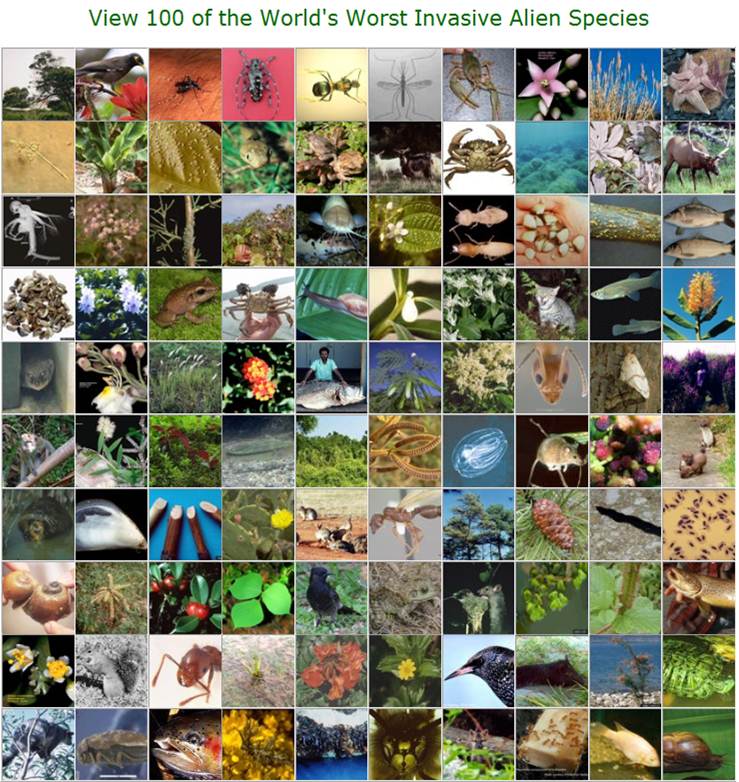
What fishes make up 100 of the World’s Worst Invasive Alien Species?

Eight fish make up 100 of the World’s Worst Invasive Alien Species.

Interestingly, the rainbow trout and brown trout are among the list with carp, catfish, bass, mosquito fish, tilapia and Nile perch.

Take a look here –

http://www.issg.org/worst100_species.html

AQUATIC VETERINARY BOARD CERTIFICATION & SPECIALISATION PROGRAMS.

I came across an old presentation that I thought was still relevant and have uploaded it to my youtube channel.
See recording at this link – https://youtu.be/N0KD287cFHE

Download the handout at this link –
Loh – Advanced Aquatic Credentials-ANZCVS.pdf

Presented by Dr Richmond Loh (BSc, BVMS, MPhil, MANZCVS, CertAqV) at NOVICE International Conference, October 4-5, 2012. Faculty of Veterinary Medicine, Bucharest, Romania.

ABSTRACT
The field of aquatic veterinary medicine is indeed diverse. Veterinarians who have acquired significant expertise and competence in this discipline would need to be recognised. This would ensure that the public has access to advanced veterinary expertise. Traditionally, a specialist must undergo extensive advanced supervised training and produce publications, culminating in the passing of a rigorous set of examinations. Certifying Bodies which set the standards acceptable for specialist registration include the Australian & New Zealand College of Veterinary Scientists (ANZCVS), the American Board of Veterinary Specialties (ABVS), the European Board of Veterinary Specialisation (EBVS) and the Royal College of Veterinary Surgeons (RCVS). Apart from the ANZCVS, there is no other program that specifically caters for aquatics.
This presentation will provide an overview on the state of specialisation programs that are available for veterinarians who wish to pursue specialist registration in aquatic animal health and to bring about discussion about whether these satisfy the needs of veterinarians and the clients.

KEY WORDS:
Veterinary Specialisation, Aquatic Animal Health, Australian & New Zealand College of Veterinary Scientists.

REFERENCES:
1. Diploma in Fish Health and Production
http://www.rcvs.org.uk/education/postgraduate-education-for-veterinary-surgeons/diplomas/#fish
2. American College of Zoological Medicine
http://www.aczm.org/content.aspx?page_id=22&club_id=366916&module_id=49001
3. Australian & New Zealand College of Veterinary Scientists
http://www.anzcvs.org.au/info_assets/documents/Membership%20guidelines/Aquatic%20Health%20Guidelines%202007-f%20Reformatted%20Dec%2011.pdf

Follow me on: Facebook "Fin Page" YouTube Blog Linkedin Twitter


Yours sincerely,

Dr Richmond Loh
DipProjMgt, BSc, BVMS, MPhil (Pathology), MANZCVS (Aquatics & Pathobiology), CertAqV, CMAVA, NATA Signatory.
Aquatic Veterinarian & Veterinary Pathologist
THE FISH VET, Perth, Western Australia, AUSTRALIA.
Mobile Aquatic Veterinary Medical & Diagnostic Services.
http://www.thefishvet.com.au
Ph: +61 (0)421 822 383

Skype: thefishvet

President WAVMA 2014

Adjunct Lecturer Murdoch University | Secretary Aquatic Animal Health Chapter – ANZCVS | 2014 President WAVMA
See advert on YouTube.

Useful quick resources for fish diagnosticians.

Most commonly, fish diagnostics do not require necropsy. Either visit the site, or ask the client to bring you a few live fish.
Follow this link to watch:
How to perform a gill biopsy and skin scrape
If you need to perform a necropsy, watch:
How to perform an autopsy of a fish for laboratory testing
For large fish, aseptically take a kidney swab, and then perform necropsy as per any other animal.
We provide laboratory testing of fish (most commonly used services are histopathology and bacteriology). "Drop me a line" to request for an e-Copy of our Services Manual.
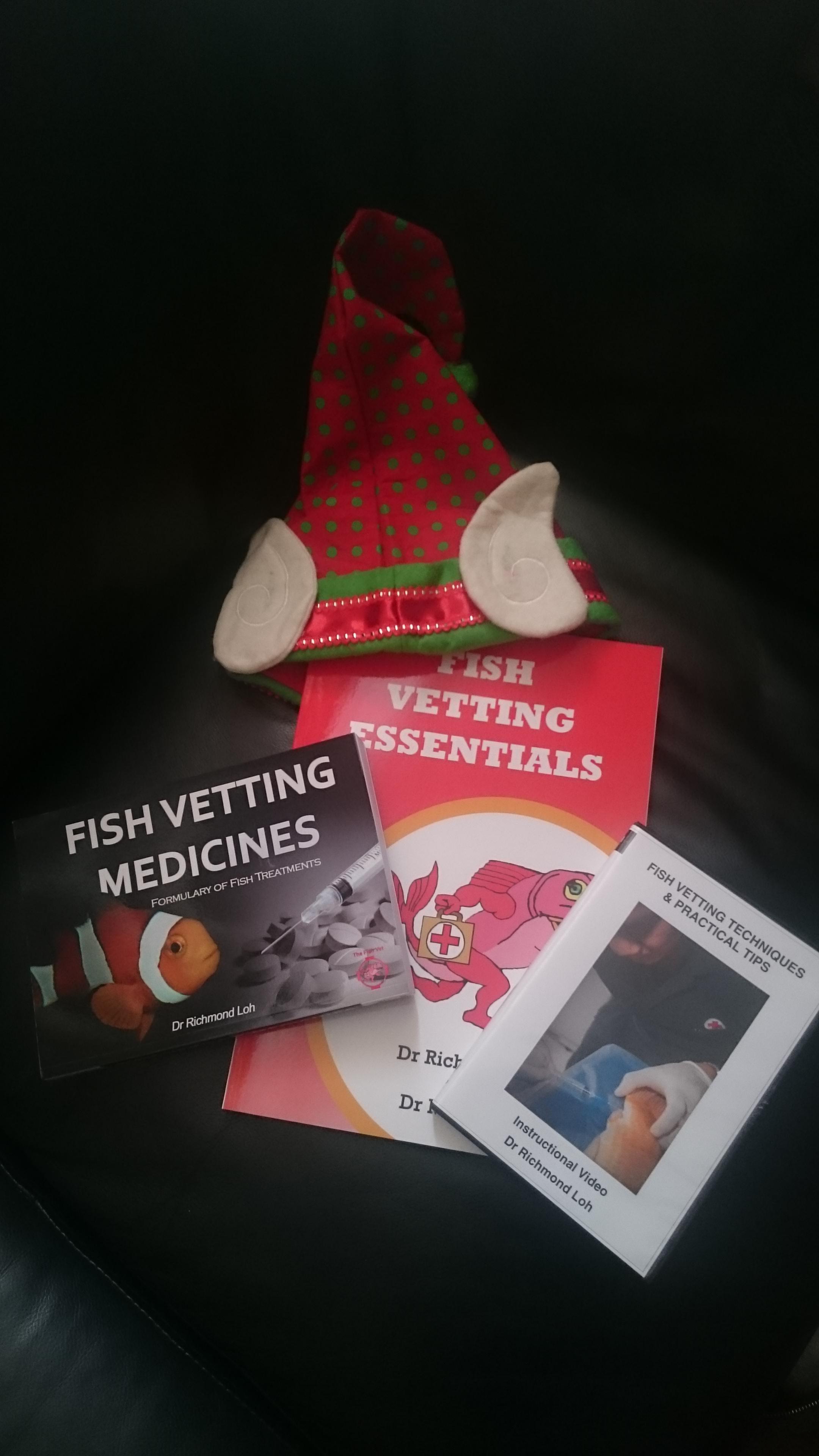
If you’re embarking on becoming a fully fledged aquatic veterinarian, I recommend "Fish Vetting Techniques & Practical Tips – Instructional Video" available through the Shopping Cart.
Perhaps, thinking of it as a Christmas gift? Beat the rush by placing your order now.
Follow me on: Facebook "Fin Page" YouTube Blog Linkedin Twitter


Yours sincerely,

Dr Richmond Loh
DipProjMgt, BSc, BVMS, MPhil (Pathology), MANZCVS (Aquatics & Pathobiology), CertAqV, CMAVA, NATA Signatory.
Aquatic Veterinarian & Veterinary Pathologist
THE FISH VET, Perth, Western Australia, AUSTRALIA.
Mobile Aquatic Veterinary Medical & Diagnostic Services.
http://www.thefishvet.com.au
Ph: +61 (0)421 822 383
Skype: thefishvet

President WAVMA 2014

Adjunct Lecturer Murdoch University | Secretary Aquatic Animal Health Chapter – ANZCVS | 2014 President WAVMA
See advert on YouTube.