First the white spot disease, now pesticides, crippling Australia’s prawn industry.

pesticides were being used on farms at levels above government guidelines“.
Pesticide run-off from farms was affecting crustaceans’ nervous systems and, in Bribie Island laboratory tests from 2017, tiger prawn larvae exposed to the level of pesticides found in the waterways would die.

[Same chemicals]… linked to honey-bee deaths in the United States in the early 2000s... impact survival (fipronil) or their feeding rates (bifenthrin and imidacloprid).

The CSIRO has released laboratory research that shows the level of pesticides in Queensland river systems is slowly increasing to a level that impacts prawn larvae.
The report showed pesticide run-off from farms was affecting crustaceans’ nervous systems and killing tiger prawn larvae when they were exposed to the level of pesticides found in the major Queensland waterways, with the potential to have a major impact on the state’s $80 million prawn industry.

Read more:

https://www.smh.com.au/environment/conservation/pesticides-killing-prawn-larvae-in-early-warning-for-80m-industry-20180321-p4z5jo.html

https://www.smh.com.au/environment/conservation/pesticide-impact-on-prawns-in-queensland-must-be-heeded-reef-scientist-20180322-p4z5rx.html

Vets going underwater… Successfully refining terrestrial principles to fish health practice

Attend ANZCVS’s Science Week 2018!

The keynote speaker will be Dr Roy Yanong.

Organisers have scheduled the following aquatic animal general session topics:

  • Viral diseases
  • Bacterial diseases
  • Parasites and fungal diseases
  • Disease control and treatments
  • Aquatic animal surgery and
  • Non infectious diseases.

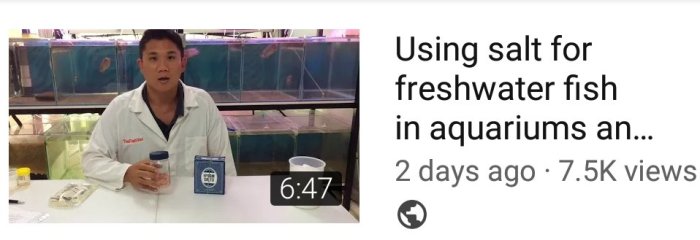
Don’t “a-salt” your fish! Know when and how to use salt safely when treating freshwater fishes.

Watch our latest video – https://youtu.be/4SBLP1gDcyA

Some more specific information on anti-caking agents and iodine in salt below, researched by one of my students, (now) Dr Cyrus So:

Table salt contains an anti-caking agent, sodium hexocyanoferrate, which prevents the salt from absorbing too much moisture from the air, which would otherwise cause the salt to form hard lumps. One paper states that ferrocyanide is “harmful to aquatic life with long lasting effects”. In a study, the LC50 of ferrocyanide for fish is 20mg/L after 4 days. LC50 stands for the toxic concentration required to kill 50% of a given population. Given that table salt contains 100mg/kg ferrocyanide, and the normal recommended amount of salt to add to water is 5g/L, this equates to a ferrocyanide concentration of 0.5mg/L, which is much lower than the LC50. But we note that the LC50 was for fish subjected to the 20mg/L concentration for 4 days. There is no published information on the effects of 0.5mg/L on fish from possible accumulation or chronic exposure. For this reason, I would not recommend using salt that contains anti-caking agents.

Iodised salt contains iodine which can be in the form of iodide (I) or iodate (IO3), at 20-40mg/kg of NaCl. In fish, excess iodine can induce colloid goitre (disease of thyroid gland due to excess iodine). The LC50 for rainbow trout for IO3 is 220 mg/L, and for I is 860 mg/L. If we use salt at 5g/L, it would equate to 0.2mg/L. So this means it should be pretty safe to use. Moreover, if the iodised salt contains iodine in the form of iodide, this would be even safer because it is not as stable. An opened packet of such salt would rapidly lose its iodine content through the process of oxidation and sublimation. This said, my recommendation is to still avoid using iodised salt if possible. Because again, the toxic levels are given as LC50, and for 4 days. So smaller amounts, and with chronic exposure, we do not know its cumulative effect.

Be sure to subscribe to get updates for our future videos.

Have a FINtastic week! R <+>{

Fish Joke for Monday-itis: Lent diet

Q: What does the pope eat during the season of Lent?

A: Holy mackerel!
source: http://www.jokes4us.com/sportsjokes/fishingjokes.html

Have a FINtastic week! R <+>{

Veterinary Externship opportunity: Project Piaba – Sustainable Fisheries and Conservation medicine on the Rio Negro, Brazil.

Project Piaba was initiated almost 30 years ago with the goal of supporting the wild-caught aquarium fisheries on the middle reaches of the Rio Negro, one of the major tributaries of the Amazon River. This well-documented sustainable fishery is under increasing threat of collapse due to competition from farm-raised Brazilian fish species that are currently produced in Asia. Further, the local fishing communities have been instrumental in protecting the  local riverine and rainforest environments the incursions of logging, mining and cattle ranching. Thus, this fishery enhances protection of the rainforest in this region while providing important socio-economic benefits to the local populations. While there is still strong demand for sustainable collected wild-species the international competition has put increasing demand on the local fisheries to improve efficiencies and overall fish handling and health management practices.


Veterinary students participating in this 2-week expedition will have the opportunity to experience the multiple ways in which veterinarians can become involved with conservation and sustainable development projects and utilize their skills to not only improve the health of the local aquatic species but also the lives of the local human populations.


The expedition length is two weeks. Students will travel to Manaus, Brazil and travel upriver via riverboat approximately 500 miles to the main fishing grounds and then back downriver to the primary transit stations and ultimately to the export facilities in Manaus. Students will also have the opportunity to learn about the local flora and fauna in the region as well as the sociological conditions and pressures on the fishing communities in this region. They will also have an opportunity to meet the local fishers, middlemen and exporters and develop an understanding of the importance of this fishery to the local communities.


Veterinary students will participate in the evaluation of overall husbandry and health management of the fish collected within this fishery throughout the chain of custody from collection to export. They will carry out health examinations of fish throughout the chain of custody and learn about the change health management and disease problems associated with each stage of the chain of custody. Students will complete a small project and participate in the facilitated roundtable held at the end of the expedition to set goals for the next year and identify emerging needs or threats.


There is also a strong possibility that interested students could arrive January 15-16 and spend some time participating in some health assessment work onsite in Manaus at a local Exporter and outside of Manaus at a large fish holding farm. This aspect of the program is still being developed but should be finalized by early Spring 2018.


Here’s some particulars:


We’re working on the itinerary which you’ll find here:

http://projectpiaba.org/what-we-do-2/expeditions/


Here’s a video Oregon Sea Grant produced about the fishery on the Rio Negro and the travels of these fish to Oregon, https://www.youtube.com/watch?v=AqRmDFas_kg. We shot this footage on the trip in 2014.


Here’s some more information:


Costs:

2 weeks on the boat in Brazil approximately $2,750. A 50% deposit saves your spot.

all included except alcohol or carbonated/bottled beverages and crew tip

Brazilian tourist visa ($100)

airfare $1,200 – $1,300 from most US cities


Any questions, feel free to send  me  an email or give a call: 541-270-4218

Also, feel free to contact me if you have any further questions or if anyone would like to talk about the trip, I’ve been 6 times and will be participating every year for the foreseeable future. I’m happy to do pre trip talks if there is interest.


Hope to see you in Brazil.


Sincerely,


Supervisor:

Timothy J. Miller-Morgan, DVM, CertAqV

Lead, Aquatic Animal Health Program, Oregon Sea Grant, College of Veterinary Medicine, Oregon State University

Assistant Professor, Department of Biomedical Sciences, College of Veterinary Medicine

Instructor, Aquatic Animal Health Management, Aquarium Science Program, Oregon Coast Community College

Veterinarian/Trainer, Project Piaba, Brazil

Member, Steering Committee, IUCN, FFSG –HASG

Chair, Credentialing Committee, World Aquatic Veterinary Medical Association


Hatfield Marine Science Center

Oregon State University

2030 Marine Science Drive

Newport, OR 97365

(541) 867-0265 (office)

(541) 867-0320 (fax)

Skype Name: h20doc

tim.miller-morgan@oregonstate.edu

Web sites:

http://seagrant.oregonstate.edu

http://vetmed.oregonstate.edu/

http://www.oregoncoastcc.org/aquarium-science

Blog:       http://blogs.oregonstate.edu/wetvet/

Facebook: https://www.facebook.com/aquaticanimalhealthprogram?ref=hl


Consider attending or presenting at the 2018 WAVMA St. Kitts Conference (2018-Conference.wavma.org). 

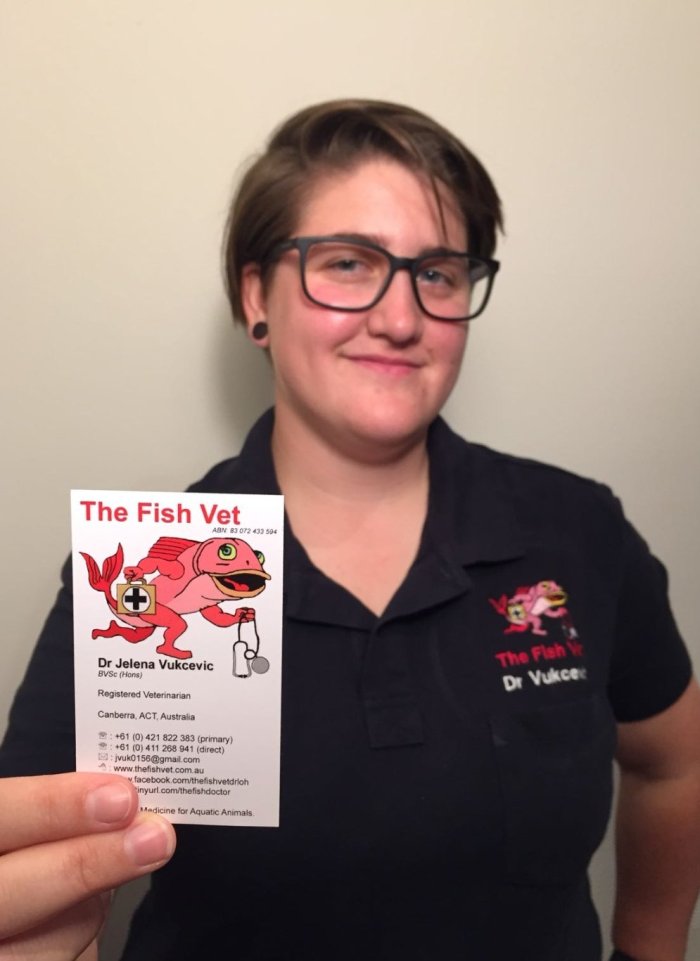
Announcing… The Fish Vet is now in Canberra!

We are expanding our veterinary services to include Canberra in the ACT.

Dr Vukcevic is a small animal and exotics veterinarian based in Canberra. Since graduation, she has held positions in small animal and exotics practices in Canberra. She has a keen interest in aquatic animal medicine and currently divides her time between working as a veterinarian at a university institution, a zoological institution and small animal/ exotic practice, where she manages and provides veterinary advice/ treatment to a variety of both aquatic and non-aquatic species in various settings.

Whether you have a pet fish, aquarium, pond or zoo, we are here to help.

Servicing Canberra, Sydney, Melbourne and Perth.

https://thefishvet.com.au/contact_us.html

Giving carp herpes may not yield desired effects, says Griffith expert

While they acknowledge that CyHV-3 can have a devastating effect on farmed carp populations, the broader number of variables at play in the wild, including carp biology, the virus’ pathogenesis and the ecology of local rivers, mean a release of koi herpesvirus would not likely result in the desired outcome...

Read more – https://app.secure.griffith.edu.au/news/2018/02/28/giving-carp-herpes-may-not-yield-desired-effects-says-griffith-expert/