Q: What did the mudskipper say to the crab?
A: I feel like a fish out of water!
Have a FINtastic week! R <+>{
All about Fish Vetting – Dr Richmond Loh
Q: What did the mudskipper say to the crab?
A: I feel like a fish out of water!
Have a FINtastic week! R <+>{
Some issues have occurred with specialists or referral veterinary surgeons advising clients to request repeat prescriptions of drugs, if they become necessary, from their general practice veterinary surgeon (GP).
The Board advises that veterinary surgeons must not prescribe a scheduled drug for an animal unless they have examined the animal within the previous 7 days and satisfied themselves that the scheduled drug is appropriate for the treatment of the animal.
Specialists and referral veterinary surgeons need to ensure that they do not place the GP in the difficult position of having to inform an owner that they cannot provide a repeat prescription of the drug without a consultation, despite what the specialist or referral veterinary surgeon may have told them.
The Board recommends that specialists or referral veterinary surgeons inform clients that they may obtain a repeat prescription from their general practice veterinary surgeon, but if the veterinary surgeon has not recently examined the animal they may need to bring their animal to the practice for a physical examination first.
Veterinarians in WA are often called upon to provide treatment and care for wildlife. These cases can often present uncertainties for veterinarians in terms of making decisions in the best welfare interests of the animal. This article is intended to provide some guidance to veterinarians on the custodianship and management of wildlife cases in WA.
The Department of Biodiversity, Conservation and Attractions (DBCA) recognises and values the role that veterinarians play in the rehabilitation of wildlife. DBCA has a statutory responsibility for the conservation and protection of wildlife under the Wildlife Conservation Act 1950 and the Biodiversity Conservation Act 2016. Under these Acts it is an offence to ‘take’, ‘disturb’ or ‘possess’ wildlife without lawful authority. However, this does not prohibit ‘temporarily caring for and rehabilitating injured or abandoned wildlife’.
In deciding on veterinary management of a wildlife case, veterinarians should consider:
· the welfare of the individual, and
· the prospects of the animal returning to fitness and being able to be returned to the wild.
There may be circumstances when there is treatment available that may save the animal’s life, but will render the animal unlikely to survive in the wild. The Department does not generally support this approach as it is often in conflict with the ultimate welfare and quality of life of a wild animal. Such actions may also be at odds with the legislation, which only allows for ‘temporarily caring for injured fauna or abandoned fauna’, unless lawfully authorised.
Decisions about veterinary management of wildlife should also take into account their wild status and species-specific responses to disease and treatment, which are potentially very different from domestic animals. In electing to undertake medical and surgical intervention with wildlife, the veterinarian should consider the welfare impacts of confinement and human interaction, given the non-domestic status of the patient. Veterinarians should refer to veterinary knowledge of the species in question to determine what sort of veterinary intervention might be appropriate.
In some instances, there may be significant pressure brought to bear on veterinarians to “save the life” of an individual wild animal, regardless of its release prospects, because a client or rehabilitator is prepared to provide care to the animal in a captive situation for the rest of its life. These assurances may be at variance with the welfare prospects of the individual, its conservation value, or the resources available to ensure high quality lifelong care. The principle of rehabilitation is for the animal to remain in care for the minimum length of time necessary to achieve return to health, and to enable it to be released fully fit back into the wild. It is an offence for a wildlife rehabilitator (or any person) to possess native fauna if it cannot be released back into the wild, unless they have an appropriate authority. In some circumstances the Department will issue such authority for individuals to keep derelict animals, however, that is it not the preferred option and veterinarians are called on to support the general principle of euthanasing such cases rather than promoting derelict captive wild individuals.
In very few instances individual wild fauna of threatened species which are unfit for release may be suitable to contribute to a breeding program, or to achieve education and advocacy outcomes in captivity. This option is not appropriate for an animal that is unable to have an acceptable quality of life in captivity. It is also not the role of the veterinarian or the wildlife rehabilitator to make this decision without direct consultation with, and authority from, the Department.
Veterinarians seeking advice or input regarding the veterinary management of any wildlife case are invited to contact DBCA veterinarians at the Perth Zoo Veterinary Department. Veterinarians are in attendance 7 days a week from 8am-5pm and are happy to give advice directly to veterinary staff about case management. Contact details are below. These details are for veterinary professionals only and veterinarians are requested not to pass them on to others outside of their staff. Veterinarians will endeavour to respond to enquiries as soon as possible.
Veterinarians seeking advice regarding legalities, release or possible rehoming of wildlife, especially Threatened or Specially Protected Fauna, should contact the DBCA Duty Wildlife Officer if in the Perth metro area (phone 9219 9837; email nature.protection@dbca.wa.gov.au), or your local DBCA office.
Perth Zoo Veterinary Department contact details (for veterinary professionals only;please do not pass on these contacts to non-veterinary personnel or members of the public): Phone 0439 953 026; email labresults@perthzoo.wa.gov.au
Dr Manda Page
Principal Zoologist, Department of Biodiversity, Conservation and Attractions
Dr Simone Vitali
Senior Veterinarian, Perth Zoo, Department of Biodiversity, Conservation and Attractions
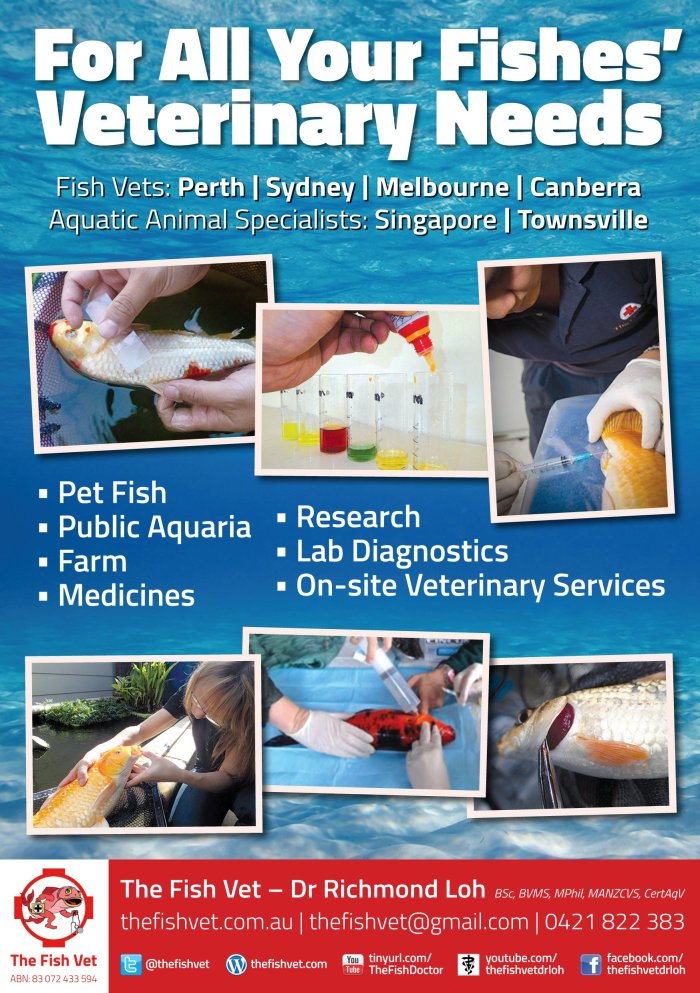
Q: What did the deep sea fish say to the pelican?
A: I feel I’m out of my depth.
Have a FINtastic week! R <+>{
“Peer review is important because we need to make sure that science is as rigorous and as accurate as it can be.”
“Under the conventional peer-review process, once an author submits a paper to a journal for consideration, the journal will then send it out to other scientists [not known by the authors] for their review. The reviewers normally ask for revisions. Only when the reviewers agree that the work is of a sufficiently high quality does the science gets published. If the work is insufficient, the paper is rejected.”
“The repercussions of following poor-quality science might be serious. Ineffective or harmful pharmaceuticals and other treatments may be promoted as good treatments.”
“Policymakers, managers, fish farmers and the general public rely on sound, reliable science for a successful and sustainable aquaculture industry,” says Clements. “If they aren’t trained to properly recognise good science from bad science, they run the risk of interpreting predatory open-access journals as high-quality scientific journals.”
Read more – https://thefishsite.com/articles/infernal-journals-and-how-to-spot-them
For more information on the peer-review process, see – http://guides.lib.jjay.cuny.edu/c.php?g=288333&p=1922599
Subscribe to our new channel – http://tinyurl.com/thefishdoctor
Q: Who is FISH most frightened of?
A: Annette!
Have a FINtastic week! R <+>{
It’s already happening…
“Victorian commercial fisherman John Ingram, who harvests carp for international markets, said just talk of the potential release of the virus was damaging his business. ‘Our export business has been halted,’ Mr Ingram said.”
“Scientists and commercial fishermen say Australia’s rollout of a carp herpesvirus is being rushed through, risking relationships with international trading partners.”
“Kevin Zai, who worked as a consultant in Papua New Guinea for 17 years said he feared the virus would spread to PNG where carp are an important commodity socially and economically. ”
“Dr Keller Kopf from Charles Sturt University said it was possible that the virus could spread outside of Australia. ”
“Queensland scientist Dr Jonathan Marshall said there was a risk the virus would not provide the results the Federal Government was after. ”
Learn more on ABC News’ article –
“Herpes-based carp control plan may stop some Australian fish exports, cause alarm overseas”
—
Yours sincerely,
Dr Richmond Loh
DipProjMgt, BSc, BVMS, MPhil (Pathology), MANZCVS (Aquatics& Pathobiology), CertAqV, NATA Signatory.
Aquatic Veterinarian & Veterinary Pathologist.
Locations: Perth | Melbourne | Sydney | Canberra | Townsville | Singapore.
THE FISH VET – AUSTRALIA
Aquatic Veterinary Medical & Diagnostic Services.
Web: http://www.thefishvet.com.au
Ph: +61 421 822 383
Mail: PO Box 5164, East Victoria Park, WA 6981, Australia.
http://parlview.aph.gov.au/mediaPlayer.php?videoID=403648&operation_mode=parlview#/4
*Forward to 26min 15sec when the session starts.
You ALL need to come to our Tuesday, July 3rd – PCS meeting. We have The Fish Vet – Dr Richmond Loh coming in to talk all about ‘Cichlid Diseases’. Dr Loh will go through all the nasty things you need to look out for in your aquariums and how to prevent or remedy them if they do occur. You can ask Dr Loh all your ‘Cichlid Disease’ questions and get answers straight from the master.

The meeting of the Perth Cichlid Society will be on Tuesday, July 3rd (tonight). The meeting will be held at our venue Atwell College, 201 Brenchley Drive, Atwell 6164. We will be opening doors at 7:30pm and starting at 8:00pm. Please park your cars in the car park marked, do not enter the school gates.
General public are welcome to attend, so please bring your friends along.
The doors will open just on 7:30pm to start setting up. Talks will start at 8:00pm.
More details – http://www.perthcichlid.com.au/forum/index.php?showtopic=64724#entry366136