Drink like a fish!

Do fish drink? Where did the phrase come from? Is it because they look like they’re continually gulping that people think they’re drinking all the time?

The constant movements of their mouth is actually so that they can draw water past their gills in order to breathe.

So, do they drink? Well… fresh water fishes don’t really drink all that much. Their skin and gills are somewhat “leaky” and they actually draw water into their body passively. The excess water is excreted through their kidneys as dilute urine. The opposite is true for marine (salt water) fishes. Body fluids are lost through their “leaky” skin and gills and they counteract this by drinking a lot of water and producing little urine.

Now on: Twitter – Blog – Facebook – Linkedin – Flickr

Yours sincerely,Dr Richmond Loh
BSc BVMS MPhil (Vet Path) MACVSc (Aquatics & Pathobiology) DipPM CMAVA

Veterinarian / Adjunct Lecturer Murdoch University
The Fish Vet, Perth, Western Australia. Mobile Veterinary Service for fish and other aquatic creatures.
http://www.thefishvet.com.au
Ph: +61 (0)421 822 383
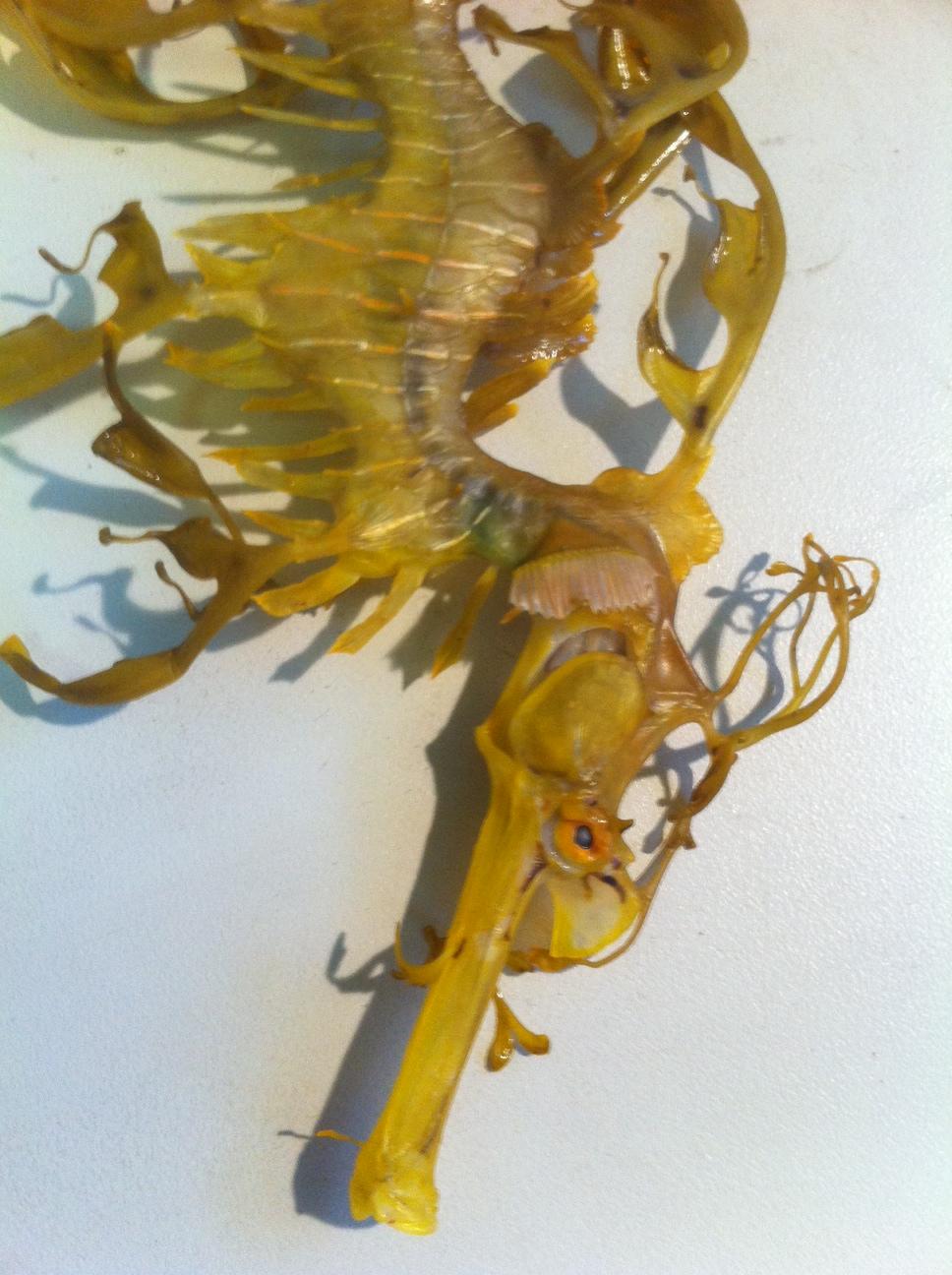
Does the seaweed look more familiar now?

Want to know more about these majestic creatures?

Go to: – http://www.wwf.org.au/publications/leafy_sea_dragon.pdf

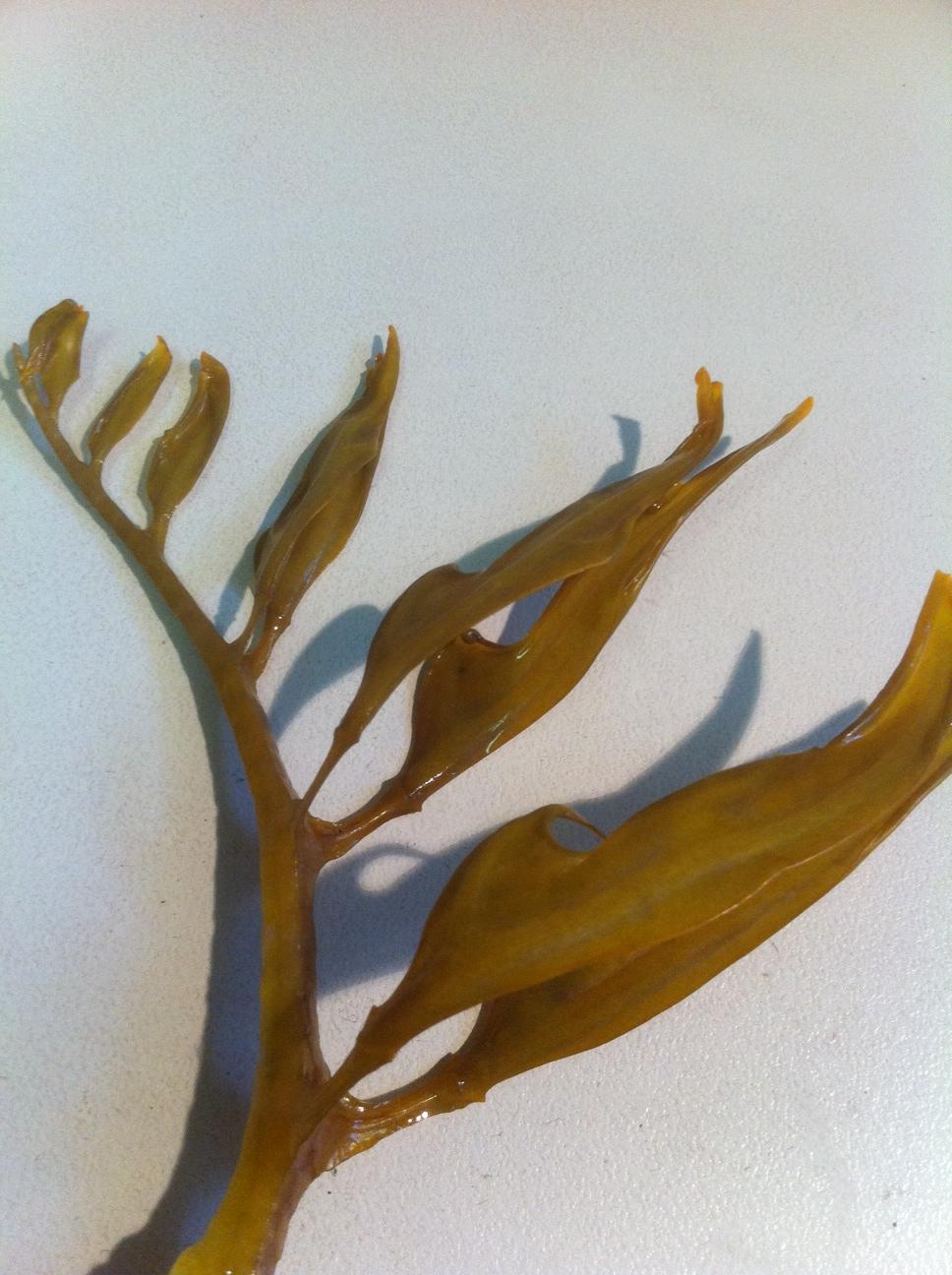
Anyone like to guess what this is?

Dr Richmond Loh
BSc BVMS MPhil MACVSc
The Fish Vet, Perth, WA.
+61 (0)421 822 383
Veterinary medicine for fish & other aquatic creatures.
http://www.thefishvet.com.au

Q&A: How long do fish live for?

Generally speaking, the larger the fish, the longer they’ll live (interestingly, the reverse is true for pet dogs). Most fishes in retail outlets are sold either as juveniles or young adults. Fighting fish for example are already >5 months old when sold at aquarium stores at >5cm in size. They have a lifespan of up to 5 years, but more commonly, 3 years.  Goldfish can live for 20-25 years, but 10 years is more common. Similarly, oscars live for about 10 years. Kois (Japanese carp) can live in excess of 50 years and even up to 100 years! It’s a fish that you’ll have to pass on to your children. On the other hand, some killifishes are annuals and can live for 1-2 years in captivity.

Sadly, the average lifespan of a fish kept without adequate filtration and filter cycling may be as short as 4 weeks. The reason for this can be found in an article from my website – http://thefishvet.com.au/pdf/Ncycle_byRL.pdf

Funeral for a Fish

Little Nancy was in the garden filling in a hole when her neighbor peered over the fence. Interested in what the youngster was doing, he asked, “What are you up to there, Nancy?”

“My goldfish died,” replied little Nancy tearfully with- out looking up, “and I’ve just buried him.”

The neighbor laughed and said condescendingly, “That’s a really big hole for a goldfish, isn’t it?”

Little Nancy patted down the last heap of earth then replied, “That’s because he’s inside your cat.”

Did you know that 50% of our oxygen comes from the ocean?

It makes sense when you appreciate that 70% of the earth is covered by ocean. The ocean is also a large carbon sink. Thus it is very important that we look after it.

How to do a fish autopsy?

Sometimes, it is not always possible to make a diagnosis clinically and so, lab testing may be required.

To do this, fish will need to be freshly dead and the necropsy video I have placed on youtube will help you perform the necropsy.

http://www.youtube.com/watch?v=gZ8HWUEQL5c&feature

The fixative I use is 10% neutral buffered formalin. If you are unable to obtain this, then less suitable alternatives include:

  • formalin you use to treat fishes diluted 1:10 (i.e. 10% formalin solution),
  • methylated spirits diluted 7:10 with water (i.e. 70% methanol solution),
  • or household vinegar used neat.

The volume of fish tissues to fixative should be 1:10 for best results (but 1:5 is also acceptable). When sampling larger fish specimens, tissue sizes should be >1cm thick. Gills and intestines are the first to decompose and so these tissues need to be preserved in the fixative as soon as possible.

NB: Formalin is considered to be carcinogenic. Do not inhale or contact formalin. Wear suitable personal protective equipment.

Do fish sleep?

Although they don’t gave eye lids, they do sleep. Watch the your fishes in the dark and notice that most of then stay very still and in the same position in the water column by small twitches with their fins. Nocturnal fishes like clown loaches will scurry around at the bottom, looking for any left over morsels of food.

Because fish have no eyelids, it is important that the lighting period reflect what happens in nature. It also gives nocturnal fishes the opportunity to come out of cover.

http://www.TheFishVet.com.au

Top 8 tips for saving water.

As fish keepers, we may bear some of the brunt of the watchful eyes of neighbours as big water users. In my opinion, we would struggle to use as much water as those who have swimming pools or thirsty gardens with large areas of lawn. Regardless, we need to do our bit to save our most precious resource by utilising some of these water saving tips:

  1. When performing water changes, collect the water for watering the garden.
  2. Collect rainwater into clean buckets for use in your tanks.
  3. Use a denitrificator (available through good aquarium stores) to convert nitrates to nitrogen gas and oxygen.
  4. Use aquatic plants to utilise fish wastes so that the frequency and quantity of water changes can be reduced.
  5. Feed good quality fish foods so that they do not pollute the tank (good quality foods tend to be in the mid to expensive range).
  6. Use an aquarium cover glass to reduce evaporation from the tank.
  7. In ponds, ensure that fountains and water falls do not cause water to spill over the sides.
  8. Provide shading for ponds to reduce evaporation, protect fish from the hungry eyes of predatory birds and to prevent excessive algal growth from the excess sunlight.

Dr Richmond Loh, The Fish Vet.

http://www.thefishvet.com.au