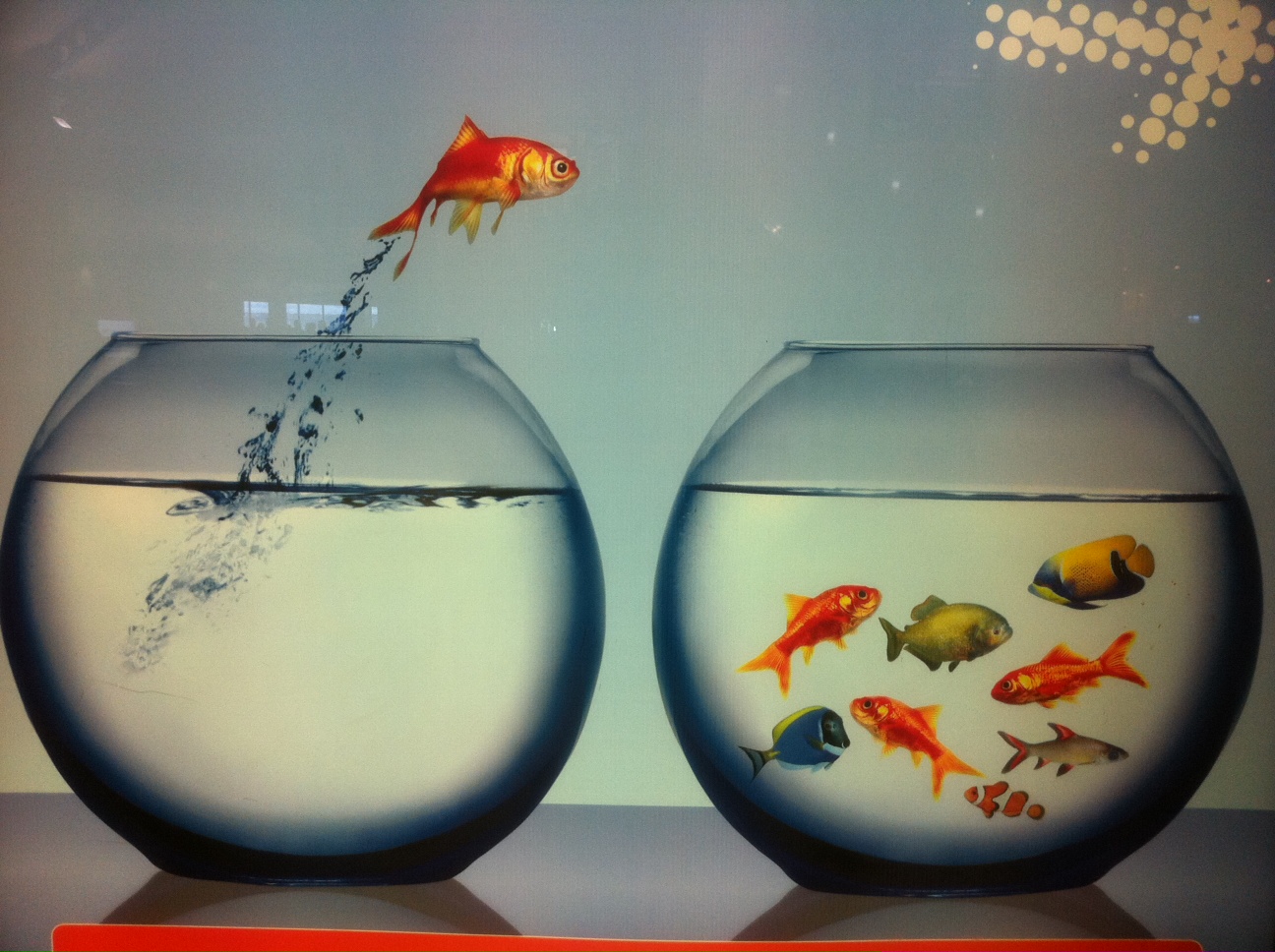
Are your pond fish safe from predators?

Cormorants, pelicans, herons, cats and more can inflict serious damage to your prized pets or eat them.

What are some signs that make you suspect such is the case?

  1. Certain fish are missing (usually the smaller ones).
  2. Fish are injured on the dorsum (over their back or dorsal fin).
  3. Fish are not coming up to eat or are very skittish.
  4. Fish jump out.
What are some things you can do to remedy the situation?
  1. Put a cover/barrier over the pond (e.g. netting, fishing line, plank).
  2. Use “scare crows” (e.g. T-shirts on hangers, crocodile ornaments floating in the water, a sticker of a shadow of a bird of prey on a window).
  3. Use “scare birds” (herons are territorial, so a plastic model of one may deter other herons – but make sure you move the model bird daily so that other birds will not realise that it’s a fake!).
  4. Use “biological scare tactics” – have more human activity near the area or employ a jack russel dog!
  5. Colour your pond green! Research shows that birds fly over many water bodies and the colour of the pond determines whether the bird would come closer for a look. Green ponds are often avoided because the birds believe that there is likely to be an algal bloom and fishing in such a pond would be a waste of their time.
  6. Provide hiding spots for your fish so that they can avoid predation – have these in deep parts of the pond.
If you have any more tips, please do not hesitate to add to these.
Fish = Good.
Bird = Bad.

Now on: Twitter – Blog – Facebook – Linkedin – Flickr

Yours sincerely,

Dr Richmond Loh
BSc BVMS MPhil (Vet Path) MACVSc (Aquatics & Pathobiology) DipPM CMAVA

Veterinarian / Adjunct Lecturer Murdoch University
The Fish Vet, Perth, Western Australia. Mobile Veterinary Service for fish and other aquatic creatures.
http://www.thefishvet.com.au
Ph: +61 (0)421 822 383

How accurate is your water test kit?

Have you been monitoring your water quality? Water quality is one of the most common causes of fish ailments.

In the last 2 weeks, I’ve had 2 cases where the clients’ water test kits were inaccurate. Please check that your water test is current. Generally speaking, most test kits have a shelf life of 1-2 years (depending on storage conditions, the test, brand and physical properties [powder vs tablets vs liquid]).

If your test kit is >2 years old, then it’s time to invest in a new set. When purchasing a new test kit from the aquarium store, you can choose your test kit using one of two methods. The first method is by looking at the price – usually, the higher quality, more reliable kits will be more expensive (you get what you pay for). The second method I will outline is because quite often, the manufacturers do not print their date of manufacture or used by dates. So, ask the retailer whichis the most popular brand that they sell. This method of buying means that the stock is turned over more quickly and so you can be more certain that you’re getting “fresh” kits – not the ones that have been sitting on the shelves for a long time, gathering dust.

Until next time… Happy fish keeping!


Now on: Twitter – Blog – Facebook – Linkedin – Flickr

Yours sincerely,

Dr Richmond Loh
BSc BVMS MPhil (Vet Path) MACVSc (Aquatics & Pathobiology) DipPM CMAVA

Veterinarian / Adjunct Lecturer Murdoch University
The Fish Vet, Perth, Western Australia. Mobile Veterinary Service for fish and other aquatic creatures.
http://www.thefishvet.com.au
Ph: +61 (0)421 822 383


Drink like a fish!

Do fish drink? Where did the phrase come from? Is it because they look like they’re continually gulping that people think they’re drinking all the time?

The constant movements of their mouth is actually so that they can draw water past their gills in order to breathe.

So, do they drink? Well… fresh water fishes don’t really drink all that much. Their skin and gills are somewhat “leaky” and they actually draw water into their body passively. The excess water is excreted through their kidneys as dilute urine. The opposite is true for marine (salt water) fishes. Body fluids are lost through their “leaky” skin and gills and they counteract this by drinking a lot of water and producing little urine.

Now on: Twitter – Blog – Facebook – Linkedin – Flickr

Yours sincerely,Dr Richmond Loh
BSc BVMS MPhil (Vet Path) MACVSc (Aquatics & Pathobiology) DipPM CMAVA

Veterinarian / Adjunct Lecturer Murdoch University
The Fish Vet, Perth, Western Australia. Mobile Veterinary Service for fish and other aquatic creatures.
http://www.thefishvet.com.au
Ph: +61 (0)421 822 383

Does the seaweed look more familiar now?

Want to know more about these majestic creatures?

Go to: – http://www.wwf.org.au/publications/leafy_sea_dragon.pdf

Anyone like to guess what this is?

Dr Richmond Loh
BSc BVMS MPhil MACVSc
The Fish Vet, Perth, WA.
+61 (0)421 822 383
Veterinary medicine for fish & other aquatic creatures.
http://www.thefishvet.com.au

Q&A: How long do fish live for?

Generally speaking, the larger the fish, the longer they’ll live (interestingly, the reverse is true for pet dogs). Most fishes in retail outlets are sold either as juveniles or young adults. Fighting fish for example are already >5 months old when sold at aquarium stores at >5cm in size. They have a lifespan of up to 5 years, but more commonly, 3 years.  Goldfish can live for 20-25 years, but 10 years is more common. Similarly, oscars live for about 10 years. Kois (Japanese carp) can live in excess of 50 years and even up to 100 years! It’s a fish that you’ll have to pass on to your children. On the other hand, some killifishes are annuals and can live for 1-2 years in captivity.

Sadly, the average lifespan of a fish kept without adequate filtration and filter cycling may be as short as 4 weeks. The reason for this can be found in an article from my website – http://thefishvet.com.au/pdf/Ncycle_byRL.pdf

Funeral for a Fish

Little Nancy was in the garden filling in a hole when her neighbor peered over the fence. Interested in what the youngster was doing, he asked, “What are you up to there, Nancy?”

“My goldfish died,” replied little Nancy tearfully with- out looking up, “and I’ve just buried him.”

The neighbor laughed and said condescendingly, “That’s a really big hole for a goldfish, isn’t it?”

Little Nancy patted down the last heap of earth then replied, “That’s because he’s inside your cat.”

Did you know that 50% of our oxygen comes from the ocean?

It makes sense when you appreciate that 70% of the earth is covered by ocean. The ocean is also a large carbon sink. Thus it is very important that we look after it.

How to do a fish autopsy?

Sometimes, it is not always possible to make a diagnosis clinically and so, lab testing may be required.

To do this, fish will need to be freshly dead and the necropsy video I have placed on youtube will help you perform the necropsy.

http://www.youtube.com/watch?v=gZ8HWUEQL5c&feature

The fixative I use is 10% neutral buffered formalin. If you are unable to obtain this, then less suitable alternatives include:

  • formalin you use to treat fishes diluted 1:10 (i.e. 10% formalin solution),
  • methylated spirits diluted 7:10 with water (i.e. 70% methanol solution),
  • or household vinegar used neat.

The volume of fish tissues to fixative should be 1:10 for best results (but 1:5 is also acceptable). When sampling larger fish specimens, tissue sizes should be >1cm thick. Gills and intestines are the first to decompose and so these tissues need to be preserved in the fixative as soon as possible.

NB: Formalin is considered to be carcinogenic. Do not inhale or contact formalin. Wear suitable personal protective equipment.