From today’s West Australian.
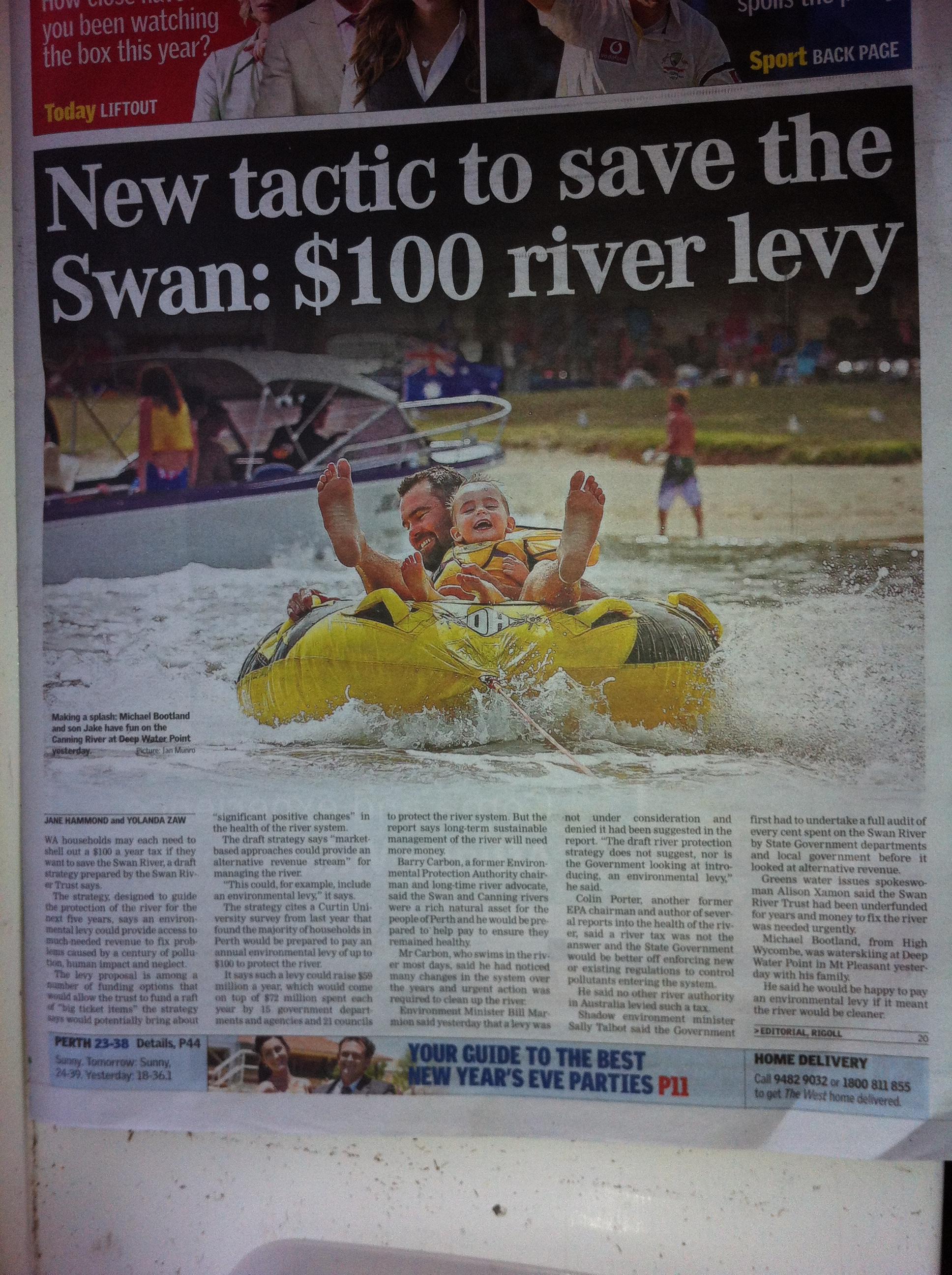
Raising money to save the river
From today’s West Australian.
All about Fish Vetting – Dr Richmond Loh
From today’s West Australian.
That’s definitely a myth.
But check out what worms may be in fish meat!
Fishborne zoonotic parasites and aquaculture: A review
Carlos A.M. Lima dos Santos, Peter Howgate
A large number of parasites infect fish but only a few cause illnesses in humans. Due to their high incidence the following helminth families deserve particular attention:Opisthorchiidae and Heterophyidae (Class Trematodea, subclass Digenea), Anisakidae and Gnathostomidae (Phylum Nematoda), and Diphyllobothridae (ClassCestoda). Humans acquire these fishborne parasitic zoonoses through the consumption of infected raw, undercooked, or inadequately preserved fish. Though the transmission of these parasites through fish caught in the wild has been well documented, the association between cultured fish and human parasitic illness has for long been neglected and it is only recently, during the last 10–15 years, that this association has gained increased consideration. This review summarizes and considers this recent evidence linking fish farming to human pathogenic parasites, and discusses the need and opportunities for prevention and control of these zoonoses.
Keywords: Fishborne parasitic diseases; Aquaculture; Fish zoonotic parasites; Fish farming; HACCP
Full article – http://www.sciencedirect.com/science/article/pii/S0044848611004510
Check out Pet Industry News’ write up here: PIN21_4_low_res 22
Next year, the annual event will be held in Beijing in Nov. 1-4, 2012.
All related information about the show and industry are available at www.cipscom.com.
It’s tough enough trying to keep octopi from wandering, it’s even harder to formulate a balanced diet for these critters!
The next time you order seafood chowder, you may want to consider seafood bogue pancake to go with it!
| Aquaculture | |||||||||||||||||
| Volume 323, Number 1 (December 2011) | |||||||||||||||||
 |
Growth, protein retention and biochemical composition in Octopus vulgaris fed on different diets based on crustaceans and aquaculture by-products | ||||||||||||||||
| Authors: | J. Estefanell, J. Socorro, F. Tuya, M. Izquierdo, J. Roo | ||||||||||||||||
| Author Affiliations: |
|
||||||||||||||||
| Source: | Aquaculture, Volume 323, Number 1 (December 2011) | ||||||||||||||||
| Page Numbers: | 91 – 98 | ||||||||||||||||
| Available Full Text: |
|
||||||||||||||||
| Abstract: | The octopus, Octopus vulgaris, is one of the main targets for aquaculture diversification in Mediterranean countries. However, the development of octopus farming is limited by the lack of information regarding nutritional requirements of this species during its life cycle. In this study, five diets were tested on the biological performance (growth, protein retention and biochemical composition) of individually reared octopuses (n=8 per diet), including three single diets constituted by: an endemic crab (the white crab, Plagusia depressa), a commercial crab imported frozen (the blue crab, Portunus pelagicus), and bogue (Boops boops) discarded from fish farms (aquaculture by-product), as well as two mixed diets, containing a 60–40% of blue crab-bogue and white crab-bogue, respectively. The rearing period lasted 8weeks. Octopuses that fed on a mixed diet constituted by blue crab-bogue showed a higher growth than those feeding on bogue as a single food item. No significant differences in growth were observed among individuals feeding on single food items. Highest protein retention was observed in octopuses fed on diets containing discarded bogue, associated with a high lipid and monoenes content in this food item, underlying the use of lipid as energy source in O. vulgaris. However, discarded bogue was deficient in ARA in comparison with octopus tissues, which did not seem to affect growth during the experimental period. These findings underline the potential of aquaculture by-products, particularly bogue, as an adequate diet for culturing O. vulgaris. | ||||||||||||||||
| Citation: | J. Estefanell, J. Socorro, F. Tuya, M. Izquierdo, J. Roo . Growth, protein retention and biochemical composition in Octopus vulgarisfed on different diets based on crustaceans and aquaculture by-products. Aquaculture, Volume 323, Number 1 (December 2011), pp. 91-98, | ||||||||||||||||
| URL: | http://ejournals.ebsco.com/direct.asp?ArticleID=4965B77A96C8B2053326 | ||||||||||||||||

What do you get a fish vet for Christmas?
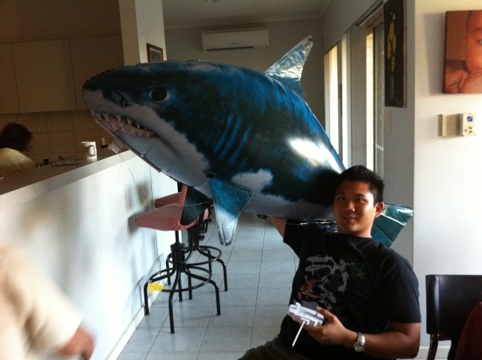
Sounds like a dolphin and moves like a drunk snail! But heaps of fun nonetheless.
$50 helium gas bottle from Spotlight or Big W.
Remote control fish available from Boronia Aquarium’s online store.
http://www.boroniaaquarium.com.au/advanced_search_result.php?keywords=air
Jack had an awful day fishing on the lake, sitting in the blazing sun all day without catching a single one. On his way home, he stopped at the supermarket and ordered four catfishes.
He told the fish salesman, “Pick four large ones and throw them to me, will you?”
“Why do you want me to throw them at you?”, asked the fish monger.
“Because I want to tell my wife that I caught them.”
“Okay, but I suggest that you take the trout.”
“ Why is that?”, Jack asked.
“Because your wife came in earlier today and said that if you came by, I should tell you to buy the trout. That is what she‘d like for supper tonight.”
Source: WAVMA newsletter.
Have a safe & joyous Christmas and a happy and prosperous new year!
Yours sincerely,
Dr Richmond Loh
The Fish Vet
http://www.thefishvet.com.au
Dr Richmond Loh (BSc, BVMS, MANZCVS, MPhil) is a fully qualified veterinarian surgeon, who graduated from the veterinary school at Murdoch University. He diagnoses fish diseases and provides fish medicine. The Fish Vet has a mobile veterinary clinic and makes home visits to see your fish in their aquarium, pond, tank or dam. So whether you are a fish keeper, fish hobbyist, fish farmer, aquaculturist, ornamental fish retailer, fish wholesaler, fish exporter or a public aquarium or zoo, The Fish Vet can see you. Some of Dr Loh’s patients include Siamese fighting fish, guppies, goldfish, koi carp, cichlid (such as oscars, discus, angel fish and Malawi cichlids), marine fishes (such as clown fish, seahorses, sharks, rays), or large fishes such as murray cod, giant gourami and saratoga (the Australian version of the arowana or otherwise known as dragon fish). So you can think of him as an aquarium doctor, pond doctor, koi doctor, aqua vet, fish vet, aquarium vet, doctor fish or fish doctor.
A routine home visit will involve water testing (including pH, ammonia, nitrite, nitrate, carbonate hardness, general hardness, water temperature, etc.) and he will have special tools including a microscope to examine for the cause of your fish’s ailments and has access to laboratory testing (including bacteriology and histology testing). In his fish mobil, Dr Loh has a mobile fish pharmacy, and carries all the medicines/medications (e.g. metronidazole or Flagyl, antibiotics such as enrofloxacin or Baytril, praziquantel or fish wormer, fish anaesthetics) necessary for treating fish diseases. These fish medicines are on hand and can be dispensed immediately to treat your fish since time is of the essence. He has all the fish dose rates and can give in-water medication or injections. Otherwise, veterinary prescriptions can be written if the drug is not in stock for you to obtain it from your local chemist.
Common reasons why fish owners call The Fish Vet are because they have sick fish or had searched the internet about any of the following topics that may include viral infection, lymphocystis, gourami iridovirus, carp pox, herpesvirus, bacterial infection, bacterial ulcer, aeromonas, yersiniosis, Yersinia, vibrio, vibriosis, flavobacter, flexibacter, streptococcus iniae, mycobacteria, fish tb, fish tuberculosis, septicaemia, bacteraemia, fungal disease, saprolegnia, achlya, cotton wool disease, fish parasite, protozoal, white spot disease, ich, cryptocaryon, trichodina, chilodonella, costia, ichthyobodo, oodinium, amyloodinium, nematode, round worm, camallanus, flat worm, monogenetic trematode, digenean, flukes, dactylogyrus, gyrodactylus, lice, argulus, anchor worm, lernaea, zoonotic diseases, toxicity, bloat, swimbladder disease, swim bladder infection, pine cone appearance, dropsy, pop eye, popeye, exophthalmia, hikui, jumped out, goldfish laying on its side, hole in the head, head and lateral line erosion, HLLE, HITH, cotton wool disease, fin rot, redness, frayed fins, physical injury, buoyancy disorder, loss of appetite, ulcer disease, ulceration, lesions, haemorrhage, columnaris, wasting disease, velvet disease or not eating.
If you are not within driving distance, Dr Richmond Loh has published a book entitled “Fish Vetting Essentials”. Purchase this book and take your sick fish to the local veterinarian to make a correct diagnosis so that you can proceed with the appropriate treatment or management of the issue.
Keep Koi Herpesvirus out!
With the holidays well underway and people jet setting around, some fish enthusiasts may become tempted to bring fish home illegally. Please refrain from doing this. Of greatest concern because of its ability to spread widely and quickly is a disease of koi. Koi herpesvirus disease affects all varieties of common carp Cyprinus carpio, including varieties such as mirror, leather, koi, and ghost koi. Mortalities are usually 100% and there is no treatment. Clinical signs include listlessness or erratic behaviour, loss of balance, loss of mucus (resulting in dry, rough patches, sloughing of mucus), and sunken eyes. Gills are most frequently affected displaying patchy areas of necrosis (dead tissue), often with secondary infection of bacteria and fungi.
Grass carp are tough as nails when coping with temperature fluctuations!
| Aquaculture | |||||||||||||||||
| Volume 323, Number 1 (December 2011) | |||||||||||||||||
| |
Respiratory response of grass carp (Ctenopharyngodon idellus) to temperature changes | ||||||||||||||||
| Authors: | Zhigang Zhao, Shuanglin Dong, Fang Wang, Xiangli Tian, Qinfeng Gao | ||||||||||||||||
| Author Affiliations: |
|
||||||||||||||||
| Source: | Aquaculture, Volume 323, Number 1 (December 2011) | ||||||||||||||||
| Page Numbers: | 128 – 133 | ||||||||||||||||
| Available Full Text: |
|
||||||||||||||||
| Abstract: | Respiratory parameters of grass carp were studied in conditions of temperature changes, 30°C–25°C–20°C–15°C–10°C–15°C–20°C–25°C–30°C (acclimation temperature 30°C for Group I) and 10°C–15°C–20°C–25°C–30°C–25°C–20°C–15°C–10°C (acclimation temperature 10°C for Group II). The results showed that the respiratory frequency (fR), oxygen consumption rate (VO2), respiratory stroke volume (VS.R), gill ventilation (VG) and water convection requirement (VG/VO2) of fish were directly dependent on the acute temperature in two acclimation groups. The oxygen extraction efficiency (EO2) of fish remained almost constant in both Group I and Group II while temperature changes between 10°C and 30°C. The fR, VO2, VGand EO2of the fish in Group II were significantly higher than those in Group I at 15°C, 20°C, 25°C and 30°C (P<0.05), but the VS.Rin Group II were significantly lower than those in Group I at 10°C, 15°C and 30°C (P<0.05). There were no significant differences in the VG/VO2between Group I and Group II at 15°C, 20°C, 25°C and 30°C (P0.05). The Q10values for fR, VO2and VGof fish decreased or increased gradually with the increases or declines of temperature. The Q10values for fR, VO2and VGwere 1.75–2.47, 2.39–2.64 and 3.21–3.48 at 10–30°C of temperature interval, respectively. Grass carp showed partial metabolic compensation to temperature. These results indicate an ecological advantage for this migratory species. The study results also suggest that grass carp has shown good suitability for aquaculture due to its regulatory ability in acute temperature changes. | ||||||||||||||||
| Citation: | Zhigang Zhao, Shuanglin Dong, Fang Wang, Xiangli Tian, Qinfeng Gao . Respiratory response of grass carp (Ctenopharyngodon idellus) to temperature changes. Aquaculture, Volume 323, Number 1 (December 2011), pp. 128-133, | ||||||||||||||||
| URL: | http://ejournals.ebsco.com/direct.asp?ArticleID=4A88B752167457CB93A8 | ||||||||||||||||
Some very clever scientists have come up with very practical, non-chemical means of decreasing shell deformities and biofouling in bivalve culture. Check out the article below.
—
Now on: Twitter – Blog – Facebook – Linkedin
Aquaculture Volume 325, Number 9 (January 2012) Using stocking density modifications and novel growth medium to control shell deformities and biofouling in suspended culture of bivalves Authors: A. Dunham, R.D. Marshall Author Affiliations:
| no affiliations available |
Source: Aquaculture, Volume 325, Number 9 (January 2012) Page Numbers: 234 – 241 Available Full Text:
| Full Text: | Subscription Required to view full text |
| Format: | |
| Size: | Unknown |
| Location: | Publisher’s Site |
| Authentication: | Publisher’s Site |
Abstract: Bivalve aquaculture currently utilizes two main farming practices: intertidal (beach) and deep-water (suspended) culture. Although suspended culture offers a number of advantages during both nursery and grow-out phases, two commonly encountered issues – shell deformities and biofouling – lead to reduced seed and final product quality in some species and preclude other species from being cultured in suspension. None of the existing strategies for controlling these issues is efficient and fully reliable. In this study we tested the efficiency of two new methods for controlling biofouling and shell deformities in suspended culture of bivalves using basket cockle Clinocardium nuttalliias a model species. The first method involved a short-term increase in bivalve stocking density during peak plankton concentrations and biofouling settlement periods. The second method comprised adding artificial growth medium (expanded clay aggregate) to culture enclosures. Both high-density and growth medium treatments significantly reduced the incidence of C. nuttalliishell deformities compared to the control treatment (by 86 and 72%, respectively). This finding suggests that clam shell deformities in suspended culture primarily develop due to the lack of structural support normally offered by the substratum. Both treatments also significantly reduced barnacle fouling rate (by 67 and 83%, respectively). Additionally, growth medium treatment led to a significant reduction in tube worm fouling, as well as combined fouling rate and intensity, but it was less effective in controlling sponge fouling. Overall, both high-density and growth medium treatments showed promise in reducing the incidence of shell deformities and the amount of biofouling on C. nuttalliiin suspended culture. These treatments are inexpensive, environmentally-friendly, readily available to shellfish growers, and may be further refined and adapted for a variety of cultured bivalve species. They have the potential to improve the efficiency of suspended grow-out systems and extend the option of suspended culture to bivalve species currently grown on the beach only. Citation: A. Dunham, R.D. Marshall . Using stocking density modifications and novel growth medium to control shell deformities and biofouling in suspended culture of bivalves. Aquaculture, Volume 325, Number 9 (January 2012), pp. 234-241, URL: http://ejournals.ebsco.com/direct.asp?ArticleID=49548B86958E34D17565