Keep a couple of eyes on your fish !
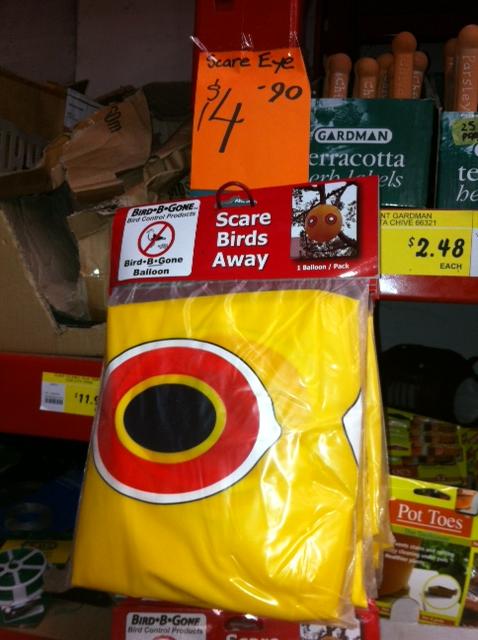
Saw it at Bunnings.
All about Fish Vetting – Dr Richmond Loh
Keep a couple of eyes on your fish !
Saw it at Bunnings.
In the old days, before refrigeration, snakeheads were one of the few fishes that could be available, fresh at the market because of their amazing ability to survive in very little water. If you’ve seen River Monster’s episode on snakeheads, you will see their amazing ability to travel across land in search of more suitable habitats. There is also folklore that they have eaten small dogs and babies! But as the show reveals, these are myths; they do not eat cats, dogs and people. They do however, eat frogs and other small aquatic critters.
The Chinese may eat snakehead fish because it is believed to help with wound healing and can be part of the confinement period diet of new mothers.
So, there is demand for the fish as food. The paper below addresses one of the many aspects of fish farming that needed to be nutted out – the ideal stocking density.
Aquaculture Research
Volume 43, Number 2 (January 2012)
Growth and production performance of threatened snakehead fish, Channa striatus(Bloch), at different stocking densities in earthen ponds
Authors: M Aminur Rahman 1, A Arshad1,2, S M Nurul Amin 2
Author Affiliations: 1: Laboratory of Marine Science and Aquaculture, Institute of Bioscience, Universiti Putra Malaysia, Selangor, Malaysia
2: Department of Aquaculture, Faculty of Agriculture, Universiti Putra Malaysia, Selangor, Malaysia
Source: Aquaculture Research, Volume 43, Number 2 (January 2012)
Page Numbers: 297 – 302
Available Full Text: Full Text: Subscription Required to view full text
Format: PDF
Size: unknown
Location: Publisher’s Site
Authentication: EBSCOhost EJS
Abstract: Production trials of threatened snakehead fish (Channa striatus) were carried out under different stocking densities in earthen ponds of Bangladesh. The average weight and length of the fingerlings during stocking was 17.63 ± 1.23 g and 13.21 ± 0.52 cm. Fingerlings were stocked at 5000 ha-1in treatment-1 (T1), 6250 ha-1in treatment-2 (T2) and 7500 ha-1in treatment-3 (T3) respectively. Fish in all the experimental ponds were fed with supplementary feed comprising of fish meal (30%) and mustard oilcake (70%) at the rate of 3–6% of estimated body weight two times per day. In addition, trash fish were supplied at the rate of 2–3% of the estimated biomass on each alternate day. In situwater quality parameters of the pond were within the suitable range for fish culture. The growth and survival of fingerlings were significantly higher in T1than in T2and T3. The food conversion ratio was significantly lower (P<0.05) in T1than in T2and T3. The estimated gross and net production of fish was higher in T1, followed by T2and T3. Overall, the highest growth, survival and production were obtained from T1. Therefore, it could be concluded that of 5000 fingerlings ha-1is the most suitable stocking density for culturing C. striatusunder a monoculture system in the earthen ponds for better production.
Citation: M Aminur Rahman, A Arshad, S M Nurul Amin . Growth and production performance of threatened snakehead fish, Channa striatus(Bloch), at different stocking densities in earthen ponds. Aquaculture Research, Volume 43, Number 2 (January 2012), pp. 297-302,
URL: http://ejournals.ebsco.com/direct.asp?ArticleID=48F38ACC09A11A3170AC
This paper reports that of all immunostimulants for fish, beta-glucans are the single most important ingredient of all. And we know that yeasts are a fantastic source of it! Beer o’clock anyone?
| Journal of Fish Diseases | |||||||||||||||||
| Volume 35, Number 2 (February 2012) | |||||||||||||||||
 |
Comparative effects of four feed types on white spot disease susceptibility and skin immune parameters in rainbow trout, Oncorhynchus mykiss(Walbaum) | ||||||||||||||||
| Authors: | J Xueqin 1, P W Kania 2, K Buchmann 2 | ||||||||||||||||
| Author Affiliations: |
|
||||||||||||||||
| Source: | Journal of Fish Diseases, Volume 35, Number 2 (February 2012) | ||||||||||||||||
| Page Numbers: | 127 – 135 | ||||||||||||||||
| Available Full Text: |
|
||||||||||||||||
| Abstract: | The effects on rainbow trout, Oncorhynchus mykiss(Walbaum), immune parameters by differently formulated fish feed types containing immunostimulants have been tested in a double-blind, duplicated and controlled study performed over 50 days. A total of 800 rainbow trout (10–12 g) were kept in eight duplicate fish tanks (each containing 100 fish) and fed at a daily feeding rate of 1.5% of the biomass. The feed types were (1) control feed (C) without additives, (2) feed containing beta-glucan, nucleotides, manno-oligosaccharides (MOS), vitamins C and E (GNMCE), (3) feed containing probiotic bacteria and plant extracts (PP) and (4) feed with nucleotides, manno-oligosaccharides, vitamins C and E (NMCE). Plasma lysozyme activity was increased in fish fed two feed types (GNMCE and NMCE) but slightly depressed in fish fed PP. A non-significant trend for a higher mucous cell density at days 30 and 50 was shown in all fish receiving feeds with additives compared to the control group. All fish became infected with Ichthyophthirius multifiliiswhen exposed, but fish fed GNMCE showed a significantly lower infection both at days 30 and 50. Expression of genes encoding C3 and MHCII was significantly up-regulated in fish fed GNMCE for 50 days, and the expression of genes coding Hepcidin was significantly down-regulated in fish fed NMCE for 50 days. Beta-glucan was the single component, when used in combination with other feed ingredients, which was found associated with increased parasite resistance, increased lysozyme and immune gene up-regulation. | ||||||||||||||||
| Citation: | J Xueqin, P W Kania, K Buchmann . Comparative effects of four feed types on white spot disease susceptibility and skin immune parameters in rainbow trout, Oncorhynchus mykiss(Walbaum). Journal of Fish Diseases, Volume 35, Number 2 (February 2012), pp. 127-135, <http://ejournals.ebsco.com/direct.asp?ArticleID=4A8783A494754F6AA0F4> | ||||||||||||||||
| URL: | http://ejournals.ebsco.com/direct.asp?ArticleID=4A8783A494754F6AA0F4 | ||||||||||||||||
My friend showed me to this video over dinner.
Check out:
It is thought that poor water quality, physical trauma and stress sustained during spawning contribute to mortalities.
This paper suggests that egg retention may be the cause of deaths in captive Atlantic cod during spawning. Thus, it might be worthwhile considering artificial means of removing the retained eggs whether it be via hormonal induction, physical stripping or a combination of both.
Aquaculture Research
Volume 43, Number 2 (January 2012)
Spawning-related mortality in captive Atlantic cod (Gadus morhuaL.)
Authors: Tómas Árnason 1, Björn Björnsson 2
Author Affiliations: 1: Marine Research Institute, Grindavík, Iceland
2: Marine Research Institute, Reykjavík, Iceland
Source: Aquaculture Research, Volume 43, Number 2 (January 2012)
Page Numbers: 292 – 296
Available Full Text: Full Text: Subscription Required to view full text
Format: PDF
Size: unknown
Location: Publisher’s Site
Authentication: EBSCOhost EJS
Abstract: Two year-classes of Atlantic cod were reared in indoor tanks from November 2002 to November 2004. The average annual mortality was 21% and 36% for males and females respectively. The highest monthly mortality rates in females were observed around and during the spawning periods from March to July, maximally 7% and 20% for year-class 2001 and 18% and 34% for year-class 2000. The mortality in males was less dependent on season, reaching a maximum of 7% and 5% month-1for year-class 2001 and 2000 respectively. The maximum mortality during spawning increased with age from: 7%, 19% and 34% per month for 2-, 3- and 4-year-old females respectively. The average gonadosomatic indices in 3- and 4-year-old mature females that died during the spawning periods were 22% and 26% respectively and most of them were spawning when they died. The results suggest that egg-retention may have been the main cause of death in females during spawning.
Citation: Tómas Árnason, Björn Björnsson . Spawning-related mortality in captive Atlantic cod (Gadus morhuaL.). Aquaculture Research, Volume 43, Number 2 (January 2012), pp. 292-296,
URL: http://ejournals.ebsco.com/direct.asp?ArticleID=4CD2BA4FACFDE90AF666
From today’s West Australian…
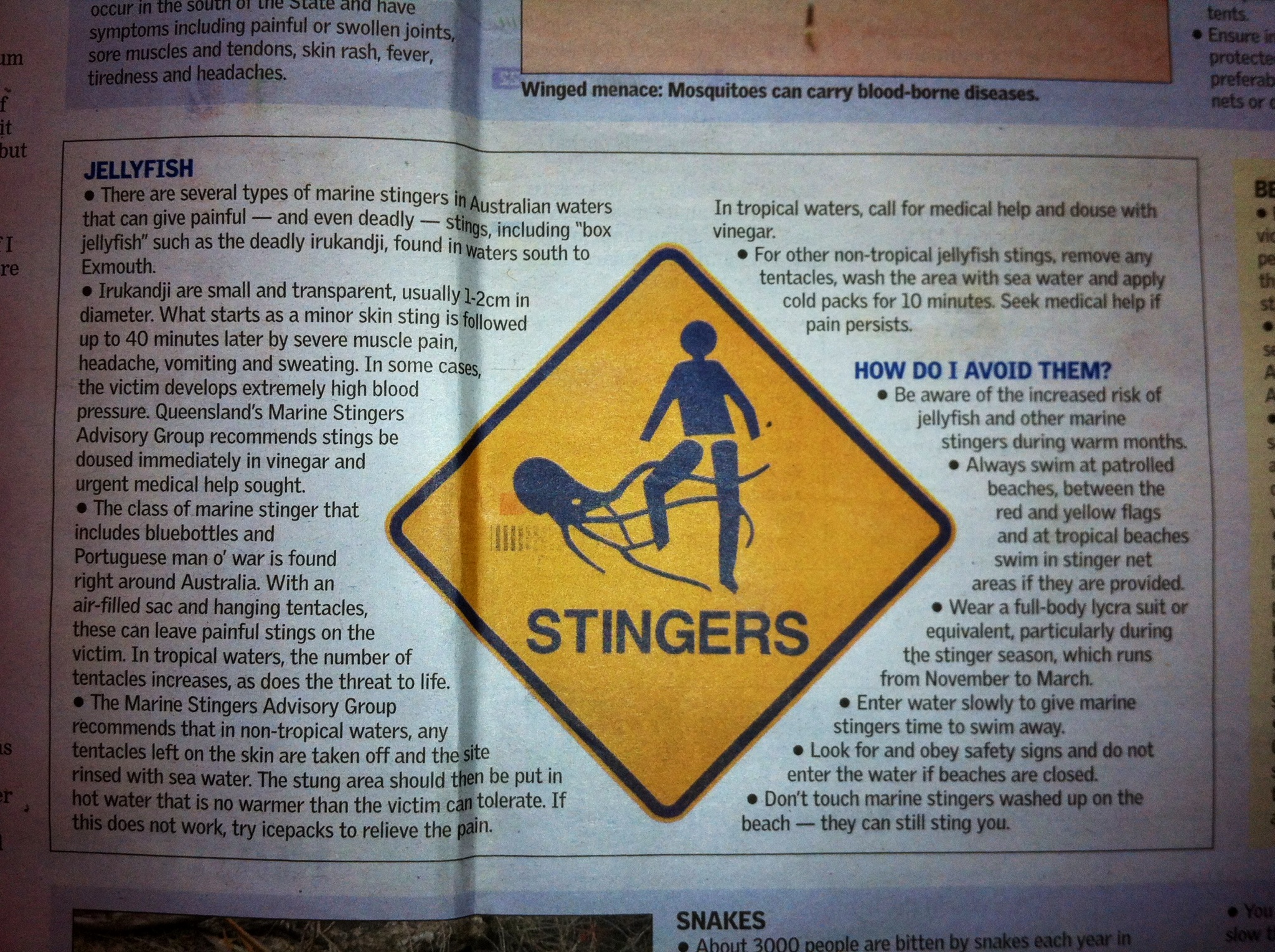
There is increasing awareness for animal welfare, starting first with the pet dog/cat, then to farmed terrestrial animals and now with aquatic animals. There are the more traditional organisations like the RSPCA and the animal ethics committees at educational institutes; then there are the extremists like PETA and new groups such as sentient.org.au that are raising awareness on animal welfare.
Likewise, there is an ever increasing body of knowledge being generated to help us understand what is needed to improve conditions and we would do well to incorporate it in the business of fish farming.
This paper is one more step closer towards providing better welfare for farmed fish.
| Aquaculture | |||||||||||||||||
| Volume 329, Number 2 (January 2012) | |||||||||||||||||
| |
Crowding, pumping and stunning of Atlantic salmon, the subsequent effect on pH and rigor mortis | ||||||||||||||||
| Authors: | Bjorn Roth, Endre Grimsbø, Erik Slinde, Atle Foss, Lars Helge Stien, Ragnar Nortvedt | ||||||||||||||||
| Author Affiliations: |
|
||||||||||||||||
| Source: | Aquaculture, Volume 329, Number 2 (January 2012) | ||||||||||||||||
| Page Numbers: | 178 – 180 | ||||||||||||||||
| Available Full Text: |
|
||||||||||||||||
| Abstract: | An optimum setting for electrical stunning of Atlantic salmon under commercial conditions was tested and compared against percussive stunning before and after pumping and at increasing durations of crowding (0.5 and 3h). For electrical stunning the fish were exposed to 60V, 100HzAC+DC for 6s after pumping. The results show that there were no significant differences in muscle pH or rigor index between fish exposed to electricity or a percussive force. Pumping and crowding did have a significant effect. Pumping alone halved the time until maximum rigor from 24 to 12h post mortem. Increasing crowding for 3h caused a significant drop in muscle pH and the time until onset of maximum rigor tension was reduced to 6h post mortem. We conclude that optimum electrical stunning performs equally well as percussive stunning and that future challenges for improving the pre rigor times for Atlantic salmon lays in the pumping and crowding conditions, and not in the selected stunning technique. | ||||||||||||||||
| Citation: | Bjorn Roth, Endre Grimsbø, Erik Slinde, Atle Foss, Lars Helge Stien, Ragnar Nortvedt . Crowding, pumping and stunning of Atlantic salmon, the subsequent effect on pH and rigor mortis. Aquaculture, Volume 329, Number 2 (January 2012), pp. 178-180, | ||||||||||||||||
| URL: | http://ejournals.ebsco.com/direct.asp?ArticleID=492D8A922079FCCBD2DE | ||||||||||||||||
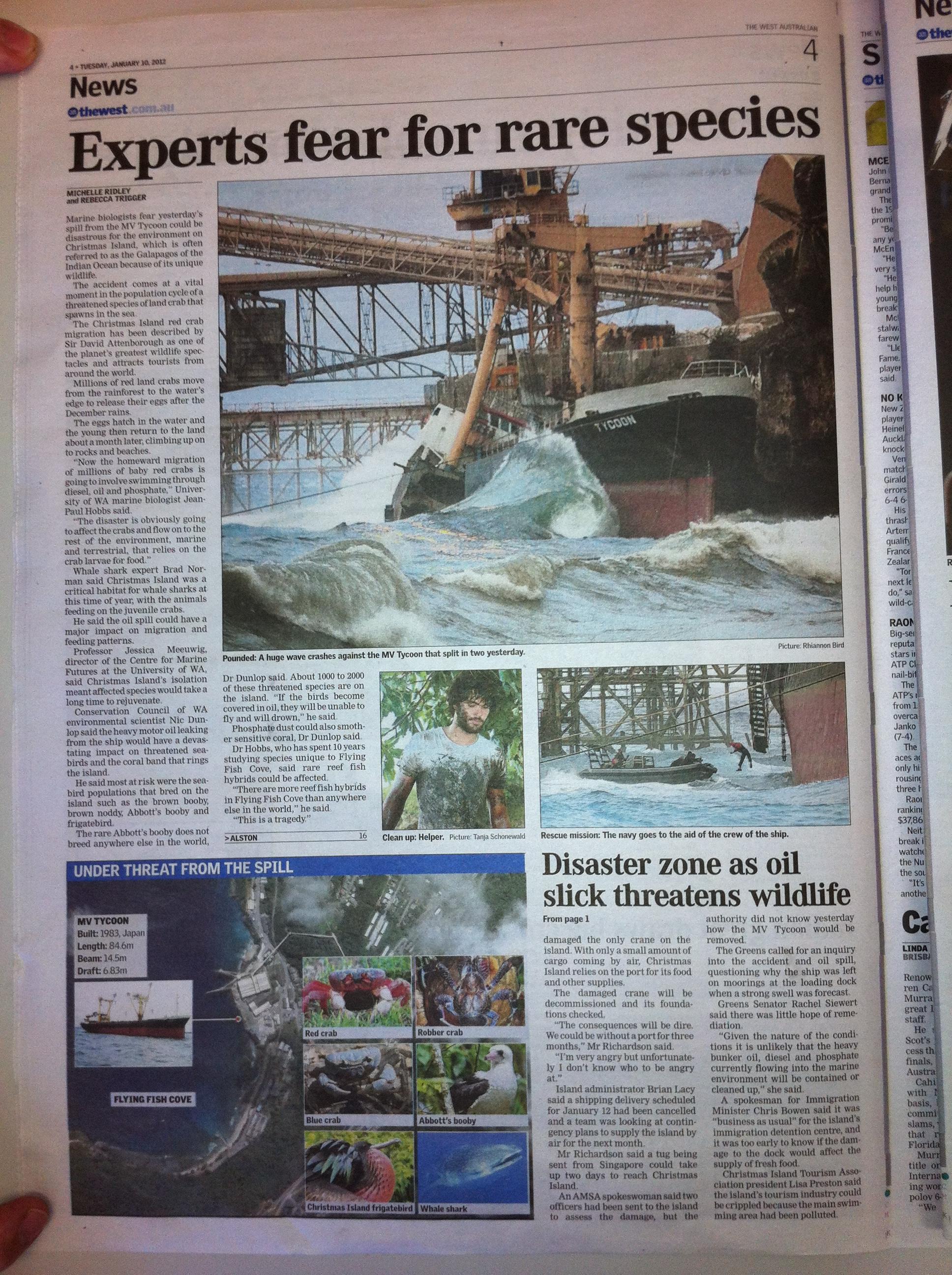
With wildlife as unique as Galapagos….
From today’s West Australian:
Researchers Study Dolphins’ Healing Ability
January 9, 2012
Atlanta, USA – For some reason, dolphins seem to bounce back from injuries much faster than humans do. Within weeks of a severe shark bite, researchers have documented badly-injured dolphins re-growing their missing tissue. A new film looks at one dolphin’s remarkable recovery, as researchers are trying to figure out just how they do it. “Dolphin Tale” tells the true story of the unlikely friendship between an 11-year-old boy and Winter, a badly injured dolphin rescued off the Florida coast.
As moving as the Hollywood storyline is, Winter’s real life story is even more compelling. She not only survived losing her tail in a trap, she’s now swimming again – a star at the Clearwater Aquarium – thanks to a prosthetic tail created just for her. There just seems to be a special connection between humans and dolphins. Even midweek at the national aquarium, rehearsal for the new dolphin show is packed.
Dr. Brent Whitaker is the head of biological programs at the National Aquarium. He says most people don’t know that dolphins possess the amazing ability to heal incredibly fast, even from wounds like shark bites. “It seems they look horrible one day, and the next day they as though they’re sealed up and they’re starting to heal well,” Whitaker said.
Researchers are trying to figure out just how they do it and what it could mean for us. The journey began about 10 years ago for Dr. Michael Zasloff with Georgetown University. He started documenting dolphin healing, including ….
See the source (http://tinyurl.com/68p4f85) for the full story and an interesting Fox News video clip.
___________________________
AquaVetMed e-News provides information to veterinary and veterinary-allied subscribers concerning aquatic animal medicine, health, welfare, public health and seafood safety, obtained from a variety of sources (largely AquaVetMed subscribers). While provided by the American Veterinary Medical Association’s, Aquatic Veterinary Medicine Committee and are for public distribution, they do not necessarily reflect the opinion of the AVMA or the veterinary profession. See the AVMA Terms of Use (http://tinyurl.com/29h2rf) for further information.
If e-News information is used elsewhere please acknowledge AquaVetMed as the source. Encourage individuals to subscribe rather than distribute through list serves.
Messages may contain attachments that will have been scanned for known viruses.
Subscription and Contributions: Interested veterinarians and veterinary-allied professionals can subscribe, unsubscribe, or contribute pertinent news or information, by sending a message with “For AquaVetMed -” and the topic in the subject line, to dscarfe@avma.org.
Note: Undelivered e-mails will not be resent; Subscribers will be deleted from the list after repeated undelivered or bounced messages and will have to re-subscribe.
Visit our website: www.avma.org
________________________________
—
Now on: Twitter – Blog – Facebook – Linkedin
Dr Richmond Loh
BSc BVMS MPhil (Vet Path) MANZCVS (Aquatics & Pathobiology) DipPM
“Often what is common knowledge is not common practice,
and research which does not guide action is not worth doing.”
As scientists, we do a lot of research. But what for?
I thought I’d share this interesting excerpt about “research”.
Superficial research will always tell you things that you know. It rarely gets beneath the surface and the surface is there for anybody to see.
Also, it is easy to read the results of research and ‘recognise them’ as thing which you knew. However, few people would be able to predict the actual results in advance…
It is one thing to know the results of research, it is another to have sufficient information to act. Often what is common knowledge is not common practice, and research which does not guide action is not worth doing.
Taken from Customer Service Handbook, published by Centre for Professional Development.