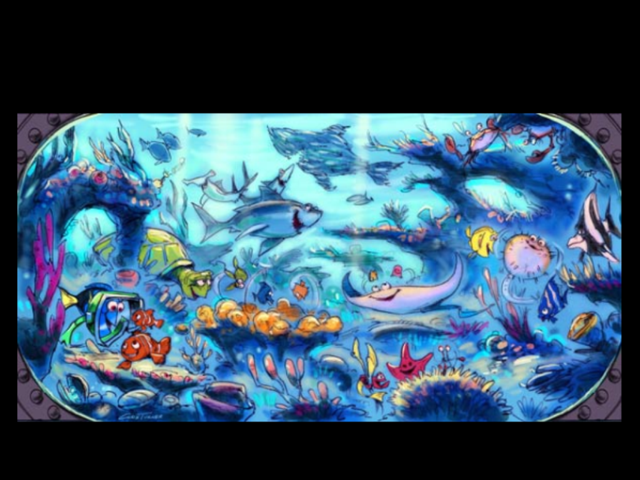
Computerised artwork by my 5-year-old niece made on the ipad. Seems like she has taken a liking to fishes after seeing the “Finding Nemo” play at Disney World.
Biological factors impinging upon control of external protozoan fish parasites
Biological factors impinging upon control of external protozoan fish parasites
parasitesAvailable online 22 September 2003.
Abstract
Various protozoans commonly occur on the external surfaces of  fishes under aquaculture conditions. Their pathologic impact is dependent upon mode of attachment and feeding method, numbers of protozoans, and host condition. Economic impact is dependent upon population dynamics, pathologic potential, production expectation, and control costs. These factors complicate control decisions since prevention of all protozoan occurrence on the fish host is not usually cost-effective.
This review describes various biologic features that contribute to a protozoan’s disease causing potential and examines some of the opportunities fish health managers have for control.
Keywords: Fish; Ecto-protozoan; Control; Biological factors
View full article here:
Ways of providing shade for fish.
Ever had a storm tear down your makeshift shade cloth? Well, a freak storm did just that with one of my clients!
Could you install some shade material that is say, ~20 cm below the water surface? Make sure though, that you do not install it at the water surface as it could diminish gas exchange or fish could become trapped at the water surface, be exposed to excessive amounts of sunlight or become easy prey.
An alternative is to add blue food colouring to the pond. This method is used by a public aquarium in Queensland to combat algal problems.
These are just some ideas and if you have other suggestions, please do share them with us.
Giant virus found…
In an amoeba from an ocean trawl!
Immunological responses of fish to parasitic organisms
Immunological responses of fish to parasitic organisms
to parasitic organismsAvailable online 22 September 2003.
Abstract
The piscine immune system is well developed and is normally quite efficient in protecting healthy free ranging fish from parasitic diseases. However, when fish are cultured in high numbers and are stressed by adverse environmental factors (e.g. heavy metal pollution, low dissolved oxygen, nutritional deficiencies, and/or overcrowding), parasites may have the advantage and the risk of disease outbreak increases in the fish population. We know very little about innate immunity against parasites. Hence it has not been considered a viable strategy to protect fish from diseases. The alternative pathway of complement activation is the protective mechanism in certain fish species against hemoflagellates (Cryptobia salmositica and Cryptobia catostomi). This mechanism also operates in some resistant individuals (in a susceptible fish species) against C. salmositica. Complement is also involved in innate parasiticidal activities against adult intestinal tapeworms (Acanthobothrium quadripartitum) and encysting larval stages of digeneans (Diplostomum spathaceum and Cryptocotyle lingua). It is suggested here that more studies be conducted to elucidate the mechanism(s) of innate immunity in nonsusceptible host species, and also to follow the heredity of parasite resistant factor(s) in individuals that belong to an otherwise susceptible host fish species.
The innate nonspecific cytotoxicity of leukocytes of flounders, infected with the copepod, Phrixocephalus cincinnatus, was significantly depressed compared to those from uninfected flounders. The target cells for the leukocytes were murine cells; future studies should include parasites as target cells to determine the importance of the depression on disease resistance in copepod-infected fish.
Fish that survive Amyloodinium ocellatum, C. salmositica, Cryptobia bullocki, Trypanosoma danilewskyi, Ichthyophthirius multifiliis, Myxidium lieberkuehni, a myxosporean parasite (PKX), and D. spathaceum infections are generally protected from disease when they are later exposed to the same parasite. Complement fixing antibodies and/or cell-mediated immunity are important in acquired immunity against C. salmositica, C. bullocki, T. danilewskyi, I. multifiliis, Diplostomum spathaceum, Cryptocotyle lingua, and Posthodiplostomum minimum. A live C. salmositica-vaccine has been developed. The vaccine has fewer polypeptide bands and a few of the remaining polypeptides are antigenically different from those in the virulent strain. It does not cause disease in fish but has remained protective. Fish are assumed to, or are known to, respond immunologically to numerous other parasitic infections. These include: Cryptocaryon irritans, Myxosoma cerebralis, Gyrodactylus bullatarudis, Dactylogyrus vastator, Neobenedenia melleni, Telogaster opisthorchis, Ligula intestinalis, Diphyllobothrium, Caryophyllaeus laticeps, Pomphorhynchus laevis, Anguillicola crassus, and Larnaea cyprinacea. However, the precise role of the immune system in these infections has yet to be determined.
In general, there are little antibody and cell-mediated responses during early myxosporean infections because the parasite antigenically mimics host tissues. The proliferative type of inflammation is the principal defense when spores are formed, resulting in parasite encapsulation. Melanomacrophages ingest spores in tissue and transport them to kidneys, spleen, or liver where they are encapsulated and destroyed. Also, cestodes are thought to adsorb host antigens on their body surface to evade the host immune system. The extent and the mechanism of host tissue mimicry by parasites, presumably to avoid or reduce the host immune response, are both fascinating and in need of more careful study in the future.
Not much is known about immunodepression due to parasitic diseases in fish. This is an important phenomenon because it generally increases the susceptibility and mortality of infected fish when they are exposed to another pathogen. Also, it will adversely affect vaccination programs carried out against other pathogens. Immunodepression has been found in C. salmositica, Glugea stephani, and PKX infections. It is suggested here that other parasitic infections should be closely examined for their effects on the piscine immune system. It is also beneficial to more closely evaluate the interactions of multiple infections (microbial and parasitic) and their effects on the fish.
Keywords: Fish; Innate immunity; Complement; Complement fixing antibody; Cell-mediated immunity; Host antigen mimicry; Immunodepression; Diseases; Ectoparasites; Endoparasites
View the full article here:
How do you protect fish from the heat?
This week is looking to be a scorcher!
How do you prevent hyperthermia in fish?

Those without central air conditioning and keep cool water animals such as axolotls, certain marine fishes and Murray cods may need to think about ways of preventing their tanks from overheating.
The most reliable method is to invest in a chiller unit. But these may be very expensive or may not be available for purchase at your local fish shop.
So what are some other stop gap measures?
One way of dropping the water temperature is by positioning a pedestal fan to blow over the water surface. Evaporative cooling is very effective and can drop the water temperature by 2-3 degrees Celsius!
Another way is to place large ice blocks in your tank, but bear in mind that this could alter the water salinity and so a salt water ice block can be used instead.
A third way is to run tap water through a hose into the tank. For small amounts of water (up to 10-15%), dechlorinator may not be necessary. For larger volumes, you will need to remove the chlorine. You may be able to fashion an in-line activated carbon filter by using some PVC pipes with hose connections on either side.
I’m sure there are many other ways, so feel free to share them with us.
Until next time, happy fish keeping!
Dr Richmond Loh
TheFishVet@gmail.com
http://www.thefishvet.com.au
Happy New Year! The year of the dragon.
Happy New Year! You might think that it’s a bit late in the year to be wishing you a happy new year. But today marks the first day of Chinese New Year. It is also known as the first day of the Lunar (Moon) Calendar Year (the Western Calendar is based on the sun). But did you know that in China, it is actually called “Spring Festival” as it is now the first day of spring over there? It’s commonly called Chinese New Year because the Chinese who no longer live in the mother land retain a connection to the country.
This year is the year of the dragon. The animal type rotates over a 12 year cycle. And each 12 year cycle has an element associated with it. This year, it is water. So, I naturally thought, water + dragon = dragon fish!
I did a quick Google for dragon fish and this is from the first website I came across:
According to the Chinese, Dragon signifies auspicious, prosperity and wealth. It is believed that it will also ward off evil spirits and thereby protecting both the owner and his home. On the other hand, the Arowana’s large scales and barbels resemble that of the Dragon, and hence, its common name -DRAGON FISH. Its huge size, gold and red large scales, bold expression, noble air and elegant moves make it a hot favourite among hobbyists and aquarists worldwide.
These are truly magnificent fish. I remember someone likening their movement to liquid silver. I’ve visited a grow out farm in Malaysia and there were tanks and tanks of these fishes just waiting to grow up to go to a new home. To me their large scales look like prehistoric armour as they glide effortlessly through the water. They’re the high jumpers of the fish world, capable to taking mouth-sized prey in mid-air. There are several species of “Dragon Fish” and they may come from Asia, Africa, South America and Australia. Most prized and the aquarium industry is the Asian Arowana that have been selected for red or golden scales. And trust me, these are truly majestic creatures.
So in my native tongue, Kong Xi Fat Choi.
What can you use to anaesthetise fish?
There may be times when you need to anaesthetise fishes. Some of these may include ease of handling for providing medication, vaccinations and for grading. Anaesthetics may also be used as a humane way to euthanise or harvest fish. So what can you use to do all these?
Iso-eugenol (a derivative of eugenol, which is present in clove oil) is marketed as Aqui-S and can be obtained through your veterinarian. It was initially formulated for use in aquacultured fishes with no witholding period for human consumption. It can also be used off label for a variety of other fishes, including your pet fish. The abstract below evaluates the efficacy and safety of the product as it relates to koi fish.
Evaluation of isoeugenol for anesthesia in koi carp (Cyprinus carpio)
Juliet N. Gladden, DVM; Ben M. Brainard, VMD; James L. Shelton, PhD; Alvin C. Camus, DVM, PhD; Stephen J. Divers, BVetMed, DZooMed
Department of Small Animal Medicine and Surgery, University of Georgia, Athens, GA 30602. (Gladden, Brainard); College of Veterinary Medicine, and the Department of Fisheries, Warnell School of Forestry and Natural Resources, University of Georgia, Athens, GA 30602. (Shelton); Department of Pathology, University of Georgia, Athens, GA 30602. (Camus); Department of Small Animal Medicine and Surgery, University of Georgia, Athens, GA 30602.0 (Divers)
Dr. Gladden’s present address is Florida Veterinary Specialists, 3000 Busch Lake Blvd, Tampa, FL 33614.
Supported by the Pamela De Journo Endowment Fund.
Presented in abstract form at the Annual Conference of the American Association of Zoo Veterinarians and Association of Reptilian and Amphibian Veterinarians, Los Angeles, October 2008.
The authors thank Suzette Knight, Melissa Christian, Jason Norman, Dr. Pam Govett, Abby Farakesh, Sara Smiley, Chrissie Shoemaker, Heather Bjornebo, Dustin Haskins, Andrew Baxter, Allen Pattillo, Krista Woodward, Russell Parr, Trey Dunn, Raj Joshi, Gretchen Singletary, Claire Erlacher, Hollis-Ann Stewart, Shannon South, Audra Jean Henderson, Jessica Casto, and Luke Williams for technical assistance and Dr. Deborah Keys for statistical assistance.
Address correspondence to Dr. Gladden (vet_jgm@hotmail.com).
Objective—To evaluate isoeugenol as an anesthetic agent in koi carp.
Animals—216 juvenile koi carp (Cyprinus carpio).
Procedures—Fish were randomly allocated to 9 groups of 24, and each group was randomly exposed to isoeugenol concentrations ranging from 0 to 500 mg/L. General activity, excitement, fin and gill color changes, opercular movement rate, loss of equilibrium, muscle tone, jaw tone, and handleability were assessed. Five fish from the control (0 mg/L), 200 mg/L, and 500 mg/L groups were randomly selected prior to anesthetic recovery and again 24 hours after recovery for euthanasia, gross necropsy, and histologic assessment of gills, internal viscera, and skeletal muscles.
Results—Mean ± SD interval to achieve stage 2 anesthesia with isoeugenol ranged from 22.4 ± 6.2 minutes at 20 mg/L to 0.25 ± 0.4 minutes at 500 mg/L, whereas the mean interval to stage 3 anesthesia ranged from 28.1 ± 3.9 minutes at 20 mg/L to 0.33 ± 0.48 minutes at 500 mg/L. With the exception of the 500 mg/L group, opercular movements were maintained throughout. Death was observed only in the 500 mg/L group, in which 50% of the fish either failed to recover or died within 24 hours after anesthetic exposure. There were no pathological differences between fish exposed to isoeugenol at 0 or 500 mg/L.
Alternative injection route to medicate fish.
Often there is a need to regularly inject fish with medication as a course of treatment. This can be antibiotics and anti-inflammatories to treat bacterial infections or post-operation. For those who prefer that their fish do not become “pin cushions”, read this article below.
|
Abstract
March 1, 2005, Vol. 226, No. 5, Pages 784-788
doi: 10.2460/javma.2005.226.784
Evaluation of a method of intracoelomic catheterization in koiGregory A. Lewbart, MS, VMD, DACZM Deborah A. Butkus, BS Mark G. Papich, DVM, MS, DACVCP Angela K. Coleman, BS Dr. Howard N. Krum, MS, VMD Dr. Edward J. Noga, MS, DVM
Department of Clinical Sciences, College of Veterinary Medicine, North Carolina State University, Raleigh, NC 27606. (Lewbart, Butkus, Coleman, Krum, Noga); Departments of Molecular and Biomedical Sciences, College of Veterinary Medicine, North Carolina State University, Raleigh, NC 27606. (Papich); Present address is Ontario Veterinary College, University of Guelph, Guelph, ON, N1G 2W1 Canada. (Coleman); Present address is the Georgia Aquarium, 2451 Cumberland Pkwy, Atlanta, GA 30339. (Krum)
Objective—To develop an easy and safe method for catheterization and determine the pharmacokinetics of a single dose of enrofloxacin after intracoelomic administration in koi. Design—Prospective study. Animals—20 healthy koi. Procedure—6 koi were anesthetized with tricaine methanesulfonate, and a 23-gauge, three-fourths-inch butterfly catheter was inserted into the coelomic cavity and secured. Catheters were flushed daily for 6 days with 0.4 mL of sterile saline (0.9% NaCl) solution containing heparin (100 units of heparin in 250 mL of saline solution) without removing koi from the aquarium. At the end of the sixth day (144 hours), each of the 6 catheterized koi and 6 uncatheterized (control) koi was anesthetized individually. Enrofloxacin (10 mg/kg [4.5 mg/lb]) was administered to catheterized koi via the injection port and to control koi via a 23-gauge needle in the same site as the catheter placement. A pharmacokinetics study was performed on multiple plasma samples to validate the efficiency of the catheter. Reliability of the catheterization method was determined in 8 koi. Results—All 6 catheters remained patent and effective for the 6 days prior to the start of the pharmacokinetics study. Results for the 2 routes of administration were comparable, and all koi survived the study without any detectable clinical problems. Conclusions and Clinical Relevance—An intracoelomic catheter was effective and safe when maintained in koi for at least 6 days. This would be highly beneficial for veterinarians, clients, and fish, especially when intracoelomic administration of a drug would require daily or more frequent dosing. (J Am Vet Med Assoc 2005;226: 784–788) |
How to combat nitrite toxicity?
I’ve used a combination of salt (NaCl), vitamin C and large partial water changes to combat the effects to nitrite poisoning. This new study suggests that using in-feed salt will prevent deleterious effects of nitrite. Useful to know when setting up new aquaria!
Another treatment option would be to add methylene blue to the water to prevent methaemoglobinaemia. More about how to interpret the nitrite test results and how to manage the situation is available by downloading some free pages taken from “Fish Vetting Essentials” – FVetEssn_Nitrite
Remember, to avoid “new tank syndrome”, make sure you establish aquaria by slowly increasing the biomass, avoid excessive feeding and most importantly, perform regular water quality testing.
| Aquaculture International: Journal of the European Aquaculture Society | |||||||||||||||||
| Volume 20, Number 1 (February 2012) | |||||||||||||||||
 |
Susceptibility of Nile tilapia (Oreochromis niloticus) fed with dietary sodium chloride to nitrite toxicity | ||||||||||||||||
| Authors: | Thomas Welker 1, Chhorn Lim 2, Mediha Yildirim-Aksoy 2, Phillip Klesius 2 | ||||||||||||||||
| Author Affiliations: |
|
||||||||||||||||
| Source: | Aquaculture International: Journal of the European Aquaculture Society, Volume 20, Number 1 (February 2012) | ||||||||||||||||
| Page Numbers: | 159 – 176 | ||||||||||||||||
| Available Full Text: |
|
||||||||||||||||
| Abstract: |
Abstract
Juvenile Nile tilapia (Oreochromis niloticus) were fed with diets supplemented with 0 or 6% NaCl for 10 weeks. Tilapia were exposed to approximately 21 mg/l nitrite-N after 5 and 10 weeks of feeding to determine the effect of dietary NaCl supplementation on resistance to nitrite toxicity. Fish were sampled before (baseline, pre-exposure) and after 24 h nitrite exposure to determine the effects of dietary NaCl on mortality, hematology (hematocrit, hemoglobin, and methemoglobin), and plasma electrolyte dynamics (nitrite, chloride, sodium, and potassium). After 10 weeks of feeding, tilapia were also challenged with Streptococcus iniae to determine the effect of sodium chloride on immunity. Tilapia fed with the NaCl-supplemented diet had significantly higher weight gain compared with the control group, which was associated with a significant increase in feed intake in the NaCl group. Mortality from nitrite exposure was lower in tilapia fed with the NaCl-supplemented diet compared with the control group at 5 and 10 weeks, but the differences were not significant. However, dietary NaCl supplementation caused a significant decrease in plasma nitrite levels after nitrite exposure. The dietary reduction in nitrite may be related to the increase in plasma chloride in the 6% NaCl-supplemented fish. A direct link between the effects of dietary NaCl supplementation on methemoglobin (MetHb) could not be established. Tilapia in this study were subjected to acute nitrite toxicity. Dietary sodium chloride may be more effective in protecting against nitrite toxicity at lower levels of nitrite, but the conditions at which it proves to be effective may be limited and requires further investigation. Feeding NaCl to tilapia did not affect susceptibility to S. iniae or immune function, but nitrite exposure cause a stress-related reduction in non-specific immune function. This is the first study to examine the effects of dietary salt on nitrite toxicity in tilapia.
|
||||||||||||||||
| Citation: | Thomas Welker, Chhorn Lim, Mediha Yildirim-Aksoy, Phillip Klesius . Susceptibility of Nile tilapia (Oreochromis niloticus) fed with dietary sodium chloride to nitrite toxicity. Aquaculture International: Journal of the European Aquaculture Society, Volume 20, Number 1 (February 2012), pp. 159-176, <http://ejournals.ebsco.com/direct.asp?ArticleID=49D283EE52CDA7E5886B> | ||||||||||||||||
| URL: | http://ejournals.ebsco.com/direct.asp?ArticleID=49D283EE52CDA7E5886B | ||||||||||||||||