Fish memory – how can we trick them into our nets?

There’s a common fallacy that fish have a 3 second memory. But I hope we’ve graduated from that a long time ago.

The article below illustrates how scientists are using the fish’s memory and ability to learn to recapture them. This article also shows that the learned fish can teach others as well (“The total number of carp captured exceeded the number of stocked carp”).

I wonder if the reason why we no longer catch fish as easily when fishing is not because there are fewer fish in the sea, but we have clever fish in the sea (from anglers who catch and release)!

They don’t call groups of fish, “schools of fish” for no reason!

Create Alert Add to Favorites Mark
Aquaculture
Volume 333, Number 7 (February 2012)
Ranching acoustically conditioned fish using an automatic fishing machine
Authors: Boaz Zion, Ilan Karplus, Assaf Barki
Author Affiliations:
no affiliations available
Source: Aquaculture, Volume 333, Number 7 (February 2012)
Page Numbers: 136 – 141
Available Full Text:
Full Text: Subscription Required to view full text
Format: PDF
Size: Unknown
Location: Publisher’s Site
Authentication: Publisher’s Site
Abstract: Fish ranching using acoustic conditioning and an automatic fishing machine was tested in a reservoir as an intermediate stage between laboratory studies and future application of sea-ranching technology in the open sea. A self-operated floating fishing machine was used. Fish were conditioned to associate an acoustic signal with food and then were released into the reservoir. Reinforcement of the conditioned response by periodic training was used to maintain the trained behavior. Fish were captured by calling them to the fishing machine using the acoustic signal and automatically closing a net around them. In one experiment, fish responses to the presence of the fishing machine, the acoustic signal and the food were tested. In another experiment, 65% and 13% of stocked common carp (Cyprinus carpio) and tilapia (Oreochromishybrid) were recaptured, respectively, together with con- and hetero-specifics of the reservoir. The total number of carp captured exceeded the number of stocked carp (154%) in nine capture events over 3months. The experiments highlight the importance of choosing a competitive species for sea-ranching applications to be successful.
Citation: Boaz Zion, Ilan Karplus, Assaf Barki . Ranching acoustically conditioned fish using an automatic fishing machine. Aquaculture, Volume 333, Number 7 (February 2012), pp. 136-141,
URL: http://ejournals.ebsco.com/direct.asp?ArticleID=4FBD9C524E776EAEC184

Fish kill or no fish kill? That is the question.

This article shows that you shouldn’t jump to conclusions too quickly:

http://www.stabroeknews.com/2012/opinion/letters/02/03/dead-fish-on-63-beach-are-those-discarded-by-fishermen/

Repelling predators – motion sensor water jet!

Following on from my previous blog on how to prevent your fish pond from being a cat/bird buffet (https://thefishvet.wordpress.com/2011/07/26/are-your-pond-fish-safe-from-predators/), one of my clients had installed their own motion sensor high pressure water jets.

Check out this short video clip I uploaded to youtube.

http://www.youtube.com/watch?v=y4d_5zRDvAM&list=UUlk5maOs1iTcCoi1HqGDt7w&index=1&feature=plcp

I’m very impressed!

Never stop at the first diagnosis.

I was called out to a case today to provide treatment for fish lice. These parasites are one of few that are visible with your naked eye.

But just to be thorough, I insisted on conducting routine microscopic examination. Lo and behold, there was another critter! Gill flukes! Now these guys are so small that you would never detect them without a microscope! They can cause massive fish losses if the problem is not addressed.

If I hadn’t persevered with doing a thorough job, then I would have missed the diagnosis and the fishes would be in grave danger! Also, the treatment regime would be different for the two different parasites.

It pays to look. For if you don’t look, you will not see.

Dr Richmond Loh
thefishvet.com.au

Plant-choked river causes massive fish kill

Most people are under the false impression that plants only add oxygen to the water. Yes they do, but not when the sun is not shining. The ‘reverse’ of photosynthesis occurs during the night and they respire, extracting oxygen and produce carbon dioxide. This is the reason why dissolved oxygen in aquatic systems are lowest just prior to sunrise.

I had been out to a job where dense growth of water lillies choked the pond and was responsible for fish deaths. To prove this, I had to get to the client’s premises just before sunrise one summer (yes this would make it 5am in the morning! That’s dedication!). Where I would normally expect a dissolved oxygen reading of ~8ppm (which is 100% saturation) the reading was 2ppm! A healthy system should have 70-100% saturation.

The web article in the link below shows it happening in a natural river system –

http://photoblog.msnbc.msn.com/_news/2012/02/01/10287175-dead-fish-pulled-from-hyacinth-choked-chinese-river

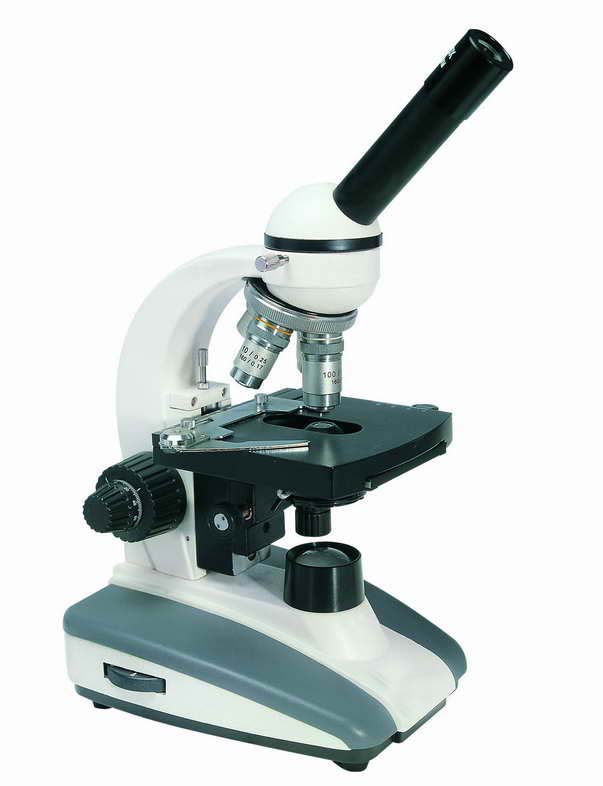
Portable microscope with rechargeable battery.

Ever needed to use a microscope but couldn’t find a power outlet? Find tripping on extension cords and having cables near water dangerous?

Searching for an affordable, portable microscope that’s crammed with features?

STOP! Look no further.

Image

For just $649, you can buy a quality device which comes with its own rechargeable power source.

This microscope is perfect for fish farmers, fish retailers, educational institutions and vets.

It comes with outstanding optics equal to any thousand-dollar model.

Check out the specification of this fantastic piece of equipment:

o Monocular eyepiece: 10x

o Objectives: 4x, 10x, 40x, 100x

o Mechanical stage with coaxial drive/rack and pinion adjustment

o Built-in rechargeable battery (for cordless operation)

o Detachable AC power cord

o Battery life up to 20 hours

o Light source: LED illumination (variable intensity)

Go to the shopping cart & BUY IT NOW for just $649!

And add a professional carry case for a mere $99!

Available at http://thefishvet.com.au/shop/shopping.html

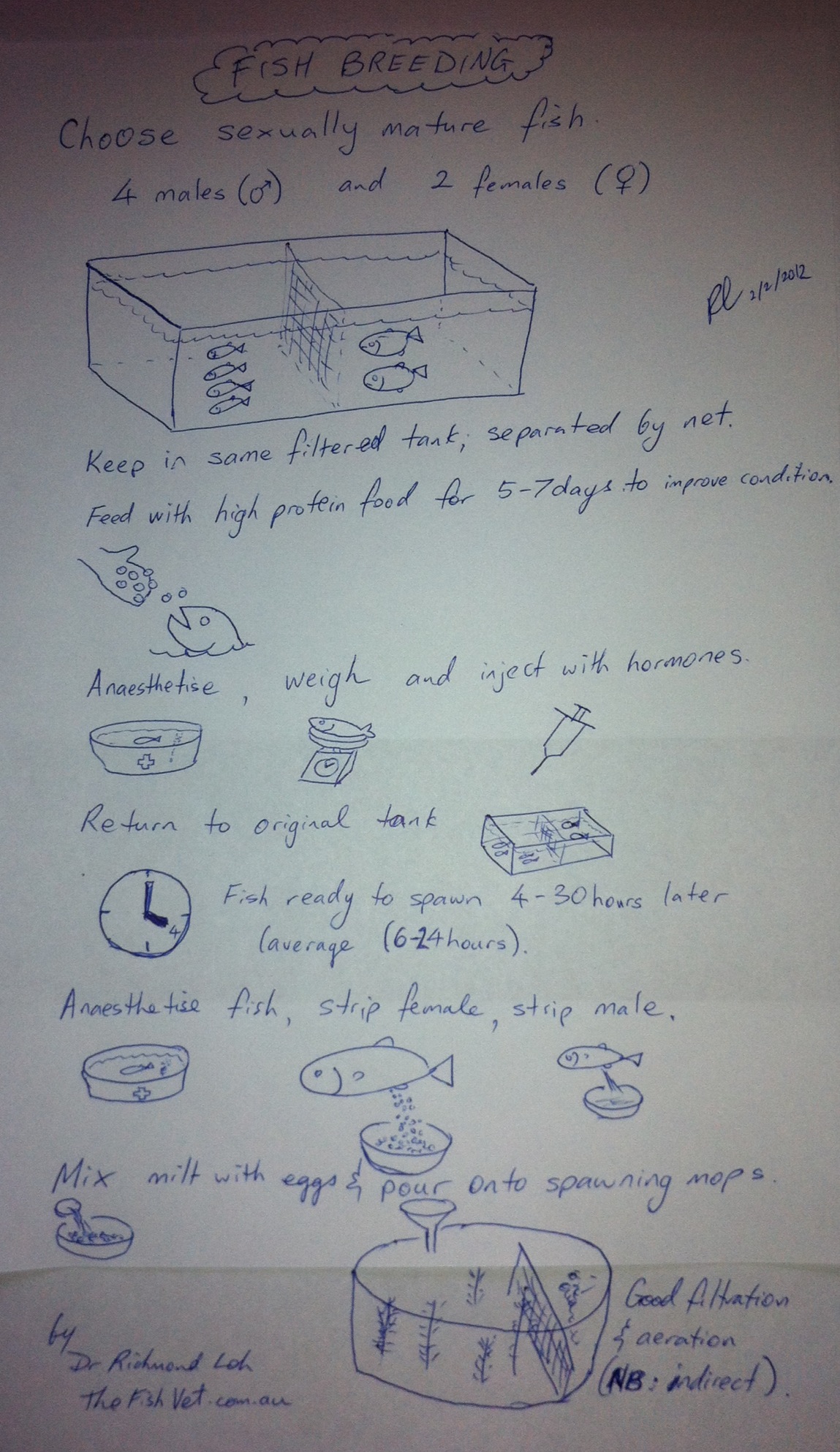
Pictorial guide for fish breeding using hormones.

It’s not too late in the season to breed fish. Fry will still have a good 2 months of warm weather to grow up in time before the weather changes.

And sometimes fish breeders need a bit of a helping hand to get their fish in the mood. I’ve made a simple flow chart on how the process should go.

There are many benefits to artificially spawn fish and they include: Ability to select & pair up individuals,
Compress & Synchronise spawning period,
Increased chances of fertilisation and yield.

More detailed information is available in
Fish Vetting Essentials – an essential text on fish health and medicine. Book is available from the shopping cart section of this website – http://www.thefishvet.com.au

Download free contents pages here – http://thefishvet.com.au/pdf/sample.pdf

Green pond killer

Those with algae-laden ponds will need to keep an eye on their pond life.
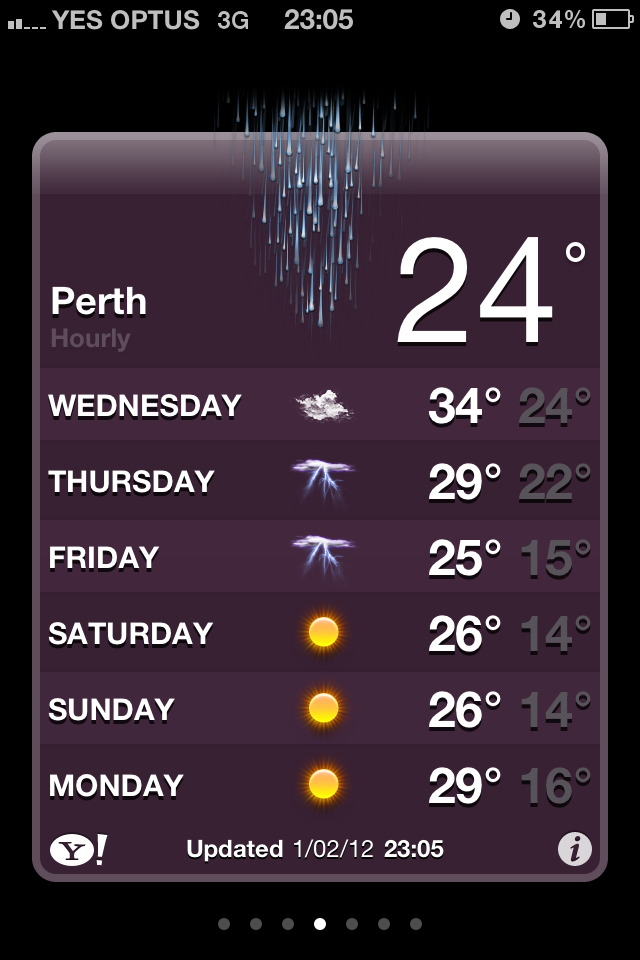
After days of hot sunny weather, algae may be abundant in your pond. After today’s overcast weather and the next couple of days of cloudy, rainy weather, your algae will be starved of light and the bloom may crash.

This may be sufficient to deplete the dissolved oxygen and cause fish to die.

So, ensure your aerators and water pumps are on continuously, especially through the night when dissolved oxygen will be at its lowest.

International Association for Aquatic Animal Medicine (IAAAM) – Medway Scholarship Program

From: <admin@iaaam.org>
Date: Wed, Feb 1, 2012 at 6:09 PM
Subject: Medway Scholarship Program
To: thefishvet@gmail.com

The International Association for Aquatic Animal Medicine (IAAAM) recognizes a continuing need for the funding of research projects focused on aquatic animal medicine. IAAAM also recognizes the value and importance for students to gain solid scientific research training. To help fill these needs and to further promote involvement of students in aquatic animal medicine, the IAAAM has established the Medway Scholarship Program designed to support research experiences for students interested in pursuing careers in aquatic animal medicine.

The program is primarily intended for undergraduate, veterinary, and graduate students without stipends or other sources of funding. The purpose of the scholarship is to partially support the student for research experiences beyond that which they might experience with normal undergraduate classwork or a graduate/veterinary curriculum.

Please visit the IAAAM.org website for more details and an application form.
_____________________________

Lisa A. Murphy, VMD, DABT
IAAAM Board – Education

Highways for fish travel.

The development of fishnext term passage research in a historical context

Christos Katopodisa, Corresponding Author Contact Information, E-mail The Corresponding Author, John G. Williamsb, 1, E-mail The Corresponding Author

a Katopodis Ecohydraulics Ltd., 122 Valence Avenue, Winnipeg, MB, Canada, R3T 3W7
b National Marine Fisheries Service – NOAA Fisheries, Northwest Fisheries Science Center, 2725 Montlake Blvd. East, Seattle, WA 98112-2097, USA

Received 16 November 2010; revised 13 July 2011; Accepted 15 July 2011. Available online 9 August 2011.

Abstract

For centuries, humankind has constructed dams on rivers to control flooding, provide for irrigation and utilize potential energy for power, but generally dams had no or little provision for previous termfishnext term passage. Thus, they often blocked or impeded previous termfishnext term migrations. Empirical observations and “trial and error” approaches that characterized historical efforts to develop passage systems for upstream migrating previous termfishnext term often did not work. The first concerted efforts to develop scientifically based fishways for upstream migrant previous termfishnext term began in the early 1900s in Europe with field and laboratory testing of different fishway designs. These were followed by extensive efforts beginning in the 1940s in North America. Scientifically based testing of configurations for fishways for downstream migrant previous termfishnext term began in the 1950s. Nearly all early efforts were directed at salmonid species, with smaller efforts on shad. Recent species at risk legislation in the U.S.A., Canada, and Europe places renewed emphasis on previous termfishnext term passage for all migratory species, and efforts have also begun to develop successful passage strategies for migratory species in other countries worldwide. This has led to renewed efforts to develop effective passage systems and to try creative solutions using natural materials in addition to concrete or metal used in standard technical fishways. Regardless of the type of structures built, history has shown that the most effective means to develop successful installations has occurred when engineers and biologists worked together systematically to design passage structures based on the ability and willingness of previous termfishnext term to seek and accept the hydraulic conditions presented to them.