FRDC funds Dr Loh to attend Aquavet in the US.

The Aquavet Admissions Committee found that Dr Loh was too overqualified to attend Aquavet I and have selected him to participate in Aquavet II instead.

Dr Loh’s trip to the US later this year has been made possible through the –

People development program: 2011 Aquatic Animal Health Training Scheme is supported by funding from the FRDC
on behalf of the Australian Government”. This federal grant was won on a competitive basis.

Thank you to all those who have helped Dr Loh in the application process and by providing references and testimonials.

These can be viewed at – http://thefishvet.com.au/testimonials.html

Stuck for a Valentine’s gift? How about “gems” of information?

Check out Practical Fish Keeping’s review of Fish Vetting Essentials:

  • written by two highly qualified aquatic experts
  • dip into it for nearly everything
  • the information is priceless
  • real world advice
  • gems of information revealed
  • a sensible investment
  • it takes pride of place

To order your own copy, go to: http://www.thefishvet.com.au/shop/shopping.html

What’s the difference between a skin fluke and a gill fluke?

Gyrodactylus Dactylogyrus
Identifying features 1 pair of large hooks on the tail. Multiple small hooklets on the tail.“Eye-spots” visible.
Mode of reproduction Viviparous (developing embryo with large hooks may be visible inside). Produce eggs (golden brown vitelline bodies seen in the body).
Life-cycle No stage of the lifecycle is free of the host and parasite numbers can build up on the host fish extremely rapidly. Eggs are laid into the water and hatch to release a free-living oncomiracidium that actively seeks out a host.
Management/treatment Single treatment will suffice. Multiple treatments required.

Special net for koi.

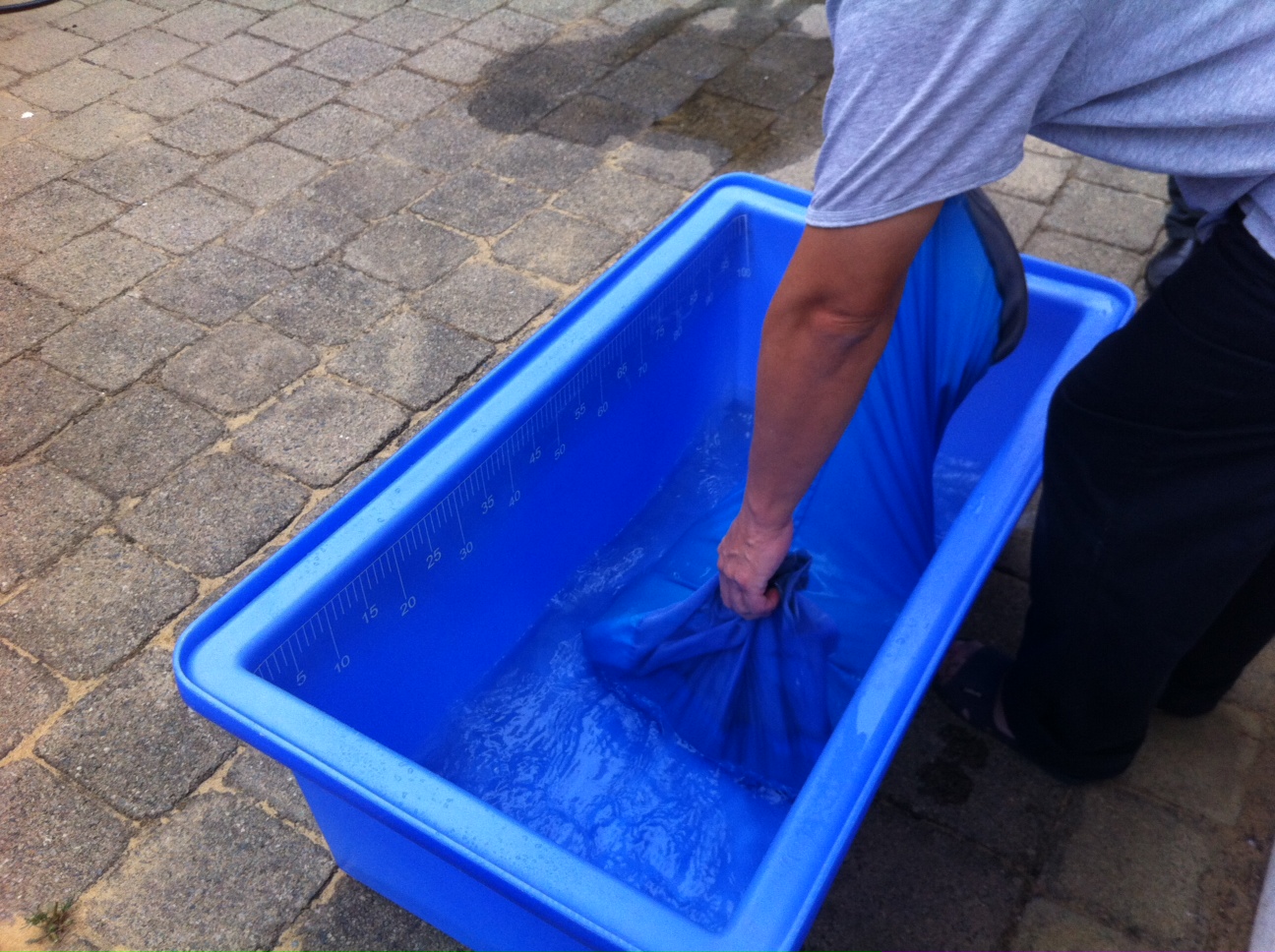
The first time I saw this net, I wondered,”How on earth do you catch a fish using a net with solid sides, a short handle and one that with a large hole at the end!”

It’s actually a fantastic way to transfer large fish from one tank to another (see blog on moving large fish also – https://thefishvet.wordpress.com/2012/02/08/how-to-move-large-fishes/) because the solid cloth sides allows you to transport the fish in a small amount of water and the fish never loses scales or gets tangled in it. The mesh material allows the handler to drain the net and the open end allows the fish to slide out easily.

Simply ingenious!

This short clip shows how we use it –  http://www.youtube.com/watch?v=Qy34rOBboUs

AVMA and WAVMA combine to present an aquatic veterinary conference – August 2012.

From: Dr. David Scarfe <DScarfe@avma.org>


Participate in the

Aquatic Veterinary Program

2012 AVMA Convention

San Diego Convention Center

August 4-7, 2012

Four days of aquatic veterinary sessions for the private practitioner. Sessions (see attached) jointly organized by AVMA’s Aquatic Veterinary Medicine Committee & the World Aquatic Veterinary Medical Association.

BIG SAVINGS for Early Registration!!!!           www.avmaconvention.org/avma12

·      Register by May 7 and save up to $100

·      Book your hotel first and receive a discount code for an additional $25 savings

·      Aquatic veterinarians – enter “E219” as the VIP/Promotion Code online and receive another $25 registration discount

WAVMA Annual General Meeting

Come meet your colleagues, feast on free food & find out what’s evolving in Aquatic Veterinary Medicine

Monday, August 6 @ 6:00 – 10:00 pm (Location to be announced)

Planning to attend the AGM and feast with the best? —– e-mail cypcarpio@aol.com by July 31, 2012 to ensure we have food and space for you

Visit the AVMA/WAVMA Aquatic Veterinary Medicine Booth (2220/2222) in the Exhibit Hall


But that’s not all for the 2012 AVMA Convention ………. Step Ahead, you’ll be glad you did!

  • ·        Earn up to 42 Hours of CE – Join thousands of the best and brightest minds in veterinary medicine for CE, networking opportunities, and fun in San Diego.  Fill your days with some of the strongest CE available, then enjoy some down-time at family-friendly social events or out-and-about at one of San Diego’s many attractions.
  • ·        Over 360 Educational Sessions to Choose From – With sessions covering all areas of veterinary medicine, from aquatics to zoos the AVMA offers something for everyone in the profession.
  • ·        Hot topics & Future Trends – New session formats like “Inside the Issues” allow exploring and discussing the latest industry developments. It’s a unique new way to get in tune with the pulse of what’s going on in the everyday veterinary medicine world.

For More Information, Housing & Registration go to www.avmaconvention.org/avma12

See the flyer from the link below for more information and the full aquatic veterinary program

2012-02_AVMAConvention_Flyer

Abalone show no immunity to herpesvirus.

The information below is extracted from:

Health Highlights
Aquatic Animal Health Subprogram Newsletter
Volume 11, Issue 2, January 2012

The recent emergence in Australia of abalone viral ganglioneuritis (AVG) caused by abalone herpeslike virus (AbHV) is recognised as a major commercial threat to both the wild capture and the fledgling aquaculture industries, and an environmental threat to wild populations in general.

Results from recent research demonstrated that abalone from various sites along the Victorian coast-line that had experienced outbreaks of AVG remained susceptible to infection and disease. The mature abalone that were sourced from these areas are presumed to be survivors from the previous disease outbreaks and the juvenile abalone are presumed to be the progeny of these survivors.
Neither groups demonstrated any resistance to reinfection and appeared to be as susceptible as naïve counterparts sourced from a farm that had no history of AVG.
This knowledge will assist industry and regulators manage the wild abalone fishery into the future.

Why use dechlorinators?

It’s Saturday, the first day of the weekend and let’s do some maintenance on the fish tank and make large partial water changes without adding chlorine neutraliser….

Or, let’s top up the fish pond… .and forget to turn off the tap first before going to the shops….

Catastrophe strikes and your fish become exposed to dangerous levels of chlorine.

Have a read of this article I co-authored with a colleague while I was working as a veterinary fish pathologist in Tasmania.

This article describes  the microscopic damage that occurs in fish with chlorine toxicosis in fish.


Histopathology of Chlorine Toxicity in Rainbow Trout


Did you know fish can drown?

Did you know that some fish like the Siamese fighting fish can drown if they do not have access to air at the surface? The labyrinth fishes, catfishes and lung fishes are just some of the common air-breathing fishes. They have developed this adaptation to allow them to live in waters that carry little dissolved oxygen.