How to become a fish veterinarian?

I just had a query on how would someone become a fish vet.

My response below:

The first is to learn about fish and the best way is by keeping fish. Volunteering or working at a fish shop and at the public aquarium are other ways of gaining more experience.

Then, you’ll have to study hard and get into vet school. Just to let you know that 99% of vet school is not about fish, but all the learnings during the 5-7 year course are 100% transferable. Keep an open mind and be ready for opportunities. After vet school, there are lots of post-graduate courses, research degrees, training opportunities, examinations (e.g. Australian & New Zealand College of Veterinary Scientists) and groups you can join (e.g. World Aquatic Veterinary Medical Association).

The sorts of fish vets include –

  • veterinary fish pathologist
  • pet fish veterinarian
  • aquaculture veterinarian
  • veterinary researcher
  • policy writing
  • wildlife veterinarian

There are not a lot of openings for fish vets at the current time, so you must be willing to travel to where the job is. Alternatively, it will help if you’re entrepreneurial
and that way, you can create your own jobs and attract your own clients.

You can follow me on the various social networking sites (see below) and read “Fish Vetting Essentials“.


Now on: TwitterBlogFacebookLinkedinYouTube
Yours sincerely,

Dr Richmond Loh
BSc BVMS MPhil (Vet Path) MANZCVS (Aquatics & Pathobiology) DipPMVeterinarian / Adjunct Lecturer Murdoch University / Secretary Aquatic Animal Health Chapter ANZCVS
The Fish Vet, Perth, Western Australia. Mobile Veterinary Service for fish and other aquatic creatures.
http://www.thefishvet.com.au
Ph: +61 (0)421 822 383
Looking for books? Check out this site.

Do you eat fish?

This is one of the most questions I get asked when I tell people what I do as a fish vet.

“You love fish?”
“Yes.”
“Do you eat fish?”
“Yes.”
They reply with a puzzled look,”But I thought you look after them. Why do you still eat fish?”

I could reply,”Do you keep mammals?… Then you still eat cow?”

But instead, I likened it to a person who keeps a pet parrot would still eat chicken.

Now they realise that a fish is not just a fish, just like a bird is not just a bird, and a mammal is not just a mammal.

Having said that I eat fish, my friend once exclaimed that the pig is the tastiest animal on the planet.

So, bacon and eggs for tomorrow morning might be the go.

Still battling high water temperatures?

How about constructing your own evaporative cooling tower?

Some above-ground ponds may be over heating during Perth’s hot summer weather, particularly if there is not sufficient shade supplied.

High water temperatures can be very stressful for fish. Combine this with ectoparasitism and bacterial infection, no amount of medication would ever be the magic bullet cure unless you can address the issue of high water temperatures.

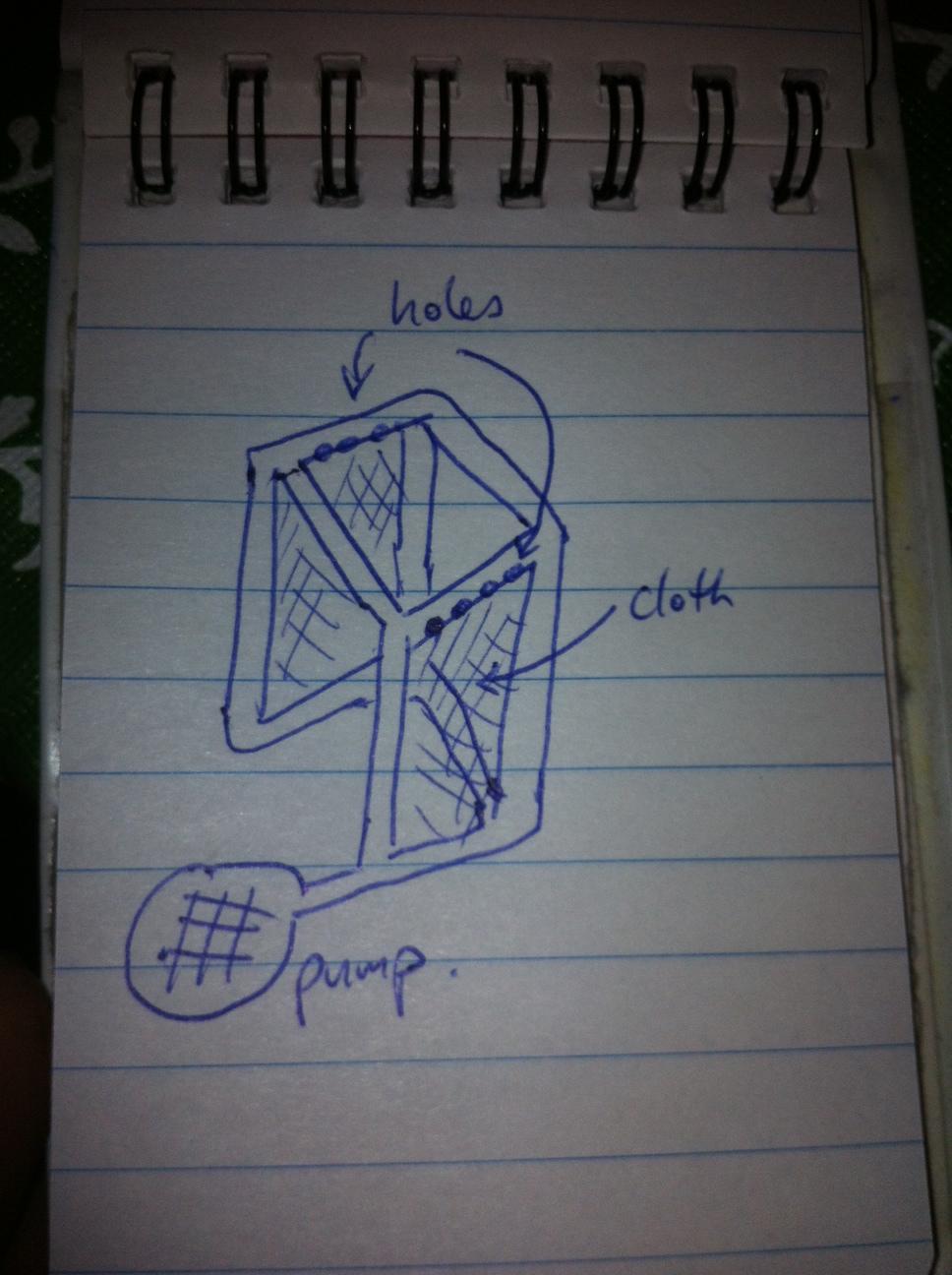
I discussed a case with Mr Chris Rout, my colleague at Boronia Aquarium, and he came up with an innovative solution – why not construct an evaporative water cooler out of polypipe? I wish I could have said that I thought of this on my own!

I hope my hand drawn picture below of his idea does him justice. This contraption would sit in the middle of the pond. A fan may be place on the side of the pond to blow air across the wet cloth (hessian bag or shade cloth) to improve its efficiency. Make sure the fan is secure and is situated well away from the water’s edge.

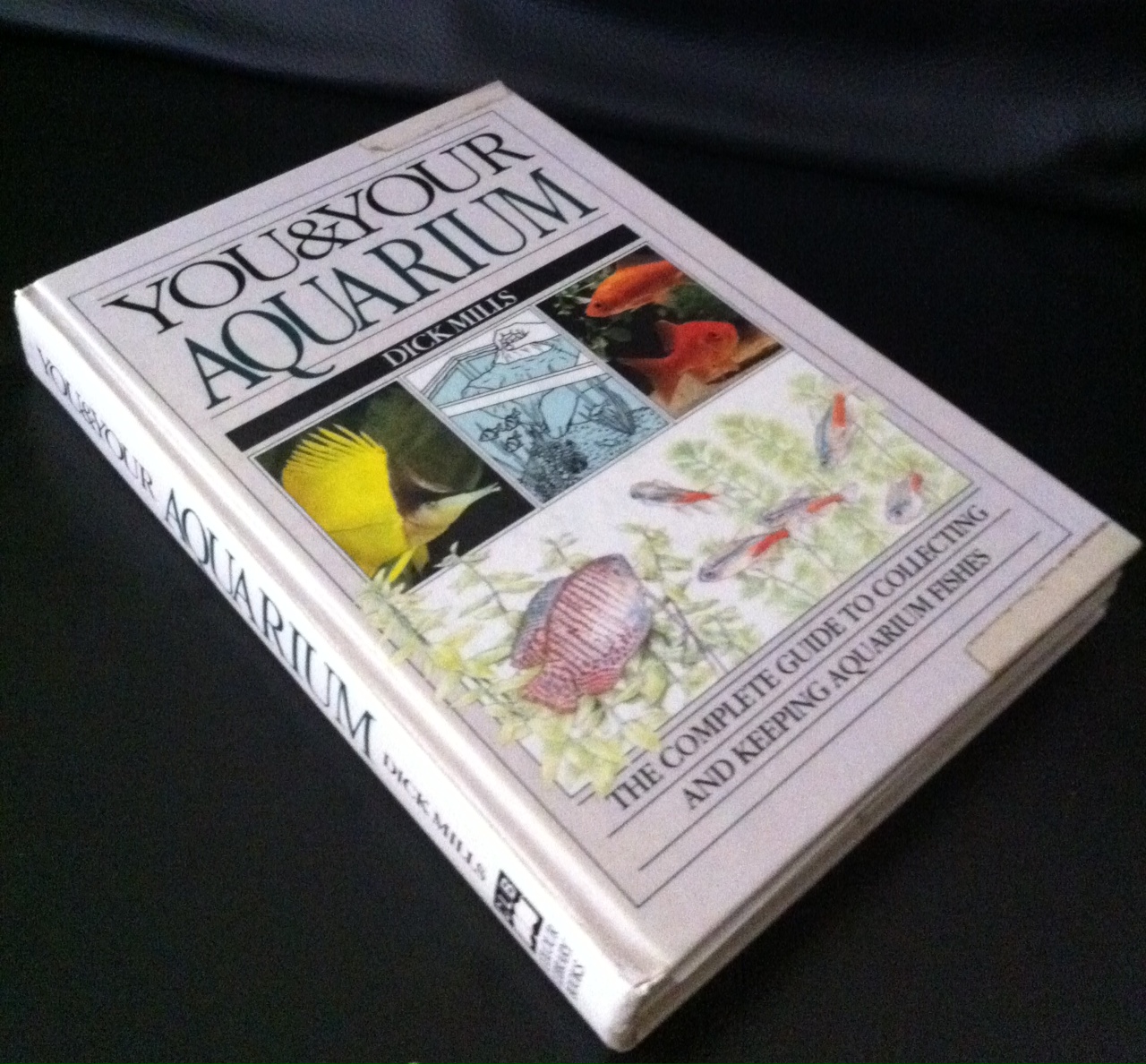
The best fish book for beginners.

One of my students asked me what is the best fishkeeping book for beginners.

This was my very first fish book I was given as a present from my eldest brother for my tenth birthday.

It became my fish bible (or fish bubble!) and I read it from cover to cover, memorising all the fish names and their biological requirements. I learnt about fish diseases and fish husbandry and breeding. It gave me hours of pleasure just looking at the beautiful pictures of fishes. My quest was to collect as many of those fishes as I could.

Today it still takes pride of place on my bookshelf, next to my Fish Vetting Essentials.

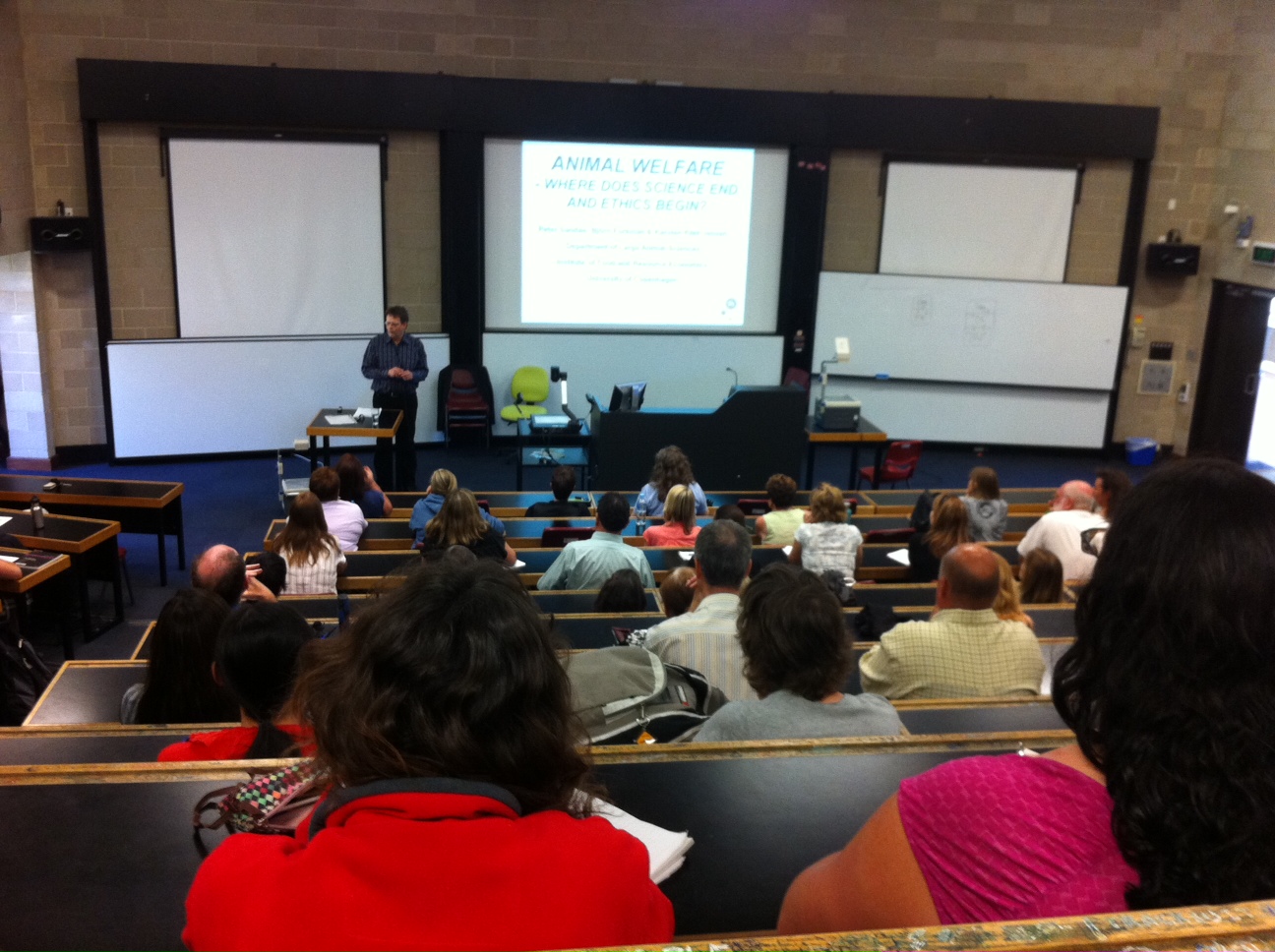
Peter Sandoe’s lecture on animal welfare & ethics.

What did we learn from the lecture?

Different people have different ideas about what constitutes good welfare. These assumptions will influence how we interpret experimental results to form conclusions that can vary.

Animal welfare is a series of double, triple or even quadruple standards where the context of it makes all the difference. For the same animal, the standards will vary greatly depending on whether it is a pet, an experimental animal, farmed, in the wild or is seen as vermin. Mice, rats and rabbits are the best examples of quadruple standards. At one end of the scale, people would spend hundreds of dollars on veterinary bills on a pet rabbit; then people would allow it to be experimented on provided that pain and suffering is minimised as a university experiment; kill them for meat and fur as a farmed animal; allow them to their own devices to fend for themselves in the wild; and trap, poison or even use biological control agents against them to die a slow agonising death as vermin. Same animal type, same human making the call, different standards.

These were just some of the points that Peter Sandoe drew to our attention in the very thought provoking lecture.

Fish pathology in the in Pathobiology Fellowship Chapter exams of the ANZCVS.

I’ve been asked by one of the examiners to contribute some pathognomonic gross lesions of fish diseases to be included in the veterinary pathology specialist exams for the Australian & New Zealand College of Veterinary Scientists. I’d have to say that unlike diseases in terrestrial animals, there are fewer than 10 diseases in fishes that you can identify grossly without using special equipment or further investigatory work. Every other disease relies on testing water quality, examination using microscopy, bacterial cultures and virology techniques. This is really where the interesting things begin!

Dr Loh will be attending a lecture on animal welfare & ethics.

The lunch time lecture is held at Murdoch University and it is being presented by Peter Sandoe, Professor of Bioethics at the University of Copenhagen, Denmark.

Information about the event is in the flyer below.
PDF.pdf

In the USA, “for every dollar of fish stocking, $36 dollars of recreational angler-related expenditures are supported.”

With abalone enthusiasts licking their lips and sharpening their screw drivers for their next treasure hunt this Sunday, some might wonder where all the money they pay for fishing licences go.

Although it hasn’t been formally done for abalone, one of the ways the money may be spent is towards breeding fish for restocking the wild fisheries.

Aquaculture Economics & Management: Official Journal of the International Association of Aquaculture Economics and Management
Volume 16, Number 1 (January 2012)
THE ECONOMIC CONTRIBUTION OF THE PRIVATE, RECREATION-BASED AQUACULTURE INDUSTRY IN THE WESTERN UNITED STATES
Authors: DanielBryan Deisenroth 1, CraigA. Bond 2, JohnB. Loomis 2
Author Affiliations:
1: Department of Economics, California State University
2: Department of Agricultural and Resource Economics, Colorado State University
Source: Aquaculture Economics & Management: Official Journal of the International Association of Aquaculture Economics and Management, Volume 16, Number 1 (January 2012)
Page Numbers: 1 – 21
Available Full Text:
Full Text: Subscription Required to view full text
Format: PDF
Size: unknown
Location: Publisher’s Site
Authentication: EBSCOhost EJS
Abstract: This article explores the economic contribution of the private, recreation-based aquaculture industry in the Western United States. New sectors are constructed in IMPLAN input-output software using data gathered between 2007 and 2010 from producers and their direct customers (stocked fisheries). Information from a third survey of anglers in Colorado and California is integrated to predict the short-term shocks that would occur to various industries if anglers at privately stocked fisheries were to discontinue fishing (simulating a hypothetical collapse of the industry). Accounting for both the backward and forward linkages of the private, recreation-based aquaculture industry’s production, model results indicate that for every dollar of fish stocking, $36 dollars of recreational angler-related expenditures are supported, and that the total economic contribution of this industry in the Western United States is roughly $2 billion annually. This is the first study addressing the forward linkages and total economic contribution of this industry.
Citation: DanielBryan Deisenroth, CraigA. Bond, JohnB. Loomis . THE ECONOMIC CONTRIBUTION OF THE PRIVATE, RECREATION-BASED AQUACULTURE INDUSTRY IN THE WESTERN UNITED STATES. Aquaculture Economics & Management: Official Journal of the International Association of Aquaculture Economics and Management, Volume 16, Number 1 (January 2012), pp. 1-21, ;
URL: http://ejournals.ebsco.com/direct.asp?ArticleID=4435992EA6DAF558CB3C

Sometimes we need “accountants”…