The FRDC is calling for Expressions Of Interest against the priority areas for R&D in 2013.

From: Crispian Ashby [crispian.ashby@frdc.com.au]

Sent: Sunday, May 06, 2012 1:30 AM

Subject: 2013 call for expressions of interest

Dear all

Please find attached the finalised 2013 annual competitive round call for expressions of interest.

The Fisheries Research and Development Corporation (FRDC) is calling for
Expressions Of Interest (EOI) against the priority areas for RD&E investment
nominated below by the FRABs/Subprograms/Coordination programs and their
alignment with the FRDC’s RD&E Plan (see http://www.frdc.com.au/plans). Applications
for the EOI are to be completed using the FRDC’s online application software
FishNet (see http://www.fishnet.gov.au).

Thanks Crispian ><> ><> ><> ><> ><> ><> ><> ><> ><> ><> ><> ><> ><> ><> ><> ><> ><> ><>

Crispian Ashby FRDC Programs Manager Locked Bag 222, Deakin West ACT 2600

Fisheries Research House, 25 Geils Court, Deakin

Phone: 02 6285 0425

Fax: 02 6285 0499 ><> ><> ><> ><> ><> ><> ><> ><> ><> ><> ><> ><> ><> ><> ><> ><> ><> ><>

The FRDC’s Research, Development and Extension Plan 2010-2015 is now available at http://www.frdc.com.au/research/current-plan or contact the FRDC to receive hard copies.

See document at the link below.

2013 Annual Competitive Round Call for Expression Of Interest

Do you work out?

Going through the security checks at the airport just now, the guy asked me,”Do you work out?” motioning with both arms, imitating doing arm curls.

I was a bit puzzled and flattered at the same time when I replied, “Just a little.” was it my physique that gave it away? I asked him,”How did you know?”

He replied, “I can tell from your bag.”

Still puzzled, I looked at my bag and it had a promo label,”The Book People.”

Then I peered into the contents and realised I had two large black containers that resemble the body building protein supplements!

These are in fact not fitness supplements, but they are actually sample containers of fish food that one of the importers had asked me to provide a review.

Maybe I ought to work out a little more.

20120507-192549.jpg

Improvement in hatching rates in the Japanese eel.

There has been immense effort all over the world at trying to close the life cycle of the eel as a food fish. Looks like these guys are making head way.

;

;

;

Aquaculture
Volume 341, Number 5 (March 2012)
Improvement in hatching rates in the Japanese eel Anguilla japonica by the control of rearing temperatures in the late stage of maturation in the female parents
Authors: Masayuki Yoshikawa
Author Affiliations:
no affiliations available
Source: Aquaculture, Volume 341, Number 5 (March 2012)
Page Numbers: 223 – 227
Available Full Text:
Full Text: Subscription Required to view full text
Format: PDF
Size: Unknown
Location: Publisher’s Site
Authentication: Publisher’s Site
Abstract: In order to improve the hatching rate of eggs from artificially matured female eels, the environmental temperature during late stages of oocyte development was lowered from 20°C (control) to 18°C. Thus, female eels in which artificial maturation was induced at 20°C using chum salmon pituitary extract (SPE) were transferred to water at either 20 or 18°C at the beginning of the late stage of maturation. Biopsy by cannulation was carried out on the basis of an increase in body weight index (BWI; BWI=body weight×100/initial body weight). If the eel was judged to be nearing final maturation, a priming dose of SPE was administered, followed by a dose of maturation-inducing hormone (MIH). The average hatching rates of the eggs from the eels maintained at 20 and 18°C were 16.6% (n=10) and 45.9% (n=11), respectively. The hatching rates at 18°C were significantly higher than those at 20°C. At 20°C, the optimal timing of cannulation may often be missed due to both the rapid rate of oocyte development in the late stage and the unreliability of the BWI-based timing criterion. At 18°C, rapid development of maturing oocytes in the late stage was prevented, and the optimal ovulation induction period was prolonged. Accordingly, the likelihood for optimal timing of cannulation was increased, as reflected in high hatching rates of fertilised eggs. On the basis of these results, a temperature of 18°C in late stages of oocyte development is recommended to help in improving and stabilising the hatching rate.
Citation: Masayuki Yoshikawa . Improvement in hatching rates in the Japanese eel Anguilla japonicaby the control of rearing temperatures in the late stage of maturation in the female parents. Aquaculture, Volume 341, Number 5 (March 2012), pp. 223-227, ;
URL: http://ejournals.ebsco.com/direct.asp?ArticleID=4F2FA1EB06703CE2EDCE

Plastic surgery for fish?

How do you fix and prevent drooping eyes in surface dwelling fish?
;

The condition in the fish pictured below (left) is very common for top dwelling fish and especially in arowanas. These guys are surface dwellers, and they are built to search the surface for food such as fallen insects, fish and can even leap out of the water into the air to catch birds in flight!

;

;

In most aquaria, there is not really much for them to look at up top. Actually, more things happen at the bottom and their eyes get lazy and droop.

So, how can you prevent this from happening? Some keep these fish in below ground tanks in purpose-built fish rooms with a lot of air space. Some advocate placing ping pong balls to float in the tank, giving them something to look at that’s near the surface. So those are some ways for prevention.

But what to do if they already have this condition? Plastic surgery for fish? There is a method whereby the fish is placed under surgical anaesthesia and the dorsal aspect of the globe is resected, scarified and then sutured in place … in other words, the fish is given an eye lift!

;

“Health and Husbandry of Aquatic Laboratory Animals” & “Advanced Aquatic Animal Care and Husbandry” – University of Prince Edward Island.

This sounds like a good course to attend for those vets attending to fish in the schools, universities, labs and research institutes.

http://lifelonglearning.upei.ca/cai


———- Forwarded message ———-

From: Dr. David Scarfe <DScarfe@avma.org>
Date: Fri, May 4, 2012 at 4:15 AM
Subject: AquaVetMed: UPEI Aquatic Veterinary Courses/Workshops (June 4-7, 2012)
To:

2012 Canadian Aquaculture Institute/Atlantic Veterinary College – Aquatic Veterinary Courses/Workshops

May 3, 2012


Prince Edward Island, Canada – The Canadian Aquaculture Institute & Atlantic Veterinary College are pleased to be partnering with the Centre for Life-Long Learning in the delivery of two new introductory and advanced courses in Aquatic Animal Health.


“Health and Husbandry of Aquatic Laboratory Animals” (June 4-5) & “Advanced Aquatic Animal Care and Husbandry” (June 6-7) will be offered at the Atlantic Veterinary College, University of Prince Edward Island, Charlottetown, PEI from June 4-7 2012, under the leadership of Dr. Jonathan Spears, Clinical Laboratory Animal Veterinarian.


The target audience for these workshops includes attending, clinical or consulting veterinarians, facility managers, aquatic facility technicians, and Animal Care Committee members working with academic or research institutions that house laboratory aquatic animals and/or review animal care protocols involving manipulating fish in the wild. These workshops provide hands-on experience in procedures for aquatic laboratory animals.


These modular workshops are designed to provide both introductory and advanced training in aquatic animal health. The 2, two-day workshops can be taken separately or combined; however, the “Advanced Aquatic Animal Care and Husbandry” has a prerequisite of either participating in the basic workshop, or equivalent training and experience.


This workshop is designed to fulfill the requirements of Continuing Education for Attending, Clinical or Consulting Veterinarians, Facility Managers and Facility Technicians as required by the Canadian Council on Animal Care.


Cost – Tuition for each two-day workshop is $700 (GST included) with one lunch and nutrition breaks provided. Space is limited, so please register early.


Accommodations – Some space may be available in student residences on the UPEI campus. Contact UPEI Residence, Food and Conferences Services at (902) 566-0362 | Fax (902) 628-4319 | conference@upei.ca.


For complete workshop descriptions, or to register, go to http://lifelonglearning.upei.ca/cai.


Other Workshop Inquiries: please contact Dr. Jonathan Spears at jspears@upei.ca or (902) 620-5026.

___________________________

AquaVetMed e-News provides information to veterinary and veterinary-allied subscribers concerning aquatic animal medicine, health, welfare, public health and seafood safety, obtained from a variety of sources (largely AquaVetMed subscribers). While provided by the American Veterinary Medical Association’s, Aquatic Veterinary Medicine Committee and are for public distribution, they do not necessarily reflect the opinion of the AVMA or the veterinary profession. See the AVMA Terms of Use (http://tinyurl.com/29h2rf) for further information.


If e-News information is used elsewhere please acknowledge AquaVetMed as the source. Encourage individuals to subscribe rather than distribute through list serves.


Messages may contain attachments that will have been scanned for known viruses.


Subscription and Contributions: Interested veterinarians and veterinary-allied professionals can subscribe, unsubscribe, or contribute pertinent news or information, by sending a message with “For AquaVetMed -” and the topic in the subject line, to dscarfe@avma.org.


Note: Undelivered e-mails will not be resent; Subscribers will be deleted from the list after repeated undelivered or bounced messages and will have to re-subscribe.


Visit our website: www.avma.org


________________________________


Follow me on: TwitterBlogFacebookLinkedinYouTube

Yours sincerely,

Dr Richmond Loh
BSc BVMS MPhil (Vet Path) MANZCVS (Aquatics & Pathobiology) DipPM

Veterinarian / Adjunct Lecturer Murdoch University / Secretary Aquatic Animal Health Chapter ANZCVS / WAMVA Communications Comm
The Fish Vet, Perth, Western Australia. Mobile Veterinary Service for fish and other aquatic creatures.
http://www.thefishvet.com.au
Ph: +61 (0)421 822 383

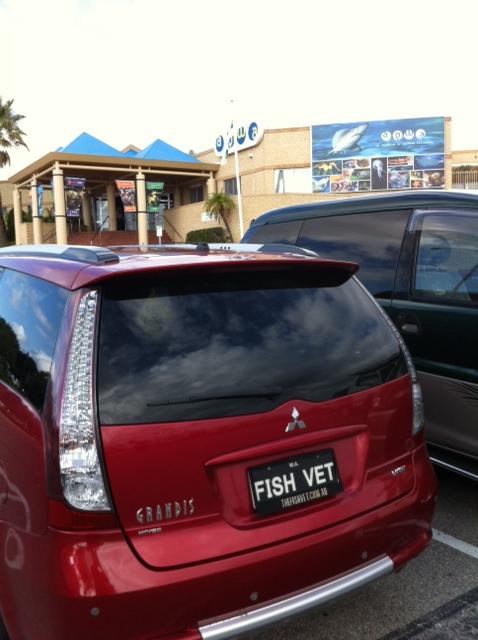
Dr Loh will be consulting in Melbourne this Saturday.

For this trip, Dr Richmond Loh will be accompanied by a budding fish loving new graduate veterinarian, Dr Jo Bannister, this Saturday (5 May) at Boronia Aquarium.

So, if you book in to see me, you’ll have the pleasure of having two qualified veterinarians for the price of one!

So, book an appointment today!

Address: Boronia Aquarium
1/262a Dorset Road,
Boronia,
VIC.
3155
Tel:Fax:

Email:

+61 3 9762 2044+61 3 9762 2144

sales2@boroniaaquarium.com.au

How can you use water safely , straight from the tap?


One of my client’s is quite a clever inventor. Check out the device he made to help make water top ups so much easier. This DIY device connects straight to the hose and with lots of other features including:

  • its own tap (saves you having to run back and forth to the main tap),
  • a U curve (so that it won’t fall off from the tank and flood your floors),
  • a wide diameter pipe at the outlet to insert activated charcoal (this will adsorb the chlorine and most other chemicals that may be dissolved in the water).

What a clever man! He has allowed me to share this with you on my blog. So, I’m going to give him a bit of a plug – read on…


This clever inventor also invented the “unicoil’. Check out his other invention here – http://www.unicoil.com.au/

I wish I could be clever enough to invent something useful!

Give me bubbles and I’ll eat more and grow faster!


Aquaculture Research
Volume 43, Number 5 (April 2012)
Feed intake, growth and metabolism of Nile tilapia (Oreochromis niloticus) in relation to dissolved oxygen concentration
Authors: An Tran-Duy 1, Anne A van Dam 2, Johan W Schrama 1
Author Affiliations:
1: Department of Animal Sciences, Aquaculture and Fisheries Group, Wageningen University, Wageningen, The Netherlands
2: Department of Environmental Resources, UNESCO-IHE Institute for Water Education, Delft, The Netherlands
Source: Aquaculture Research, Volume 43, Number 5 (April 2012)
Page Numbers: 730 – 744
Available Full Text:
Full Text: Subscription Required to view full text
Format: PDF
Size: unknown
Location: Publisher’s Site
Authentication: EBSCOhost EJS
Abstract: The objectives of the present study were to determine, for Nile tilapia of different body weights and fed to satiation, (1) the incipient dissolved oxygen (DO) concentration at which feed intake starts to level off and (2) the effect of DO on nitrogen and energy balances. Two successive experiments were conducted with two weight classes of male Nile tilapia (>200 g, Experiment 1, and <100 g, Experiment 2). Twelve aquaria were assigned to four DO levels in each experiment. Fish were fed to apparent satiation for 16 and 20 days in Experiments 1 and 2 respectively. The DO-feed intake curve of fish<100 g appeared to level off at a DO of 3 mg L-1, while that of fish>200 g continued to increase as DO increased from 2.6 to 6.0 mg L-1. The latter curve suggests that the incipient DO for fish>200 g is about 5.5 mg L-1. Fish tended to reduce the energy requirement for maintenance as DO declined. A DO reduction caused an increase in the apparent digestibility coefficient (ADC), but further declines in DO to levels below a critical level decreased ADC. The DO did not have a considerable effect on the metabolizable energy: digestible energy ratio of the diet.
Citation: An Tran-Duy, Anne A van Dam, Johan W Schrama . Feed intake, growth and metabolism of Nile tilapia (Oreochromis niloticus) in relation to dissolved oxygen concentration. Aquaculture Research, Volume 43, Number 5 (April 2012), pp. 730-744, <http://ejournals.ebsco.com/direct.asp?ArticleID=412EB83B501BE3B259FF&gt;
URL: http://ejournals.ebsco.com/direct.asp?ArticleID=412EB83B501BE3B259FF