They’re on my facebook fanpage – LIKE IT!
http://facebook.com/thefishvetdrloh
There are two folders of my recent visits to public aquaria:
Mystic Aquarium – Connecticut
&
New York Aquarium
All about Fish Vetting – Dr Richmond Loh
They’re on my facebook fanpage – LIKE IT!
http://facebook.com/thefishvetdrloh
There are two folders of my recent visits to public aquaria:
Mystic Aquarium – Connecticut
&
New York Aquarium
I watched this during the flight. Very unbelievable. Biologically impossible. And what are they going to eat in the middle of the dessert?
Plus I think they need a veterinarian to do the health checks prior to massive mobilisation of 10,000 fish and its water.
From: “Dr. David Scarfe”
Date: 13 June 2012 4:45:03 PDT
Subject: AquaVetMed: BC Salmon Farms Confirmed Negative for IHN
All BC Salmon Farms Confirmed Negative for IHN Virus
June 13, 2012
Vancouver, Canada – In a further public update, it is now confirmed that independent tests on all active Atlantic salmon farm sites in BC have come back negative for the Infectious Haematopoietic Necrosis (IHN) virus. The independent tests were part of the immediate organised follow-up by farmers to a finding of the IHN virus on a farm north of Tofino in mid-May.
“Our farmers are still paying close attention to their fish and there continues to be additional testing – but these results are welcome news for our members who work hard each day to protect the health of their fish,” said Mary Ellen Walling, Executive Director of the BC Salmon Farmers Association. IHN is an endemic virus found naturally in the Pacific Ocean. The virus can be carried by wild salmon, trout and herring, however studies have shown that because of their historical exposure to it, they have a natural resistance to it. Atlantic salmon can be highly susceptible to the virus and it can cause high mortalities on farm sites
In mid-May, Mainstream Canada found IHN in two pens of their Dixon Bay farm. The company responded swiftly, working with the Canadian Food Inspection Agency to quarantine the site and remove the fish as quickly as possible. “Mainstream has really been an exemplary leader in this situation – they quickly made the right decisions that likely helped in protecting all of the other farms, and they set a high bar when it comes to sharing their information with the public,” said Ms Walling.
A viral management plan developed by the BCSFA for its Atlantic-salmon growing members was enacted immediately and … … … .
See the source (http://tinyurl.com/6v2rshv) for the full story.
___________________________
AquaVetMed e-News provides information to veterinary and veterinary-allied subscribers concerning aquatic animal medicine, health, welfare, public health and seafood safety, obtained from a variety of sources (largely AquaVetMed subscribers). While provided by the American Veterinary Medical Association’s, Aquatic Veterinary Medicine Committee and are for public distribution, they do not necessarily reflect the opinion of the AVMA or the veterinary profession. See the AVMA Terms of Use (http://tinyurl.com/29h2rf) for further information.
If e-News information is used elsewhere please acknowledge AquaVetMed as the source. Encourage individuals to subscribe rather than distribute through list serves.
Messages may contain attachments that will have been scanned for known viruses.
Subscription and Contributions: Interested veterinarians and veterinary-allied professionals can subscribe, unsubscribe, or contribute pertinent news or information, by sending a message with “For AquaVetMed -” and the topic in the subject line, to dscarfe@avma.org.
Note: Undelivered e-mails will not be resent; Subscribers will be deleted from the list after repeated undelivered or bounced messages and will have to re-subscribe.
Visit our website: http://www.avma.org
__________________
National Geographic and Mystic Aquarium attached a critter cam on the snapping turtle at the
Tributary Mill Conservancy –
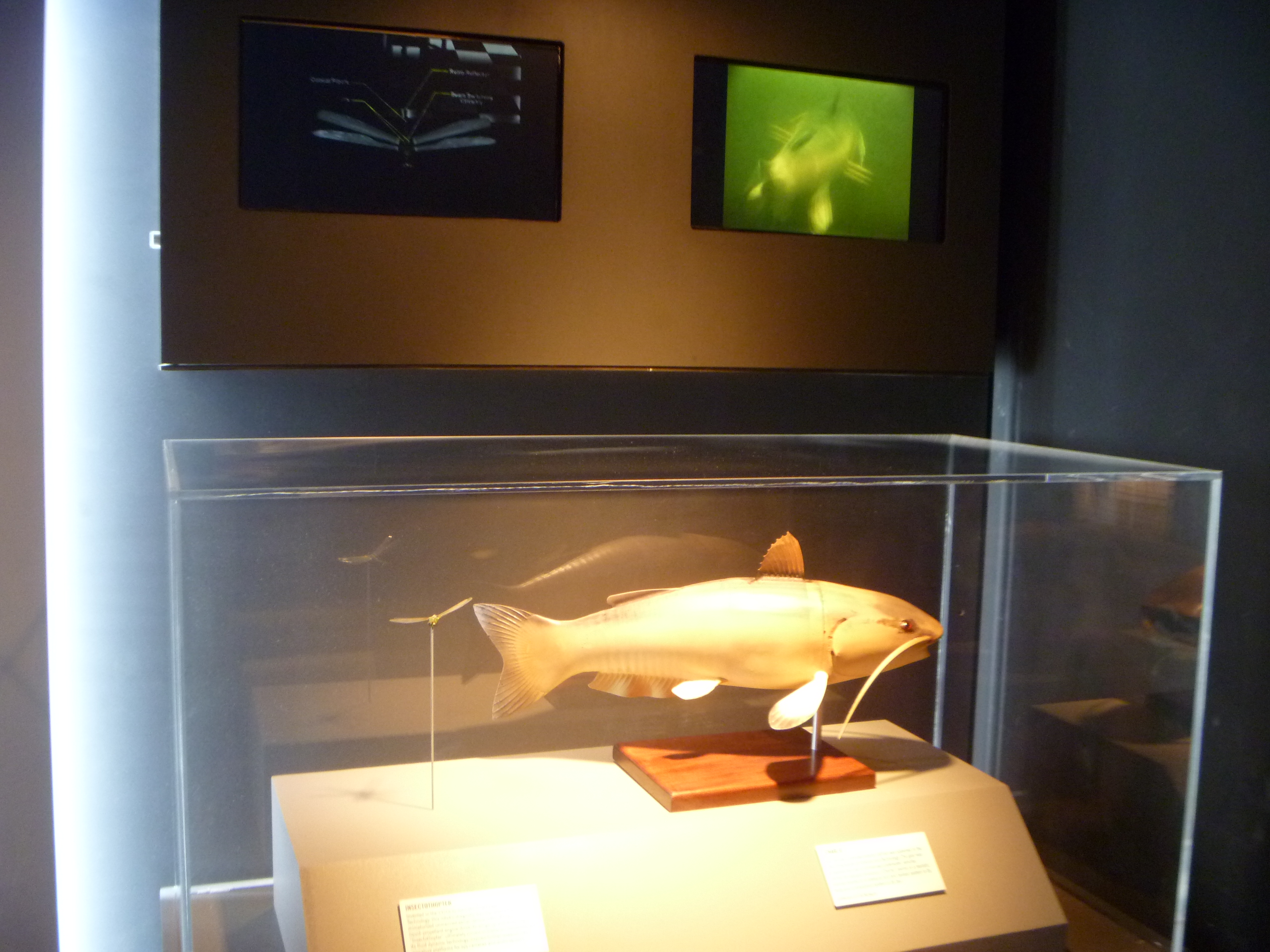
I visited the Discovery Times Square – Spy: The Secret World of Espionage.
“Charlie” the catfish.
This remote-controlled robotic catfish was spawned in the CIA’s Directorate of Science and Technology. The goal was to explore the use of unmanned underwater vehicles (UUVs) for aquatic missions. “Charlie” swims in a realistic manner thanks to a pressure hull and ballast system in tis body and a proulsion system in its tail.
My dream house would have a moat around it and a basement with windows that look into the moat. But this house has a real creek that runs through it and it’s filled with a huge variety of fauna, common and rare. I had the unique opportunity to be invited to see the work they are doing. Mills have traditionally been built alongside creeks so that they could harness the power of water. This had previously caused disruption to the ecosystem and caused blockage to the arteries of the delicate tributary ecosystem. Jim and Sandra Tripp have been fortunate enough to be guardians of this mill house by the creek and have put in their heart and soul into reversing the damage that had been done to the critters that depend on this waterway. This tributary is vital breeding ground to a huge range of aquatic animals who in turn provide food for aquatic, terrestrial and aerial animals.
Check out the pictures at – http://facebook.com/thefishvetdrloh –
More information about their project is at – http://tributarymill.org/
—
Follow me on: Twitter – Blog – Facebook – Linkedin – YouTube —
Yours sincerely,
Dr Richmond Loh
BSc, BVMS, MPhil (Vet Path), MANZCVS (Aquatics), MANZCVS (Pathobiology), DipPM.
Veterinarian | Adjunct Senior Lecturer Murdoch University | WAVMA Communications Committee Member |
Secretary Aquatic Animal Health Chapter – Australian and New Zealand College of Veterinary Scientists (ANZCVS)
The Fish Vet, Perth, Western Australia. Mobile Veterinary Service for fish and other aquatic creatures.
http://www.thefishvet.com.au
Ph: +61 (0)421 822 383
What can run, but cannot walk?
Water.
Nose.
Stockings.
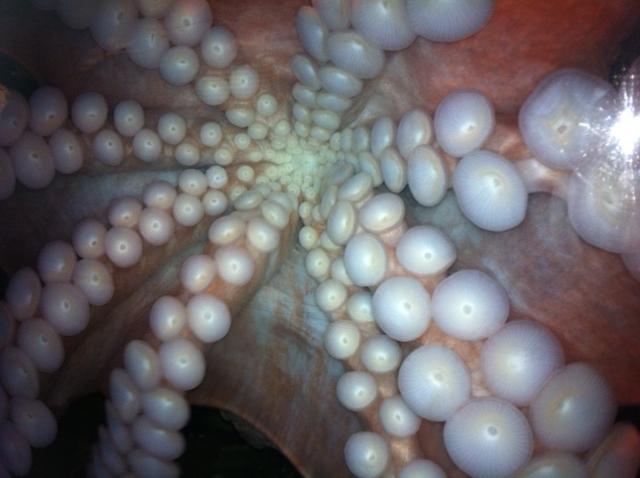
Taken at the Mystic Aquarium today.
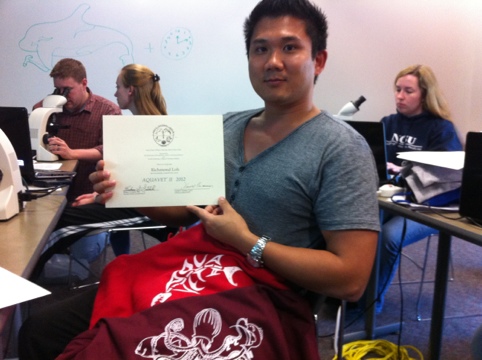
Two weeks of 10-12 hour days of intensive aquatic veterinary education is now completed.
Dr Loh’s trip to attend AquaVet has been made possible through the – “People development program: 2011 Aquatic Animal Health Training Scheme which is supported by funding from the FRDC on behalf of the Australian Government”.
This is the last day of the Aquavet II course.
Did you know that these prawns moult after they have grown by ~18% and around the time of the full moon (synchronised in line with the lunar cycle!)?
Did you know ~90% of the shrimp consumed in the USA is sourced from farms?
Did you know that shrimp farming occurs in the Arizona desert? They utilise water with 2ppt salinity and the nutrient-rich water used to irrigate salt tolerant durum wheat and olive groves.
Did you know that there have been >$20 billion in losses worldwide since 1980 due to disease?
More than 60% of shrimp diseases are due to viruses. WSSV can wipe out a country’s shrimp farming in as little as 3 days! It has >90 spp of crustacean hosts (close to 120spp at the last count)! Unfortunately no vaccine exists for shrimp.
How does disease spread? There are many ways and it can even include intentional sabotage!
The future of shrimp farming is predicted to be via the “super-intensive system” where it can yield 20,000-100,000 kg/ha. Why? There is no need for the expensive coastal location, utilises smaller land area and makes it possible for higher biosecurity.
Dr Loh’s trip to attend AquaVet has been made possible through the – “People development program: 2011 Aquatic Animal Health Training Scheme which is supported by funding from the FRDC on behalf of the Australian Government”.