Check out the pictures on The Fish Vet’s Facebook fanpage.
The Fish Vet visits Mandalay Bay Aquarium in Vegas.
Check out the pictures on the Facebook fanpage.
If you like the pictures, check out the video on feeding the sawfish by clicking here.
When should a veterinarian prescribe antibiotics?
Check out the AVMA’s policies on the matter as it relates to aquatic animals at this link: –
Judicious Use of Antimicrobials for Treatment of Aquatic Animals by Veterinarians
Add salt to your fish’s diet?
This abstract details that 7.5g of salt added per kilogram of food will improve growth rate in angelfish….
I wonder if it’s just increased water retention…
I guess you’ll have to read the whole paper to find out.
| Journal of Applied Aquaculture | |||||||||||||||||
| Volume 24, Number 1 (January 2012) | |||||||||||||||||
 |
Effects of Different Dietary Salt Levels on Growth and Salinity Tolerance of Angel Fish (Pterophyllum scalare) | ||||||||||||||||
| Authors: | SomayehPourali Motlagh 1, AsadMohammadi Zarejabad 1, Ehsan Ahmadifar 2 | ||||||||||||||||
| Author Affiliations: |
|
||||||||||||||||
| Source: | Journal of Applied Aquaculture, Volume 24, Number 1 (January 2012) | ||||||||||||||||
| Page Numbers: | 1 – 7 | ||||||||||||||||
| Available Full Text: |
|
||||||||||||||||
| Abstract: | This study investigated the effects of dietary salt (NaCl) levels on growth performance and salinity tolerance of angel fish (Pterophyllum scalare). Five diets were supplemented with 0 (control), 7.5, 15, 22.5, and 30 g kg-1salt, respectively. Over 56 days, weight gain and specific growth rate were similar for the fish fed diets supplemented with 0 (control), 22.5, and 30 g kg-1salt (P > 0.05), but slightly lower than fish fed the 7.5 and 15 g kg-1salt diets. Results showed that addition of 7.5 and 15 g kg-1salt to diets slightly increased specific growth rate (SGR), while decreased food coefficient ratio (FCR) and the highest final weight were observed in fish fed the diet containing 7.5 g kg-1salt. There was no significant difference in survival rate among groups at experimental period (P > 0.05). At the end of experiment, the angel fish were exposed to salinity stress (6, 9, and 12 ppt). There was no significant obvious trend in survival index after 48-h salinity stress (P < 0.05). | ||||||||||||||||
| Citation: | SomayehPourali Motlagh, AsadMohammadi Zarejabad, Ehsan Ahmadifar . Effects of Different Dietary Salt Levels on Growth and Salinity Tolerance of Angel Fish (Pterophyllum scalare). Journal of Applied Aquaculture, Volume 24, Number 1 (January 2012), pp. 1-7, <http://ejournals.ebsco.com/direct.asp?ArticleID=41809D158D9A1AE5E8A4> | ||||||||||||||||
| URL: | http://ejournals.ebsco.com/direct.asp?ArticleID=41809D158D9A1AE5E8A4 | ||||||||||||||||
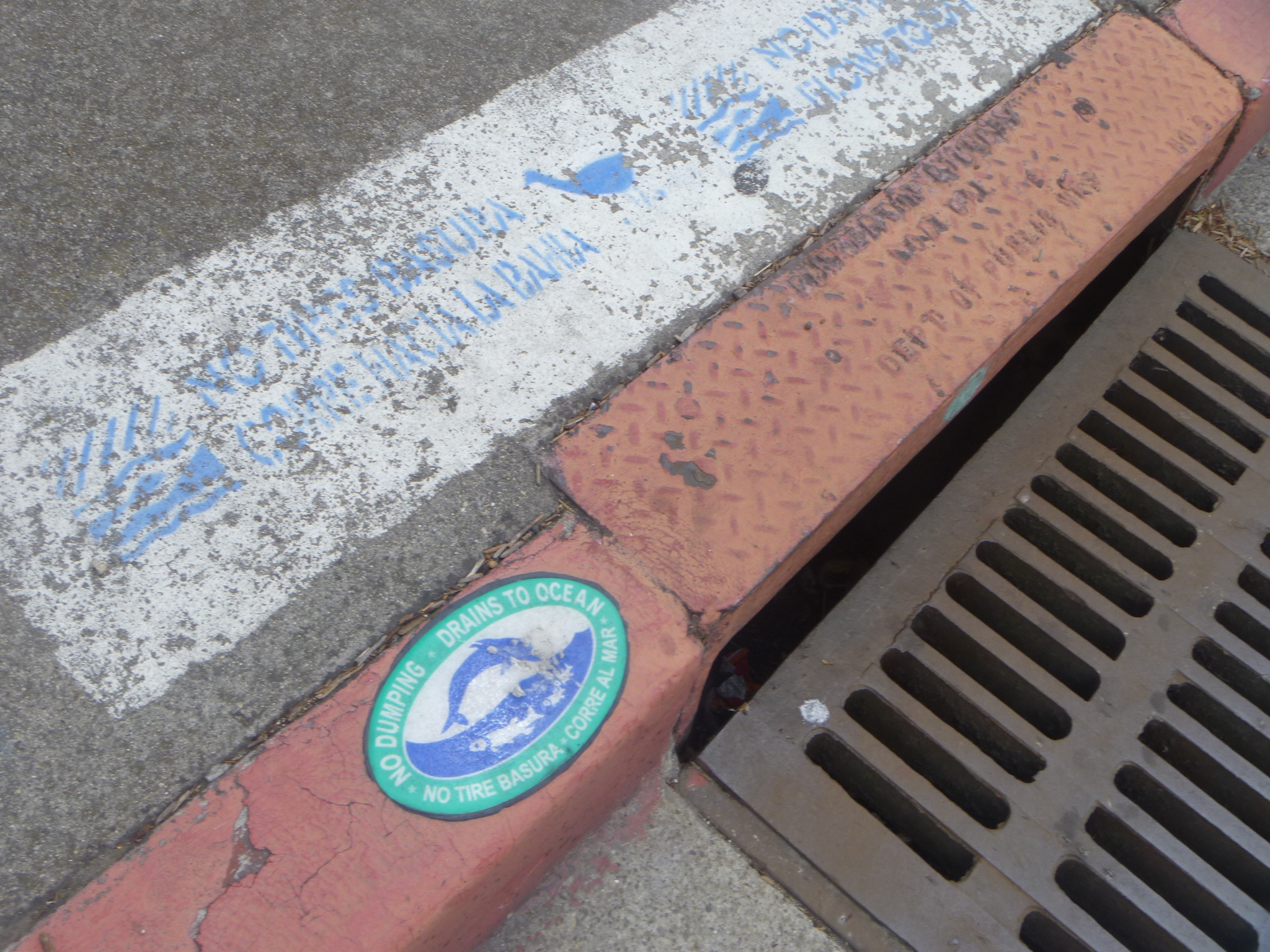
Be careful what goes down the drain.
There’s a crustacean that can rival Bruce Lee’s one-inch punch!

Head butting fish!
Water conserving toilet x2.
Not only is the toilet here dual flush, but it also utilises reclaimed water.
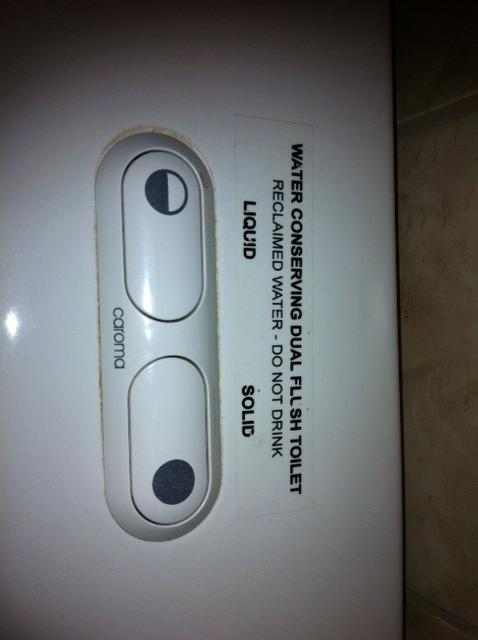
At a Hotel in Arizona.
Fish joke for Monday-itis
Where do stone fish go for entertainment?
The rock and roll concert.
She swallowed squid sperm causing severe pain.
This article shared by Dr Don Stremme.
Squid strikes woman’s oral cavity with spermatophores
15.jun.12
barfblog
Doug Powell
http://www.barfblog.com/blog/155368/12/06/15/squid-strikes-woman%E2%80%99s-oral-cavity-spermatophores
Park et al. report in the Journal of Paristology regarding a case of oral stings by spermatophores of the squid Todarodes pacificus. A 63-yr-old Korean woman experienced severe pain in her oral cavity immediately after eating a portion of parboiled squid along with its internal organs. She did not swallow the portion, but spat it out immediately. She complained of a pricking and foreign-body sensation in the oral cavity.
Twelve small, white spindle-shaped, bug-like organisms stuck in the mucous membrane of the tongue, cheek, and gingiva were completely removed, along with the affected mucosa. On the basis of their morphology and the presence of the sperm bag, the foreign bodies were identified as squid spermatophores.
Penetration of the oral mucosa by parasite-like sperm bags of squid: A case report in a Korean woman, Journal of Parasitology 98(1):222-223. 2012
Gab-Man Park, Jong-Yun Kim, Jeong-Ho Kim, and Jong-Ki Huh
http://www.bioone.org/doi/abs/10.1645/GE-2827.1