Selecting and caring for pet fish video.

A great little video prepared by the AVMA:

Selecting and caring for pet fish

Fish come in an array of sizes and colors, and they are ideal pets for people with space limitations or allergies to other pets. All species of fish need a responsible and loving owner to care for them, so be sure to pick the right fish for your home.

Download the video using this link – http://www.avmamedia.org/manage/mediaimg/s466-petfish.wmv

Hot & cold, how are your fish?

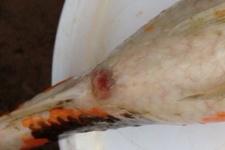
The recent spate of temperature fluctuations from almost summery conditions to deep winter cold may wreak havoc on your pond fish. Keep a keen eye on them, in particular, check their ventrum, their fins, their eyes and their vents for any signs of redness or ulcers developing.

20120928-214325.jpg

If in doubt, call Dr Loh, The Fish Vet on 0421 822 383 to check it out.

Free webinar – Ranching Southern Bluefin Tuna – The South Australian Way – by Claire Webber. « The Fish Vet’s Blog

Don’t forget that it’s on today!

See previous post by clicking on the link below for details-

https://thefishvet.com/2012/09/17/free-webinar-ranching-southern-bluefin-tuna-the-south-australian-way-by-claire-webber/

Do you want free student membership to the World Aquatic Veterinary Medical Association?

Last days remaining for this special offer. See link for details.

https://thefishvet.com/2012/09/06/free-student-membership-to-the-world-aquatic-veterinary-medical-association-wavma/

What do veterinary fish pathologists see down the microscope?

Have you wondered how and what we see when we examine your fish in the laboratory?

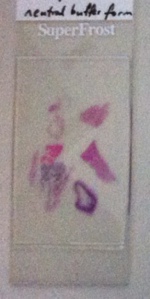
Specimens are first preserved in formalin and then sectioned to smaller portions, placed in a machine that will impregnate wax into the tissues, trimmed into wafer thin sections, placed on glass slides, stained with dyes and then cover slipped (see pic below).

20120922-091538.jpg

This entire process can take between 2-5 days. Only after all that is done can we only begin to examine the fish.

I’ve provided a video of the microscopic examination of a fish in histology section on TheFishVet’s YouTube Channel: http://youtu.be/_4BBlHPT-Ms

So, if you want to get some diagnostic lab testing conducted on your fish colony or farm, no matter where you are in Australia, contact Dr Richmond Loh, The Fish Vet.

See video on preparing fish for lab testing – http://m.youtube.com/watch?v=gZ8HWUEQL5c

The 7th annual C.L. Davis Day Seminar on Diagnostic Pathology – Pathology of aquatic animals, farmed and laboratory fish.

The Indian Association of Veterinary Pathologists (IAVP) with the CL Davis DVM Foundation of USA is offering a one-day seminar on the Pathology of aquatic animals, farmed and laboratory fish including integrated aquaculture and waste management.

The 8-hour seminar will provide information on integrated macroscopic and microscopi pathology of aquatic animals, Piscine models of human disease and fish as laboratory species and important diseases of farmed fish.

The seminar would be presented by Eric Lombardini at the National Research Center on Equines, Hisar (Haryana), India.

Who should attend?
Veterinary pathologists/specialists in aquatic animals working or aspiring to work for industry, academia and government institutions.

The detailed program is available on the following websites:


See also the flyer below:

SATELLITE SEMINAR Flyer 2012

How do you tube feed a leafy seadragon?

I just gastric tubed a seadragon who hasn’t eaten for a while, with freshly hatched Artemia and I thought I’d to share with sygnathid / seahorse owners on how it is done.

A catheter with the right diameter (thin enough to enter the oesophagus, but wide enough to allow passage of food to be injected) and length (needs to be long enough to reach the oesophagus which is located posterior to the gill chamber) is selected and it is glued to a syringe to prevent it from being dislodged from any back pressure.

The syringe is filled with newly hatched brine shrimp that’s rinsed in freshwater. Why we chose newly hatched Artemia is because it’s packed with nutrients and the particle size is small enough to fit through the bore of the feeding tube. The shrimp is rinsed in freshwater to remove wash off any muck and bacteria.

The feeding tube is inserted into the mouth and gently directed to the back of the throat where you’ll feel a bit if resistance. This is the opening to the stomach. When the fish attempts to swallow, you’ll feel the catheter can be inserted a little further and you’re in!

At this stage, you can slowly inject the food. In my case I gave 2-3ml of a brine shrimp slurry.

Although it is not so critical in other fish species, sygnathids should be kept submerged at all times where possible.

Fingers crossed Mr seadragon comes through.
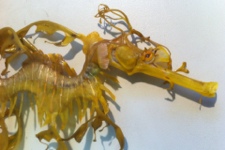
20120929-171226.jpg

New Zealand hospital removes ‘asparagus-sized’ eel from man’s bottom !

Read more here:

http://mobile.news.com.au/weird-true-freaky/new-zealand-hospital-removes-asparagus-sized-eel-from-mans-bottom/story-e6frflri-1226479886293


Yours sincerely,

Dr Richmond Loh
BSc BVMS MPhil MANZCVS (Aq & Pathol)
The Fish Vet, Perth, Western Australia.
Veterinary Medicine for fish.
http://www.thefishvet.com.au
Ph: +61 (0)421 822 383

Fish-e Trivia for Monday-itis. Are Mexican walking fish, fish?

Are Mexican walking fish, fish with legs?

My friends when seeing these creatures would either say,”Wow! Cool! These fish have got legs!”
Or they may say,”Ewwwww! The fish have legs!”

Well, the short answer is – no, axolotls are in fact, amphibians just like frogs and toads. They are permanently ‘stuck’ in their larval stage and breathe through their gills and skin! Imagine a tadpole with four legs, a tail and gills. That’s what these axolotls are!