For something light, The Salmon Dance Song by Chemical Brothers
All about Fish Vetting – Dr Richmond Loh
The floating raft system is one of the techniques used to hydroponically grow plants such as lettuce. If you have a fish pond or similar, you can do something similar too, and with just a few items.
Check out my latest YouTube upload to find out how you can make it happen.
| Aquaculture Research | |||||||||||||||||
| Volume 43, Number 10 (September 2012) | |||||||||||||||||
 |
Effect of stocking density and photoperiod on growth and survival in cultured early juvenile pot-bellied seahorses Hippocampus abdominalis Lesson, 1827 | ||||||||||||||||
| Authors: | Leonardo Martinez-Cardenas, Gary John Purser | ||||||||||||||||
| Author Affiliations: |
|
||||||||||||||||
| Source: | Aquaculture Research, Volume 43, Number 10 (September 2012) | ||||||||||||||||
| Page Numbers: | 1536 – 1549 | ||||||||||||||||
| Available Full Text: |
|
||||||||||||||||
| Abstract: | The effect of stocking density and photoperiod on Hippocampus abdominaliswas examined in this study. Stocking densities of 45, 30, 15 and 5 seahorses 3 L-1were tested on newborns. Growth and survival were independent of stocking density. A second stocking-density experiment aimed to remove the effect of an early mortality experienced in experiment 1 using older juveniles at 25, 15 and 5 seahorses 3 L-1. There were no differences in the parameters measured. Also, the effect of photoperiod was investigated on seahorses cultured under 24:00, 16:08 and 08:16 (L:D) photoperiods. A single Artemia meal was delivered at 10:00 hours. Survival and body growth in 16:08 and 08:16 hours were higher than in 24:00 hours. In a second experiment, seahorses were cultured in the photoperiods and conditions described for experiment 1, except they were fed twice the amount in two meals delivered at 10:00 and 16:30 hours. The seahorses in 16:08 hours showed better growth than the other treatments, but there were no differences in survival. These results suggest that early juvenile H. abdominaliscan be cultured at higher stocking densities than previously reported, without compromising growth and survival, and when feeding was not limiting, grew better in an extended photoperiod (16:08) but not in 24:00 hours. | ||||||||||||||||
| Citation: | Leonardo Martinez-Cardenas, Gary John Purser . Effect of stocking density and photoperiod on growth and survival in cultured early juvenile pot-bellied seahorses Hippocampus abdominalis Lesson, 1827. Aquaculture Research, Volume 43, Number 10 (September 2012), pp. 1536-1549, ; | ||||||||||||||||
| URL: | http://ejournals.ebsco.com/direct.asp?ArticleID=4B24B765D5200D9066DA | ||||||||||||||||
For your information, I have uploaded a video on the preparation of medicated feed.
A great little video prepared by the AVMA:
Fish come in an array of sizes and colors, and they are ideal pets for people with space limitations or allergies to other pets. All species of fish need a responsible and loving owner to care for them, so be sure to pick the right fish for your home.
Download the video using this link – http://www.avmamedia.org/manage/mediaimg/s466-petfish.wmv
The recent spate of temperature fluctuations from almost summery conditions to deep winter cold may wreak havoc on your pond fish. Keep a keen eye on them, in particular, check their ventrum, their fins, their eyes and their vents for any signs of redness or ulcers developing.
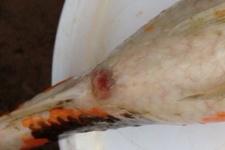
If in doubt, call Dr Loh, The Fish Vet on 0421 822 383 to check it out.
Will TheFishVet fall in and have to be “fished out”?
Check out my latest post on my YouTube channel.
Don’t forget that it’s on today!
See previous post by clicking on the link below for details-
Last days remaining for this special offer. See link for details.
Have you wondered how and what we see when we examine your fish in the laboratory?
Specimens are first preserved in formalin and then sectioned to smaller portions, placed in a machine that will impregnate wax into the tissues, trimmed into wafer thin sections, placed on glass slides, stained with dyes and then cover slipped (see pic below).
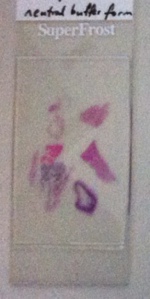
This entire process can take between 2-5 days. Only after all that is done can we only begin to examine the fish.
I’ve provided a video of the microscopic examination of a fish in histology section on TheFishVet’s YouTube Channel: http://youtu.be/_4BBlHPT-Ms
So, if you want to get some diagnostic lab testing conducted on your fish colony or farm, no matter where you are in Australia, contact Dr Richmond Loh, The Fish Vet.
See video on preparing fish for lab testing – http://m.youtube.com/watch?v=gZ8HWUEQL5c