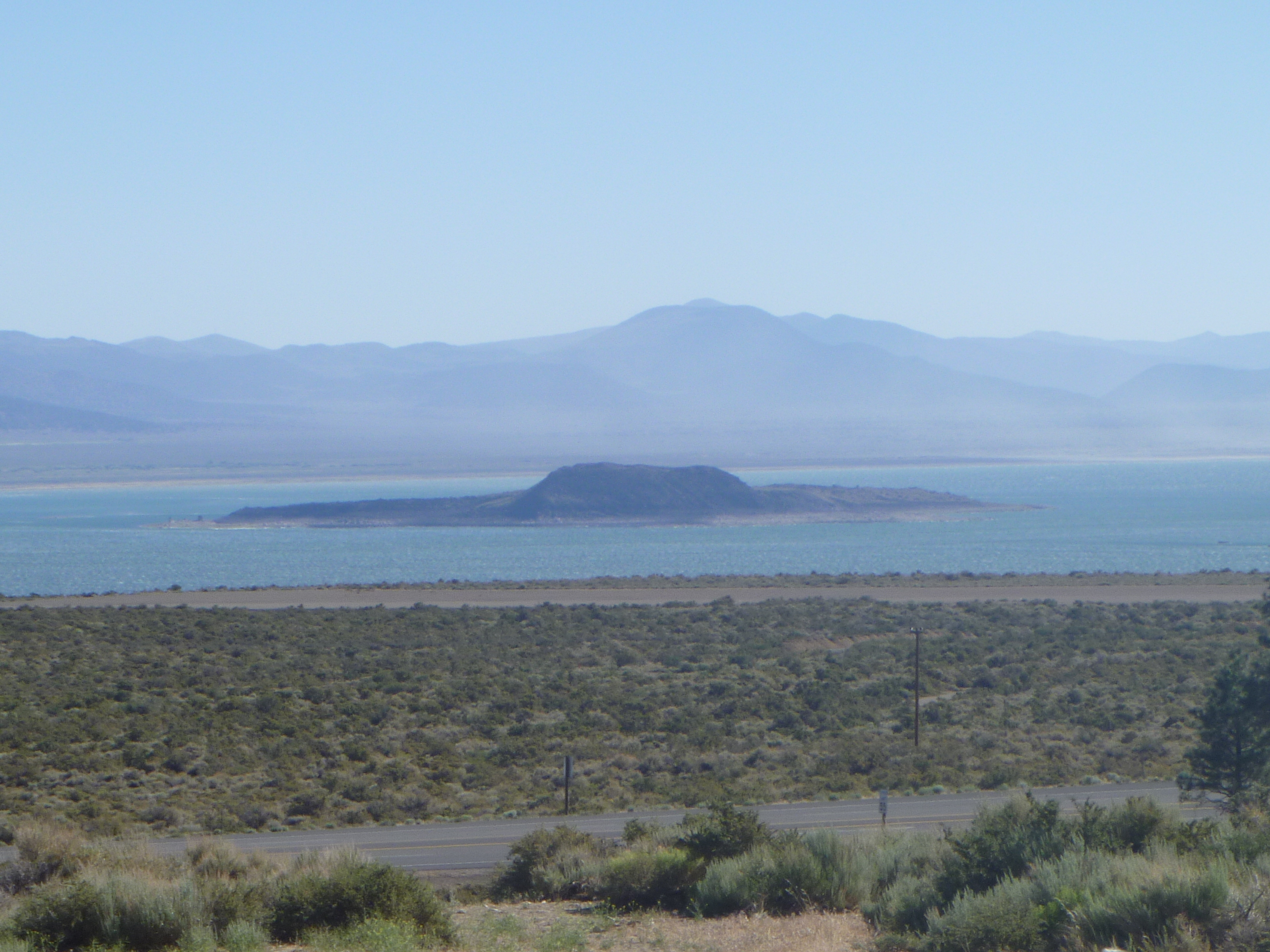
Fish-e Trivia for Monday-itis. Mono Lake.


Monolake is one of the oldest lakes in the world. It has no outlets. The lake is surrounded by pillars of calcium carbonate that form as the water evaporates. Some of these spires may be as old as 200-250 years.


During summer, 1 trillion brine shrimp reach maturity and provide a food source for water birds. In the olden days, the Mono tribes used to harvest the shrimp, drying them to preserve them for their winter diet and for bartering with neighbouring tribes.

How to support and grow the aquaculture industry? Cut red tape.

In this article ”

Cut Red Tape to Develop Irish Aquaculture, says Farmers Association”

(http://www.thefishsite.com/fishnews/18569/cut-red-tape-to-develop-irish-aquaculture-says-farmers-association), there are some parallels which we could apply to our respective industries wherever we are in the world.

The Irish Aquaculturists have identified the following as roadblocks and how they must be tackled:

    • “Focus must be addressed to ensuring a major shift towards better communication, rationalisation and reduction of cost to the taxpayer between all Departments and agencies tasked with overseeing the sector (last count, five Govt. Departments, eight state agencies and numerous local authorities to deal with a sector worth €120 at the farm gate);
    • Assign dedicated case officers and deputies to each licence application on hand in the department as points of contact for applicants with clear guidelines and time limits set out for each step of the process. This must go hand in hand with a major drive to increase the basic knowledge of practical aquaculture production among those dealing with the sector.
    • Remove unilateral decisions taken behind closed doors in the past 5 years without consultation such as the treatment of straight licence renewals, remove full Environmental Assessment or licence application review requirements for individual licence condition changes, remove demands for information which exceed national and EU law and remove restrictions on access to grant aid in NATURA 2000 areas. Before any new burden is placed on industry in future a full regulatory impact assessment must be carried out first.
    • Reduce repetition and cost in paperwork and remove inefficiencies in monitoring, auditing, spot checks and reporting by having a single agency deal with regulation rather than a queue of officials demanding duplicate information on a monthly basis from family run SMEs;
    • Both reform and properly resource the Aquaculture Licence Appeals Board to reflect its legal basis or find an agreed radical new form of public consultation;
    • Assist producers with practical issues from raising capital based on longer-term licences (currently they only last up to three generations of stock – 10 years) of tangible value to investors to using EU funds to assist in naturally occurring algal bloom or pollution incidents;
    • Respect the right of aquaculture operators to grow their produce in clean waters by upgrading waste water treatment works upstream of shellfish and finfish farming;
    • Assist and encourage marketing under national quality and environmental management schemes through Bord Bia promotion, improved enforcement of consumer labelling regulations and help displace foreign imports by encouraging more added value be created in Irish processing companies using Irish raw material.
    • Focus R&D funding into practical science to promote self-sufficiency in juvenile production, improved growth and disease resistance, logistics, early warning systems for plankton and jellyfish, predator management, adaptation of technology to Irish conditions, etc.
    • Use the wealth of environmental, health and industry data collected by the state in a positive promotion of the high standard of Irish aquaculture instead of leaving it to gather unused and inaccessible in a haphazard fashion.“

“It is only through a focus on these deliverables that Irish industry will prosper and coastal and rural areas create jobs and exports and look to the future with confidence.“

I’ve just come out of a 3+ hour meeting at the WAVMA Comms via Skype.

Working hard together to serve the global professional aquatic veterinary community. Check out the World Aquatic Veterinary Medical Association’s web page – http://www.wavma.org

Italians and Chinese love garlic. Let’s feed it to fish!

Dr Loh, with Ms Jessie Poon, at Boronia Aquarium have come up with a recipe that has had clinical evidence of improving the immune system of fish using such ingredients. If you’d like Dr Loh to mix some food up for you, just book to see The Fish Vet.

Journal of the World Aquaculture Society
Volume 43, Number 4 (August 2012)
Review of the Application of Garlic, Allium sativum, in Aquaculture
Authors: Jeong-Yeol Lee 1, Yang Gao 1
Author Affiliations:
1: Department of Aquaculture and Aquatic Science, Kunsan National University, Kunsan, Korea
Source: Journal of the World Aquaculture Society, Volume 43, Number 4 (August 2012)
Page Numbers: 447 – 458
Available Full Text:
Full Text: Subscription Required to view full text
Format: PDF
Size: unknown
Location: Publisher’s Site
Authentication: EBSCOhost EJS
Abstract: The extensive use of antibiotics and various chemical compounds has resulted in drug residue and resistant pathogens in treated fish. Drug residue not only pollutes the environment, but also threatens human consumers. In contrast, garlic as a well-known natural antibiotic that causes no environmental or physical side effects has shown to be effective for the treatment of many diseases in humans and animals owing to its antimicrobial, antioxidant, and antihypertensive properties. In aquacultural operations, garlic with dose optimization is strongly recommended. This review focuses on the application of garlic in various fish diseases treatments and the prospects of using garlic preparations in aquaculture.
Citation: Jeong-Yeol Lee, Yang Gao . Review of the Application of Garlic, Allium sativum, in Aquaculture. Journal of the World Aquaculture Society, Volume 43, Number 4 (August 2012), pp. 447-458, <http://ejournals.ebsco.com/direct.asp?ArticleID=4CA898C64E79522C5689&gt;
URL: http://ejournals.ebsco.com/direct.asp?ArticleID=4CA898C64E79522C5689

 
—
Follow me on: Facebook “Fin Page” – YouTube – Blog – Linkedin – Twitter

—
Yours sincerely,

Dr Richmond Loh

BSc, BVMS, MPhil (Vet Path), MANZCVS (Aquatics), MANZCVS (Pathobiology), DipPM.
Veterinarian | Adjunct Senior Lecturer Murdoch University | WAVMA Communications Committee Member |
Secretary Aquatic Animal Health Chapter – Australian and New Zealand College of Veterinary Scientists (ANZCVS)
The Fish Vet, Perth, Western Australia, AUSTRALIA. Mobile Veterinary Service for fish and other aquatic creatures.
http://www.thefishvet.com.au
Ph: +61 (0)421 822 383

New Journal – Journal of Aquaculture Research & Development

Journal of Aquaculture Research & Development (JARD) is an Open Access journal, publishes research/review/case reports articles. Authors are invited to submit original research/review articles related to JARD.

Please visit the Journal Home page by using following URL
http://www.omicsonline.org/jardhome.php

Enquiries to: editor.jard@omicsonline.com

—
Yours sincerely,

Dr Richmond Loh
BSc BVMS MPhil MANZCVS (Aq & Pathol)
The Fish Vet, Perth, Western Australia.
Veterinary Medicine for fish.
http://www.thefishvet.com.au
Ph: +61 (0)421 822 383

The world’s biggest network of Marine Protected Areas.

Today the Australian Federal Government finalised the outline of the world’s biggest network of Marine Protected Areas (MPAs), which is an historic and inspiring win for Australian marine conservation and the creatures that call our oceans home.

—
Yours sincerely,

Dr Richmond Loh
BSc BVMS MPhil MANZCVS (Aq & Pathol)
The Fish Vet, Perth, Western Australia.
Veterinary Medicine for fish.
http://www.thefishvet.com.au
Ph: +61 (0)421 822 383

Thinking of putting in a summer fish crop for your Aquaponics?

Those in Perth with rainbow trout still in their tanks will do well to start harvesting now, before the weather gets too warm for them to handle.

Now is about the right time to put in your barramundi. But the Growout period will only be till early April.

Those who prefer a longer term crop that can tolerate the seasonal weather patterns from summer to winter may consider silver perch (these are what I have).

Ever wondered why the skin of male koi are rough?

Check out the answer at The Fish Vet’s Facebook “Fin” page –

http://www.facebook.com/thefishvetdrloh

See the pictures in the “Under the Microscope” section.

While you’re there, make sure you LIKE the page so that you’ll get interesting pictorial updates too.

Sustained fisheries – the Australian Abalone Fishery is a good example.

Reviews in Fisheries Science
  Volume 20, Number 4 (October 2012)
     Fifty Years of Sustained Production from the Australian Abalone Fisheries
   Authors: S. Mayfield 1, C. Mundy 2, H. Gorfine 3, A.M. Hart 4, D. Worthington 5
   Author Affiliations:
 1: South Australian Research and Development Institute Aquatic Sciences
 2: Institute for Marine and Antarctic Studies
 3: Fisheries Victoria
 4: Fisheries WA
 5: AMBRAD Consulting
   Source: Reviews in Fisheries Science, Volume 20, Number 4 (October 2012)
   Page Numbers: 220 – 250
   Available Full Text:
Full Text: Subscription Required to view full text
Format: PDF
Size: unknown
Location: Publisher’s Site
Authentication: EBSCOhost EJS
   Abstract: The sustained production of abalone from the five state-managed (Tasmania, Victoria, South Australia, New South Wales, and Western Australia) Australian abalone fisheries has contrasted with many of those elsewhere that exhibited rapid and sustained declines in production. Australian abalone fisheries are significant at local, regional, state, national, and international scales. Key attributes are (1) harvesting, processing, and reinvestment of profits occur away from major metropolitan centers; (2) they are among the most valuable wild-catch species in all states; (3) the combined Australian abalone harvest in 2011 (>4,500 t) had a landed value of ~AU$200M and represented 15% of the Australian total wild-catch production; and (4) this level of production made these fisheries the dominant contributor (60%) to global wild-catch abalone production. Unlike many other abalone fisheries, total catches were controlled by limited entry, quotas, size limits, and geographic boundaries, overseen by stringent compliance regimes, early in their history. Subsequently, state-based research programs, explicitly tasked with providing scientific advice to support management decisions, undertook assessments to match harvests with stock productivity. This information upon which to base management decisions contributed to long-term (>20 years) stable harvests and enabled relationships among stakeholders to develop around consideration of the information and advice for management. In general, rights-holders developed stewardship for the resource, and this has led to numerous important outcomes, including evolving resource co-management and a nationally representative industry entity, the Abalone Council of Australia. The Abalone Council of Australia, state-based industry entities, and ongoing relationships among rights-holders, fishery managers, and researchers play vital roles in addressing and overcoming current and impending challenges for these fisheries. These difficulties include (1) urban encroachment into coastal regions (the so-called “sea change” phenomenon); (2) a growing interest in access to the abalone resource, reflecting the increasing, culturally diverse Australian population; (3) the ever-present threat of illegal fishing; (4) recent total allowable commercial catch reductions, particularly in Victoria and New South Wales, to facilitate stock rebuilding; (5) changing market conditions; (6) declining profitability from increasing operational costs and appreciation of the Australian dollar; and (7) environmental changes, such as prolonged drought and warmer seas associated with shifts in climate. Overall, this review demonstrates that abalone can be harvested sustainably over extended periods, despite aspects of their demography that suggest higher vulnerability to overexploitation, providing the management systems that control harvesting activities and external impacts that encompass several key underpinning elements. This review also identifies likely challenges to sustained production and shows that the future of these stocks and fisheries will require proactive strategies to mitigate current threats to sustainability and to maintain economically viable productivity.
   Citation: S. Mayfield, C. Mundy, H. Gorfine, A.M. Hart, D. Worthington . Fifty Years of Sustained Production from the Australian Abalone Fisheries. Reviews in Fisheries Science, Volume 20, Number 4 (October 2012), pp. 220-250, <http://ejournals.ebsco.com/direct.asp?ArticleID=4B218BB628FACD94375C&gt;
   URL: http://ejournals.ebsco.com/direct.asp?ArticleID=4B218BB628FACD94375C

Ornamental fish blamed for introducing EUS.

According to the information below,
Epizootic ulcerative syndrome (EUS)
disease was likely to have entered the European Union repeatedly via ornamental fish. But there’ve been no outbreaks of EUS and there is no evidence to suggest that EUS has the potential for detrimental environmental impact. And so the European Union has decided to remove EUS from the list of controlled diseases in aquatic animals.

Why this decision despite the ever increasing number of ornamental fish imports? Are there better quarantine and biosecurity practices in place? Are the ornamental fish of better health status? Or was it realised that ornamental fish were merely scapegoats for a disease that depends on environmental factors to cause disease (acidification of the water)? Then could throw in the questions to do with politics and trade?

From: “Dr. David Scarfe”
Date: 10 November 2012 23:26:18 AWST
Subject: AquaVetMed: EUS no longer an EU controlled disease

November 10, 2012
Epizootic ulcerative syndrome removed from controlled diseases in England and Wales

The European Commission have issued Commission Implementing Directive 2012/31/EU removing Epizootic ulcerative syndrome (EUS) from the list of controlled diseases in aquatic animals.

The criteria for the listing of exotic and non-exotic diseases includes that they have the potential for significant economic impact if introduced to the Union. The decision was taken as the impact of the disease was deemed pose no impact to a low impact on aquaculture in the Union.

It was also concluded that the disease was likely to have entered the Union repeatedly via ornamental fish and considering the fact that no outbreaks of EUS have been reported in the Union, there is no evidence to suggest that EUS has the potential for detrimental environmental impact.

Source: http://www.defra.gov.uk/aahm/2012/11/02/eus-removed-controlled-diseases

[The full EU Directive 2012/31/EU is available at http://tinyurl.com/bch6p6x. ADS-Mod.]
___________________________
AquaVetMed e-News provides information to veterinary and veterinary-allied subscribers concerning aquatic animal medicine, health, welfare, public health and seafood safety, obtained from a variety of sources (largely AquaVetMed subscribers). While provided by the American Veterinary Medical Association’s, Aquatic Veterinary Medicine Committee and are for public distribution, they do not necessarily reflect the opinion of the AVMA or the veterinary profession. See the AVMA Terms of Use (http://tinyurl.com/29h2rf) for further information.

If e-News information is used elsewhere please acknowledge AquaVetMed as the source. Encourage individuals to subscribe rather than distribute through list serves.

Messages may contain attachments that will have been scanned for known viruses.

Subscription and Contributions: Interested veterinarians and veterinary-allied professionals can subscribe, unsubscribe, or contribute pertinent news or information, by sending a message with “For AquaVetMed -” and the topic in the subject line, to dscarfe@avma.org.

Note: Undelivered e-mails will not be resent; Subscribers will be deleted from the list after repeated undelivered or bounced messages and will have to re-subscribe.

Visit our website: http://www.avma.org

________________________________